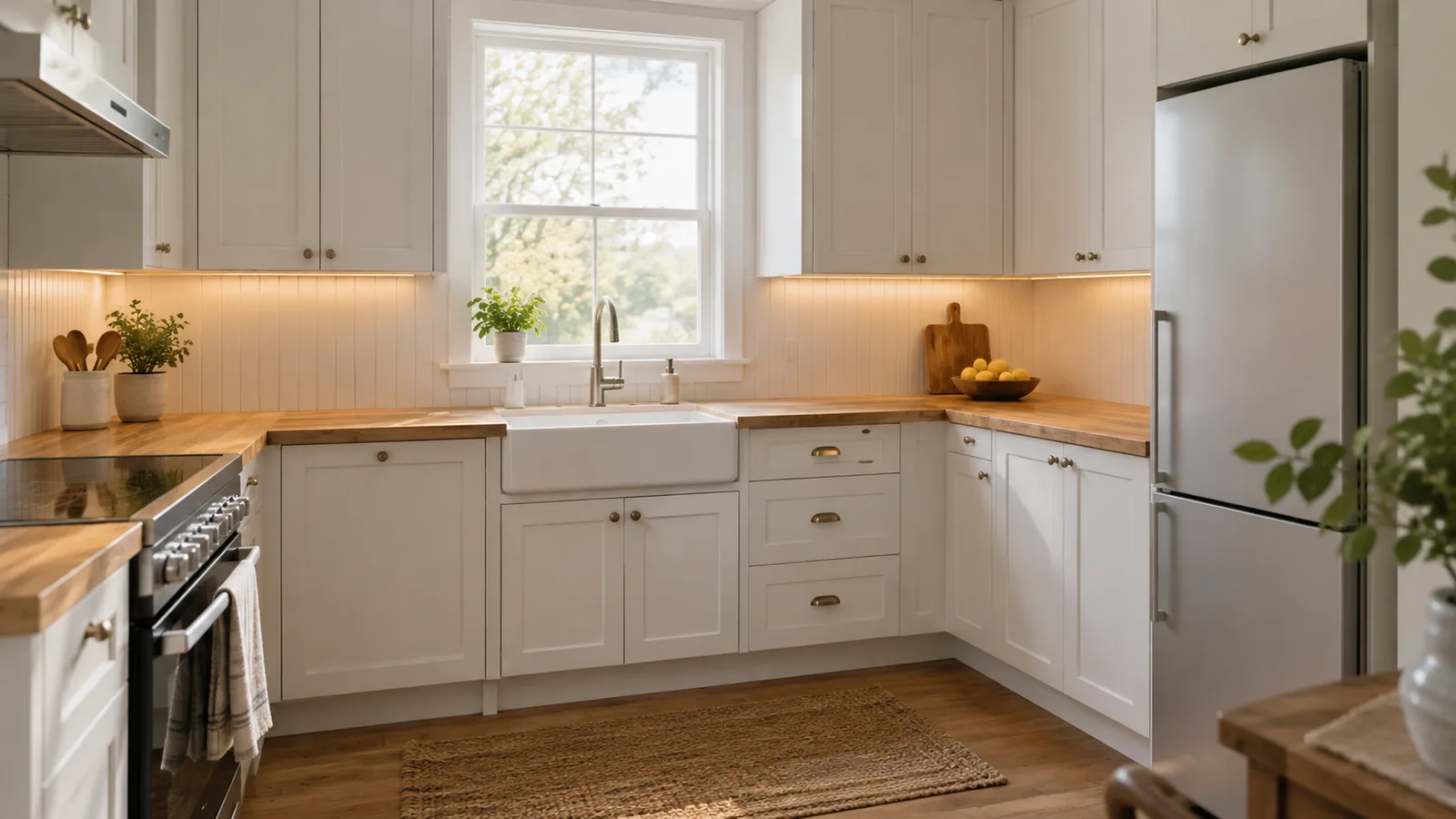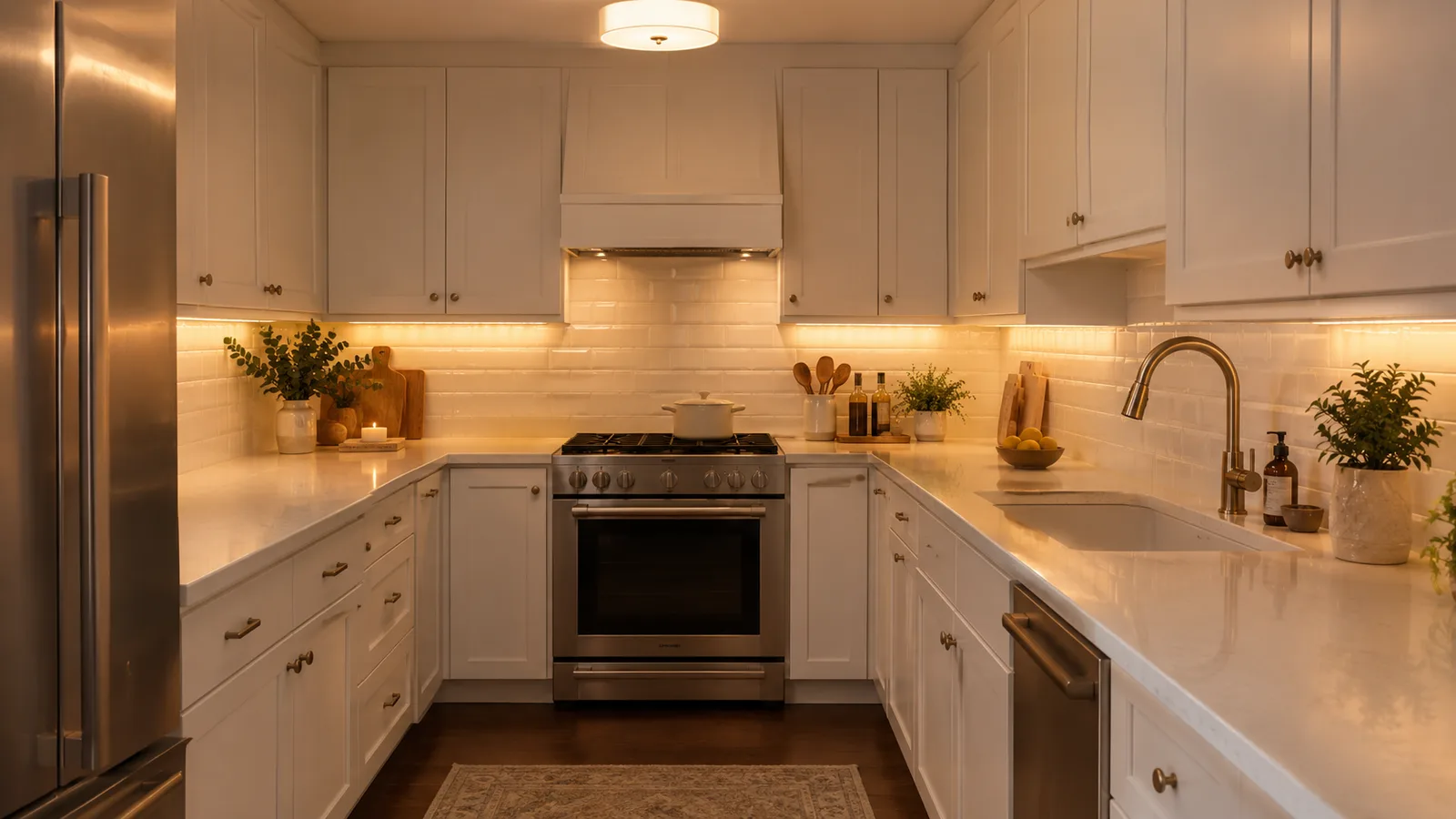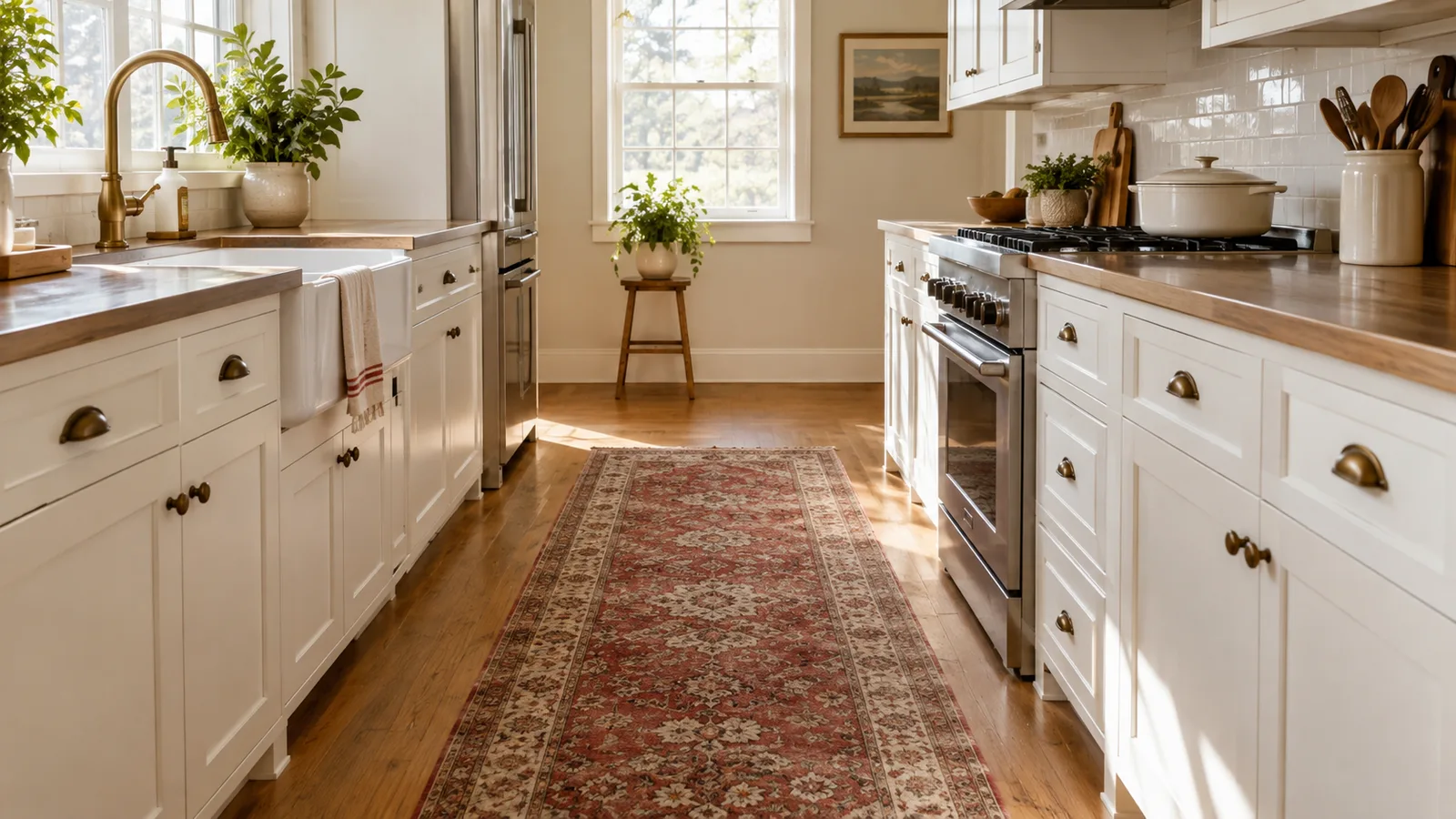
The short version: most kitchen runners are 2 to 3 feet wide and should end 6 to 12 inches short of the cabinets at each end of the aisle. A rug in front of the sink is usually 2 × 3 ft or 2 × 4 ft. Under a kitchen table, the rug should extend about 24 inches past the table on every side so chairs stay on it.
Whatever the size, choose flat-weave, washable or low-pile rugs that won't catch the dishwasher door or trip anyone carrying a hot pan.
Sizing a rug for a kitchen table? Use the rug size calculator
Find the right rug size for your living room, dining room or bedroom.
Kitchen Runner Sizes
Standard runner widths are about 2 ft, 2.5 ft and 3 ft, and common lengths are 6, 8, 10, 12 and 14 ft. Pick the width from your aisle and the length from the run of cabinets.
Width: leave floor showing at the sides
A typical kitchen aisle is about 36 to 48 inches between cabinet fronts (or between an island and the counters). A runner should leave a few inches of floor on each side so it doesn't bump the toe kicks:
| Aisle width | Runner width |
|---|---|
| 36 in | 2 ft (24 in) |
| 42 in | 2.5 ft (30 in) |
| 48 in | 2.5–3 ft (30–36 in) |
Length: stop short of the ends
Measure the length of the aisle and subtract 12 to 24 inches (6 to 12 inches at each end), then pick the closest standard length that fits:
| Aisle length | Runner length |
|---|---|
| 8 ft | 6 ft |
| 10 ft | 8 ft |
| 12 ft | 10 ft |
| 14 ft | 12 ft |
| 16 ft | 14 ft |
In each case the runner leaves about 12 inches of floor at each end. If your aisle falls between sizes, round down; a runner that's too long bunches against the cabinets and becomes a trip hazard.
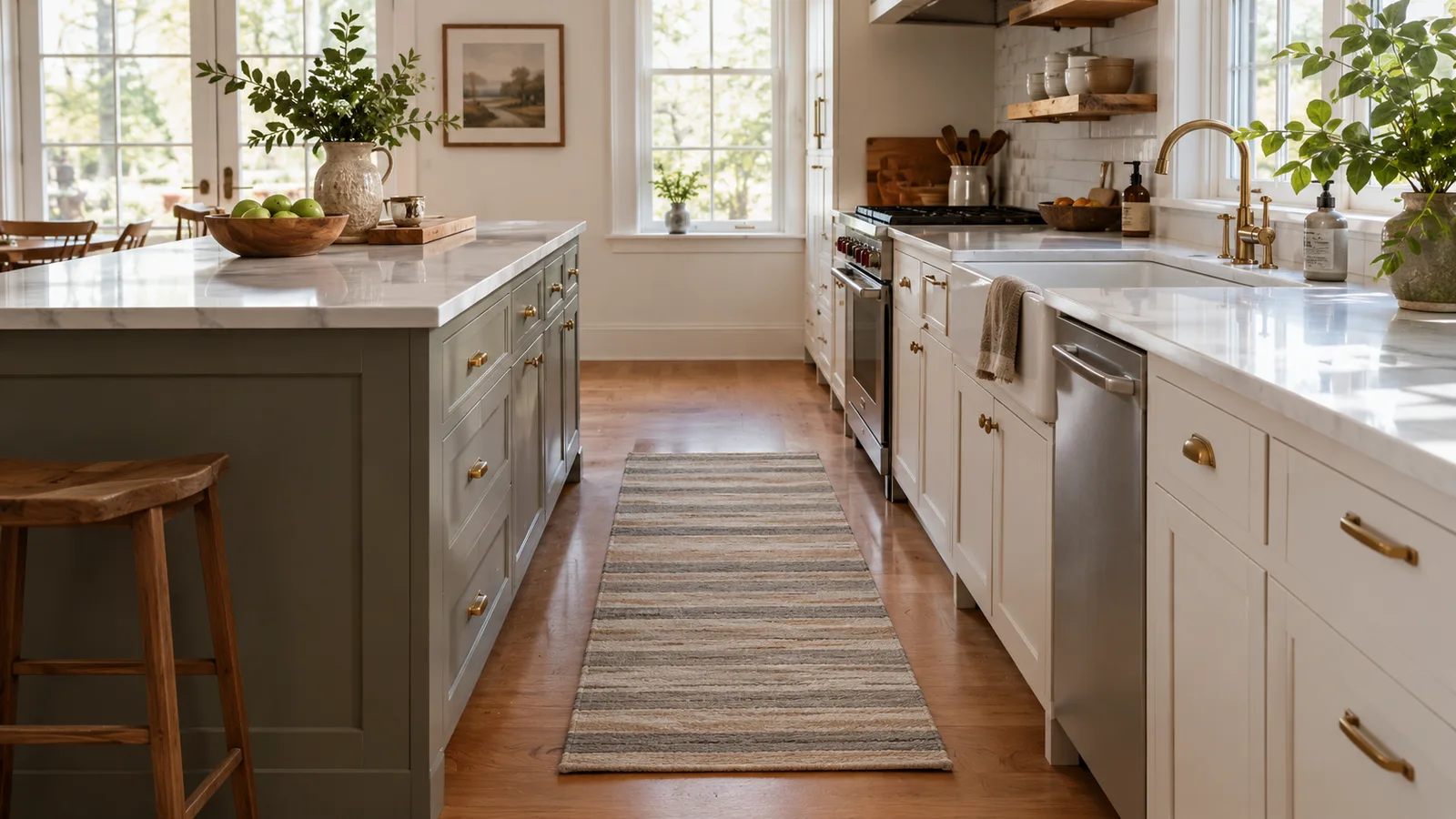
Galley kitchens
In a galley, one long runner down the center looks cleaner than two small rugs. If the aisle is very long, two matching runners with a gap at a doorway also work.
Island kitchens
Put the runner in the main work aisle, usually between the sink and the island. You don't need a rug in every aisle; one well-placed runner is enough.
A Rug in Front of the Sink
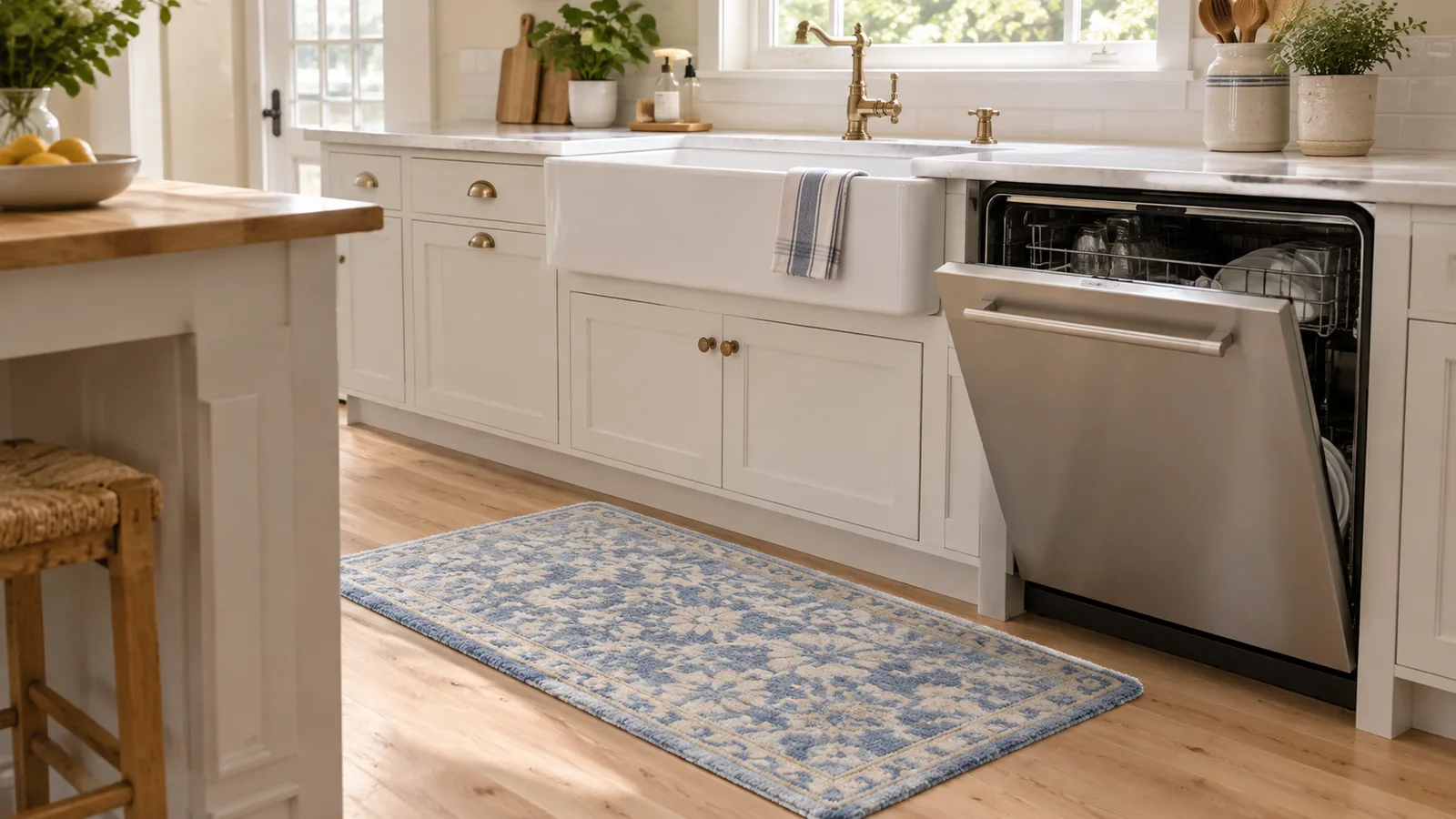
A small rug at the sink catches drips and gives your feet a softer spot to stand:
- 2 × 3 ft suits most single sinks; 2 × 4 ft or 2 × 5 ft suits wide farmhouse sinks.
- Center it on the sink.
- Keep it thin. A thick rug can stop the dishwasher door from opening fully or catch the bottom of the door. Low-pile and flat-weave rugs (or a slim anti-fatigue mat) avoid this.
A Rug Under a Kitchen Table
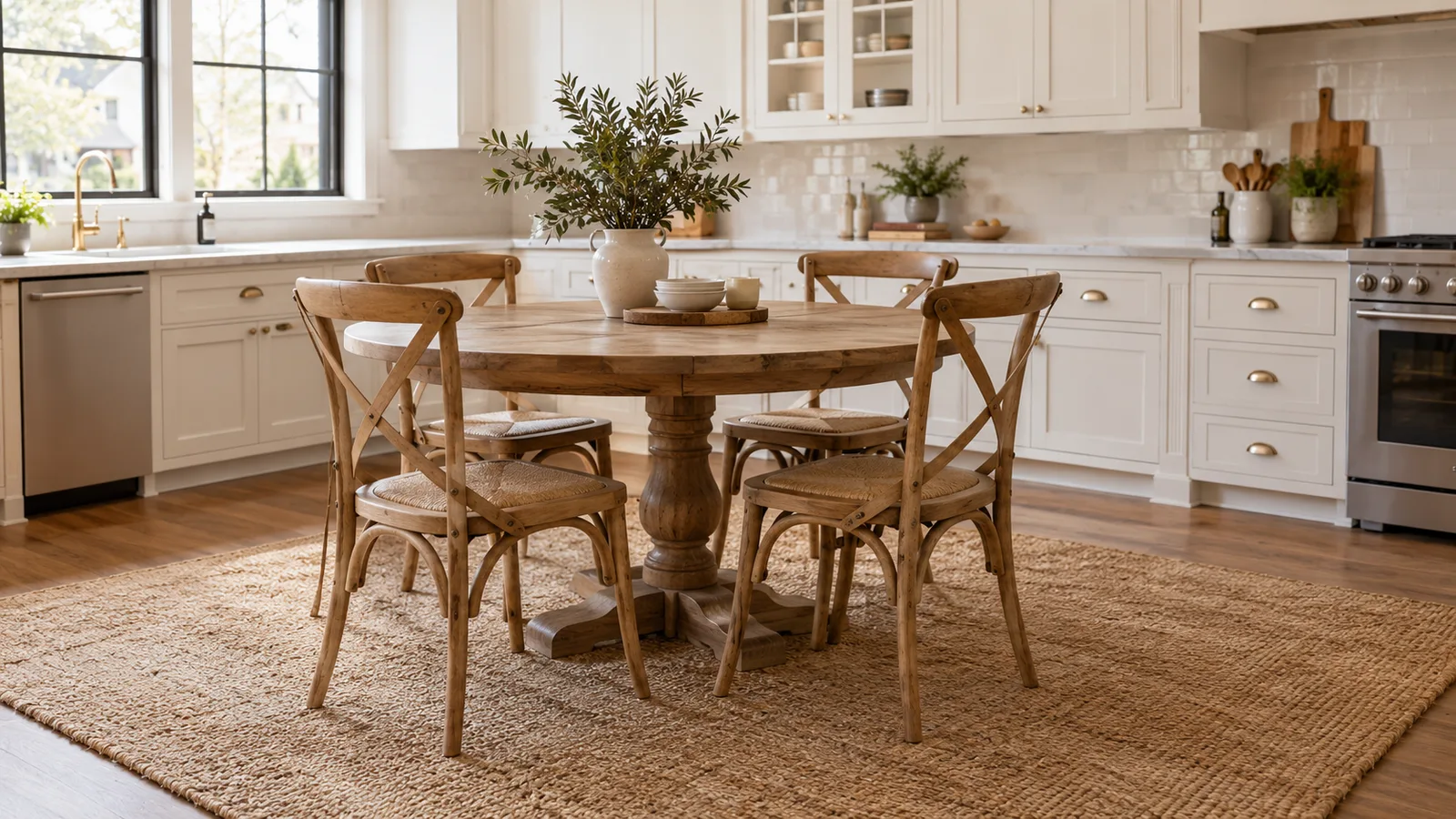
Size an eat-in kitchen rug the same way as a dining room rug: about 24 inches past the table on every side, so chairs stay on the rug when someone pulls one out. A 40 × 72 inch table usually needs an 8 × 10 ft rug. Our guide to what size rug for a dining room has a full chart, and the rug size calculator checks the size against your room.
The Best Kitchen Rug Materials
| Material | Why it works | Watch out for |
|---|---|---|
| Machine-washable | Throw it in the wash after spills | Thinner; use a rug pad |
| Flat-weave cotton or polyester | Low profile, easy to clean | Can slide without a pad |
| Low-pile synthetic | Durable and stain-resistant | Shows crumbs in light colors |
| Indoor-outdoor | Handles water and heavy traffic | Feels less soft |
| Jute or sisal | Natural texture | Stains easily; avoid at the sink |
Avoid thick, shaggy rugs in kitchens: they trap crumbs, are hard to clean and can catch cabinet and appliance doors.
Always use a non-slip rug pad or a rug with a rubber backing in the kitchen. Wet floors and sliding rugs are a common cause of slips.
L-Shaped and U-Shaped Kitchens
Runners are made for straight aisles, so open layouts take a little more thought:
- L-shaped kitchens: Put a single runner along the longer leg, usually in front of the sink or range, rather than trying to wrap the corner with two rugs.
- U-shaped kitchens: If the space between the legs is wide, a small rectangular rug (such as 3 × 5 ft) can sit in the center. If it's tight, use a runner in front of the main workstation and leave the rest bare.
- Peninsulas: Treat the space between the peninsula and the counters like a galley aisle and size a runner the same way.
Whatever the shape, the rug should sit in the space where you actually stand, and it should never extend under cabinet toe kicks or into a doorway where it can catch a door.
Common Kitchen Rug Mistakes
- Buying a runner that's too long. It bunches at the ends and curls up against the cabinets. Leave floor showing at both ends.
- Going too wide. A runner that touches the cabinets on both sides looks cramped and gets kicked out of place. Leave a few inches on each side.
- Skipping the rug pad. Even rubber-backed rugs can slide on wet tile or wood. A thin pad keeps the rug flat and in place.
- Choosing a pale, solid color. Light solids show every spill. Patterned, vintage-style or mid-tone rugs hide crumbs and stains between washes.
- Forgetting the doors. Open the dishwasher, the oven and any lower cabinet doors over the rug before you commit. If anything catches, choose a thinner rug.
Should You Put a Rug in the Kitchen at All?
Rugs aren't required, but they earn their place in a few ways. They soften hard tile or stone underfoot during long prep sessions, add color and pattern to an all-white kitchen, and protect the floor in front of the sink where drips land. The trade-off is cleaning: a kitchen rug needs washing or shaking out far more often than a living room rug. If that sounds like a chore, choose one machine-washable runner and skip the rest.
Kitchen Rug Picks
Washable runner
Washable Kitchen Runner, 2.5 x 8 ft
- ✓Machine washable
- ✓Low profile under doors
- ✓Vintage-style patterns
Flat-weave rug
Flat-Weave Cotton Kitchen Rug, 2 x 3 ft
- ✓Thin and light
- ✓Easy to shake out
- ✓Won't catch the dishwasher
Rug pad
Non-Slip Rug Pad for Runners
- ✓Stops sliding
- ✓Trim to size
- ✓Safe for hard floors
Anti-fatigue mat
Anti-Fatigue Kitchen Mat
- ✓Cushions long prep sessions
- ✓Wipe-clean surface
- ✓Beveled edges
As an Amazon Associate, we earn from qualifying purchases.
For more small-kitchen ideas, see small farmhouse kitchens and old farmhouse kitchen ideas.
The Bottom Line
- Runner width: 2 ft for a 36 in aisle, 2.5 ft for 42 in, 2.5–3 ft for 48 in.
- Runner length: aisle length minus 12–24 inches, rounded down to a standard size.
- Sink rug: 2 × 3 ft for most sinks; keep it thin so the dishwasher opens.
- Table rug: about 24 inches past the table on every side.
- Choose washable, flat-weave or low-pile rugs and always use a non-slip pad.