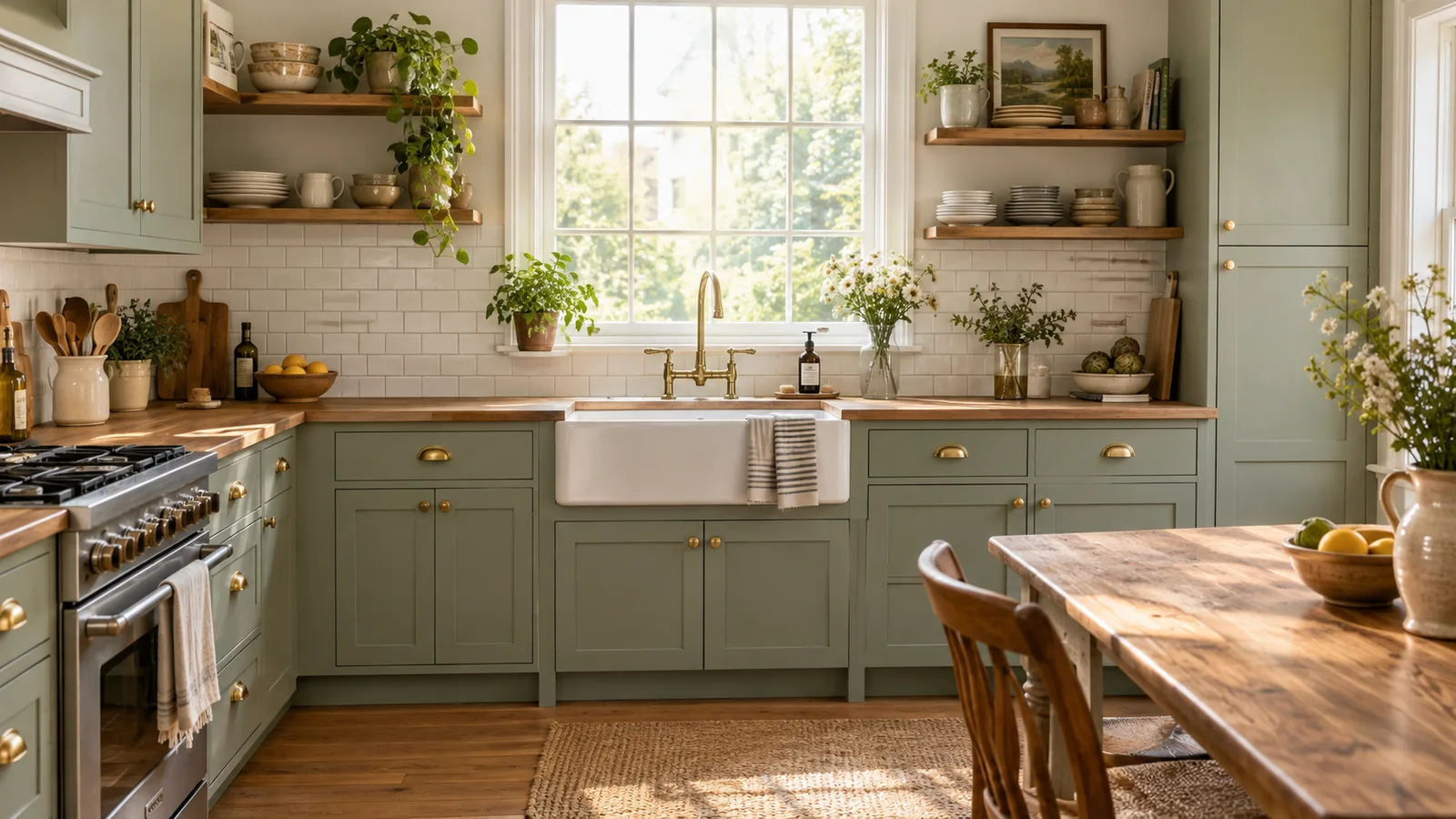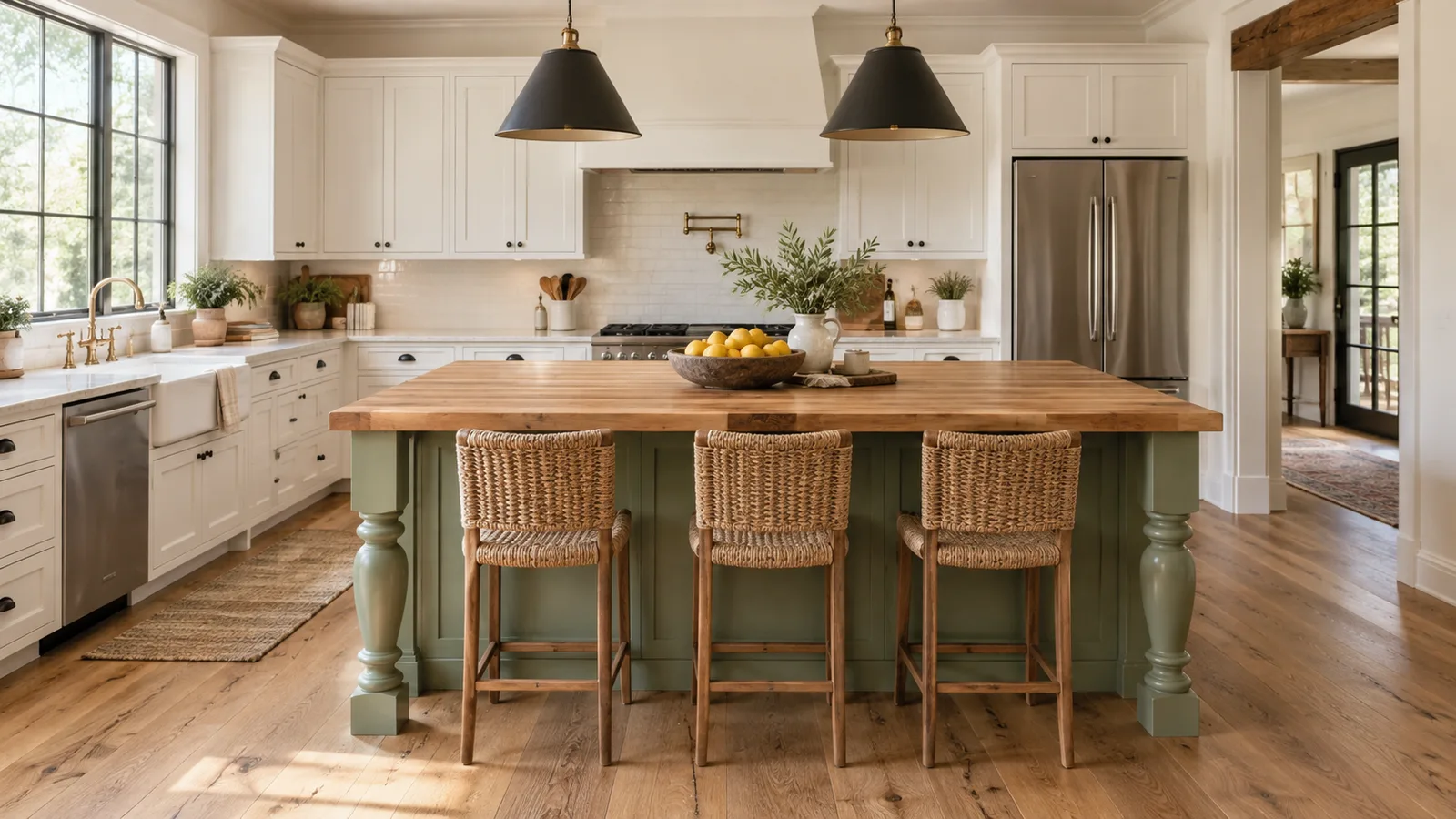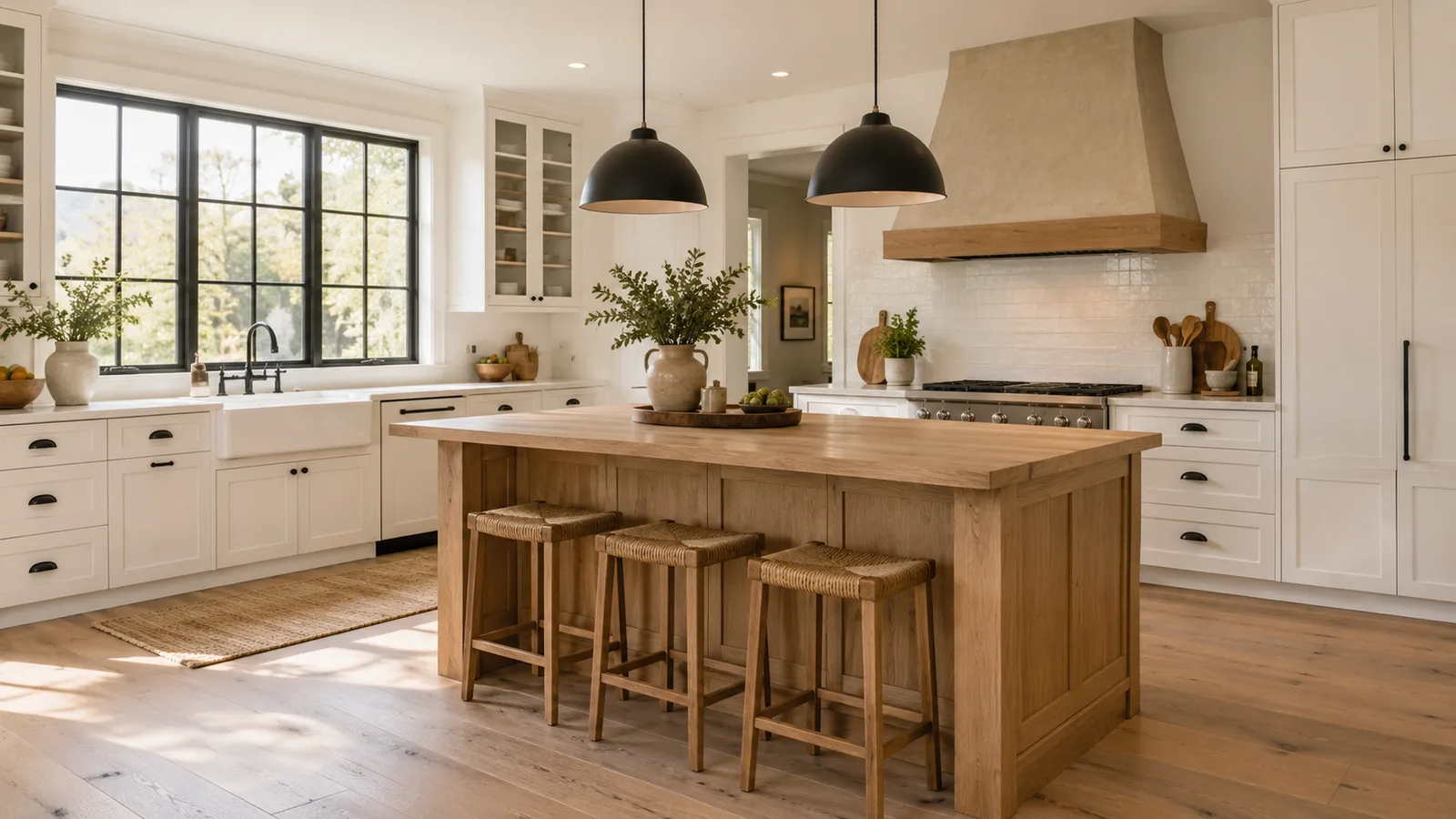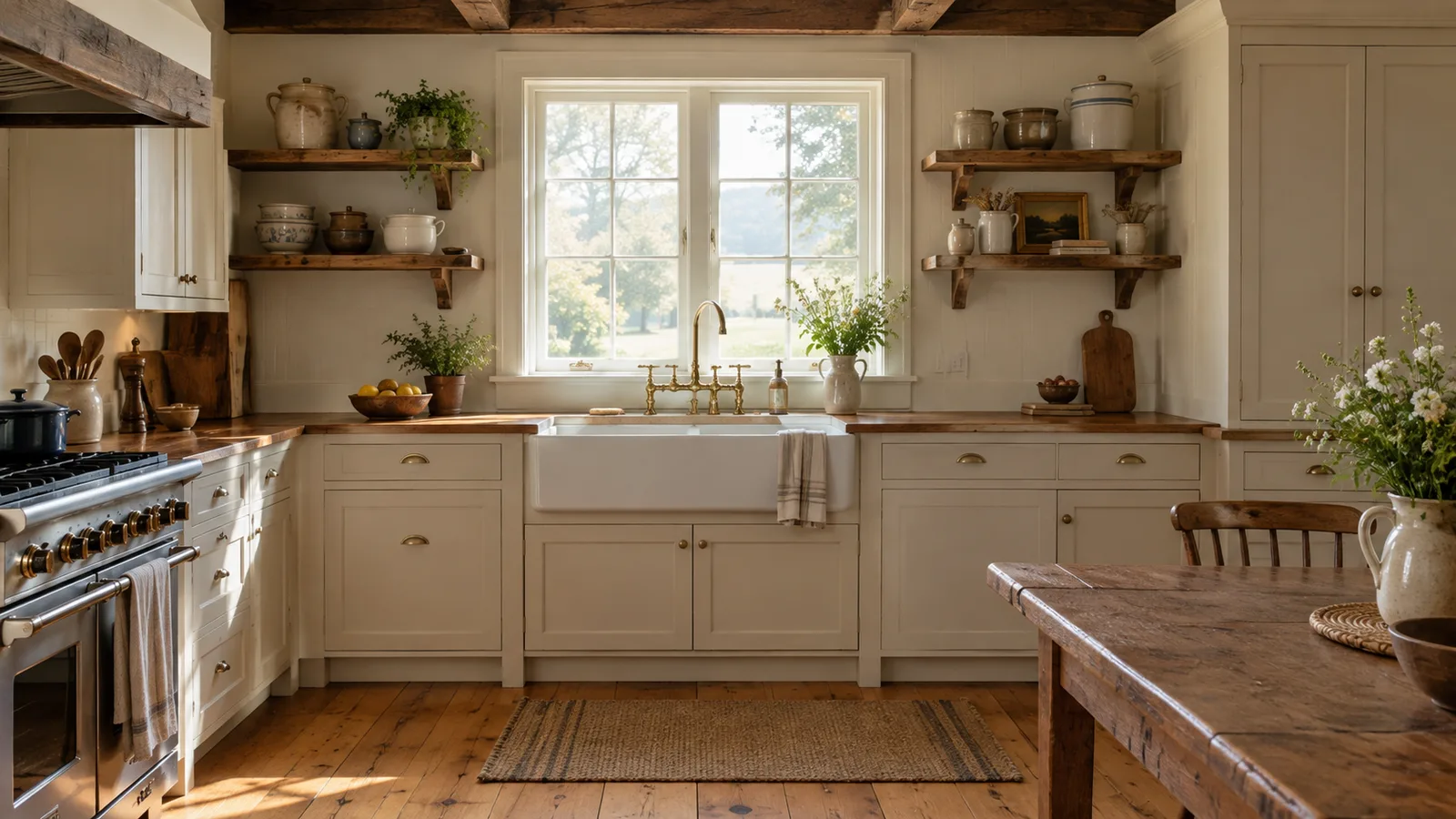
The short version: a traditional farmhouse kitchen looks old because it looks assembled over time. Cabinets read like furniture, the sink is big and practical, materials are natural and allowed to wear, and storage is partly out in the open. Get those four things right and the rest (color, hardware, lighting) is easy.
Below are the design choices that create that look, what they typically cost, and the places where the "authentic" option isn't worth the trouble.
What Makes a Farmhouse Kitchen Look Traditional?
Modern farmhouse kitchens lean on shiplap, black-and-white contrast, and matte black hardware. Traditional (or "old") farmhouse kitchens are softer and warmer:
| Element | Traditional farmhouse | Modern farmhouse |
|---|---|---|
| Cabinet color | Cream, warm white, muted green or blue | Bright white, black, gray |
| Cabinet style | Inset doors, beadboard panels, glass uppers | Shaker overlay doors |
| Hardware | Unlacquered brass, nickel, iron latches | Matte black pulls |
| Counters | Butcher block, soapstone, honed marble | Quartz, white marble look |
| Walls | Plaster, beadboard, handmade tile | Shiplap, white subway tile |
| Floors | Wide-plank wood, brick, terracotta | Wide-plank LVP, large porcelain |
You don't need every item in the left column. Two or three of them, repeated throughout the room, are enough to shift the whole feel.
1. Choose Cabinets That Look Like Furniture
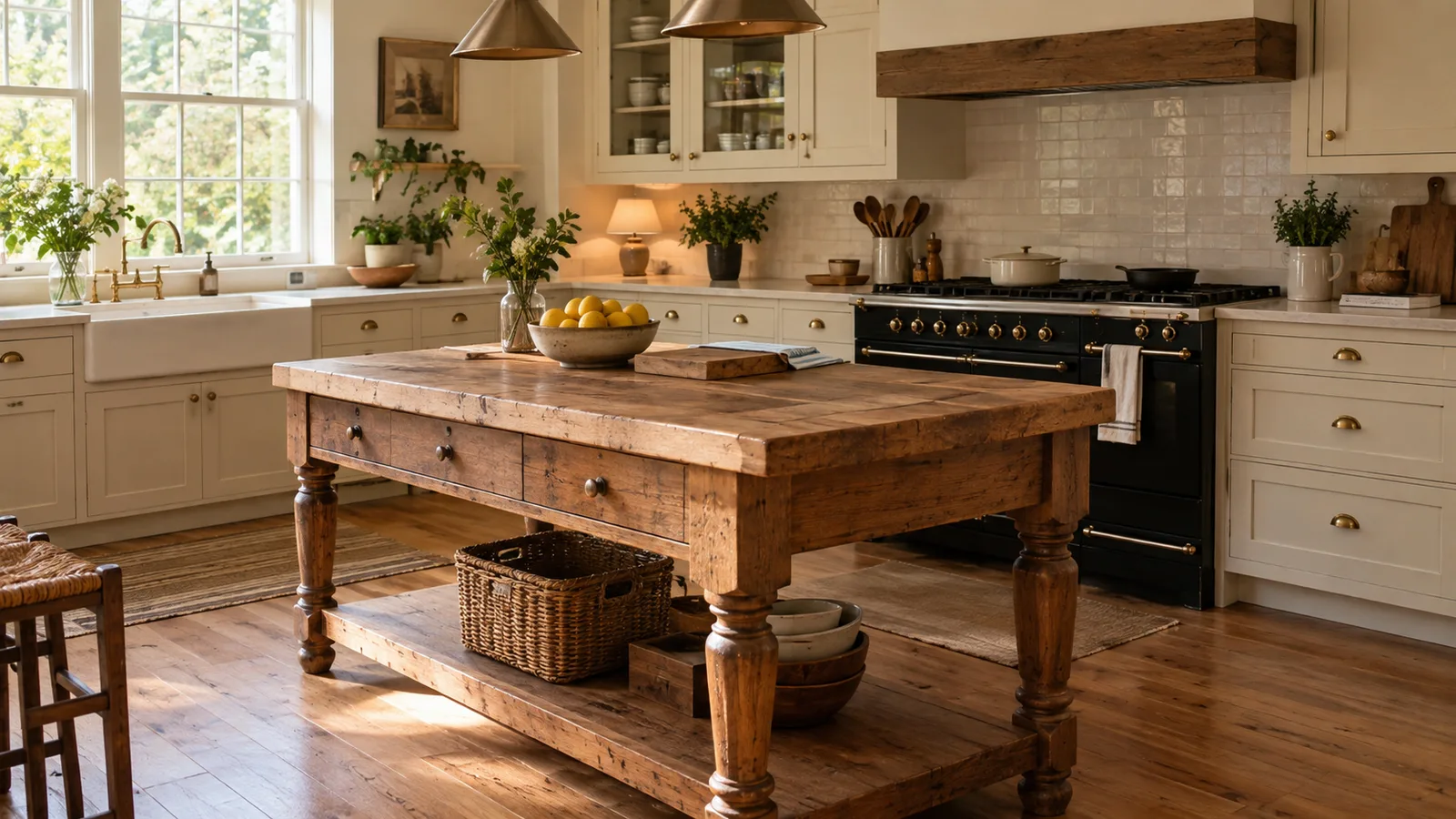
Old farmhouses didn't have wall-to-wall fitted cabinets. They had a dresser, a worktable, a pantry cupboard. You can borrow that idea in a few ways:
- Inset cabinet doors sit flush inside the frame instead of overlapping it. It's the single most "old house" cabinet detail, but it typically costs noticeably more than standard overlay doors and needs precise installation.
- A freestanding worktable as the island. Look for one about 30–36 inches deep and 34–36 inches tall. Leave at least 36 inches (42 is more comfortable) between it and the counters.
- Feet and furniture toe kicks on base cabinets, so they look like separate pieces instead of a continuous box.
- Mixed finishes: painted perimeter cabinets with a stained wood island or hutch.
Can't afford inset cabinets? Standard shaker doors painted a warm cream, with a beaded edge and unlacquered brass knobs, get you most of the way there for far less.
2. Make the Sink the Star
The deep apron-front (farmhouse) sink is the signature of this style for a reason: it's practical for big pots and canning, and it looks right.
- Fireclay is the classic choice. It's glossy, hard-wearing, and resists stains. Single-bowl 30–33 inch sinks are the most common size.
- Cast iron is heavy and very durable, but the enamel can chip if you drop something heavy into it.
- Pair it with a bridge faucet or wall-mount faucet in brass or nickel and, if you want the full look, a wooden or checked café curtain on the window above.
Apron sinks need a specific sink-base cabinet, so pick the sink before you order cabinets.
3. Use Honest Materials (and Know How They Age)
Traditional kitchens use materials that change over time. That patina is part of the charm, but go in knowing what you're signing up for:
| Countertop | Look | Upkeep | Typical cost range |
|---|---|---|---|
| Butcher block | Warm, classic | Oil every month or two; can scratch and stain | Lower |
| Soapstone | Soft charcoal, matte | Scratches easily but sands out; darkens with oil | Mid to high |
| Honed marble | Elegant, timeless | Etches from lemon, wine, vinegar | High |
| Quartz (marble look) | Clean, consistent | Very low maintenance; less "old" character | Mid to high |
A common compromise: durable quartz or soapstone on the perimeter, with a butcher block top on the island where you roll dough and serve.
4. Give the Range Its Own Alcove
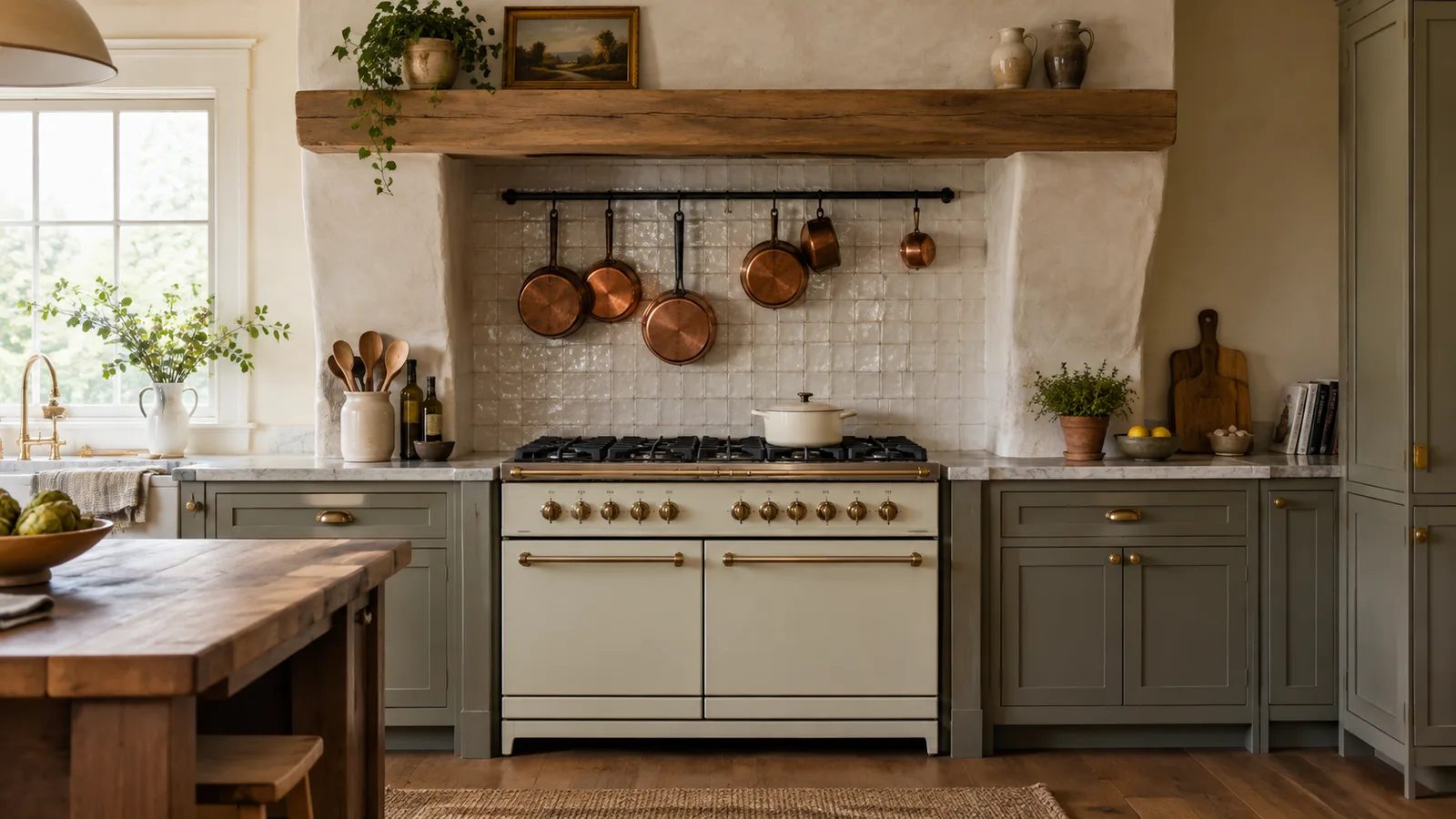
In older homes the cooking area was often a distinct nook. You can recreate it with a plaster or drywall range hood that runs to the ceiling, a simple wood mantel shelf, and handmade-look tile behind the stove. Zellige-style or glossy handmade tiles have slight variations that read as old; perfectly uniform subway tile reads as new.
A rail with hooks for pans and utensils adds working character without taking cabinet space.
5. Open Shelving, Used Sparingly
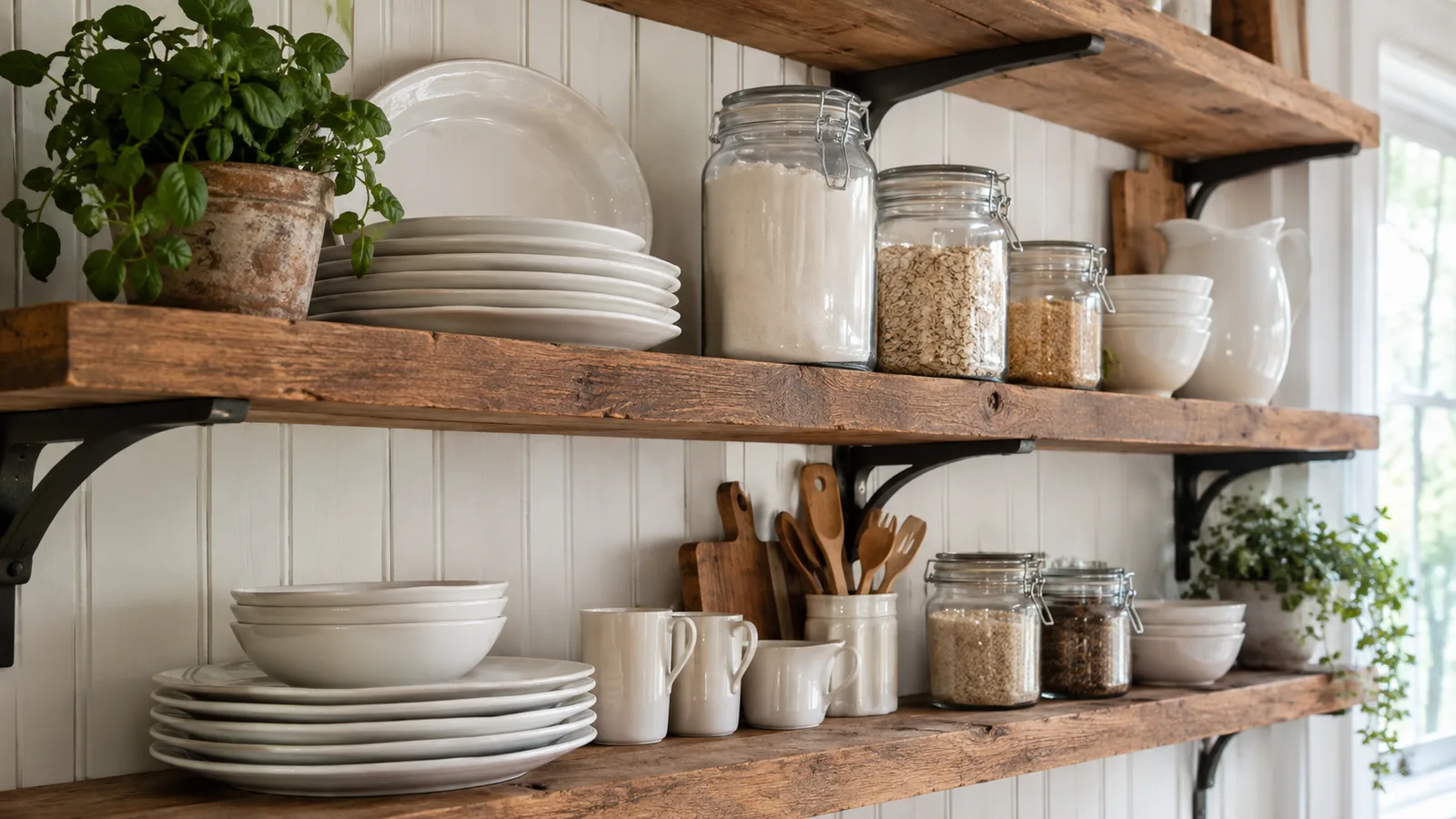
Open shelves are traditional, but a whole kitchen of them collects dust and grease. Use them where they make sense:
- One or two runs of shelving near the sink or coffee station for everyday dishes you use constantly
- Thick wood (about 2 inches) on simple iron or wood brackets
- Keep cooking-area items behind doors, especially near the range
Planning to tile behind shelves or along the backsplash? Our tile calculator works out how many tiles to buy with waste included.
6. Add a Hutch or Pantry Cupboard
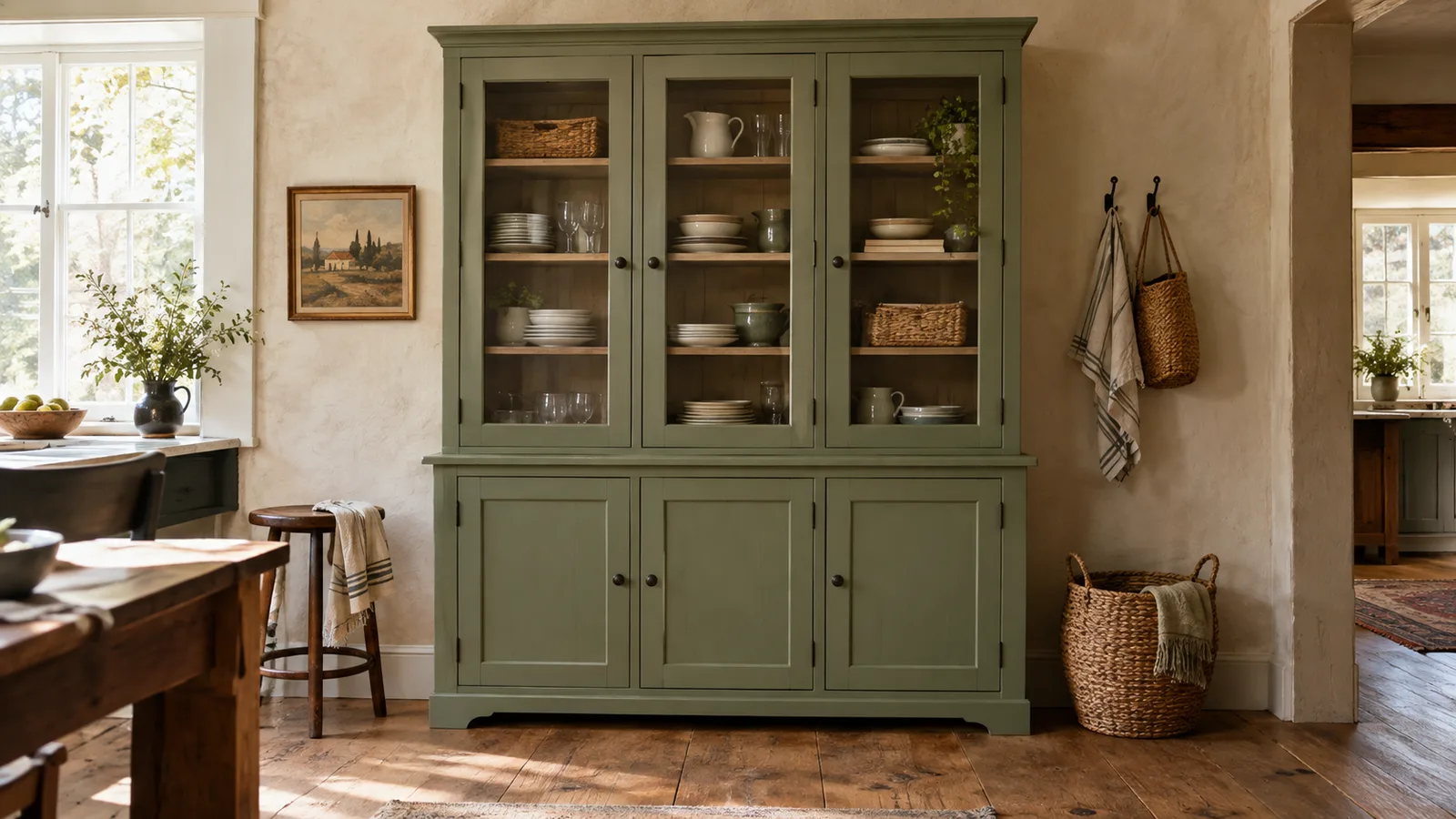
A tall freestanding hutch is one of the fastest ways to make a kitchen feel collected. Painted in a muted green, blue, or black against cream cabinets, it becomes a focal point and adds real storage. Vintage hutches turn up regularly at estate sales and secondhand marketplaces; check that drawers run smoothly and that it's deep enough (about 16–18 inches) for dinner plates.
7. Choose Floors and Lighting That Feel Lived-In
- Floors: wide-plank wood is the classic, but brick pavers and terracotta tile are both authentic and very durable. Luxury vinyl in a wide-plank, low-sheen finish is a practical budget option.
- Lighting: schoolhouse pendants, simple glass or enamel shades, and a sconce over the sink. Warm bulbs (around 2700K) keep cream and wood tones from looking flat.
8. Use a Warm, Soft Color Palette
Traditional farmhouse color is quieter than modern farmhouse contrast. The palette usually starts with a warm white or cream on walls and cabinets, then adds one or two muted, earthy colors:
- Muted greens (sage, olive, gray-green) on an island, hutch, or lower cabinets
- Soft blues (gray-blue, blue-green) for a slightly cooler cottage feel
- Deep accents such as black-green or charcoal on a range hood or a single piece of furniture
- Natural wood everywhere else: shelves, cutting boards, a worktable, beams
Keep the ceiling and trim in the same warm white as the walls (or one shade lighter) so the room feels soft rather than sharply outlined. Sample colors next to your countertop and floor before committing; cream cabinets can look yellow beside a cool white quartz.
Planning the Order of Work
If you're remodeling rather than redecorating, the order matters, because several traditional elements depend on each other:
- Choose the sink first. Apron sinks need a specific base cabinet and sometimes a reinforced frame.
- Pick countertops and range next. They set the cabinet layout and the range alcove dimensions.
- Order cabinets. Inset cabinets often have longer lead times, so plan for that.
- Decide on floors before cabinets go in if you want flooring to run underneath for a furniture look.
- Finish with tile, hardware, and lighting, which are the easiest to change later.
What to Skip
Some "farmhouse" touches date quickly or work against the traditional look:
- Word signs ("Gather," "Eat") and faux-distressed decor
- Too much shiplap on every wall; one beadboard or plaster wall feels more authentic
- Barn doors on everything; they don't seal well and are noisy
- Matching everything from one collection; mixing woods and metals is what makes it feel old
Bringing It Together on a Budget
If a full remodel isn't on the table, these changes give the most traditional-farmhouse effect per dollar:
- Paint existing cabinets a warm cream or muted green
- Swap hardware for unlacquered brass or nickel knobs and cup pulls
- Add a freestanding worktable or vintage hutch
- Replace the faucet with a bridge-style model
- Hang one run of thick wood open shelving
Repainting cabinets? Our paint calculator estimates how much paint you'll need for walls, and a quart of cabinet enamel typically covers a small set of doors per coat.
Products That Help Create the Look
Swiss Madison
Fireclay Farmhouse Apron-Front Sink, 33 Inch
A big glossy fireclay apron sink is the most recognizable piece of an old farmhouse kitchen.
- ✓Deep single bowl for big pots
- ✓Stain and scratch resistant
- ✓Classic glossy white finish
Kingston Brass
Bridge Kitchen Faucet with Side Sprayer
The traditional two-handle bridge shape suits an apron sink in brass or nickel.
- ✓Traditional two-handle design
- ✓Brass or nickel finishes
- ✓Pairs well with apron sinks
Unlacquered Brass Cabinet Knobs
Unlacquered brass darkens with use, which is exactly the assembled-over-time look.
- ✓Develops a warm patina
- ✓Instant vintage look
- ✓Works on painted cabinets
Schoolhouse Glass Pendant Light
Milk glass schoolhouse shades are a period-appropriate choice over a sink or island.
- ✓Classic milk glass shade
- ✓Ideal over islands and sinks
- ✓Warm, even light
As an Amazon Associate, we earn from qualifying purchases.
The Bottom Line
An old farmhouse kitchen isn't about buying "farmhouse" decor. It's about a few honest choices:
- Furniture-like cabinets, ideally inset, in warm cream or muted color
- A deep apron sink with a traditional faucet
- Natural materials like butcher block, soapstone, wood, and handmade tile
- A freestanding piece such as a worktable or hutch
- Limited open shelving where it's practical
Mix old and new, let materials age, and resist the urge to match everything. That's what makes a new kitchen feel like it's been there for a hundred years.