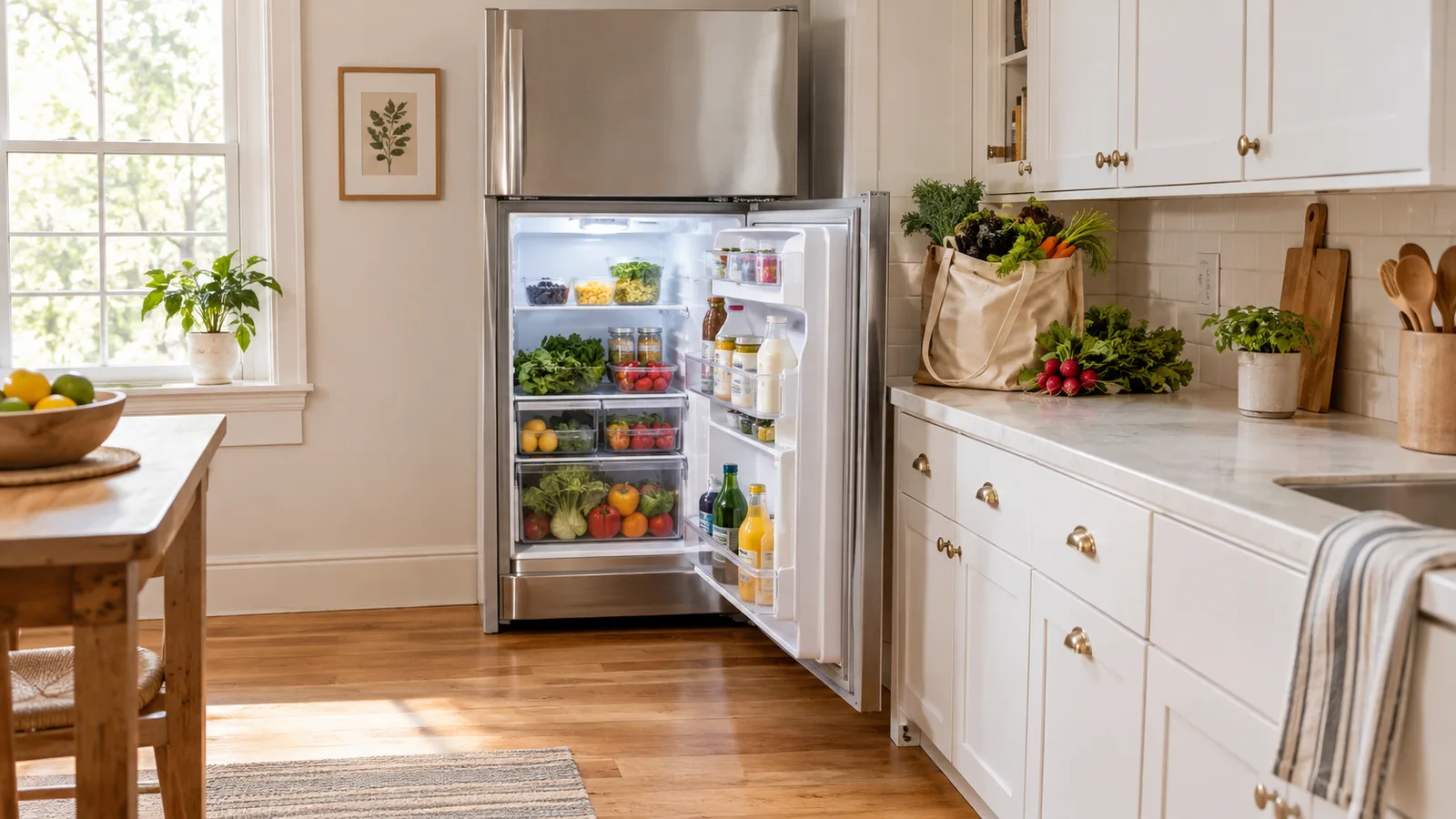
The short version: a refrigerator door should open so the handle side faces your nearest counter. Then you can grab something and set it down in one move. If your door swings the other way, many refrigerators can have the door hinges moved to the other side. Check your owner's manual first: many single-door and top/bottom-freezer models are reversible, while French-door and some side-by-side models are not.
It's one of the cheapest layout fixes in a small kitchen, but it's a real job. Plan for help, an hour or two, and the parts your manual lists.
Why Door Direction Matters So Much in a Small Kitchen
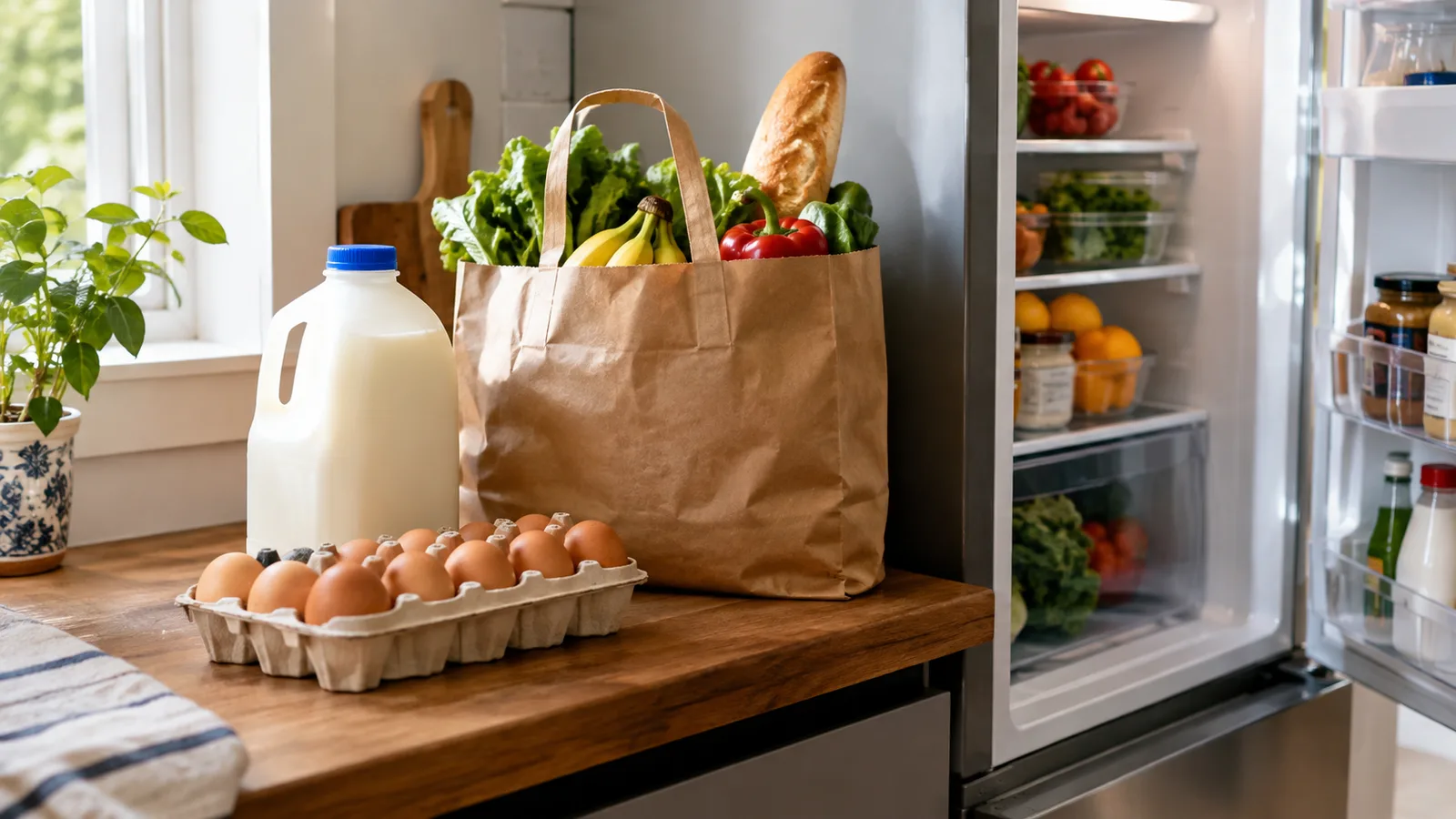
Kitchen planners talk about a landing area: a stretch of counter next to the fridge where you can put things down. A common planning guideline is at least 15 inches of counter on the handle side of the refrigerator (or across from it, if the counter is close).
When the door opens the wrong way, it creates a wall between you and that counter. You end up:
- Reaching around the door to set down milk or leftovers
- Closing the door with your hip while holding food
- Leaving groceries on the floor while you unpack
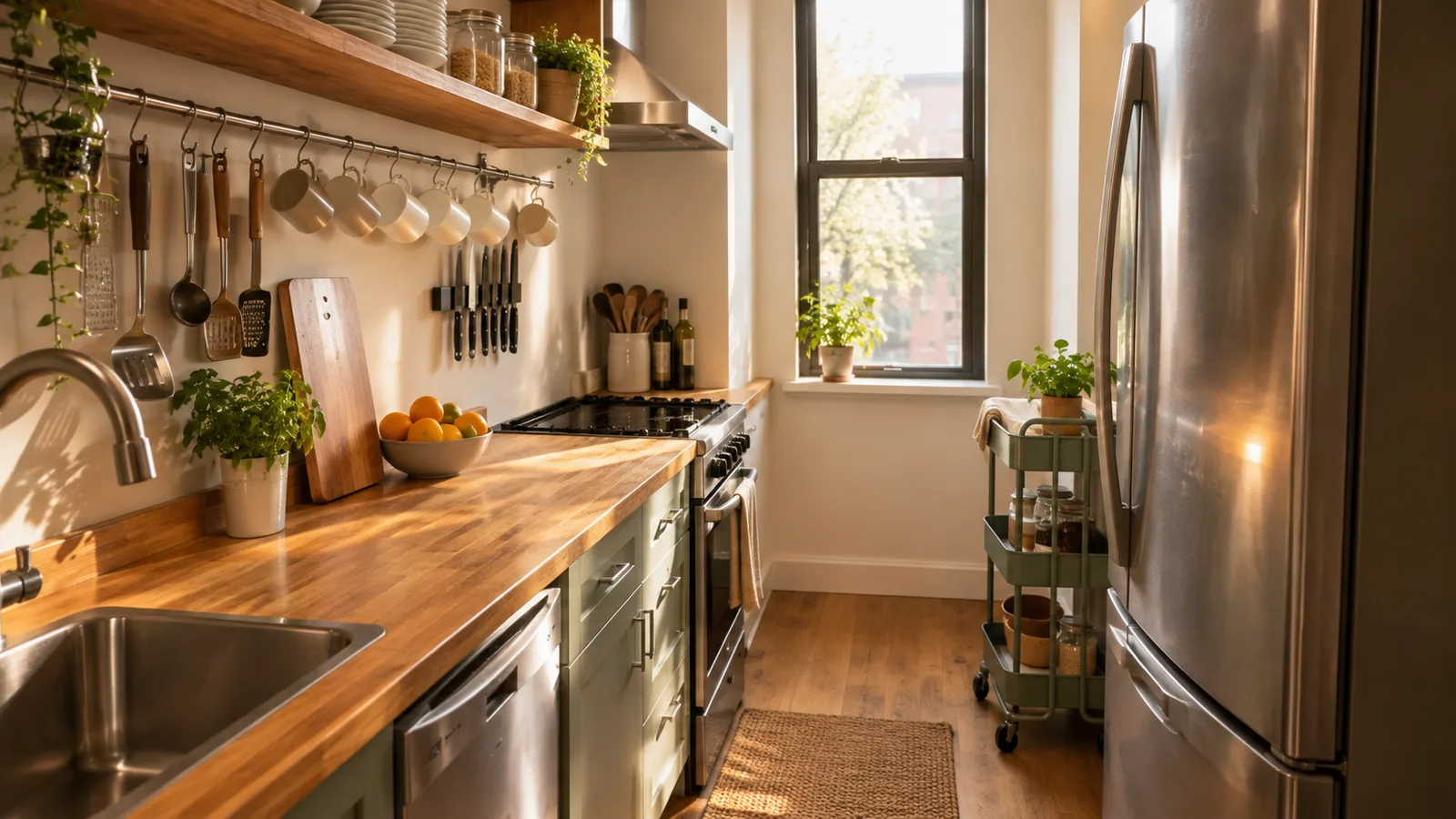
In a galley or corner kitchen, flipping the door direction can turn the fridge from an obstacle into part of the work triangle.
Quick Test: Does Your Door Open the Wrong Way?
Stand in front of the fridge and open the door fully. Then ask:
| Question | If yes | If no |
|---|---|---|
| Is the nearest counter on the hinge side? | Reversing likely helps | Door is probably fine |
| Does the open door block the main walkway? | Reversing may help | Check door clearance instead |
| Does the door hit a wall before opening fully? | Reversing may help, or move the fridge | Fine |
| Can you open the crisper drawers fully? | Fine | You may need more door clearance |
Can Your Refrigerator Door Be Reversed?
Not every model can. Before you buy parts or pick up a screwdriver:
- Find the model number. It's usually on a label inside the fresh-food section or on the side wall.
- Check the owner's manual. Look for a section called "reversing the door" or "door swing." If it's there, the manual lists the tools and steps.
- Look for hinge holes on the other side. Many reversible models have capped holes at the top and bottom on the opposite side.
- Check for a separate kit. Some models need a door reversal kit or a new handle. The manual or the manufacturer's support page will say.
- Know the usual exceptions. French-door refrigerators already open from the center, and many side-by-side models can't be reversed. Some models with water or ice dispensers in the door need a technician.
If your manual doesn't cover door reversal, or the door has a dispenser, water line or wiring running through the hinge, have an appliance technician do it. Lost parts or a pinched line can be expensive.
What the Job Usually Involves
Every model is different, so follow your manual step by step. At a high level, the job tends to look like this:
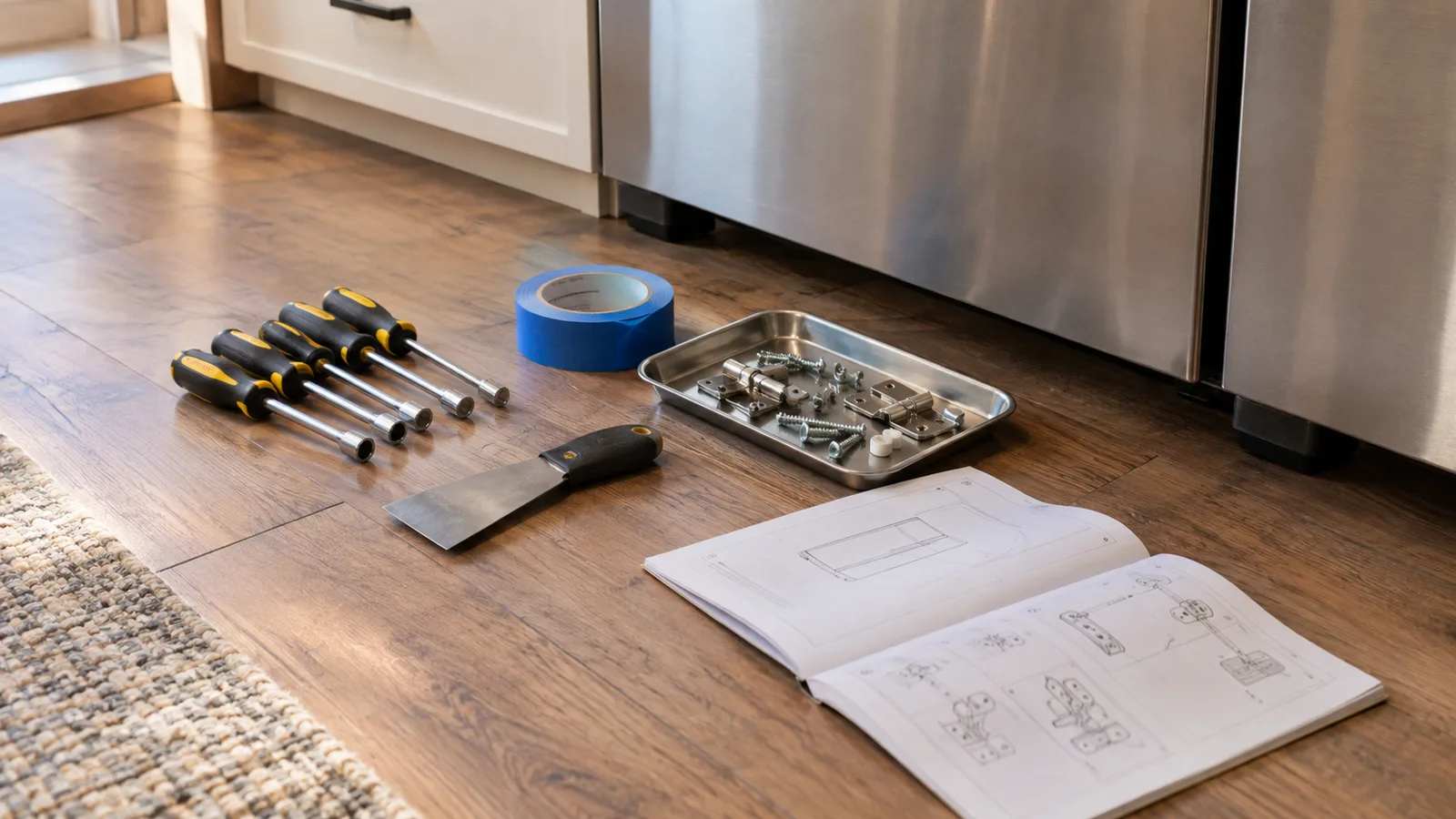
- Empty the door shelves and remove door bins so the door is lighter.
- Unplug the refrigerator for safety.
- Have a helper. Refrigerator doors are heavy and awkward. One person holds the door while the other works on the hinges.
- Remove the top hinge cover, top hinge and door, then move the hinge parts and any door stops to the other side as shown in the manual.
- Move the handle to the opposite side of the door if your model requires it.
- Rehang the door, check that it closes and seals evenly all the way around, and level the fridge if needed.
Keep screws and small parts in a labeled tray, and take photos at each step so you can retrace them.
Plan the Clearance Too
Reversing the door helps most when the fridge also has room to work:
- Door swing: some doors need extra space beside a wall to open past 90°, so drawers and shelves can come out. Check the "door clearance" figure in the manual.
- Ventilation: leave the gaps the manual specifies at the top, back and sides. A fridge squeezed too tightly can run harder.
- Walkway: in a galley, keep the open door from blocking the only path through the kitchen if you can.
Other Ways to Fix an Awkward Fridge Spot
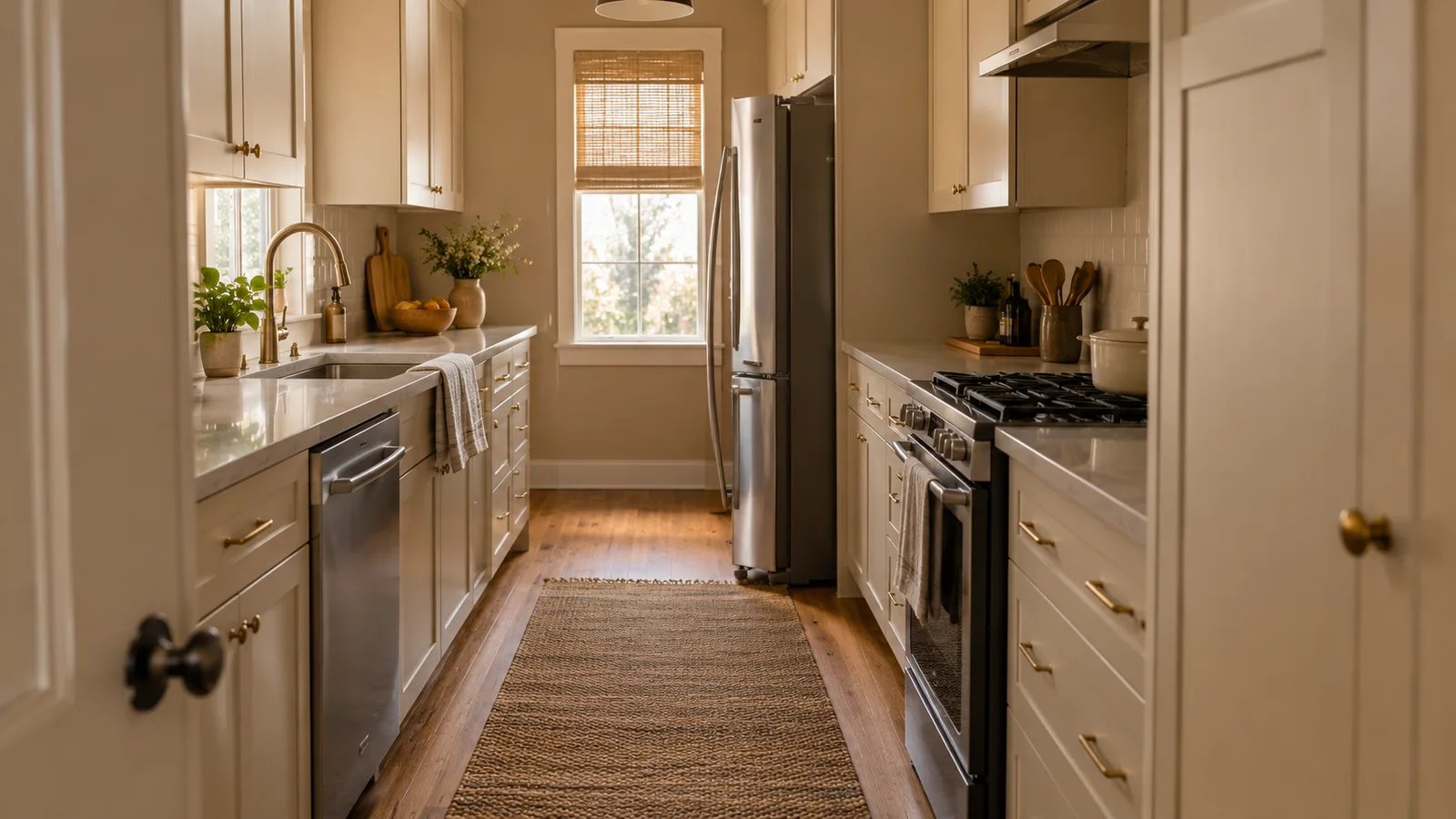
If your fridge can't be reversed, these can still help:
- Add a landing spot across from the fridge: a rolling cart or a small wall shelf works.
- Swap positions with a nearby cabinet or cart if the plumbing and outlet allow it.
- Choose a counter-depth fridge next time. It sticks out less, which helps in narrow kitchens.
- Organize by frequency: put the things you grab most on the door and upper shelves on the handle side.
For more ideas, see how to organize a small kitchen with no storage and our small farmhouse kitchen ideas.
Fridge Placement Rules for Small Kitchens
If you're planning a layout from scratch, or moving the fridge rather than flipping the door, these general guidelines help:
- Put the fridge at the end of a counter run, not in the middle, so its door doesn't split your workspace in two.
- Keep it away from heat where possible: not right beside the oven or in a spot that gets strong afternoon sun. Many manuals give minimum distances from heat sources.
- Leave room beside a wall for the door to open far enough to pull out drawers. Check the "door clearance" figure in your manual.
- Keep the landing area of about 15 inches of counter on the handle side or directly across the aisle.
- Mind the outlet and water line. Moving a fridge with an ice maker may mean extending or rerouting the water supply, which is a job for a plumber in many homes.
FAQ
Does reversing a fridge door void the warranty? Following the manufacturer's own instructions normally shouldn't, but check your warranty terms. Using parts or steps the manual doesn't cover is riskier.
How long does it take? For a standard top-freezer or single-door model, the manual's steps often take an hour or two with a helper. Models with displays or dispensers take longer and may need a technician.
Can I reverse just the freezer door? On top- and bottom-freezer models, both doors are usually reversed together so the handles line up. Your manual will say.
Helpful Products
Winsome Wood
Kitchen Cart with Butcher Block Top
If the door can't be reversed, a cart gives you a landing spot on the handle side instead.
- ✓Adds counter beside the fridge
- ✓Storage shelves below
- ✓Moves when you need it to
mDesign
Clear Refrigerator Organizer Bins
Pull-out bins mean fewer trips with the door wide open, whichever way it swings.
- ✓Pull out a whole bin at once
- ✓Easy to see what you have
- ✓Stackable
Klein Tools
Nut Driver Set
Hinge bolts on many refrigerators are hex-head; check your manual for the size it calls for.
- ✓Common for hinge bolts
- ✓Color-coded sizes
- ✓Useful for many appliances
Stanley
9-Inch Magnetic Torpedo Level
After moving the door, a level fridge helps it close and seal on its own.
- ✓Check the fridge is level
- ✓Helps doors seal and close
- ✓Magnetic base
As an Amazon Associate, we earn from qualifying purchases.
The Bottom Line
- The fridge handle side should face the nearest counter so you have a landing spot.
- Many single-door and top/bottom-freezer refrigerators are reversible; French-door and many side-by-side models are not.
- Check your owner's manual for the steps, tools and any kit you need.
- Unplug the fridge, empty the door and get help with the heavy lifting.
- If there's a water line, dispenser or wiring in the door, call a technician.