The short version: a small kitchen with no storage works when you own less, store by zone, and use the walls. Start by clearing out duplicates and rarely used gadgets, then set up three zones (prep, cooking, cleaning), and move everyday tools onto rails, pegboards and one open shelf. Fill the gaps with freestanding pieces, like a slim rolling cart or a microwave cart, that you can take with you when you move.
Most of these fixes are renter-friendly. Where something needs a screw in the wall, there's usually an adhesive or freestanding alternative.
Our Top Picks
- 1See on Amazon
Fits Tight Gaps: Slim Rolling Storage Cart by SimpleHouseware
Turns the 5 to 7 inch gap beside the fridge into a pantry for spices and oils.
- 2See on Amazon
Magnetic Knife Strip, 16 in
Moving knives to the wall frees a whole drawer or a block's worth of counter.
- 3See on Amazon
Easy Win: Expandable Cabinet Shelf Riser
Adds a second level for plates and bowls inside the cabinets you already have.
As an Amazon Associate, we earn from qualifying purchases.
Step 1: Edit Before You Organize
No organizer can make room for things you don't use. Empty one cabinet at a time and sort everything into three piles: use weekly, use a few times a year, and haven't used in a year.
| Category | Keep in a small kitchen | Usually safe to cut |
|---|---|---|
| Pans | One skillet, one saucepan, one larger pot | Duplicate sizes, warped nonstick |
| Knives | Chef's knife, paring knife, bread knife | Block sets you never reach for |
| Bakeware | One sheet pan, one baking dish | Specialty pans used once a year |
| Utensils | Spatula, wooden spoon, tongs, ladle, whisk | Duplicates of each |
| Appliances | The ones you use every week | Single-purpose gadgets |
| Food storage | Containers with matching lids | Lidless containers, takeout tubs |
Items you use a few times a year can live outside the kitchen: under a bed, on a closet shelf, or in a labeled bin.
Keep a "maybe" box for a month. If you don't open it, donate what's inside without looking again.
Step 2: Set Up Zones
In a small kitchen, every step counts. Store things where you use them:
- Prep zone (the longest stretch of counter): knives, cutting boards, mixing bowls, measuring cups.
- Cooking zone (beside the stove): pans, oils, salt and pepper, spatulas, pot holders.
- Cleaning zone (around the sink): dish soap, sponges, towels, trash bags, the dish rack.
- Serving zone (closest to the table or dishwasher): plates, glasses, cutlery.
Once each zone has a home, the counters stay clearer because nothing needs to "wait" there.
Step 3: Use the Walls
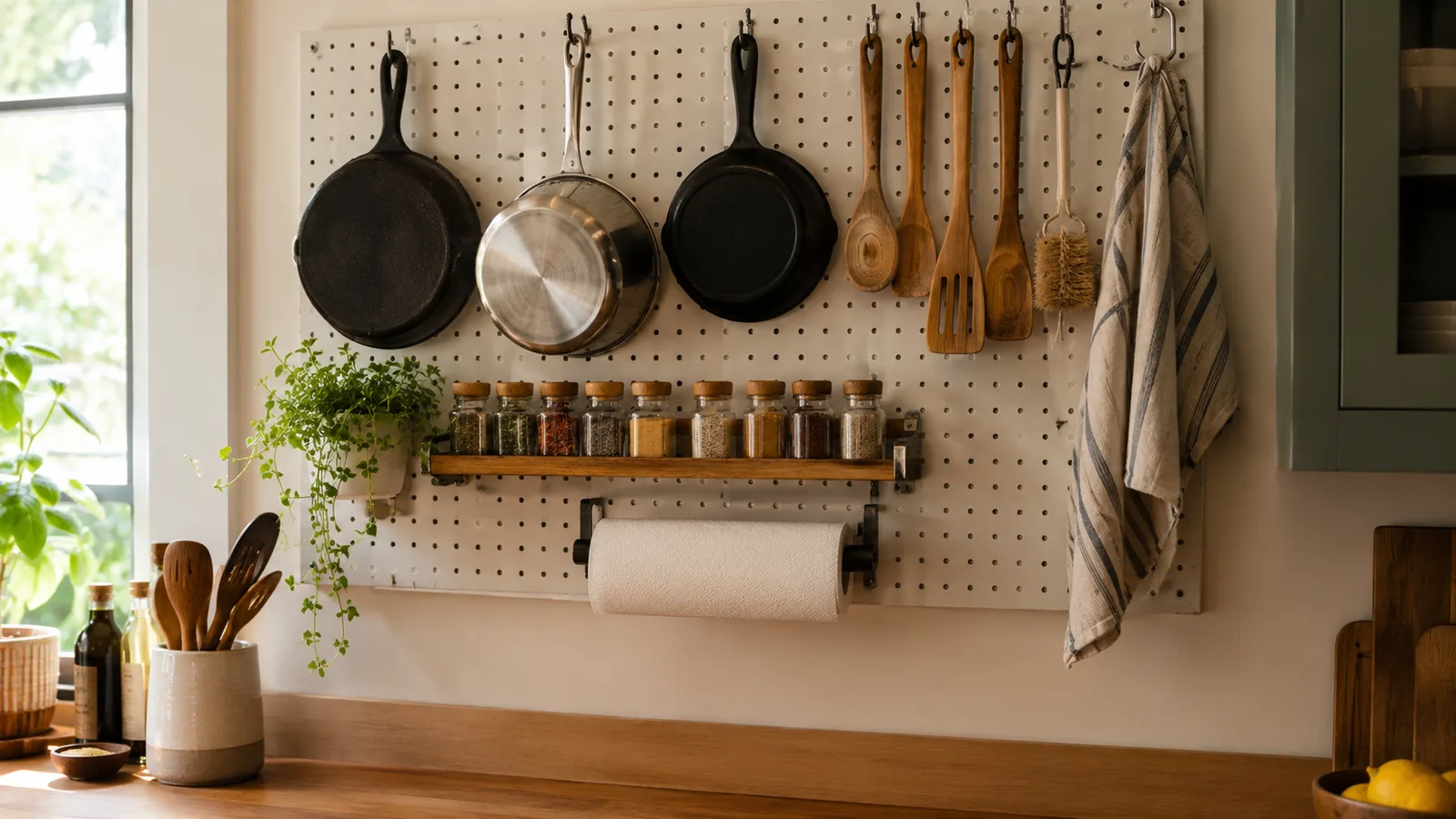
Walls are the biggest unused storage space in a tiny kitchen.
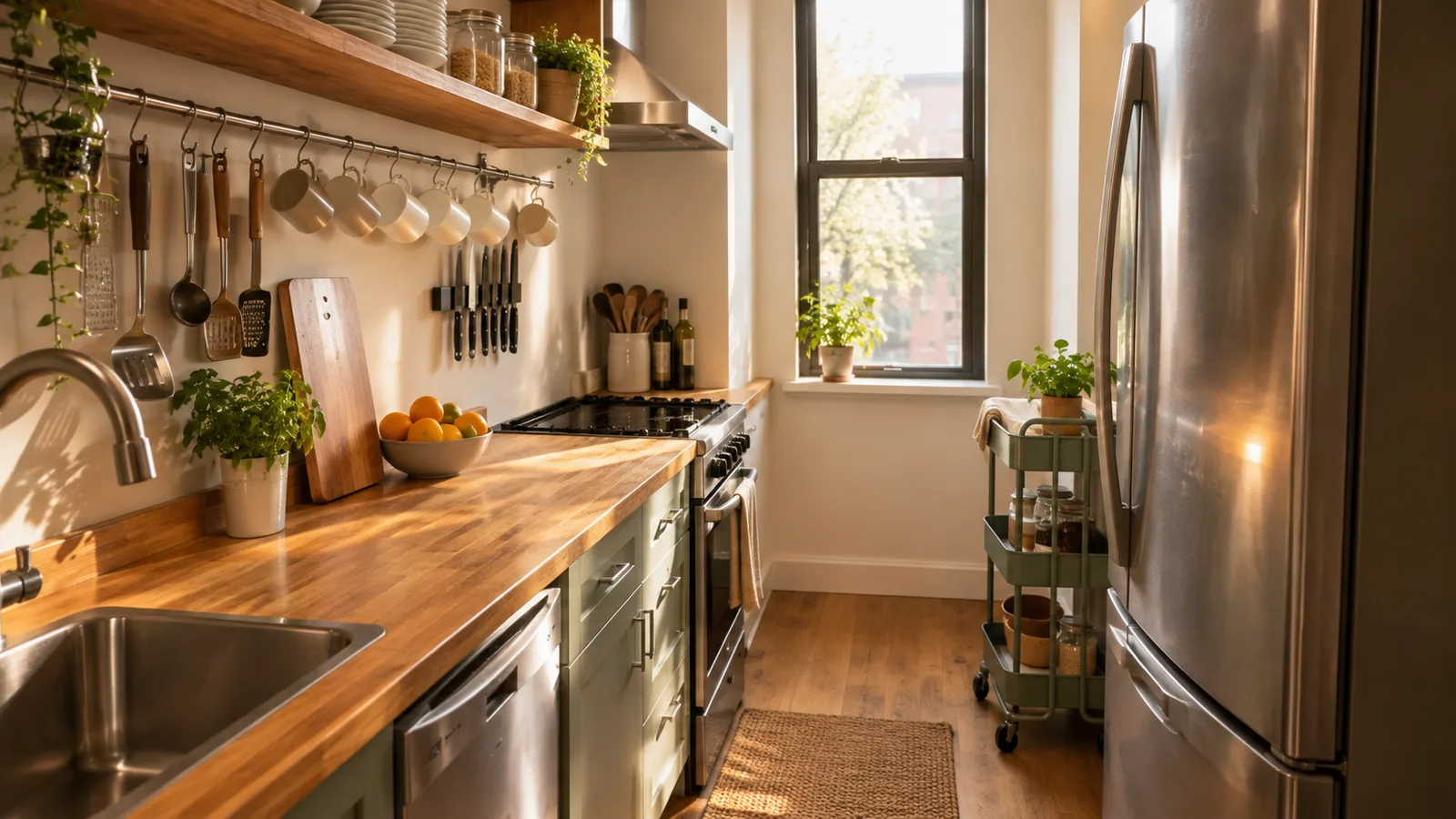
- Rail and S-hooks under a cabinet or on a backsplash for utensils, mugs and small pans.
- Pegboard for pots, pans and tools you can rearrange as your needs change.
- Magnetic knife strip, which frees a whole drawer or counter spot taken up by a knife block.
- One open shelf above the counter for everyday plates and glasses. Keep it tidy and limit it to things you use daily.
- Over-the-sink shelf that stands on the counter on either side of the sink, for soap and a drying rack.
Renting? Many rails, hooks and spice racks come in adhesive or tension-mount versions. Check the weight rating and keep heavy cast iron on screw-mounted hardware only (with permission).
Step 4: Make Cabinets Hold More
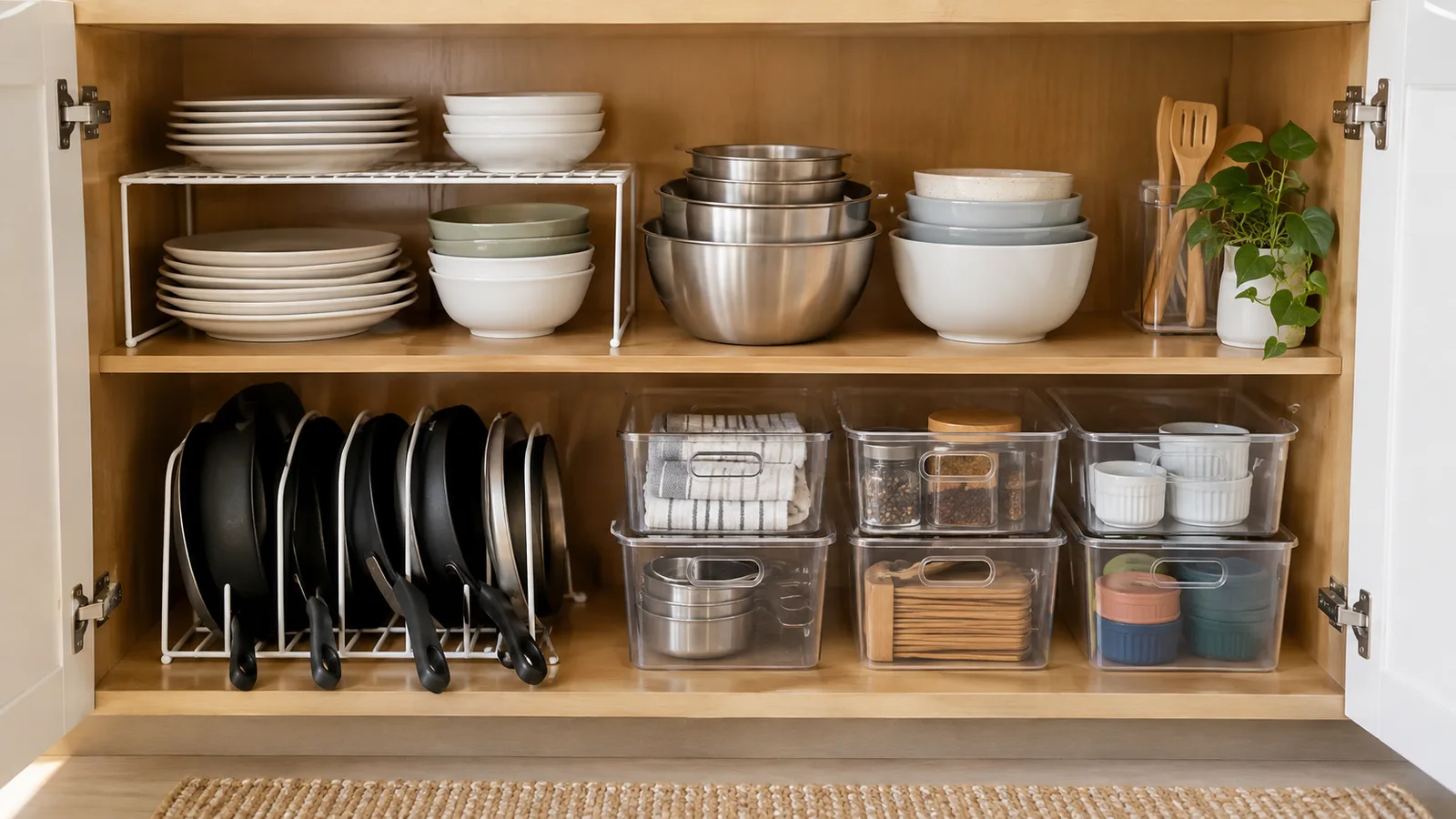
The cabinets you do have are often half empty above the plates. Fix that with:
- Shelf risers to create a second level for plates and bowls.
- Vertical pan organizers so you can pull out one skillet without lifting the whole stack.
- Door-mounted racks for lids, foil and wrap.
- Turntables in corner cabinets and for oils and sauces.
- Clear, square containers for dry goods. Square containers waste less space than round ones.
Step 5: Add Freestanding Storage
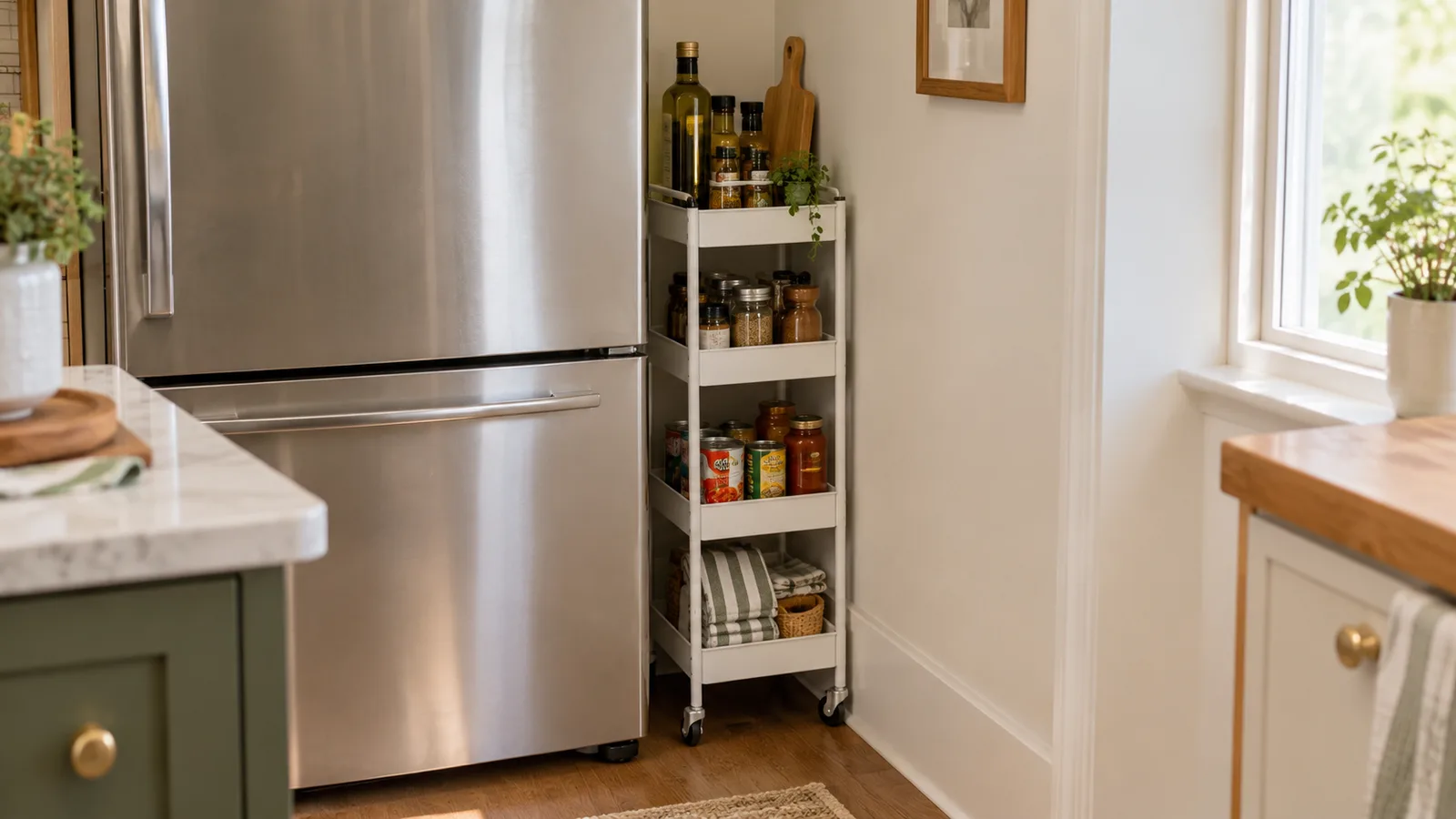
Freestanding pieces add real storage and leave with you when you move.
- Slim rolling cart (often 5–7 in wide) for the gap beside the fridge or between the counter and the wall.
- Microwave or utility cart that gets the microwave off the counter and adds shelves underneath.
- Bakers rack on an empty wall for appliances, bowls and pantry items.
- Over-the-fridge baskets for things you rarely need, like party platters or backup paper towels.
- Rolling island or butcher block cart for extra prep space, if there's at least about 36 in of walkway around it.
Measure gaps carefully, including baseboards, before you buy. A cart that's half an inch too wide won't fit.
Step 6: Keep the Counters Clear
A counter is a workspace, not storage. Try to keep only two or three things on it: maybe the coffee maker, a utensil crock by the stove, and a fruit bowl. Everything else goes on the wall, in a cabinet, or on a cart. In a tiny kitchen, clear counters make the biggest visual difference of all.
Small Kitchen Storage Ideas Compared
| Idea | Space gained | Renter-friendly? | Best for |
|---|---|---|---|
| Rail and hooks | Medium | Adhesive versions exist | Utensils, mugs |
| Pegboard | Large | Usually needs screws | Pans and tools |
| Magnetic knife strip | Small | Adhesive versions exist | Knives, metal tools |
| Shelf risers | Medium | Yes | Plates and bowls |
| Slim rolling cart | Medium | Yes | Pantry items, oils |
| Over-the-sink shelf | Small | Yes | Soap, drying dishes |
| Bakers rack | Large | Yes | Appliances, bowls |
Small Kitchen Fixes by Budget
| Budget | What to do first |
|---|---|
| Free | Purge duplicates, set up zones, move rarely used items out of the kitchen, clear the counters |
| Under $50 | Shelf risers, a magnetic knife strip, adhesive hooks, a turntable for oils |
| $50–150 | Slim rolling cart, over-the-sink shelf, rail system with S-hooks |
| $150+ | Bakers rack or rolling island, pegboard wall, a microwave cart |
Spend in that order. Most small kitchens feel much bigger after the free steps alone, and you'll know exactly which organizers you still need.
Keep It Working: A 10-Minute Reset
Small kitchens get cluttered fast because there's nowhere to hide anything. A short daily or every-other-day reset keeps the system working:
- Clear the counters back to your two or three everyday items.
- Return tools to their zone, not just to "a drawer."
- Empty the dish rack so it's ready for the next meal.
- Do a quick fridge scan before shopping so you don't buy duplicates you then have to store.
Once a season, repeat the edit from Step 1. Gadgets, mugs and food storage containers creep back in.
Common Mistakes
- Buying organizers first. Edit and measure before you shop.
- Storing everything in sight. Open storage only looks good when it's limited to things you use.
- Ignoring the door swing. Carts and racks shouldn't block the fridge, oven or dishwasher doors.
- Overloading adhesive hooks. Check the weight limit and keep heavy items on screw-mounted hardware.
If the fridge door itself gets in the way, see whether reversing it helps in our fridge door reversal guide. For more layout ideas, read small farmhouse kitchens.
Helpful Small Kitchen Organizers
SimpleHouseware
Slim Rolling Storage Cart
Turns the 5 to 7 inch gap beside the fridge into a pantry for spices and oils.
- ✓Slides beside the fridge
- ✓Three shelves
- ✓No installation
Magnetic Knife Strip, 16 in
Moving knives to the wall frees a whole drawer or a block's worth of counter.
- ✓Frees a drawer or counter spot
- ✓Holds knives and metal tools
- ✓Wall or adhesive mount options
Expandable Cabinet Shelf Riser
Adds a second level for plates and bowls inside the cabinets you already have.
- ✓Doubles plate storage
- ✓No tools needed
- ✓Adjusts to cabinet width
Over-the-Sink Dish Drying Rack
Gets the dish rack off the counter and drains straight into the sink.
- ✓Frees counter space
- ✓Drains into the sink
- ✓Adjustable width
As an Amazon Associate, we earn from qualifying purchases.
The Bottom Line
To organize a small kitchen with no storage:
- Edit first: keep only what you use weekly in the kitchen.
- Store by zone: prep, cooking, cleaning and serving.
- Go vertical: rails, pegboard, a magnetic knife strip and one open shelf.
- Add freestanding pieces like a slim rolling cart that move with you.
- Keep counters clear of everything except two or three daily items.