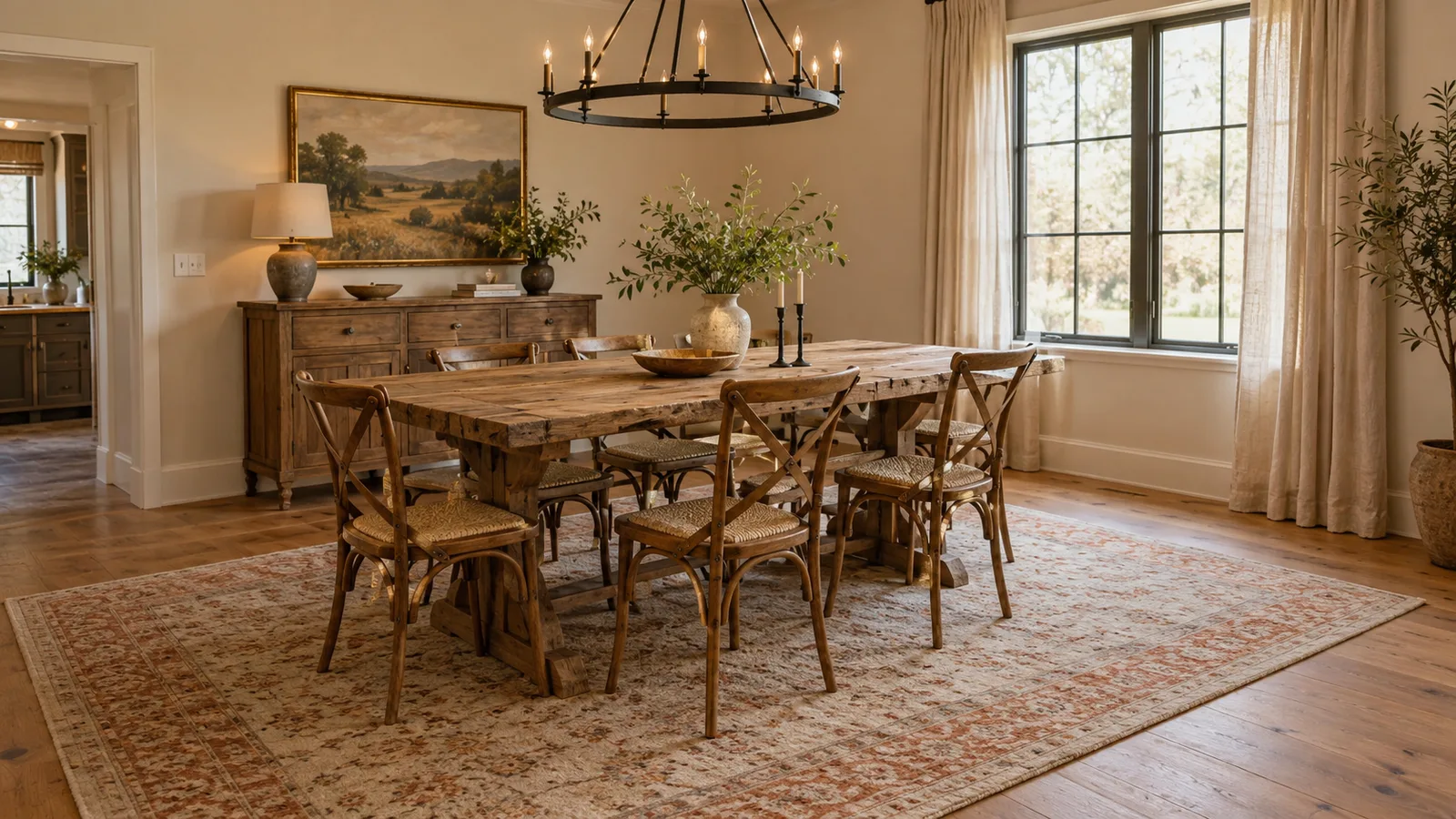
Short answer: a dining room rug should extend about 24 inches past the table on every side, so chairs stay fully on the rug when someone pulls one out to sit down. For most 6-seat tables (about 40 x 72 inches), that means an 8x10 rug. Larger 8-seat tables usually need a 9x12.
The dining room is the one place where a rug that's "a little small" causes daily annoyance: chair legs catch on the edge every time someone sits down. Size it from the table out, and it will look intentional and work properly.
Enter your table and room size to get the right rug
Find the right rug size for your living room, dining room or bedroom.
The 24-Inch Rule
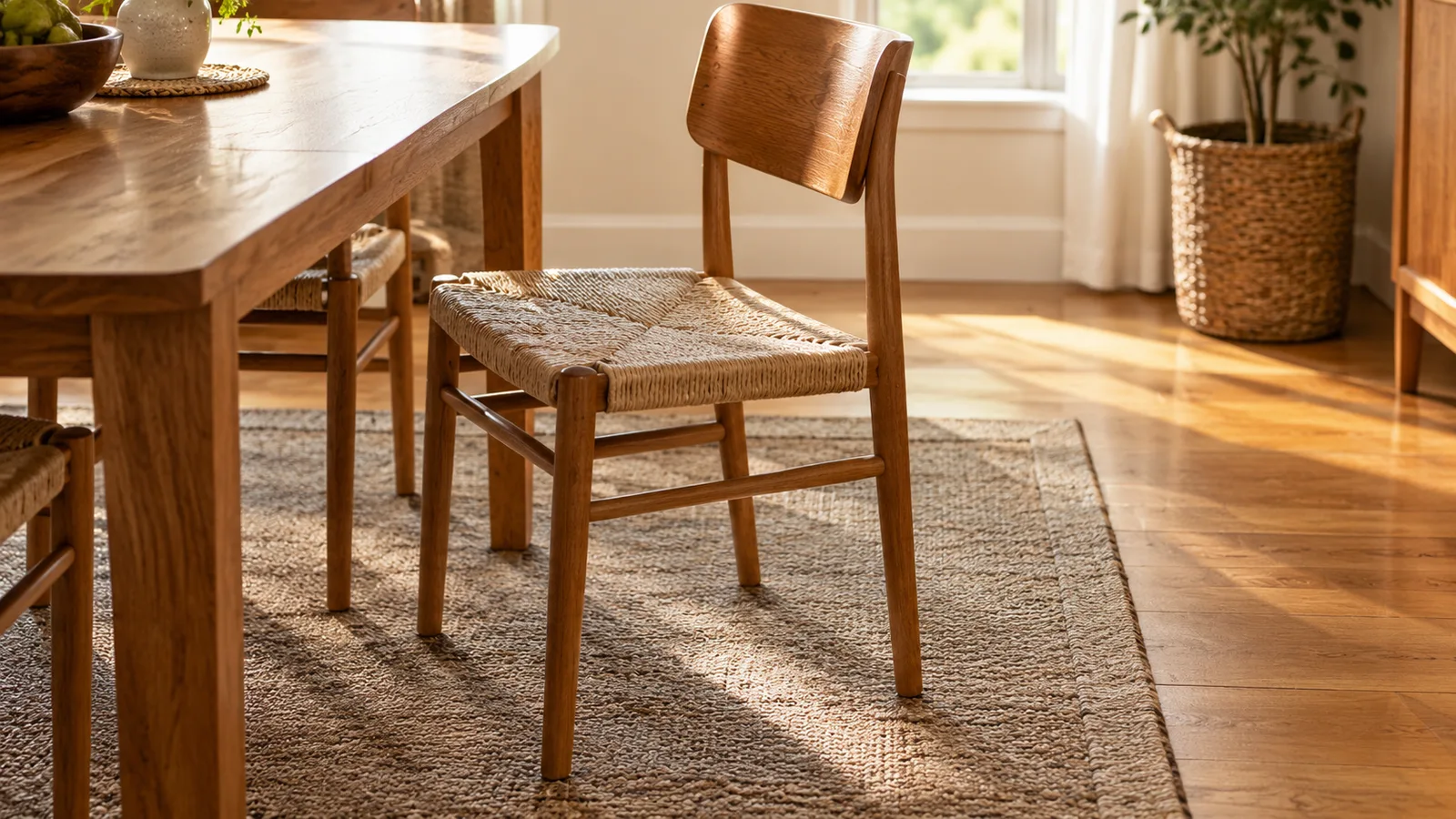
Measure your table, then add 48 inches to both the length and the width (24 inches on each side). That's the smallest rug that keeps pulled-out chairs on the rug.
- Rectangular table: (table length + 48) x (table width + 48)
- Round table: (diameter + 48) in both directions
- Round up to the next standard rug size that covers both numbers
Our rug size calculator does this for you, then checks that the rug still leaves bare floor around it in your room (about 18 inches in most rooms, 12 inches in rooms narrower than 11 feet).
Rug Size Chart by Table Size
These sizes come from the rug size calculator for a roomy 13 x 15 ft dining room.
| Table | Typical seats | Minimum rug (ft) | Standard rug to buy |
|---|---|---|---|
| 36" x 60" rectangle | 4 | 7 x 9 | 8' x 10' |
| 48" round | 4 | 8 x 8 | 8' round or 8' x 10' |
| 40" x 72" rectangle | 6 | 7.5 x 10 | 8' x 10' |
| 60" round | 6 | 9 x 9 | 9' round or 9' x 12' |
| 42" x 96" rectangle | 8 | 7.5 x 12 | 9' x 12' |
If your table has leaves, size the rug for the table with the leaf in if you use it often, or at least for the size you use most days.
Before you buy, pull a chair out as if you're sitting down and mark where the back legs land with painter's tape. Do it on all four sides of the table. The rug needs to reach past every piece of tape.
Round Tables Look Best on Round Rugs
A round table on a rectangular rug works, but a round rug echoes the table's shape and usually looks more natural, especially in a breakfast nook or square room. Use the same rule: diameter plus 48 inches. A 48-inch round table needs an 8-foot round rug; a 60-inch round table needs a 9-foot round rug.
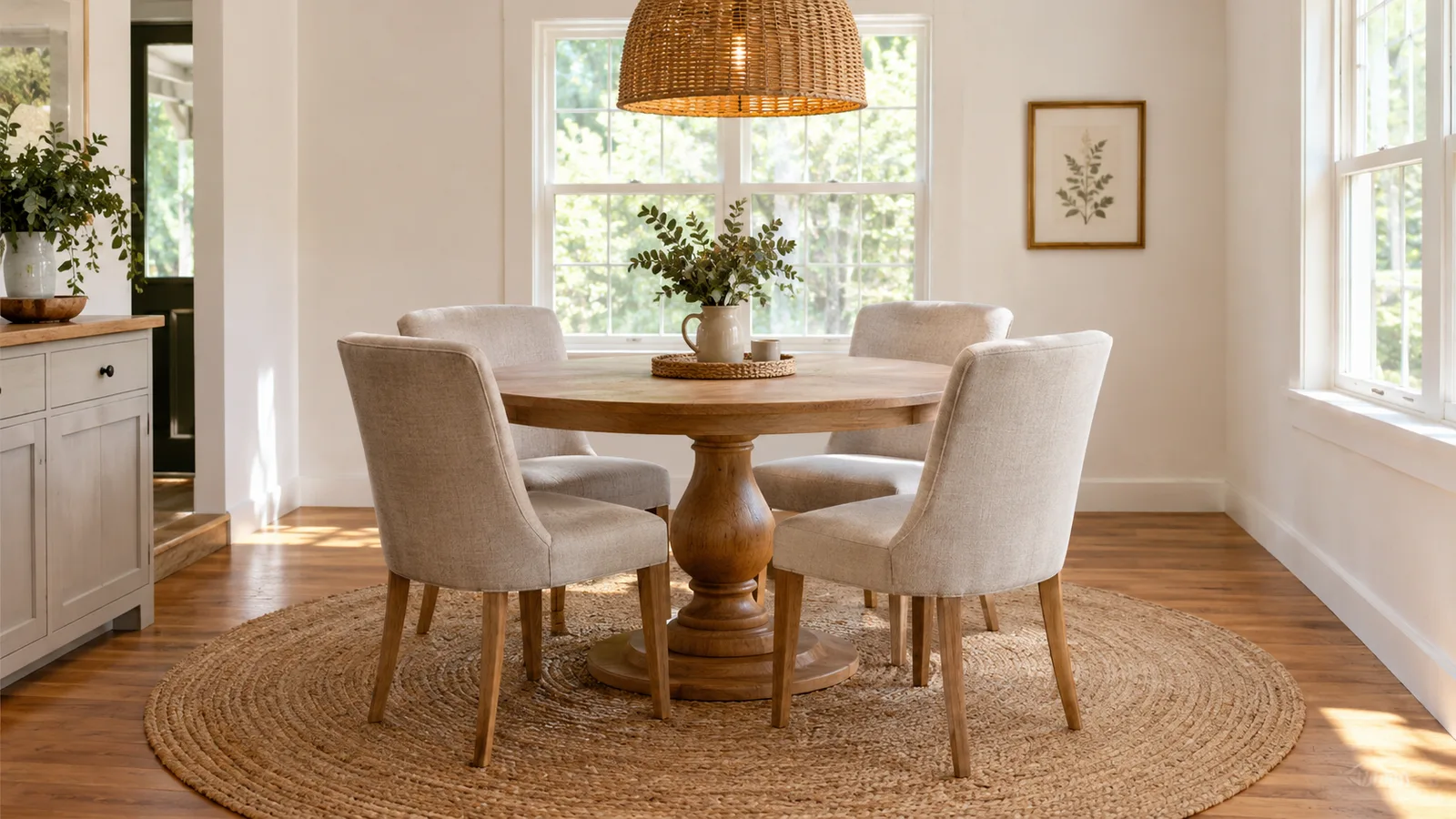
If you can't find a round rug that large, a square rug of the same size is a good fallback.
When Your Dining Room Is Too Small for a Rug
Sometimes the math doesn't work. The calculator flags these cases, and they're more common than you'd think:
| Room | Table | Rug needed | Largest rug that fits | Verdict |
|---|---|---|---|---|
| 12' x 10' | 36" x 60" | 7 x 9 ft | 8' x 10' | Fits: 8' x 10' |
| 11' x 10' | 40" x 72" | 7.5 x 10 ft | 8 x 9 ft space | Too small |
| 12' x 11' | 40" x 72" | 7.5 x 10 ft | 8 x 9 ft space | Too small |
| 10' x 10' | 48" round | 8 x 8 ft | 8 x 8 ft space | Too tight |
When the room is too small, you have three good options:
- Skip the rug. A bare wood or tile floor under a dining table is completely normal, easier to clean, and chairs slide better.
- Go smaller with a round table. Switching to a round pedestal table often frees enough space for a round rug.
- Use a custom size or a rug in a nearby size that leaves a slimmer floor border, as long as chairs still stay on it.
What you should avoid is a rug that sits only under the table, with the chairs half on and half off. That's the version that trips people and wears unevenly.
Choosing a Rug That Works Under a Table
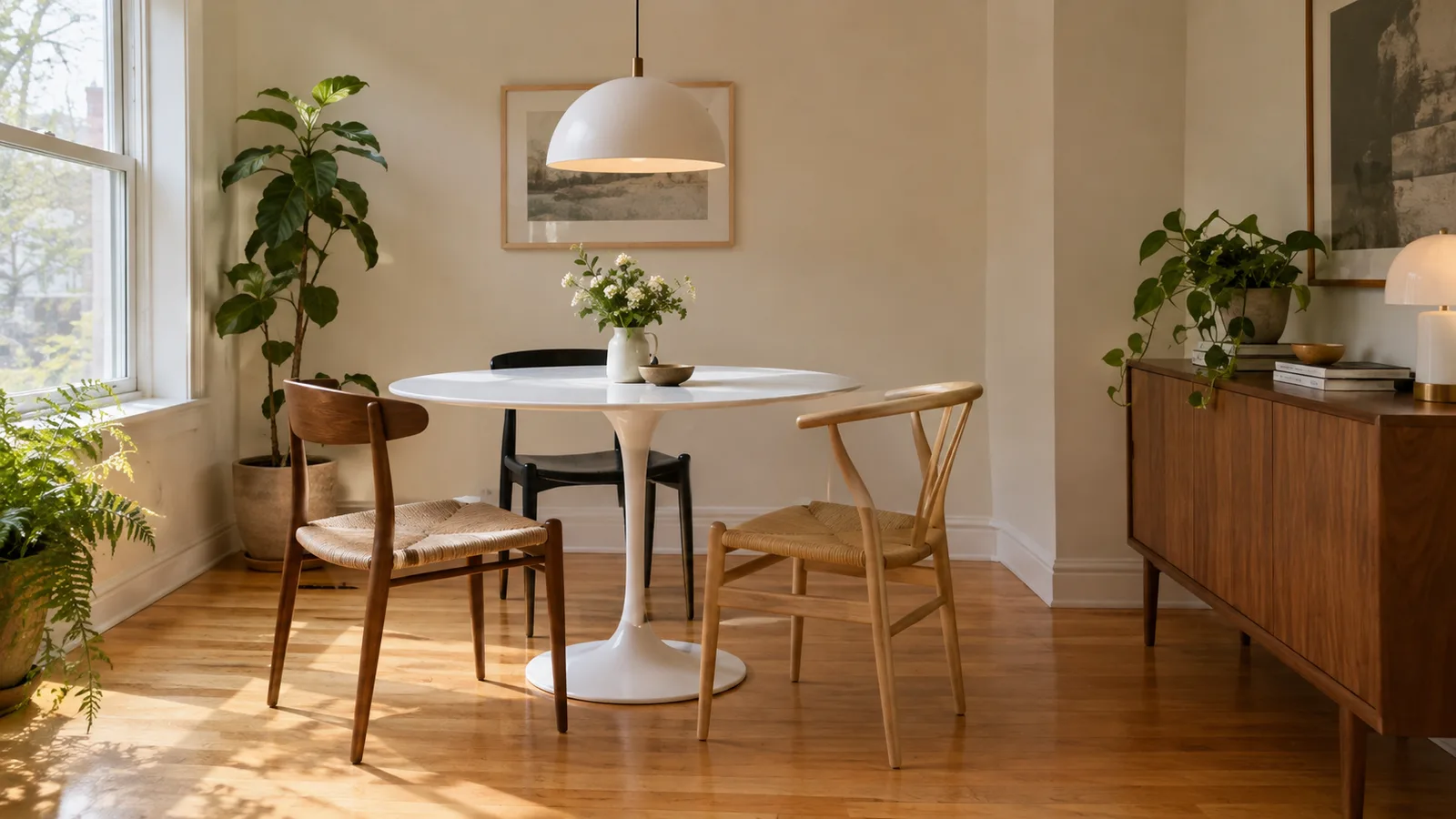
Size is only half of it. Dining rugs take more abuse than any other rug in the house: chairs dragging, crumbs, spills.
- Low pile or flat-weave. Chairs slide easily and crumbs don't disappear into the fibers. Thick shag and high-pile rugs make chairs wobble.
- Washable or wipeable. Machine-washable rugs and wool flat-weaves are the easiest to live with if you have kids.
- Busy patterns hide stains. A vintage-style or multi-tone pattern forgives spills far better than a solid cream rug.
- Skip natural jute if you eat messy food. Jute looks great but stains easily and is hard to clean. Wool or a jute-wool blend is more forgiving.
- Use a rug pad. A thin felt-and-rubber pad keeps the rug from shifting when chairs move, without adding height.
How the Dining Rug Relates to the Rest of the Room
In an open-plan space, the dining rug also defines the dining zone. Keep at least a couple of feet of floor between the dining rug and the living room rug so they read as two separate areas, and don't let them overlap.
The rug should also be centered on the table, not the room, and the table should be centered under the light fixture. If your chandelier isn't centered, see our guide to farmhouse dining room lighting for how to size and position it.
For living room and bedroom rugs, see what size rug for a living room and what size rug for a queen bed.
Rugs and Pads Worth a Look
Washable rug
Washable Low-Pile Area Rug, 8x10
- ✓Machine washable
- ✓Chairs slide easily
- ✓Thin enough for doorways
Wool dhurrie
Wool Flat-Weave Dhurrie Rug, 9x12
- ✓Hard-wearing wool
- ✓Reversible
- ✓No pile to trap crumbs
Round rug
8 ft Round Area Rug
- ✓Fits 48 inch round tables
- ✓Echoes a round table
- ✓Works in square rooms
Rug pad
Felt and Rubber Rug Pad
- ✓Stops shifting under chairs
- ✓Thin profile
- ✓Protects hardwood
As an Amazon Associate, we earn from qualifying purchases.
The Bottom Line
- Add 24 inches on every side of the table (48 inches to each dimension).
- 6-seat tables usually need an 8' x 10'; 8-seat tables a 9' x 12'.
- Round tables look best on round rugs: 48" table → 8' round, 60" table → 9' round.
- If the room can't fit a rug that clears pulled-out chairs, skip the rug rather than buying one that's too small.
- Choose low pile or flat-weave, and use a thin rug pad.
Put your table and room size into the free rug size calculator to get a size that fits both.