Short answer: most living rooms need an 8x10 rug. The rug should be at least 6 inches wider than the sofa on each end and deep enough to slide under the front legs of the sofa and chairs. Leave about 12 to 18 inches of bare floor between the rug and the walls.
The most common mistake is buying a rug that's too small. A 5x8 under a full-size sofa makes the furniture look like it's floating and makes the whole room feel smaller, not bigger. Here's how to get the size right the first time.
Enter your sofa and room size to get the right rug
Find the right rug size for your living room, dining room or bedroom.
Standard Rug Sizes
Area rugs come in a handful of standard sizes. Knowing them makes shopping much faster.
| Rug size | In inches | Typical use |
|---|---|---|
| 5' x 8' | 60" x 96" | Small living rooms with a loveseat, under a coffee table only, home offices |
| 6' x 9' | 72" x 108" | Small living rooms, smaller dining tables |
| 8' x 10' | 96" x 120" | Most living rooms, queen beds, dining tables for 6 |
| 9' x 12' | 108" x 144" | Large living rooms, long sofas, king beds |
| 10' x 14' | 120" x 168" | Large open-plan spaces, sectionals, big dining tables |
The Living Room Rule: Front Legs On
There are three ways to place a living room rug, but one works in almost every room.
- All legs on: every piece of furniture sits entirely on the rug. It looks luxurious but needs a very large rug, usually 9x12 or bigger.
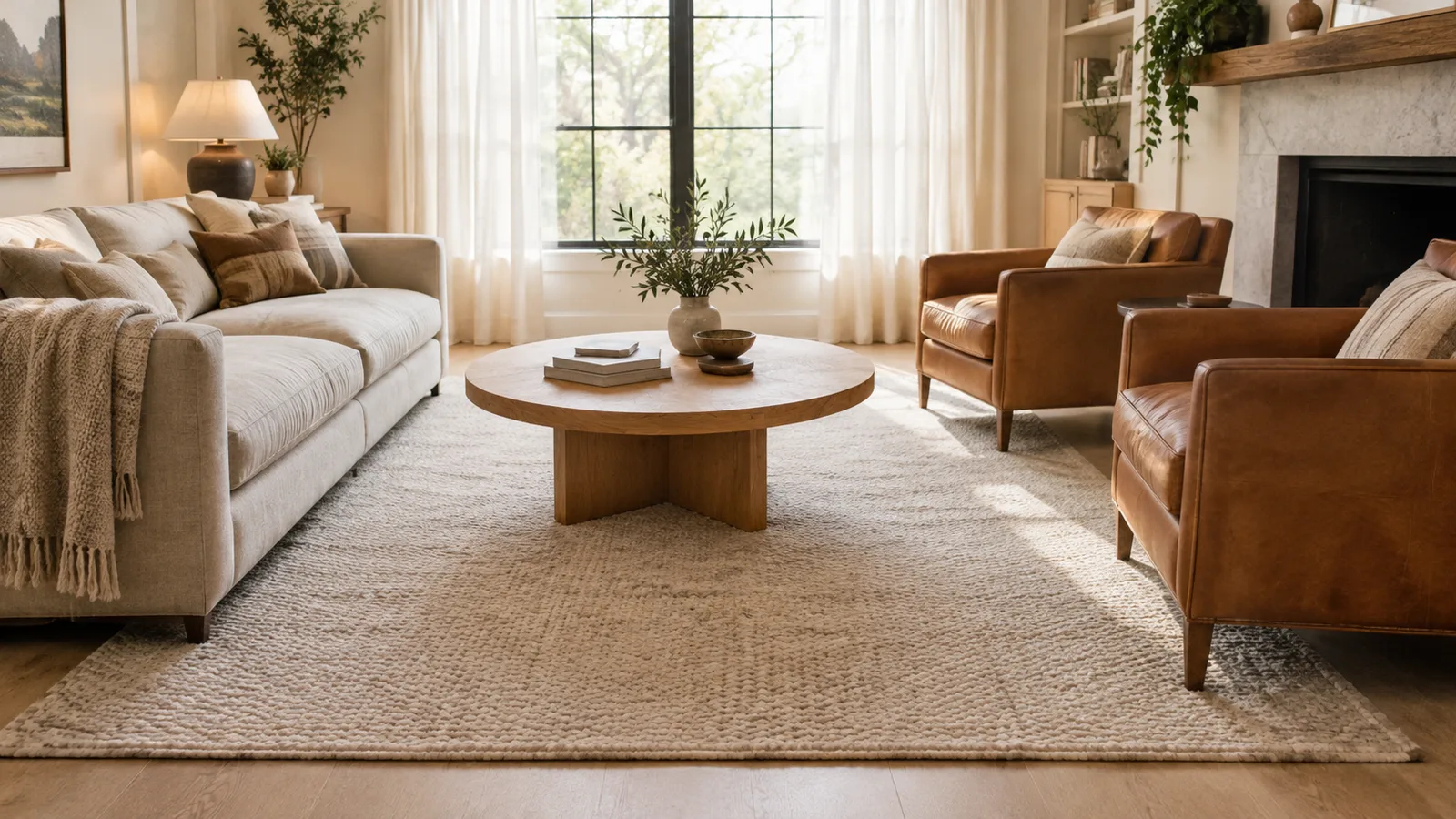
- Front legs on: the front legs of the sofa and chairs sit on the rug and the back legs sit on the floor. This is the go-to layout. It ties the seating group together without needing a huge rug.
- No legs on: the rug floats in front of the sofa. This only works with a small loveseat in a tight room, and usually looks undersized.
For front legs on, size the rug with two measurements:
- Width: the length of your sofa plus about 6 inches on each end. An 84-inch (7-foot) sofa needs a rug at least 96 inches (8 feet) wide.
- Depth: enough to reach from under the front legs of the sofa, across the coffee table, to under the front legs of the chairs opposite. In most living rooms that's 10 to 12 feet.
Mark the rug size on the floor with painter's tape before you buy. It takes five minutes and shows you instantly whether a rug will feel generous or skimpy in your room.
How Much Floor Should Show Around a Rug?
A rug that runs wall to wall looks like carpet. Leave a border of bare floor:
- Typical rooms: about 12 to 18 inches between the rug and each wall
- Very small rooms: about 8 to 12 inches
So the largest rug that fits a room is roughly the room size minus twice the border. A 12 x 15-foot living room with an 18-inch border can take a rug up to 9 x 12 feet.
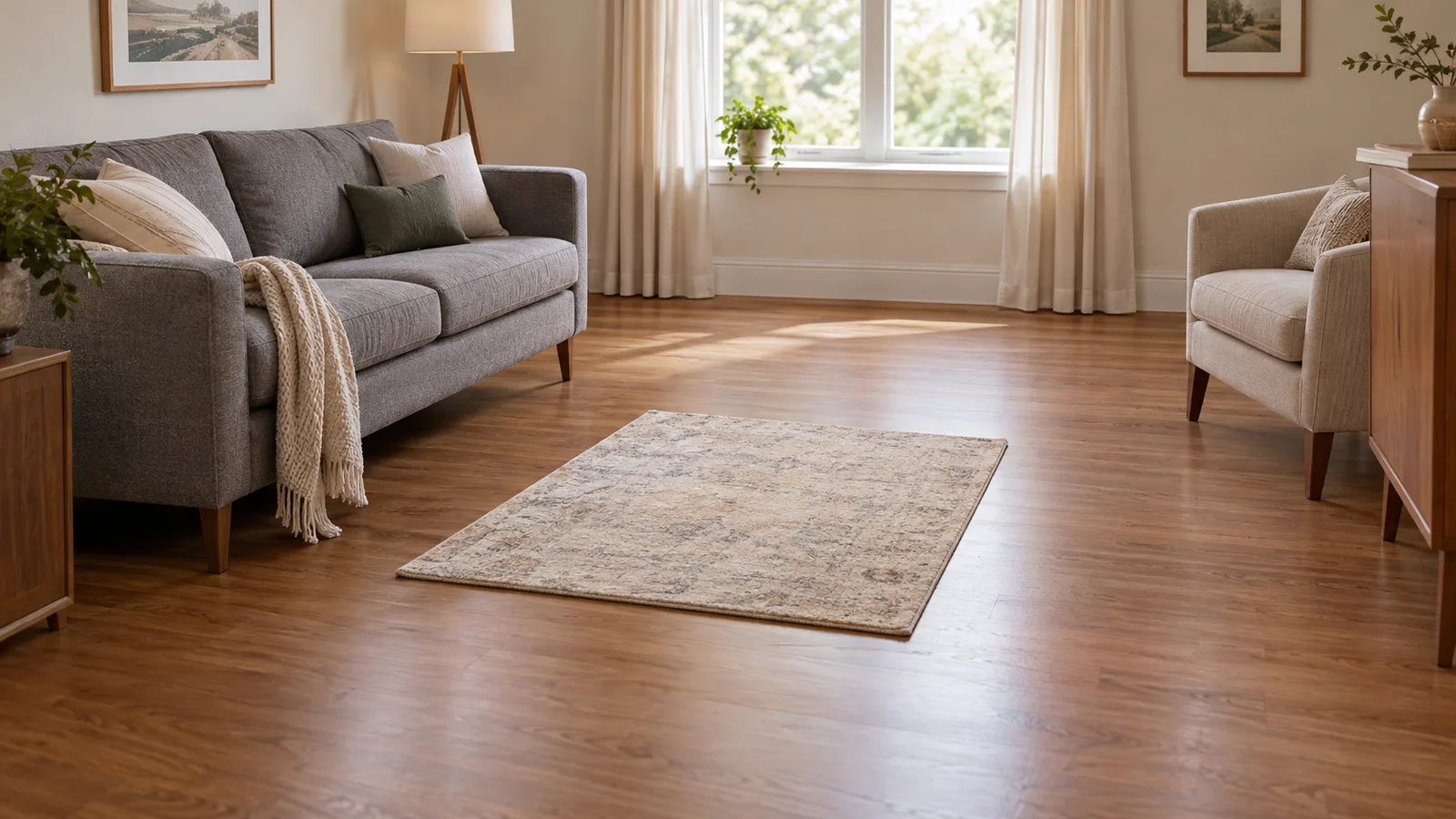
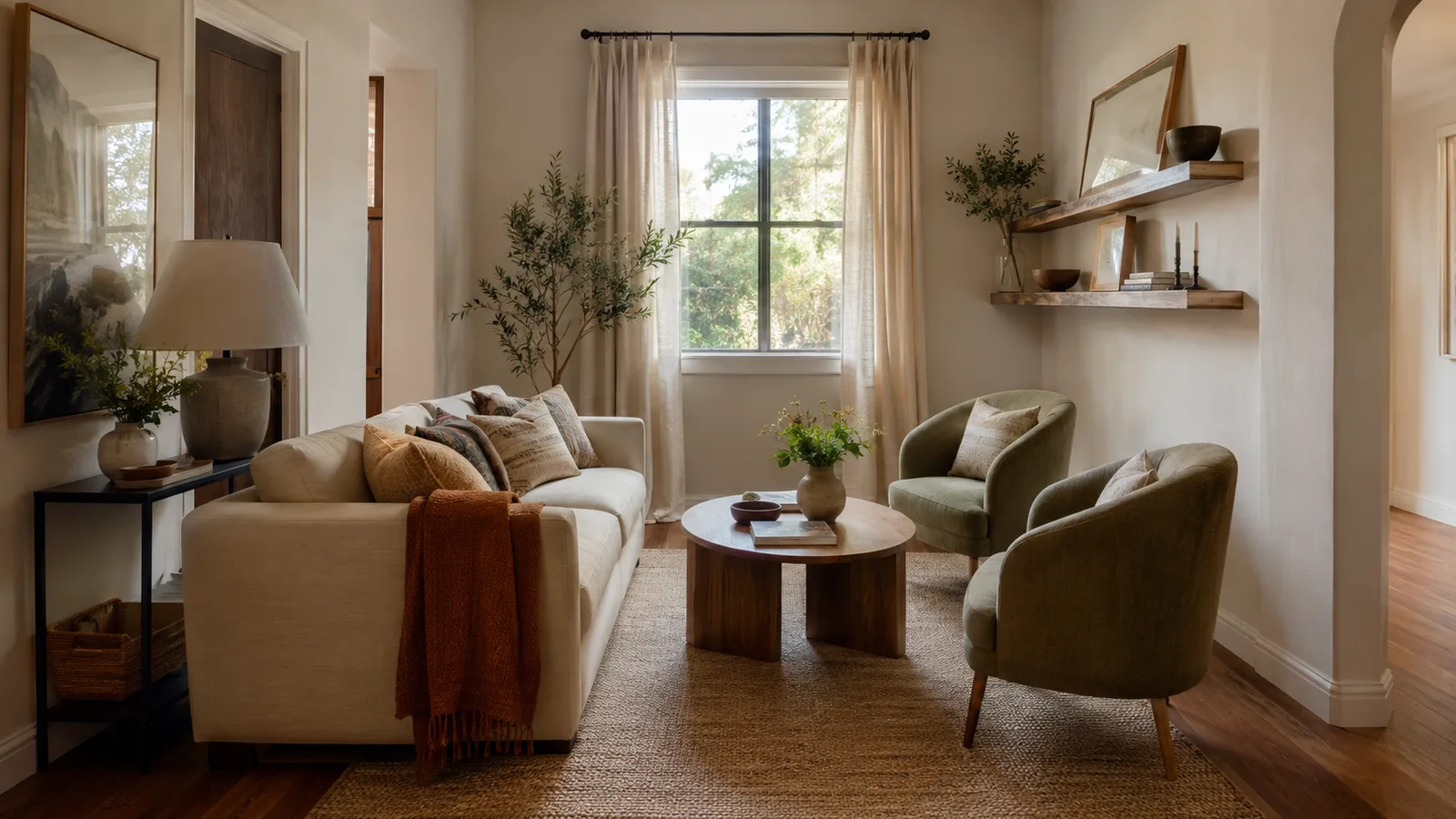
The photo above shows the classic mistake: the rug doesn't reach any furniture, so the seating looks disconnected and the room feels emptier.
Quick Guide by Sofa Size
| Sofa length | Minimum rug width | Usual best size |
|---|---|---|
| Loveseat (about 60") | 72" (6 ft) | 6x9 |
| Apartment sofa (about 72") | 84" (7 ft) | 8x10 |
| Standard sofa (about 84") | 96" (8 ft) | 8x10 |
| Long sofa (about 90–96") | 102–108" | 9x12 |
| Sectional | Depends on layout | 9x12 or 10x14 |
If your room is too small for the size the sofa calls for, choose the largest rug that still leaves an 8 to 12-inch border. A slightly smaller rug with the front legs on still looks better than a tiny rug in the middle.
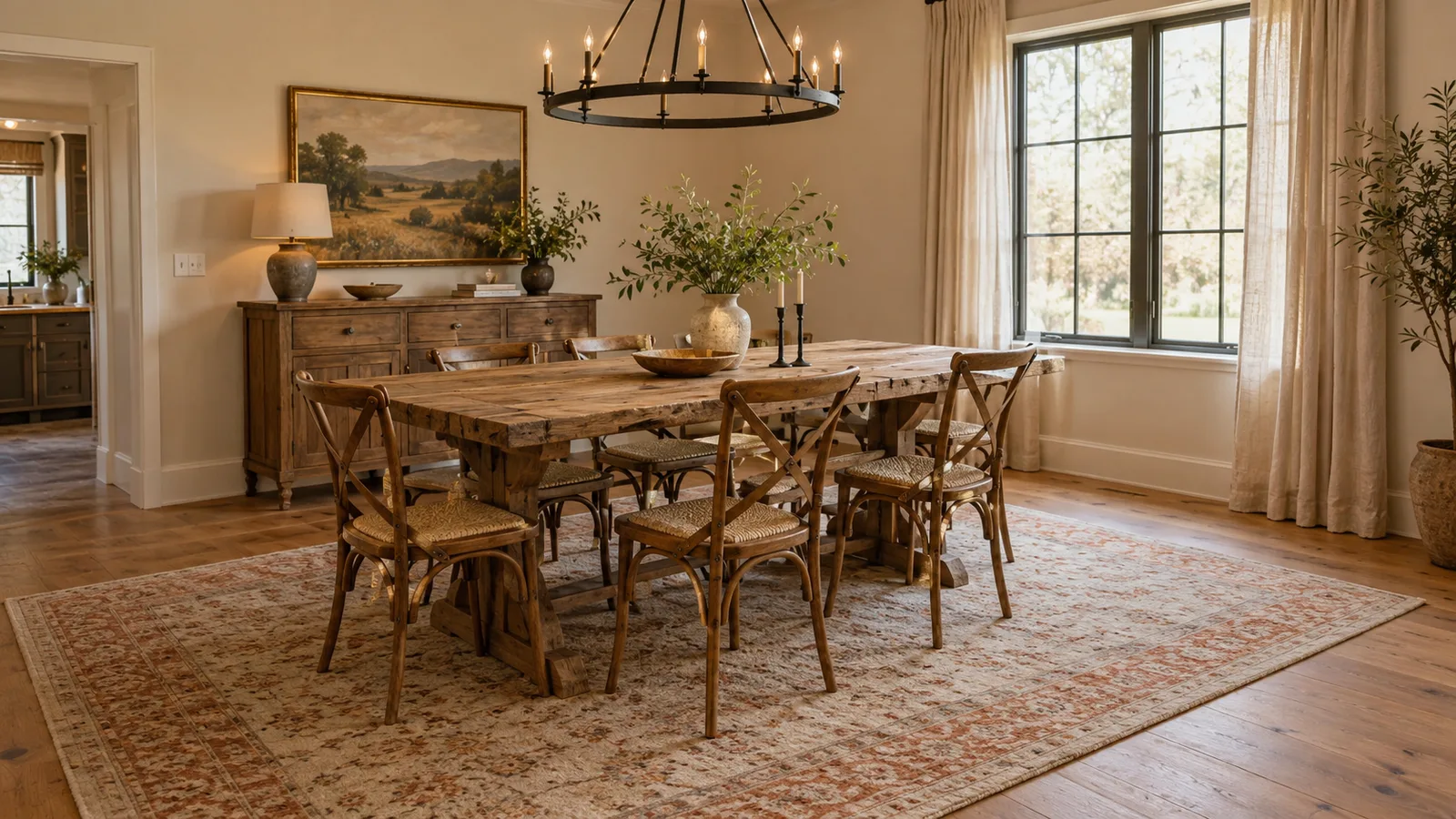
Dining Room Rugs
Dining rugs follow a different rule: chairs should stay on the rug when they're pulled out. Otherwise, the back legs catch on the edge every time someone sits down.
The rule: take your table size and add 24 inches on every side.
- A 72 x 40-inch table needs a rug at least 120 x 88 inches, so an 8x10 works.
- A 48-inch round table needs about 96 inches across, so an 8-foot round or an 8x10 rectangle.
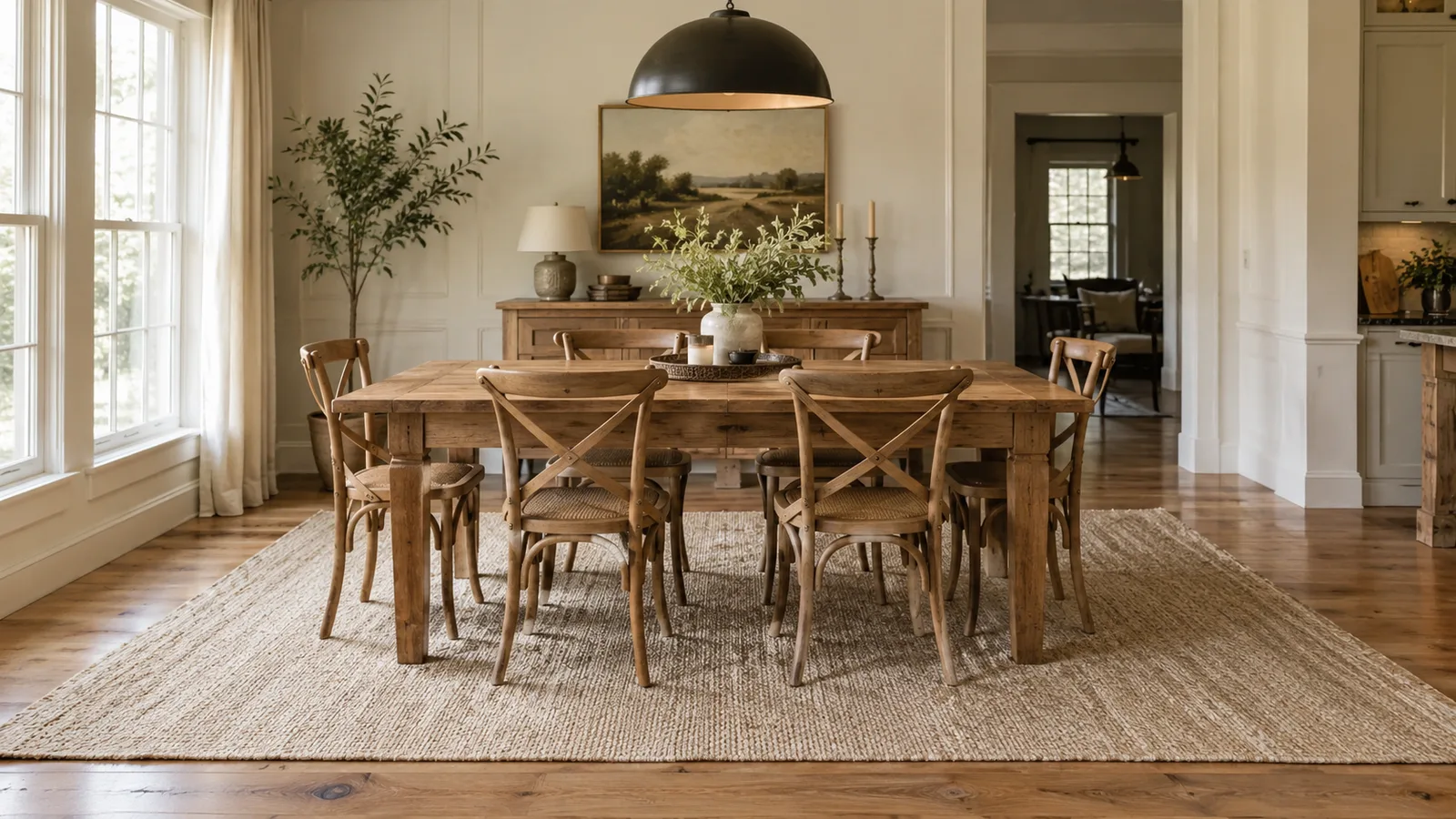
Choose a low-pile or flatweave rug for dining rooms. It's easier to slide chairs on and to clean up crumbs.
Bedroom Rugs
In a bedroom, the rug should extend beyond the sides of the bed so your feet land on something soft when you get up.
- Queen bed: usually an 8x10, placed sideways under the lower two-thirds of the bed
- King bed: usually a 9x12
- Aim for about 18 to 24 inches of rug showing on each side of the bed
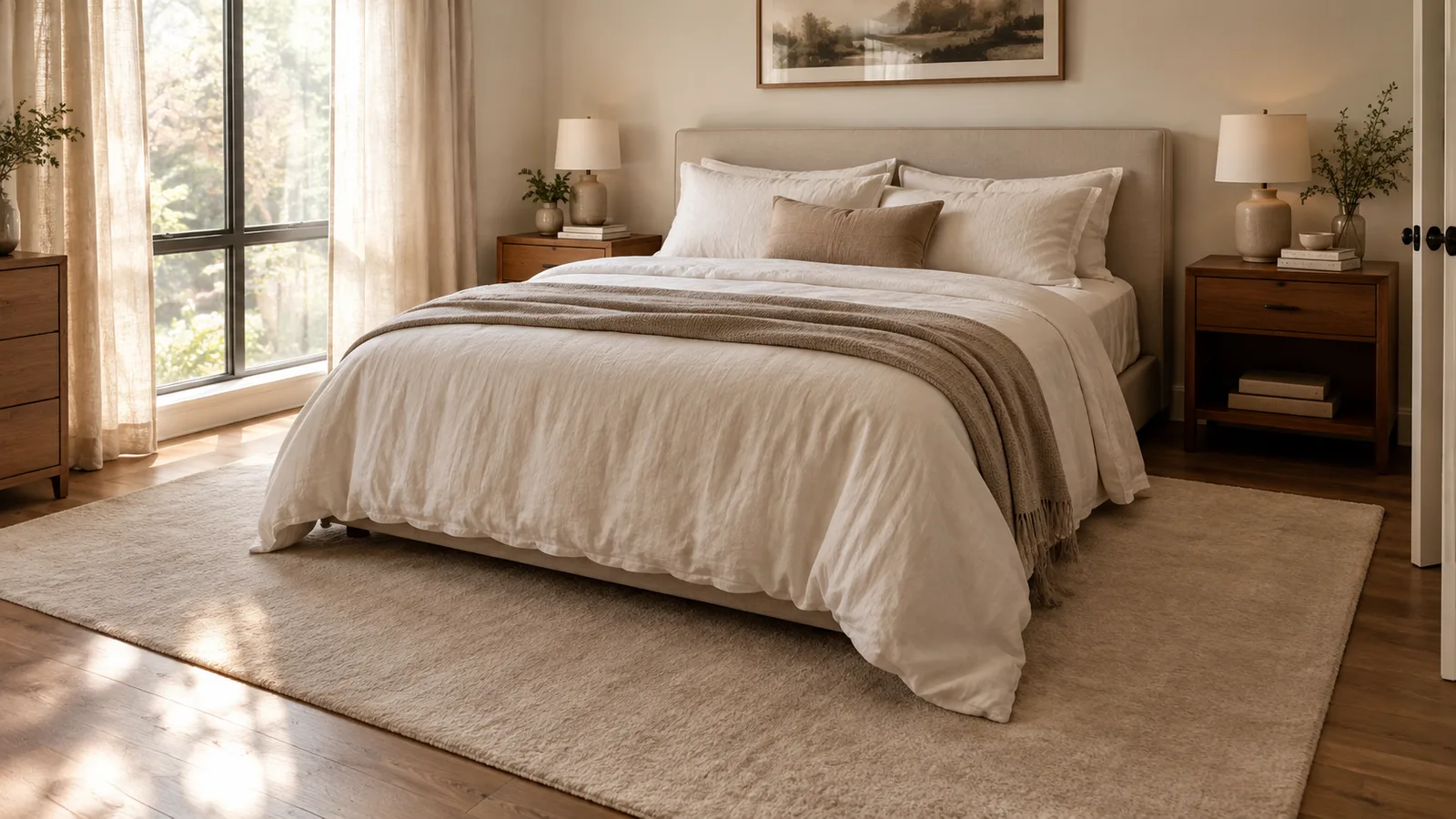
If a large rug isn't in the budget, two runners on either side of the bed do the same job for less.
Choosing a Rug Material for a Living Room
Size comes first, but the material decides how the rug wears in a busy room.
| Material | Feel | Durability | Good to know |
|---|---|---|---|
| Wool | Soft, springy | Very durable | Naturally resists crushing and soil; can shed at first |
| Polypropylene | Smooth, slightly firm | Durable, stain-resistant | Affordable and easy to clean; can flatten in high traffic |
| Jute or sisal | Coarse, textured | Durable but absorbent | Great texture; stains and spills are hard to remove |
| Cotton flatweave | Thin, soft | Moderate | Often washable; slides without a pad |
| Washable rugs | Thin, low pile | Moderate | Removable cover goes in the washer; good with pets and kids |
For a family living room, wool or a polypropylene rug in a low to medium pile is the easiest to live with. A busy pattern or a mid-tone color also hides everyday dirt much better than solid cream.
Layering is a good trick when the right size is out of budget: put a large, inexpensive jute or flatweave rug down first, then a smaller patterned rug on top in front of the sofa.
Common Rug Size Mistakes
- Buying for the price, not the room. A 5x8 is much cheaper than an 8x10, which is exactly why so many living rooms have rugs that are too small.
- Ignoring the doorways. Make sure doors can swing open over the rug, especially with thick pile.
- Skipping the rug pad. A pad keeps the rug from sliding, protects the floor and makes a thin rug feel more substantial. Buy a pad about 1 inch smaller than the rug on each side.
Rugs and Pads Worth a Look
Various
8x10 Neutral Wool Blend Area Rug
- ✓Fits most living rooms
- ✓Wool resists crushing
- ✓Neutral color works with any style
Ruggable-style
Washable Area Rug 8x10
- ✓Machine-washable cover
- ✓Low profile
- ✓Easy to swap seasonally
Mohawk / Gorilla Grip
Non-Slip Felt & Rubber Rug Pad
- ✓Stops rugs from sliding
- ✓Adds cushion
- ✓Protects hardwood floors
As an Amazon Associate, we earn from qualifying purchases.
The Bottom Line
- Living room: usually 8x10, at least 6 inches wider than the sofa on each end, with the front legs of all seating on the rug
- Leave 12–18 inches of floor around the rug (8–12 inches in very small rooms)
- Dining room: table size plus 24 inches on every side
- Bedroom: 8x10 for a queen, 9x12 for a king, with 18–24 inches showing beside the bed
Not sure which size fits your room? The free rug size calculator takes your room and furniture measurements and recommends a standard size. For the rest of the layout, see our guide to arranging furniture in a small living room.