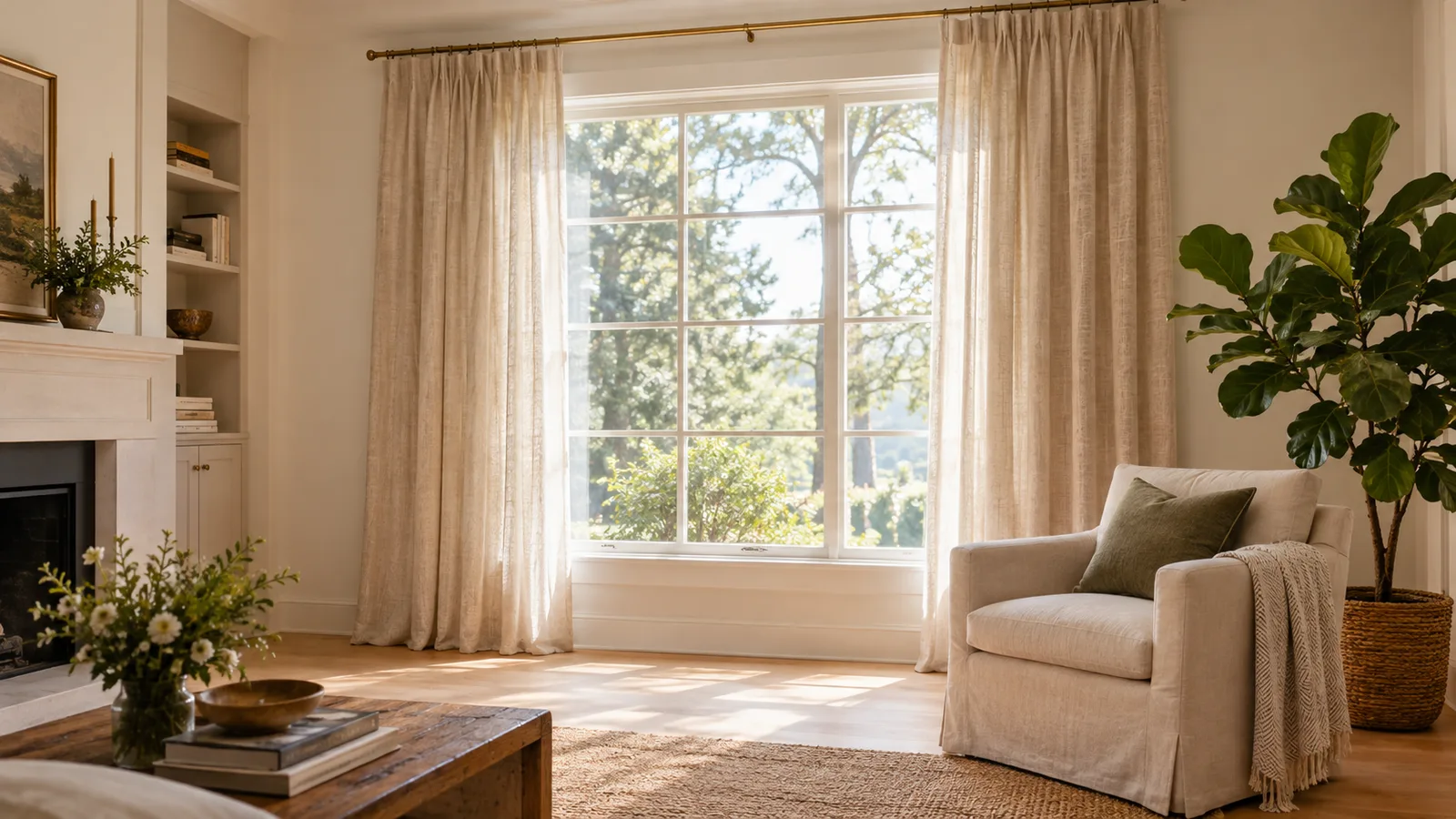
Short answer: in most rooms, curtains should just touch the floor. Hang the rod 4 to 6 inches above the window frame, or about halfway between the frame and the ceiling, and extend it 4 to 10 inches past each side of the frame. For width, the panels together should be about twice the rod width so they look full when closed.
Get those three measurements right and even inexpensive curtains look tailored. Get them wrong and the window looks smaller than it is.
Calculate your curtain length, width and number of panels
Work out curtain length, panel count and rod size for any window.
Step 1: Decide Where the Rod Goes
The rod position sets everything else, so start here.
- Height: mount the rod 4 to 6 inches above the top of the window frame, or about halfway between the frame and the ceiling. Hanging it higher makes the ceiling look taller.
- Width: extend the rod 4 to 10 inches past each side of the frame. When the curtains are open, the panels stack on the wall instead of covering the glass, so you get more light and the window looks wider.

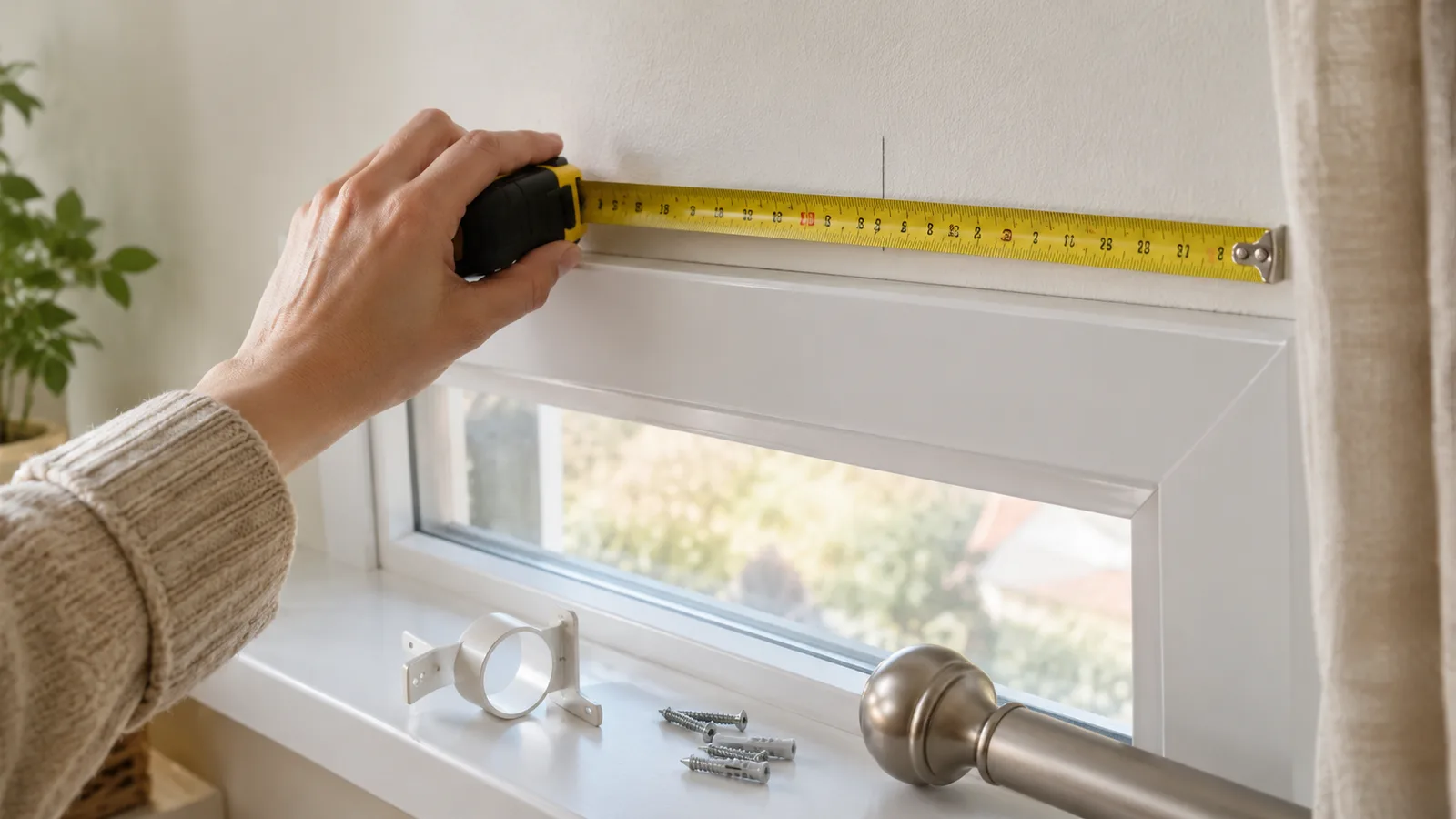
Measure the rod height and length before you buy curtains. The curtain length you need is measured from the rod (or from where the top of the curtain will sit), not from the window.
Step 2: Measure the Length
Measure from where the top of the curtain will hang down to the floor. If your curtains hang from rings or clips, measure from the bottom of the ring, because that's where the fabric starts.
Then choose how you want the hem to meet the floor:
| Style | Length | Best for |
|---|---|---|
| Float | About 1/2" above the floor | Easy cleaning, pets, robot vacuums, a crisp modern look |
| Kiss | Just touching the floor | The classic tailored look for almost any room |
| Break | 1–2" extra, so fabric bends slightly | A relaxed, casual look |
| Puddle | 4–8" extra, pooling on the floor | Formal or romantic rooms with little foot traffic |
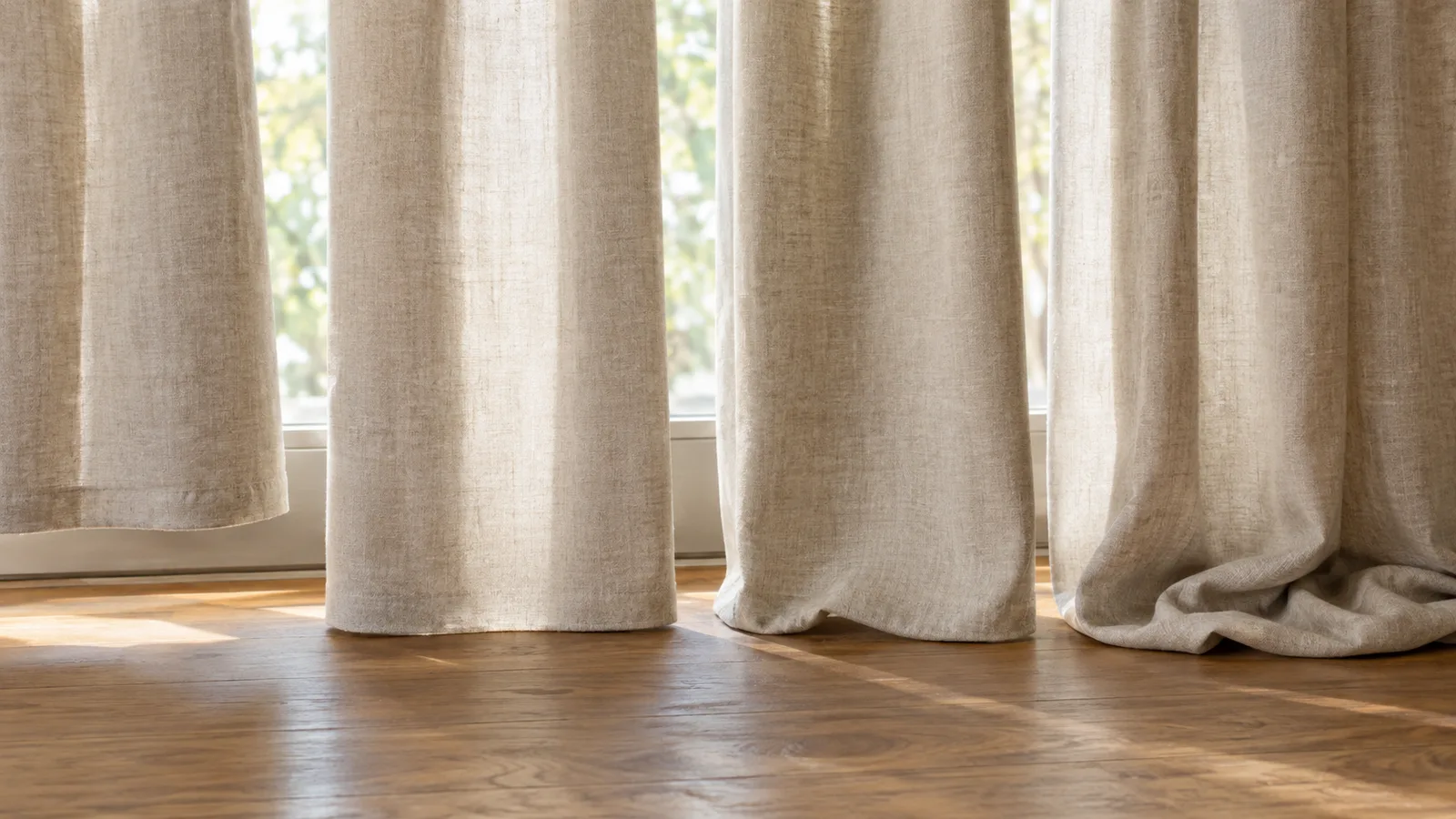
Avoid curtains that stop a few inches above the floor (sometimes called "high water" curtains) unless they're sill-length or apron-length café curtains on purpose. They make the room look unfinished.
Step 3: Pick a Standard Length
Ready-made curtain panels come in standard lengths:
63" · 84" · 95" · 108" · 120"
Pick the shortest standard length that is at least as long as you need. If your measurement falls between two sizes:
- buy the longer length and hem it, or
- raise the rod slightly so the longer panel just touches the floor.
Raising the rod is often the easier fix, and it makes the window look taller too.
Step 4: Work Out the Width
Curtains need extra fabric so they look full when closed, not stretched flat. That extra is called fullness:
| Fullness | Total panel width | Look |
|---|---|---|
| 1.5x | Rod width x 1.5 | Light, airy; good for sheers or tight budgets |
| 2x | Rod width x 2 | Standard; full but not heavy |
| 2.5x | Rod width x 2.5 | Lush, luxurious pleats |
Divide the total width you need by the width of one panel, then round up. Most people hang an even number of panels so each side matches.
A Worked Example
Let's put it all together for a common living room window:
- Window is 48 inches wide
- Top of the frame is 84 inches above the floor
- Rod mounted 5 inches above the frame, so it sits 89 inches above the floor
- Rod extends 6 inches past each side: 48 + 6 + 6 = 60-inch rod
- 2x fullness: 60 x 2 = 120 inches of total curtain width
- Panels are 50 inches wide: 120 ÷ 50 = 2.4, which rounds up to 3 panels. Since 2 per side looks balanced, buy 4 panels.
- For a kiss length, you need 89 inches. That falls between 84 and 95, so buy 95-inch panels and either hem 6 inches or raise the rod to 95 inches above the floor.
Special Cases
Windows Close to the Ceiling
If there's less than about 6 inches between the frame and the ceiling, mount the rod as close to the ceiling as the brackets allow, or use ceiling-mounted brackets or a ceiling track. Curtains that run from ceiling to floor make a low room look taller.
Short Windows Above a Radiator or Bench
Floor-length curtains can block a radiator or get in the way of a window seat. Here, sill-length curtains (ending about 1/2 inch above the sill) or apron-length curtains (about 4 inches below the sill) are the practical choice. Hang the rod high and wide anyway so the window still looks generous.
Layering Sheers and Blackout Panels
Use a double rod: sheers on the back rod for daytime privacy, heavier panels on the front rod for light control. Both layers should use the same length so the hems line up, and the front rod should extend a little farther than the back one so the panels clear each other.
Sliding Doors
Measure the full width of the door opening plus the extension on each side, and plan for the stacked panels to sit fully beside the opening so they don't catch when the door slides.
Common Curtain Mistakes
- Mounting the rod right on the frame. It shrinks the window visually and leaves a gap of wall above the curtains.
- A rod that's too short. Open curtains end up covering part of the glass, blocking light.
- Skimpy panels. One panel per side on a wide window looks flat. Aim for about 2x fullness.
- Measuring from the window instead of the rod. The result is curtains that hover awkwardly above the floor.
- Forgetting the brackets. On rods longer than about 60 inches, add a center support bracket so the rod doesn't sag.
Blackout and lined curtains are heavier and hang straighter. If you plan to puddle them, the extra fabric won't drape as softly as unlined linen.
Curtain Hardware and Panels to Consider
Various
Adjustable Curtain Rod, 1-Inch Diameter
- ✓Adjusts to fit wide windows
- ✓Includes brackets
- ✓Matte black or brass finishes
Various
Linen Blend Curtain Panels, 95 Inch
- ✓Light filtering
- ✓Relaxed drape
- ✓Works with rings or rod pocket
Various
Blackout Curtains, 108 Inch
- ✓Blocks light for bedrooms
- ✓Thermal insulation
- ✓Long length for high rods
Various
Clip Curtain Rings (Set of 28)
- ✓Easy to slide open
- ✓Adjust length by clipping lower
- ✓Fits most rods
As an Amazon Associate, we earn from qualifying purchases.
The Bottom Line
- Rod height: 4–6 inches above the frame, or halfway to the ceiling
- Rod width: 4–10 inches past each side of the frame
- Length: usually just kissing the floor; pick the shortest standard length (63, 84, 95, 108, 120") that's at least as long as you need
- Width: panels totaling about 2x the rod width
Plug your window measurements into the free curtain calculator to get the rod length, number of panels and the standard length to buy.