Short answer: grout depends on tile size, joint width and tile thickness, not just floor area. For 100 square feet:
- 12x12 tile, 1/8 in joints: about 9 lb of grout
- 3x6 subway, 1/8 in joints: about 18 lb
- 2x2 mosaic, 1/8 in joints: about 36 lb
Small tiles have far more joints per square foot, so mosaics use several times more grout than large tile. Here are the charts.
Get your exact grout amount in pounds and bags
Determine how much grout you need for your tiling project.
How Grout Is Calculated
Grout fills the joints, so the amount is the volume of all the joints:
- Joint length per tile: the tile's length plus its width (each joint is shared with a neighbor)
- Joint volume: joint length × joint width × tile thickness
- Joints per square foot: depends on how many tiles fit in a square foot
- Convert to pounds: cement grout works out to roughly 0.072 lb per cubic inch of joint, in line with manufacturer coverage charts
- Add 10% for mixing loss and cleanup
That's exactly what our grout calculator does, so the charts below match it.
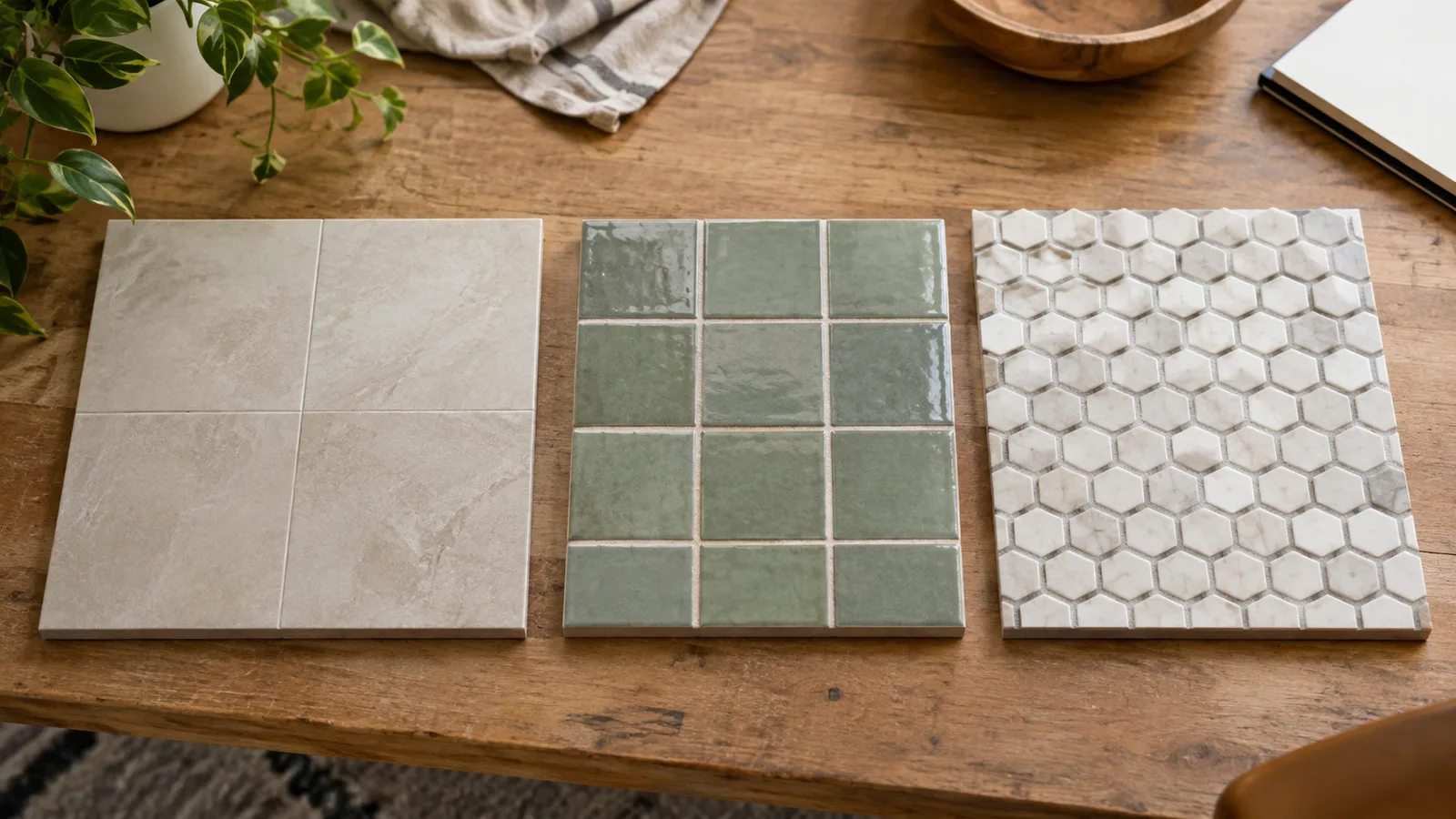
Grout Chart: 50 Square Feet
Pounds of grout, including 10% extra. Thickness: 3/8 in for 12x12, 12x24 and 6x6; 1/4 in for 3x6, 4x4 and 2x2.
| Tile size | 1/16 in joint | 1/8 in joint | 3/16 in joint | 1/4 in joint |
|---|---|---|---|---|
| 12 × 24 | 2 lb | 4 lb | 6 lb | 7 lb |
| 12 × 12 | 3 lb | 5 lb | 7 lb | 9 lb |
| 6 × 6 | 5 lb | 9 lb | 14 lb | 18 lb |
| 4 × 4 | 5 lb | 9 lb | 14 lb | 18 lb |
| 3 × 6 subway | 5 lb | 9 lb | 14 lb | 18 lb |
| 2 × 2 mosaic | 9 lb | 18 lb | 27 lb | 36 lb |
Grout Chart: 100 Square Feet
| Tile size | 1/16 in joint | 1/8 in joint | 3/16 in joint | 1/4 in joint |
|---|---|---|---|---|
| 12 × 24 | 4 lb | 7 lb | 11 lb | 14 lb |
| 12 × 12 | 5 lb | 9 lb | 14 lb | 18 lb |
| 6 × 6 | 9 lb | 18 lb | 27 lb | 36 lb |
| 4 × 4 | 9 lb | 18 lb | 27 lb | 36 lb |
| 3 × 6 subway | 9 lb | 18 lb | 27 lb | 36 lb |
| 2 × 2 mosaic | 18 lb | 36 lb | 54 lb | 72 lb |
Turning pounds into bags: grout is commonly sold in 10 lb and 25 lb bags. For 36 lb you'd buy two 25 lb bags, or four 10 lb bags.
Thicker tile needs more grout because the joints are deeper. Natural stone and some porcelain planks are thicker than standard ceramic; enter the real thickness in the calculator if yours is over 3/8 in.
Sanded, Unsanded or Epoxy?
The joint width decides most of it:
| Grout type | Best joint width | Good for | Watch out for |
|---|---|---|---|
| Unsanded | Under 1/8 in (e.g. 1/16 in) | Wall tile, tight subway joints | Can shrink and crack in wide joints |
| Sanded | 1/8 in and wider | Most floors | Can scratch polished marble or glass tile |
| Epoxy | Any width (check the product) | Showers, kitchen counters and backsplashes | Sets fast; work in small sections |
| Premixed urethane / single-component | Per the label | DIYers who want no mixing | Usually costs more per pound |
Most cement-based grouts benefit from a penetrating sealer once they've cured, especially on floors and in showers. Epoxy grouts generally don't need sealing; check the label.
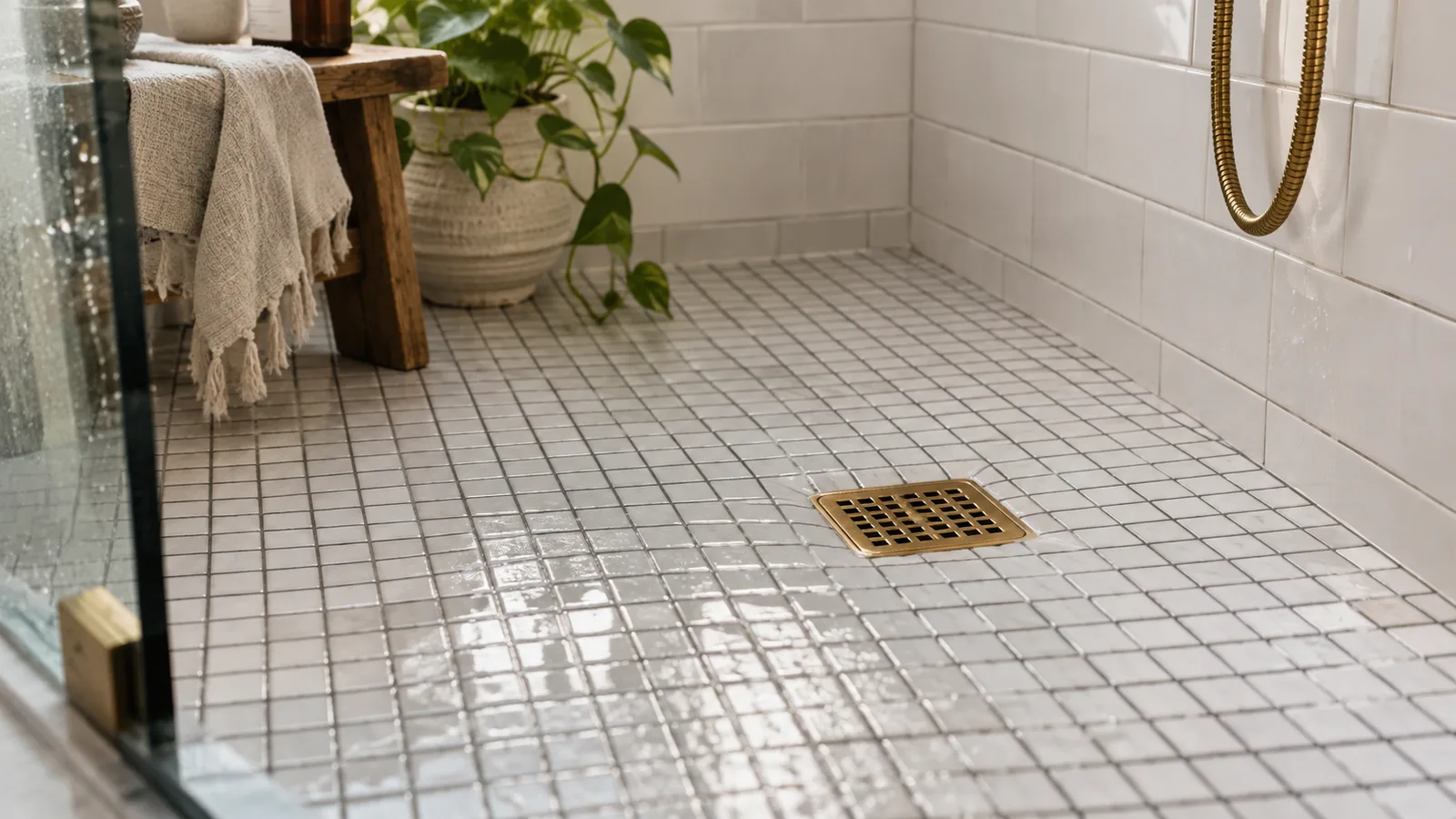
How Wide Should Grout Joints Be?
Your tile usually decides the joint width before you do. Check the tile box first; many manufacturers recommend a minimum joint.
- Rectified tile (precisely cut edges, common on large porcelain) can use tight joints, often 1/16 in to 1/8 in.
- Non-rectified or handmade-look tile varies slightly in size, so it usually needs 1/8 in to 3/16 in or more to keep the lines even.
- Large-format tile (over 15 in on a side) is rarely set with joints narrower than about 1/8 in, because slight warping needs room.
- Mosaics come pre-spaced on their sheets, so the joint is set for you.
Narrower joints use less grout and look cleaner, but don't go below what the tile maker recommends.
Choosing a Grout Color
- Matching grout (white tile, white grout) makes the tile read as one calm surface and hides minor size differences.
- Contrasting grout (white tile, charcoal grout) shows off the pattern, especially herringbone and subway, but also shows every uneven line.
- Mid-tone grays and beiges hide dirt best on floors.
- Grout dries lighter or darker than it looks wet. Check the dried color chip at the store, not the wet sample.
Tips for Mixing and Using Grout
- Mix only what you can use in about 20–30 minutes. Grout stiffens in the bucket; don't add water to "revive" it, which weakens it.
- Buy a little extra of a colored grout. Running short and opening a new batch can mean a slightly different shade.
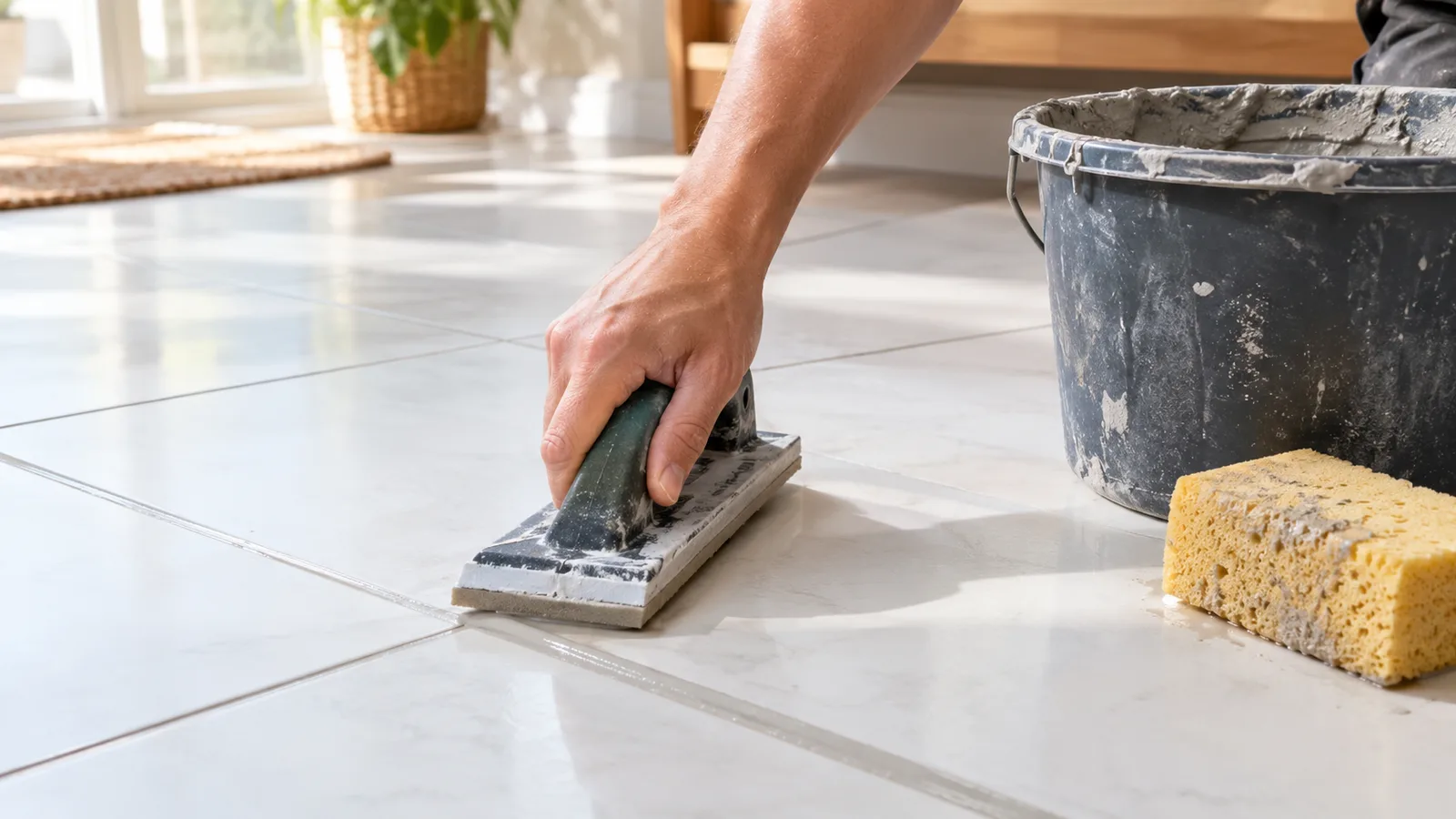
- Work diagonally across the joints with the float so you don't drag grout out of them.
- Clean with a barely damp sponge. Too much water washes out the joints and leaves haze.
- Keep the leftover bag in a dry spot for future repairs.
- Wait before sealing. Cement grout usually needs to cure for a few days before a penetrating sealer goes on; the bag will say how long.
- Protect neighboring surfaces. Grout can stain unsealed natural stone and textured tile; seal porous tile first if the manufacturer recommends it.
What You'll Need
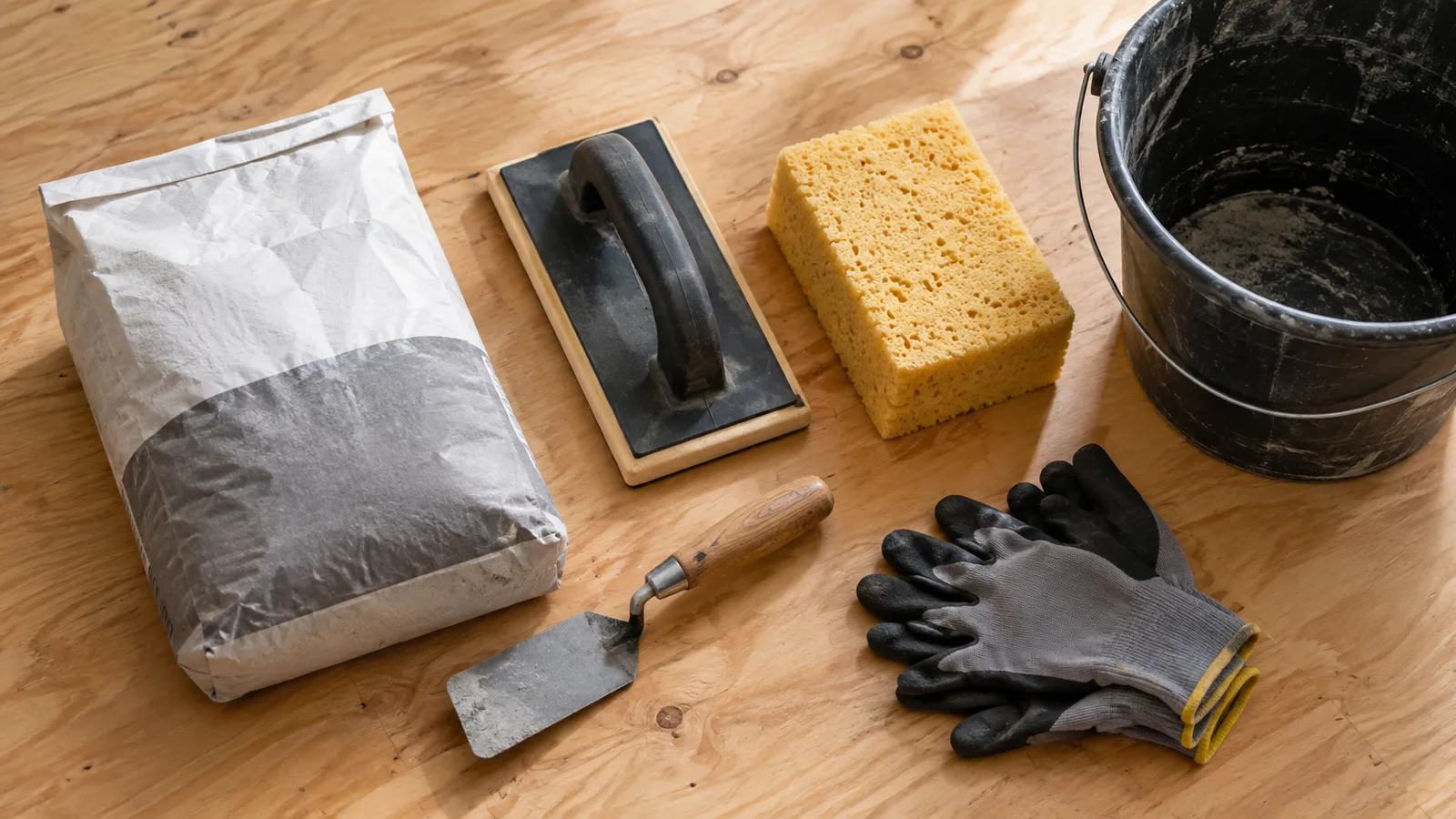
Custom Building Products
Polyblend Sanded Grout, 25 lb
- ✓For joints 1/8 in and wider
- ✓Many colors
- ✓Seal after curing
QEP
Rubber Grout Float
- ✓Presses grout into joints
- ✓Gum rubber pad
- ✓Comfortable handle
QEP
Hydrophilic Grout Sponge
- ✓Wipes haze without washing joints
- ✓Rounded edges
- ✓Durable
Aqua Mix
Penetrating Grout Sealer
- ✓Helps resist stains
- ✓Doesn't change grout color
- ✓For cement grout
As an Amazon Associate, we earn from qualifying purchases.
Still choosing tile? See how many tiles you need for a bathroom floor or for a kitchen backsplash.
The Bottom Line
- Grout depends on tile size, joint width and thickness, so mosaics need much more than large tile
- 100 sq ft of 12x12 with 1/8 in joints ≈ 9 lb; 3x6 subway ≈ 18 lb; 2x2 mosaic ≈ 36 lb
- Use unsanded under 1/8 in, sanded for 1/8 in and up, epoxy where stains matter
- Mix in small batches and keep a little extra of the same color
Plug your tile size, thickness and joint width into the free grout calculator for pounds and bag counts.