Short answer: for a 1,000 sq ft attic, plan on roughly 25 bags of blown-in insulation for R-30, 30 for R-38, 38 for R-49 and 47 for R-60. The exact number depends on the product, so always confirm with the coverage chart printed on the bag.
Which R-value you need depends on your climate zone: ENERGY STAR's recommendations for attics range from about R-30 in the warmest areas to R-60 in the coldest. Here's how to work it out for your home.
Get bag and batt estimates for your attic
Calculate insulation batts or rolls needed for walls and attics.
Step 1: Find the R-Value You Need
R-value measures how well insulation resists heat flow; higher is better. Attic recommendations depend on where you live:
| Climate zone | Example areas | Attic target (uninsulated attic) |
|---|---|---|
| Zone 1 | South Florida, Hawaii | About R-30 to R-49 |
| Zones 2–3 | Gulf Coast, Southwest, Southeast | About R-49 to R-60 |
| Zones 4–8 | Mid-Atlantic, Midwest, Northern states | About R-60 |
These follow ENERGY STAR's general guidance for attics, summarized. Look up your climate zone and the current ENERGY STAR or DOE recommendations, and check your local building code, which sets the minimum for new work. If you already have some insulation, you're adding enough to reach the target, not starting from zero. Our calculator covers R-30 through R-60.
Checking what you have: measure the depth of your existing insulation in a few spots. Old, compressed or patchy insulation performs below its original rating.
Step 2: Measure the Attic Floor
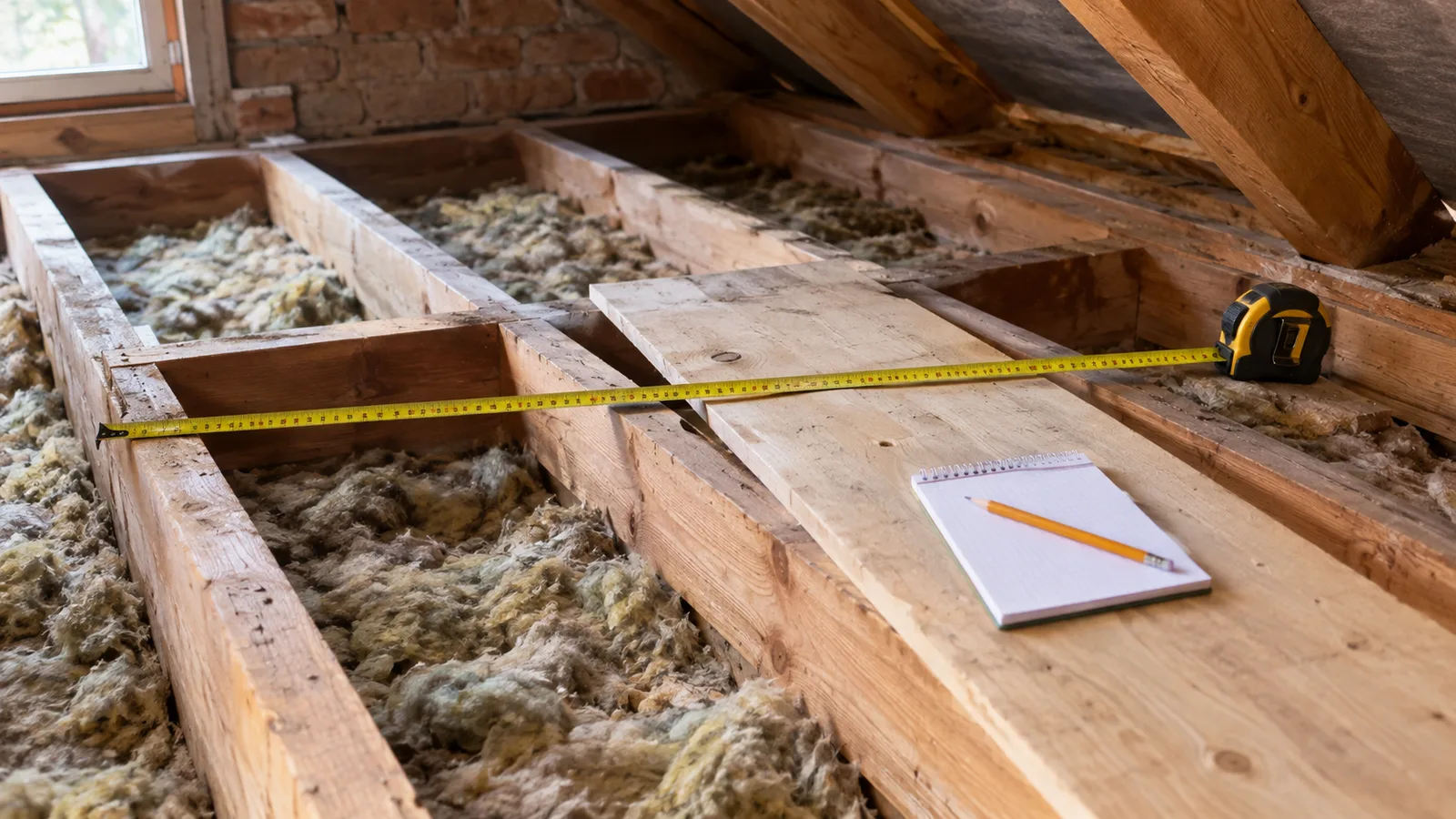
You're insulating the attic floor (the ceiling of the rooms below), so measure its length and width and multiply. It's usually close to the footprint of the house below. For an L-shaped attic, split it into rectangles and add them.
Only walk on the joists or on boards laid across them. The drywall between joists won't hold your weight. Wear a dust mask or respirator, eye protection, long sleeves and gloves.
Step 3: Blown-In Insulation Bags
These estimates come from our insulation calculator, which uses typical bags-per-square-foot figures for each R-value:
| Attic area | R-30 | R-38 | R-49 | R-60 | | --- | --- | --- | --- | | 500 sq ft | 13 bags | 15 bags | 19 bags | 24 bags | | 1,000 sq ft | 25 bags | 30 bags | 38 bags | 47 bags | | 1,500 sq ft | 38 bags | 45 bags | 57 bags | 70 bags |
Bag sizes and coverage vary a lot between blown cellulose and blown fiberglass and between brands. Every bag has a coverage chart showing how many bags per 1,000 sq ft and how deep to blow it for each R-value. Use our numbers to budget, then use the bag chart for the final count.
Many home improvement stores lend the blowing machine free or at low cost when you buy a minimum number of bags.
Blown-In vs Batts
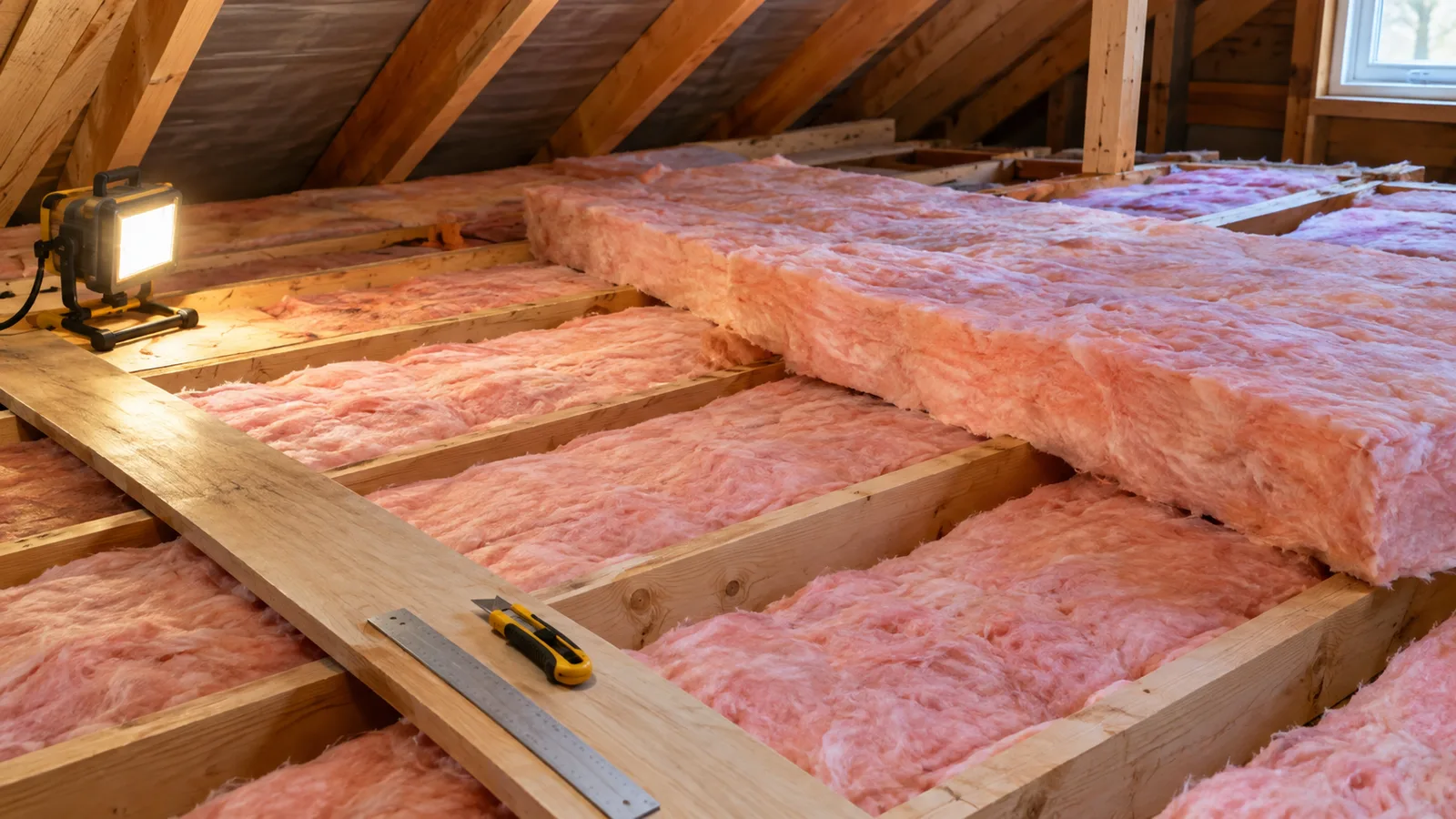
| Blown-in (loose fill) | Batts / rolls | |
|---|---|---|
| Best for | Topping up existing insulation, attics with lots of wires and obstructions | Open, unobstructed joist bays, adding a layer across the joists |
| Coverage | Fills gaps and odd shapes well | Gaps at edges and around obstacles reduce performance |
| DIY effort | Two people: one feeds the machine, one blows | One person, but lots of cutting and fitting |
| Mess | Dusty | Itchy (fiberglass), less airborne dust |
For high R-values with batts, a common approach is a layer between the joists plus a second layer across them (perpendicular), which also covers the tops of the joists.
How many batt packages? Batt coverage per package depends heavily on its thickness and width, so work in square feet: take the attic area, add 5% for cutting and fitting, and divide by the square footage printed on the package. For a 1,000 sq ft attic that's 1,050 sq ft of batts per layer. If you're doing two layers, count each layer separately.
Do These Before You Add Insulation
- Air seal first. Gaps around plumbing stacks, wiring holes, the attic hatch and top plates leak warm air. Sealing them with caulk or spray foam is often as valuable as the insulation itself.
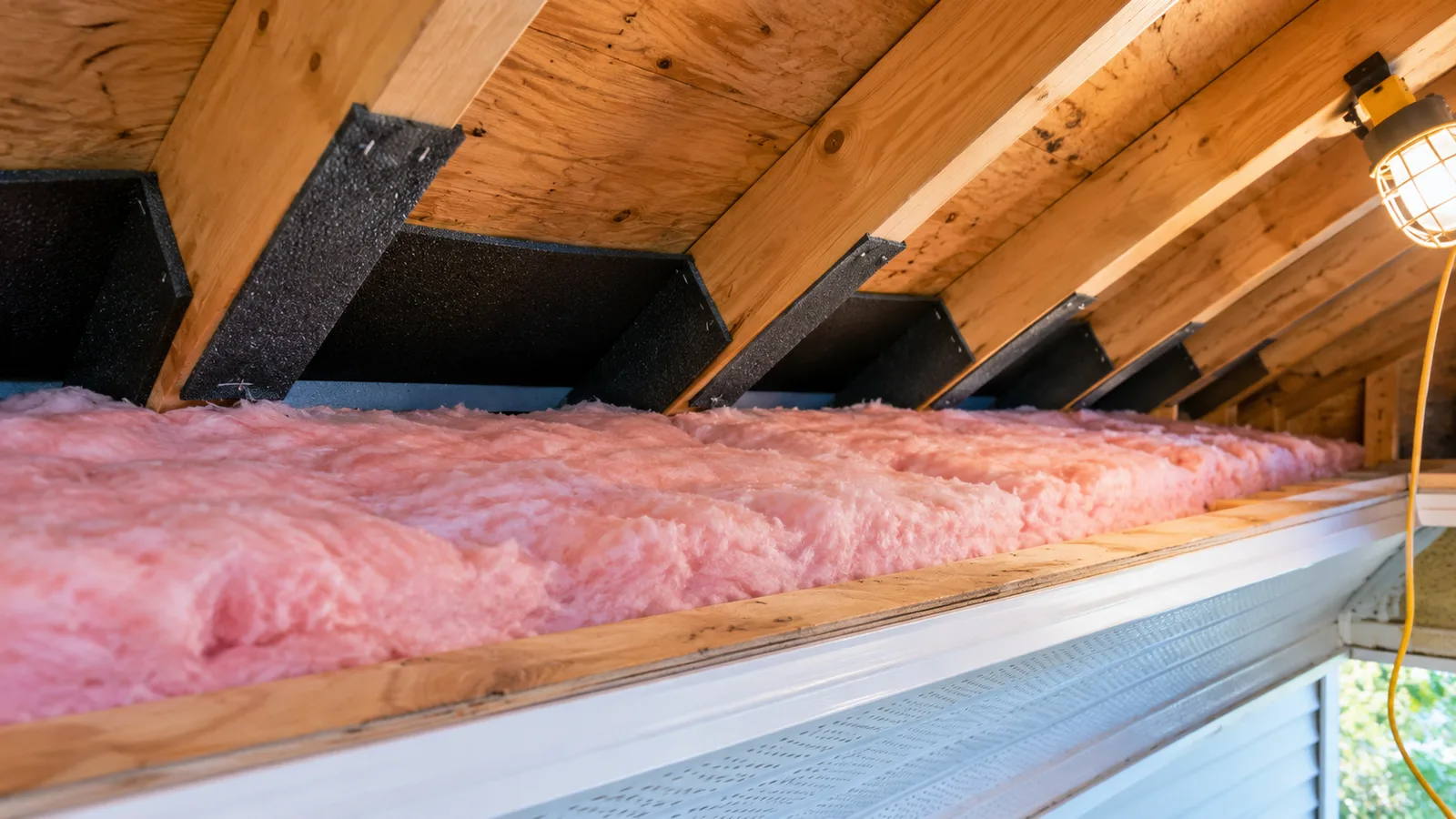
- Keep vents open. Install rafter vent baffles at the eaves so insulation doesn't block soffit vents.
- Respect recessed lights. Only cover recessed fixtures rated IC (insulation contact). Older non-IC fixtures need clearance or a fire-rated cover.
- Fix moisture problems like roof leaks or bathroom fans that vent into the attic before adding insulation.
- Insulate and weatherstrip the attic hatch. It's a common weak spot.
Signs Your Attic Needs More Insulation
- You can see the tops of the joists. Most recommended levels are deeper than standard joists, so visible joists usually mean you're below target.
- Uneven or patchy coverage, especially near the eaves and around the hatch.
- Rooms below the attic are hard to heat or cool compared with the rest of the house.
- Ice dams in winter in cold climates, which often point to warm air and heat escaping into the attic (air sealing helps as much as insulation here).
Cellulose or Fiberglass Blown-In?
Both work well; the differences are practical:
- Blown cellulose is denser, so it settles more and resists air movement a little better. It's made largely from recycled paper treated for fire resistance.
- Blown fiberglass is lighter, so you need a deeper layer for the same R-value, and it doesn't absorb moisture.
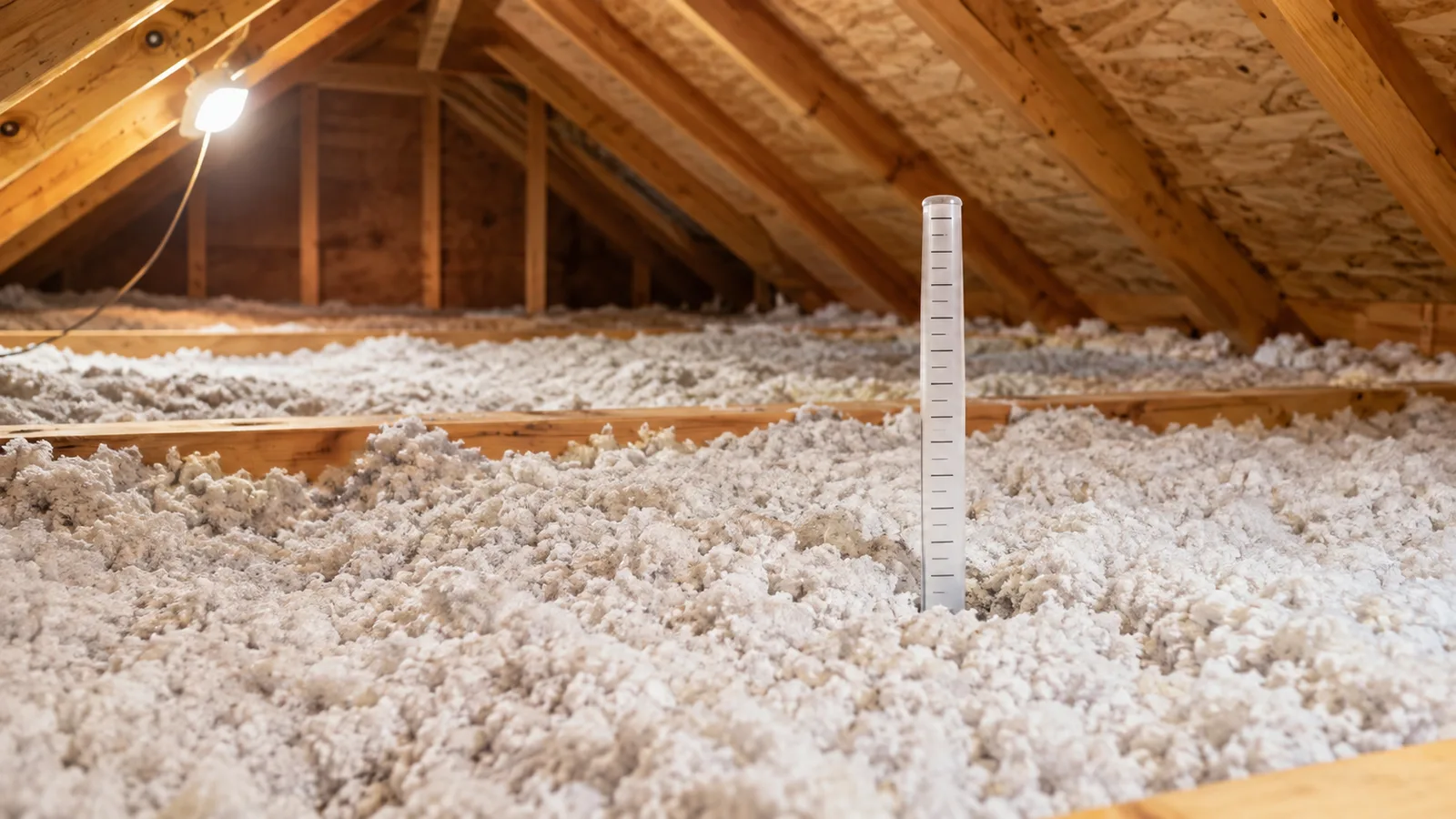
- Either way, the bag chart tells you the depth to blow for your target R-value and the minimum number of bags per 1,000 sq ft. Staple depth rulers to a few joists so you can see when you've reached it.
DIY or Hire a Pro?
Topping up an open, accessible attic with blown-in insulation is a common weekend DIY job for two people, especially with a rental machine. Consider a pro if:
- The attic is tight, steep or hard to move around in
- There are signs of moisture, mold, pests or old knob-and-tube wiring
- You suspect the existing insulation could be vermiculite, which may contain asbestos and shouldn't be disturbed
- You want spray foam, which needs specialized equipment and protection
Some utilities and programs offer rebates or energy audits for insulation and air sealing, so it's worth checking what's available locally before you buy.
What You'll Need
Various
Attic Insulation Depth Rulers
- ✓Shows when you've hit target depth
- ✓Staple to joists
- ✓Helps inspectors too
Various
Foam Rafter Vent Baffles
- ✓Keeps soffit vents clear
- ✓Staples between rafters
- ✓Lightweight
3M
Disposable Respirator Masks, N95
- ✓Filters insulation dust
- ✓Comfortable seal
- ✓Multi-pack
Various
Attic Hatch Insulation Cover
- ✓Seals a common air leak
- ✓Easy to lift off
- ✓Fits standard openings
As an Amazon Associate, we earn from qualifying purchases.
Insulating walls or floors too? The same insulation calculator handles those. For a full room refresh afterward, see how many sheets of drywall a 12x12 room needs.
The Bottom Line
- Pick your R-value from your climate zone: roughly R-30 to R-60 for attics
- Measure the attic floor, length × width
- A 1,000 sq ft attic needs about 25 / 30 / 38 / 47 bags of blown-in for R-30 / R-38 / R-49 / R-60, then confirm with the bag's chart
- Air seal, add vent baffles and check recessed lights before you add insulation
Use the free insulation calculator to estimate blown-in bags, batt square footage and spray foam for your attic size and R-value.