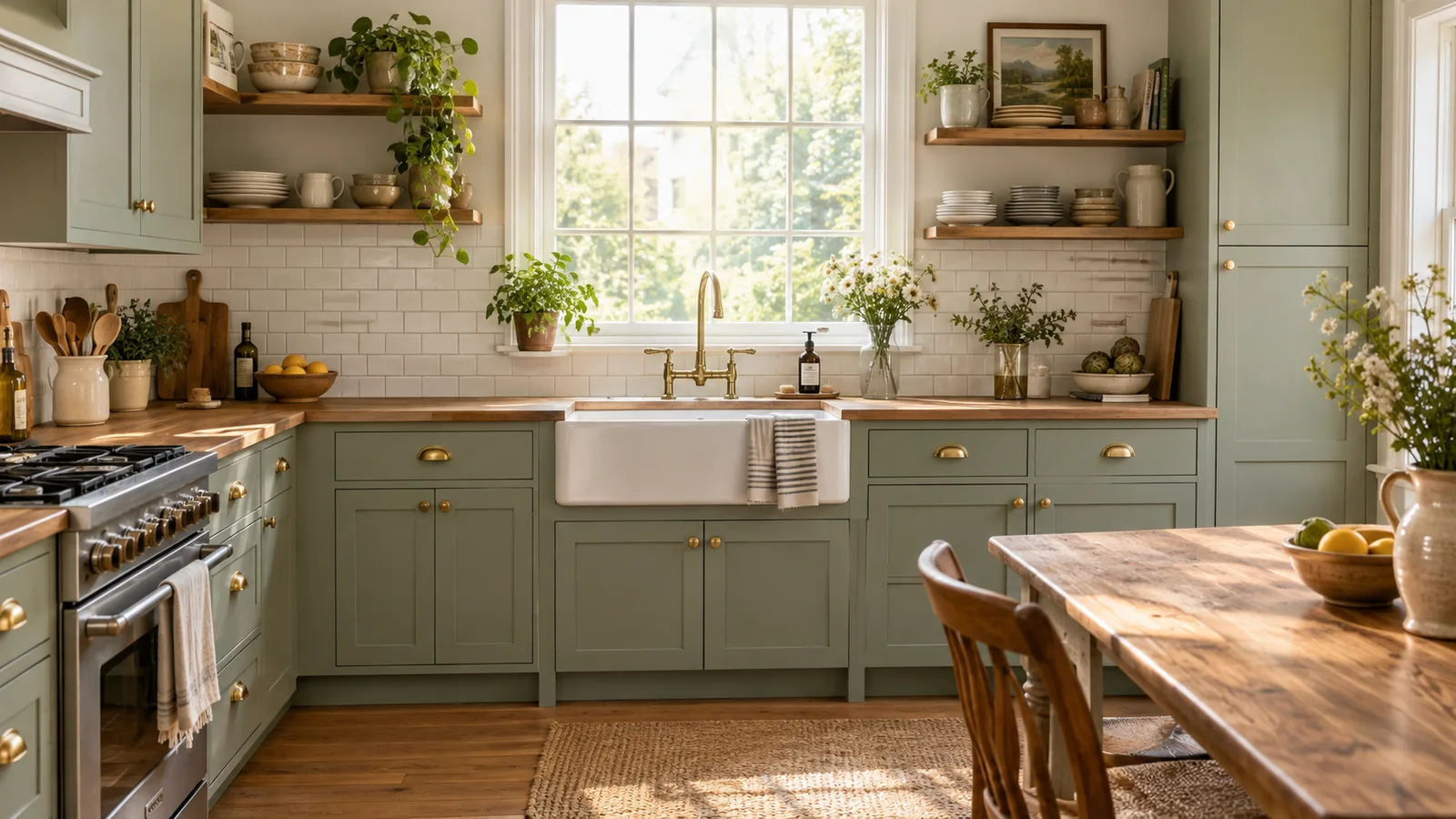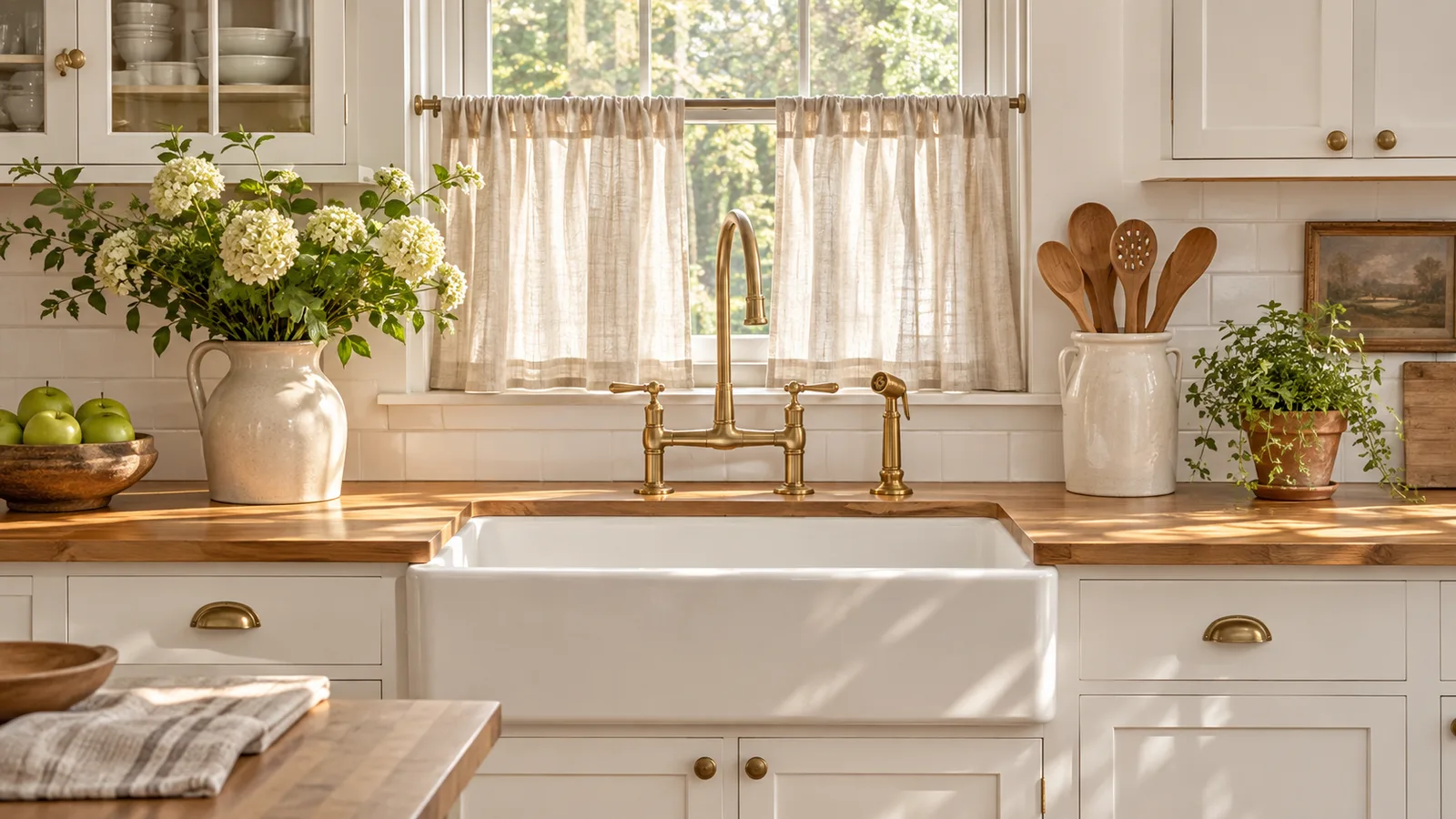
The short version: a farmhouse kitchen sink is an apron-front sink: the front panel is exposed instead of hidden behind a cabinet door. The most popular choices are fireclay (classic glossy white), cast iron (enamel-coated and very durable), and stainless steel (lighter and budget-friendly). Most kitchens use a 30, 33 or 36 inch sink, and every apron sink needs a base cabinet built or modified for it, so choose the sink and cabinet together.
Here's how the materials compare, which size suits your kitchen, and what to check before you order.
Our Top Picks
- 1See on Amazon
Classic Look: Fireclay Farmhouse Sink, 33 in by Swiss Madison
The glossy white fireclay look most people picture, in the most versatile 33 inch width.
- 2See on Amazon
Practical Pick: 33-Inch Stainless Workstation Apron-Front Sink by Ruvati
Lighter to install and won't chip, with a ledge for boards and racks that adds prep space.
- 3See on Amazon
Bridge Kitchen Faucet with Side Sprayer by Kingston Brass
A deck-mounted bridge faucet suits apron sinks, which usually have no faucet holes.
As an Amazon Associate, we earn from qualifying purchases.
Farmhouse Sink Materials Compared
| Material | Weight | Durability | Care | Relative cost |
|---|---|---|---|---|
| Fireclay | Heavy | Very hard glazed surface; can chip if hit hard | Easy; avoid harsh abrasives | Mid to High |
| Cast iron (enameled) | Very heavy | Long-lasting; enamel can chip | Easy; non-abrasive cleaners | Mid to High |
| Stainless steel | Light | Won't chip or crack; can dent and scratch | Easy; scratches blend in over time | Low to Mid |
| Copper | Medium | Durable; develops a living patina | Gentle soap only; patina changes | High |
| Granite / quartz composite | Heavy | Hides scratches and water spots well | Easy; avoid very hot pans directly | Mid |
Relative cost is for the sink only. Prices vary widely by brand, size and finish.
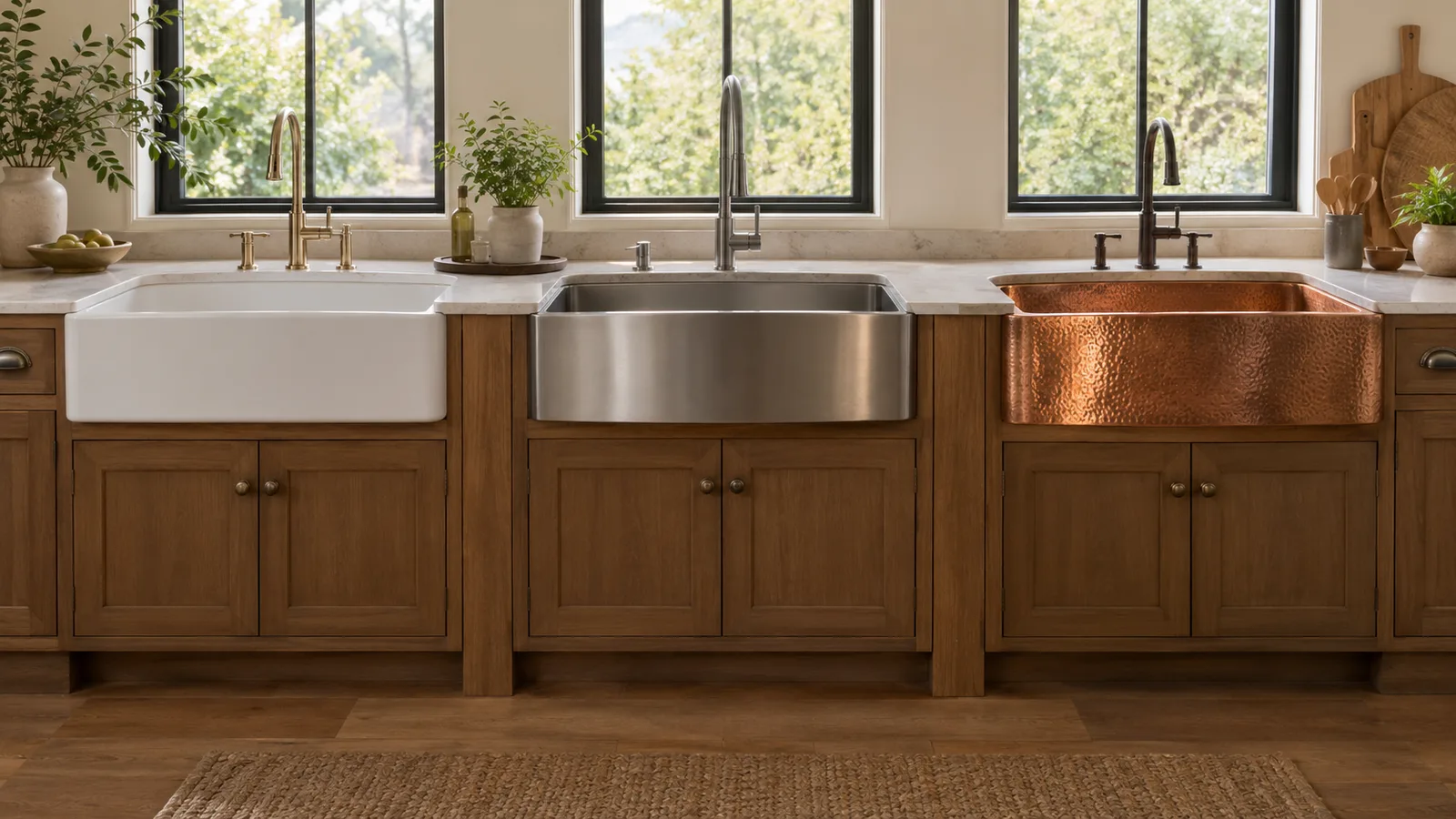
Fireclay: the classic farmhouse look
Fireclay is clay fired at very high temperatures with a glossy glaze. It gives that deep, bright white look most people picture when they think "farmhouse sink." It resists staining well, but a dropped cast iron pan can chip the glaze, and fireclay is heavy enough to need solid cabinet support.
Cast iron: tough and heavy
Enameled cast iron is the old-school option and lasts for decades. It's also the heaviest choice, so the cabinet and supports must be up to the job. Like fireclay, the enamel can chip if something heavy falls into it.
Stainless steel: practical and forgiving
A stainless apron sink gives the farmhouse shape with a more modern, lighter-weight build. It won't chip, it's easier to install, and it's often the most affordable. Look for a thicker gauge (a lower gauge number) and sound-dampening pads if noise bothers you.
Copper and composite
Copper brings warmth and patina, ideal for rustic or vintage kitchens, but needs gentle care. Composite sinks come in matte black, white and earthy colors and hide water spots well.
Choosing the Right Width
| Sink width | Best for | Notes |
|---|---|---|
| 24–27 in | Small kitchens, prep or bar sinks | Tight for big sheet pans |
| 30 in | Small to medium kitchens | Fits most standard layouts |
| 33 in | The most common all-rounder | Room for sheet pans and stockpots |
| 36 in | Larger kitchens, big cooks | Generous single bowl or roomy double |
| 42 in and up | Large kitchens, two-person cleanup | Often double bowl or workstation style |
In a small kitchen, every inch of sink takes an inch of counter. A 30 or 33 inch sink usually leaves enough prep space on each side. For more small-space trade-offs, see our small farmhouse kitchens guide.
Single Bowl, Double Bowl or Workstation?
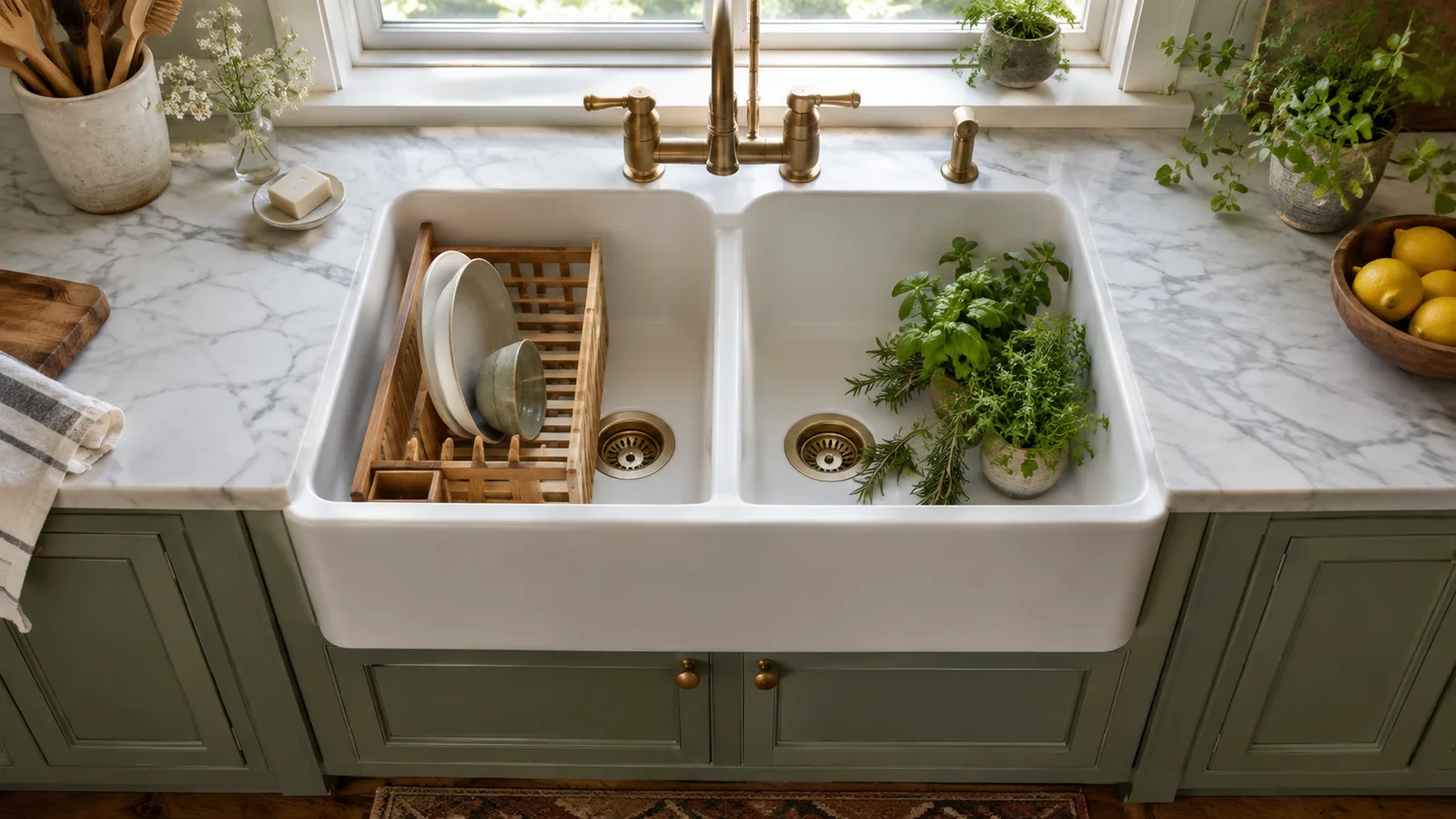
- Single bowl: the most popular farmhouse choice. Big enough to lay a roasting pan flat and easy to clean.
- Double bowl: handy if you hand-wash dishes and want a wash side and a rinse side. A low divider gives you both: two bowls when you need them, a big basin for oversized pots.
- Workstation sinks: have a ledge for sliding cutting boards, colanders and racks. Great in small kitchens where the sink doubles as prep space.
The Cabinet: Plan It Before You Order
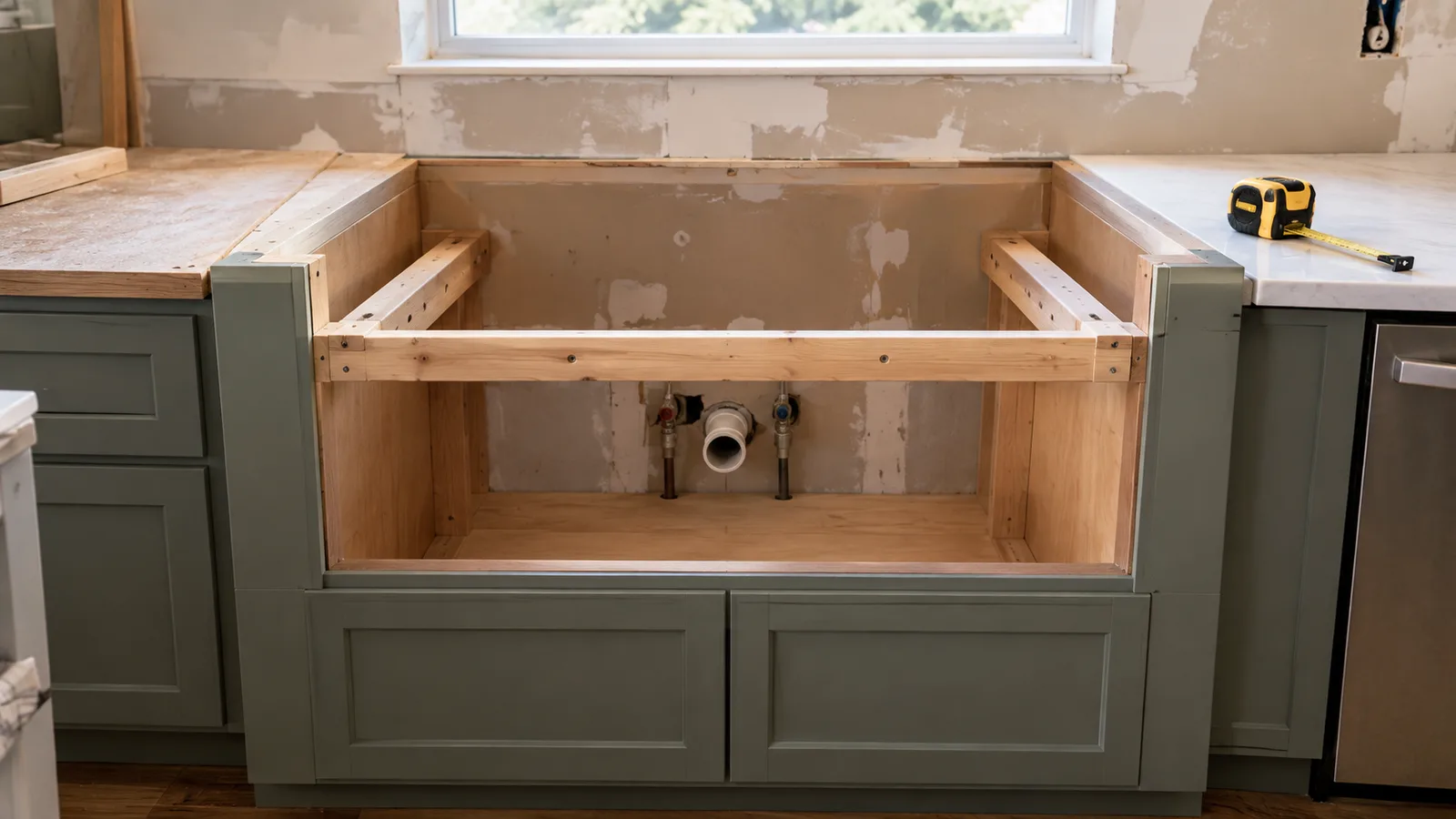
Most installation headaches come from the cabinet, not the sink. Before you buy:
- Use an apron-front sink base. A standard sink base has a solid top rail where the apron needs to sit. Many cabinet lines sell a dedicated farmhouse sink base, or the front can be modified.
- Check the manufacturer's spec sheet. It lists the minimum cabinet width and the exact cutout. Some sinks fit a cabinet of the same nominal width; others need a wider base.
- Build in support. Fireclay and cast iron sinks need a sturdy internal frame or platform sized to the sink's height, not just the countertop above.
- Measure the apron height. The apron height sets where the counter meets the sink. Confirm it before the countertop is templated.
- Plan the faucet separately. Most apron sinks have no faucet holes, so the faucet mounts on the counter or wall.
Order the sink first and have it on site before the countertop is measured. Fireclay sinks vary slightly from piece to piece, and countertop fabricators template from the actual sink.
Retrofitting an apron sink
Swapping a standard undermount sink for an apron-front sink means cutting the cabinet face and usually replacing the countertop section around the sink. Some manufacturers make retrofit apron sinks designed to fit a standard 36 inch base with less cabinet work; read their specs closely before you commit.
Pairing the Faucet
- Bridge faucets look classic with fireclay and cast iron.
- Gooseneck pull-down faucets are the most practical for filling big pots.
- Wall-mount faucets suit vintage kitchens but need plumbing in the wall.
Check the reach: the spout should land near the center of the bowl so water doesn't hit the back edge. Brass, matte black and polished nickel all suit farmhouse kitchens. For more ideas on the room around the sink, see old farmhouse kitchen ideas and our farmhouse kitchen cabinet ideas. Planning a bathroom too? Here are farmhouse bathroom sinks.
Farmhouse Sink Picks
Swiss Madison
White Fireclay Farmhouse Sink, 33 in
Deep, glossy white single bowl; confirm the minimum cabinet width on the spec sheet before ordering.
- ✓Deep glossy white glaze
- ✓Single bowl for big pans
- ✓Check cabinet spec sheet
Ruvati
33-Inch Stainless Workstation Apron-Front Sink
The tough, lighter-weight option that turns the sink into extra prep space in a small kitchen.
- ✓Lighter to install
- ✓Ledge for boards and racks
- ✓Won't chip
Kingston Brass
Bridge Kitchen Faucet with Side Sprayer
The classic faucet shape for fireclay and cast iron; check the spout reaches the bowl center.
- ✓Classic farmhouse style
- ✓Deck-mounted
- ✓Pairs with apron sinks
Stainless Sink Bottom Grid
Buy the size made for your sink's bowl; it keeps heavy pans off fireclay and enamel.
- ✓Protects the sink surface
- ✓Lets water drain
- ✓Reduces chips and scratches
As an Amazon Associate, we earn from qualifying purchases.
Common Questions
Do farmhouse sinks chip easily?
Fireclay and enameled cast iron are hard, glossy surfaces that hold up well to everyday use, but a heavy pot dropped on an edge can chip them. A bottom grid and a little care with cast iron pans go a long way. Stainless steel won't chip at all, which is why many busy households choose it.
Are farmhouse sinks hard to keep clean?
Not usually. The big single bowl has no divider to scrub around, and glossy fireclay wipes clean with mild soap. The exposed apron can collect drips along its top edge, so keep a towel handy and wipe it down when you clean the counters.
Can I put a farmhouse sink in an island?
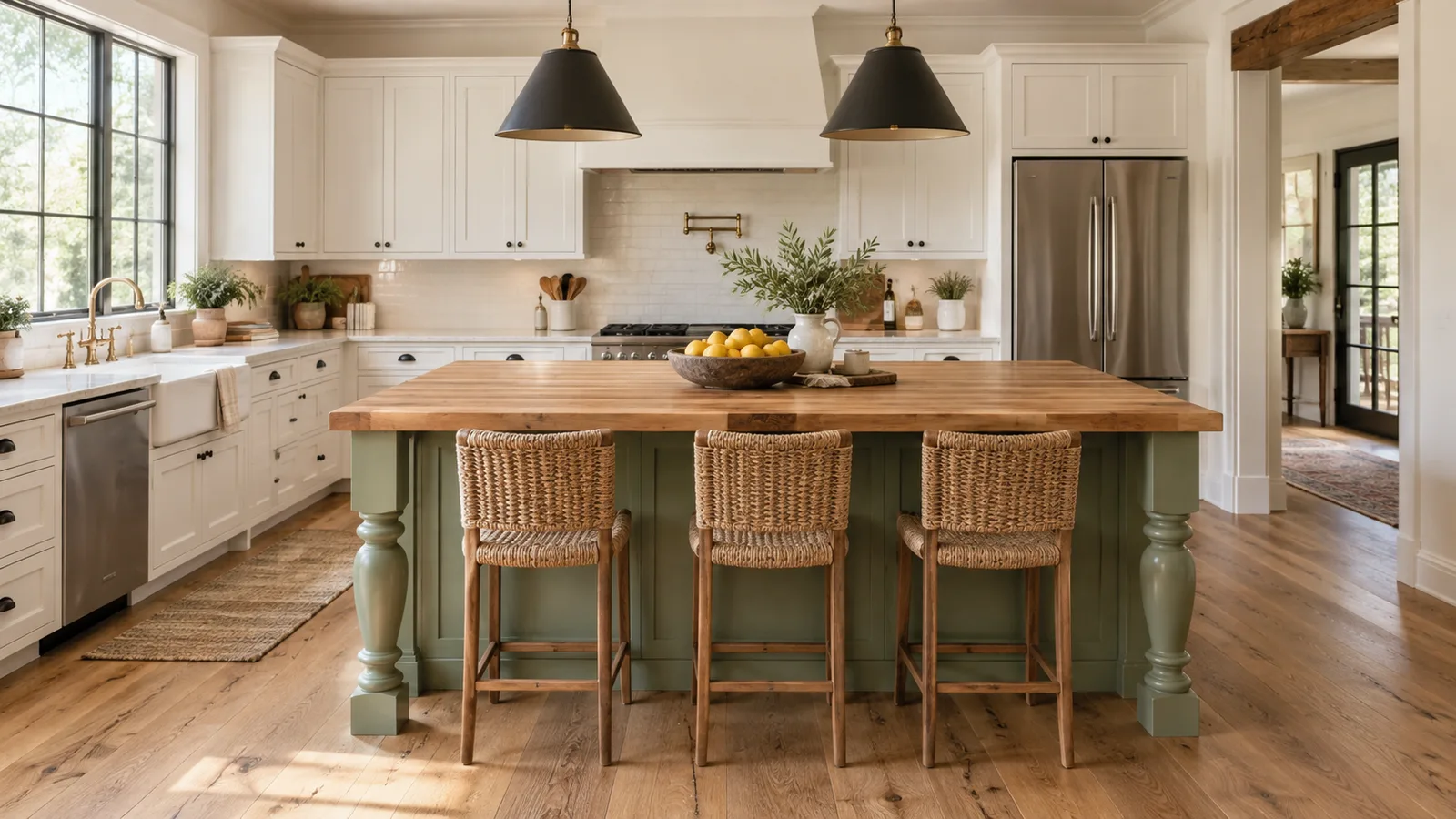
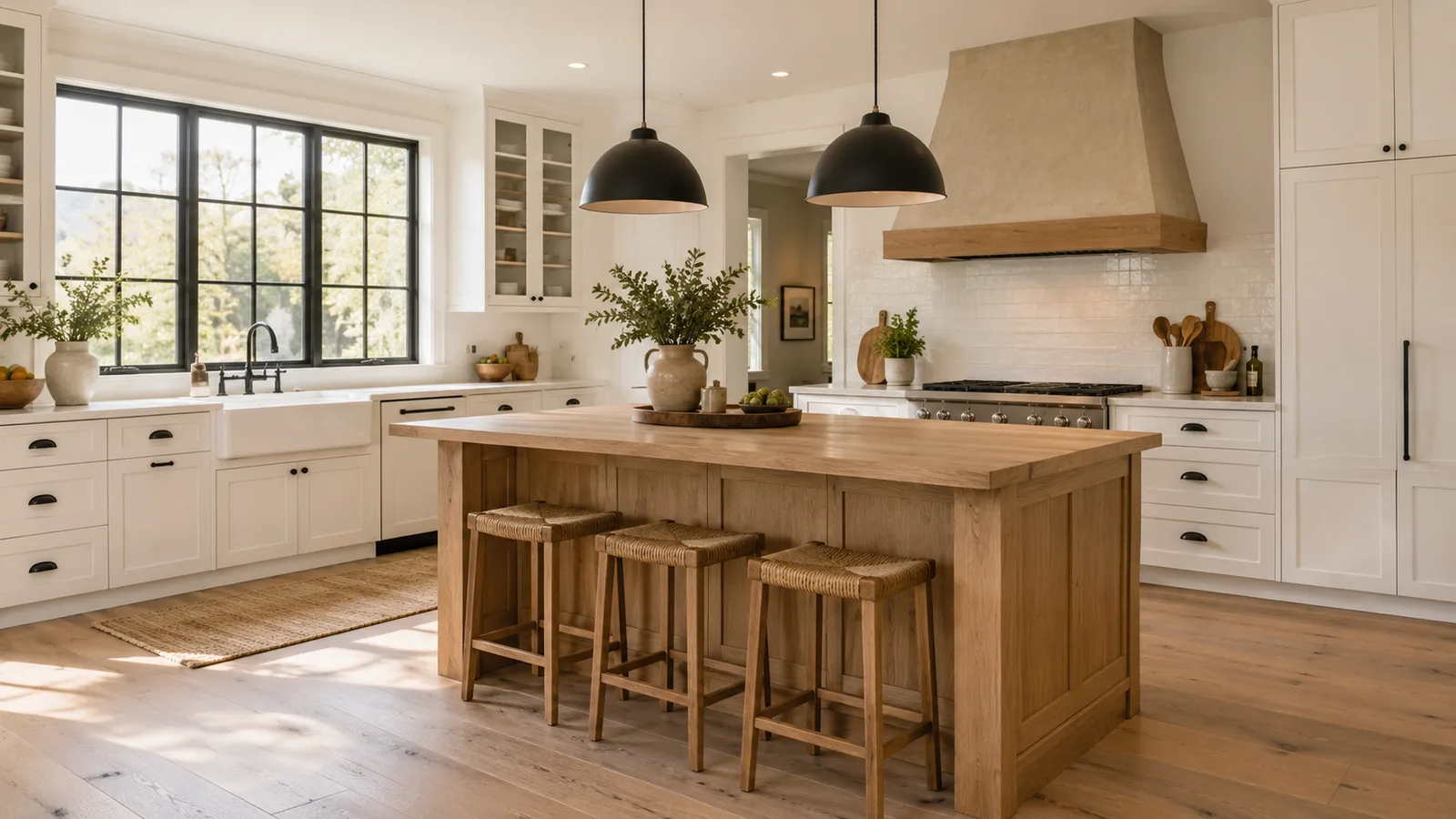
Yes, as long as the island cabinet is built for it and there's room for plumbing and a dishwasher nearby. An apron sink in an island becomes a focal point, so pick a finish you'll enjoy seeing from the living area.
The Bottom Line
- Fireclay or cast iron for the classic white farmhouse look; stainless for a lighter, tougher, budget-friendly option.
- 33 inches is the most versatile width; go 30 inches in small kitchens and 36 inches or more for big cooks.
- Plan the cabinet with the sink: use an apron-front base, follow the spec sheet and build in support.
- Have the sink on site before the countertop is templated.