The short version: the cheapest way to remodel a small kitchen is to keep the layout, paint or reface the cabinets instead of replacing them, and spend on the few things you touch every day: counters, faucet, hardware and lighting. Moving plumbing or walls is what turns a budget refresh into a full-price renovation.
Here's where kitchen money usually goes, the cheaper alternative for each item, and the order of work that avoids paying twice.
Where the Money Goes
Every kitchen is different, but cabinets and installation are typically the biggest costs, followed by counters and appliances. Use this as a relative guide when deciding what to change.
| Item | Typical share of spend | Budget alternative | Savings potential |
|---|---|---|---|
| Cabinets | Largest | Paint or reface existing boxes | High |
| Labor and installation | Large | DIY demo, painting and hardware | High |
| Countertops | Medium | Laminate or butcher block instead of stone | Medium–High |
| Appliances | Medium | Keep working ones; replace one at a time | Medium |
| Plumbing and electrical moves | Variable, can be large | Keep sink and range where they are | High |
| Backsplash | Small–Medium | Simple ceramic tile or peel-and-stick | Medium |
| Hardware and faucet | Small | Upgrade these; big visual impact | Low cost, high impact |
| Lighting | Small | Under-cabinet LEDs, one new fixture | Low cost, high impact |
Prices vary a lot by region, materials and contractor. Get at least three quotes for any work you won't do yourself, and ask each one to itemize so you can compare.
1. Keep the Layout
Moving a sink means new drain and water lines; moving a range can mean a new gas line or a dedicated electrical circuit and venting. Keeping the sink, range and fridge where they are is the single biggest saving in a small kitchen remodel.
If the current layout genuinely doesn't work, see our small kitchen design guide and change only the piece that's broken.
2. Paint, Reface or Replace the Cabinets
| Option | What it involves | Relative cost | Best when |
|---|---|---|---|
| Paint | Clean, sand, prime and paint existing doors and boxes | Low | Boxes and doors are solid and you like the door style |
| Reface | New doors and drawer fronts, veneer on the boxes | Medium | Boxes are solid but the door style is dated |
| Replace | New cabinets | High | Boxes are damaged, or the layout is changing |
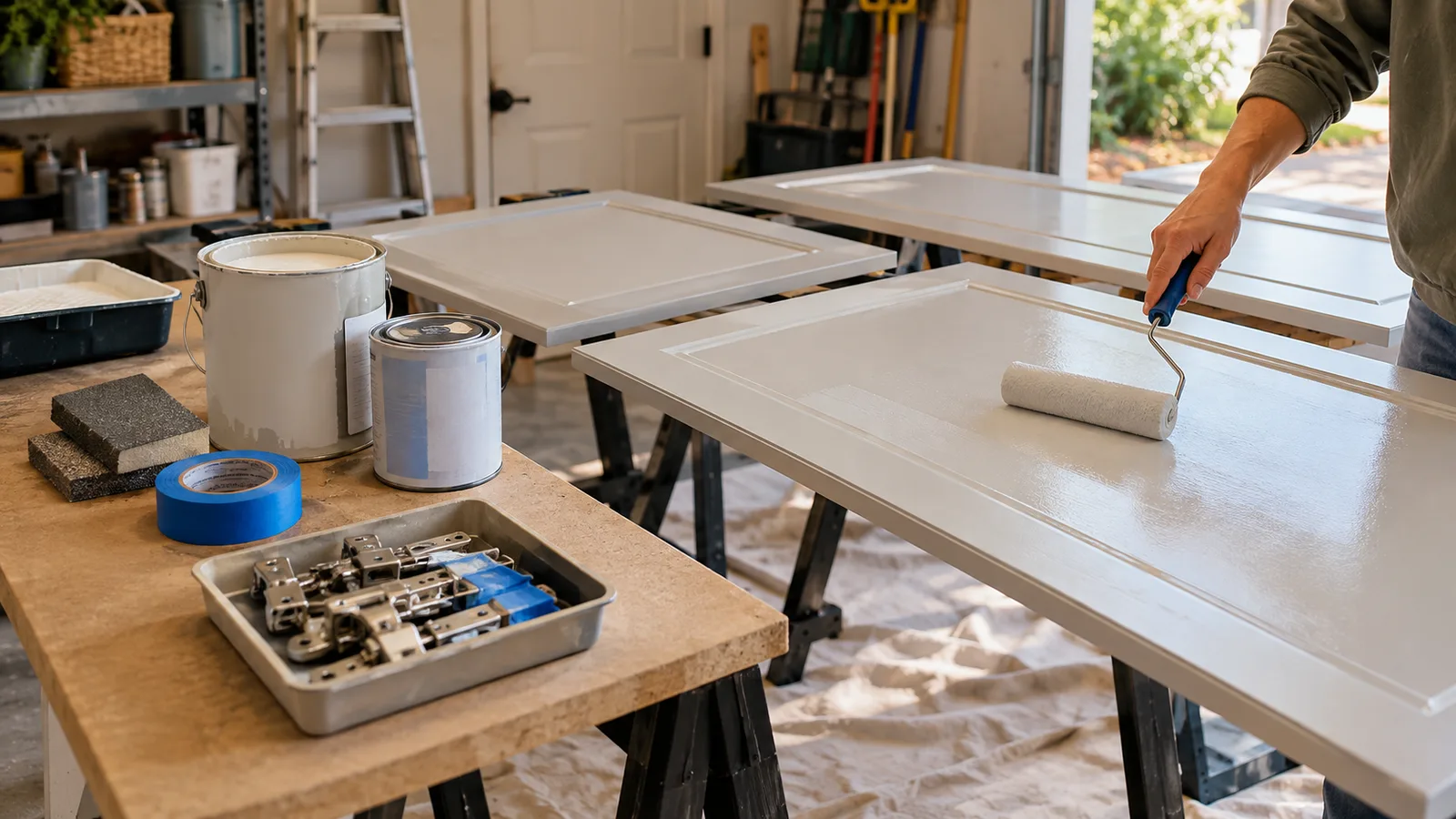
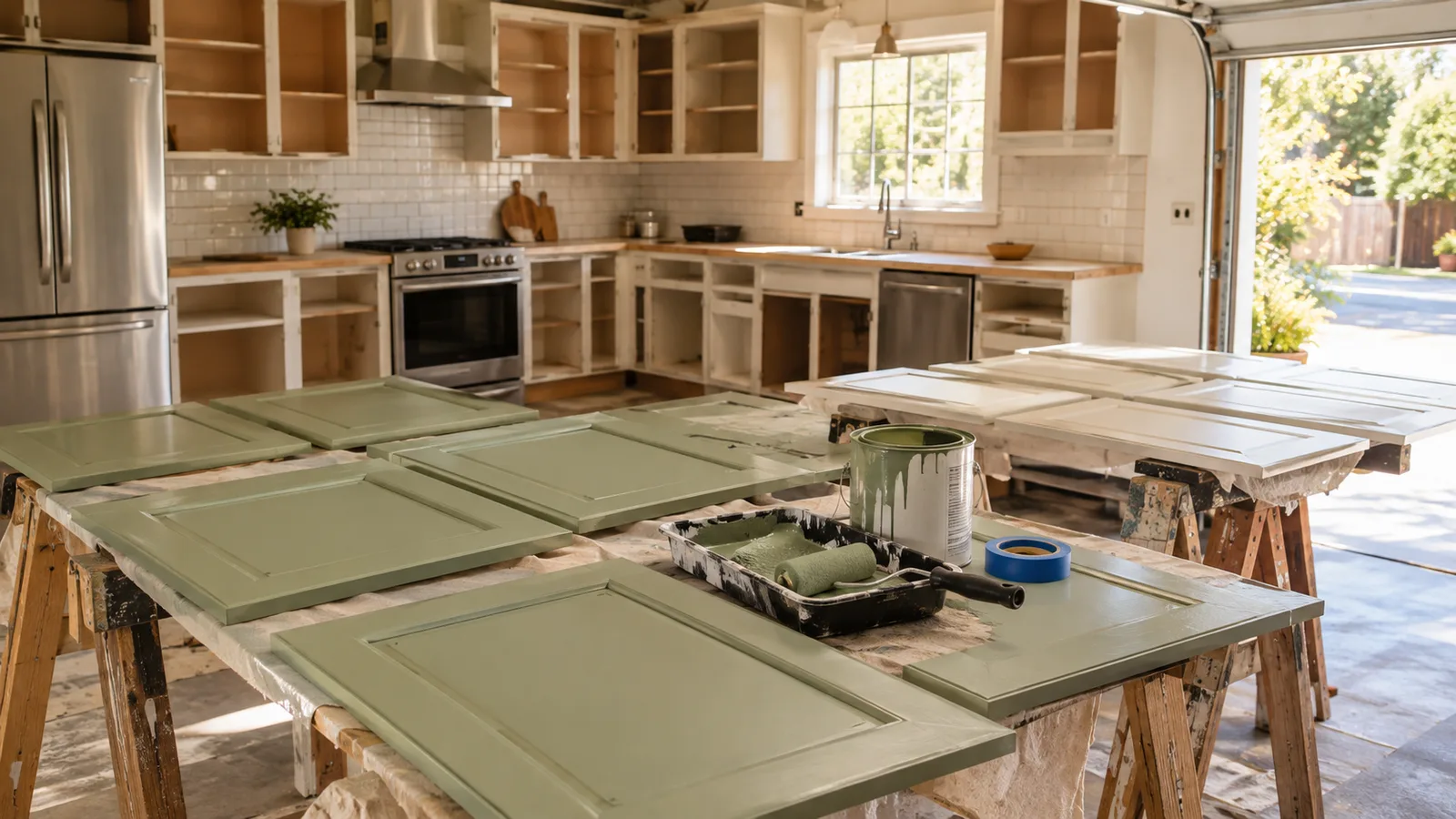
Painting is the classic budget move, but prep is everything: degrease, scuff-sand, use a bonding primer and a cabinet-grade enamel, and give the paint time to cure before heavy use. Our paint calculator helps you estimate the walls while you're at it.
3. Upgrade Hardware and the Faucet
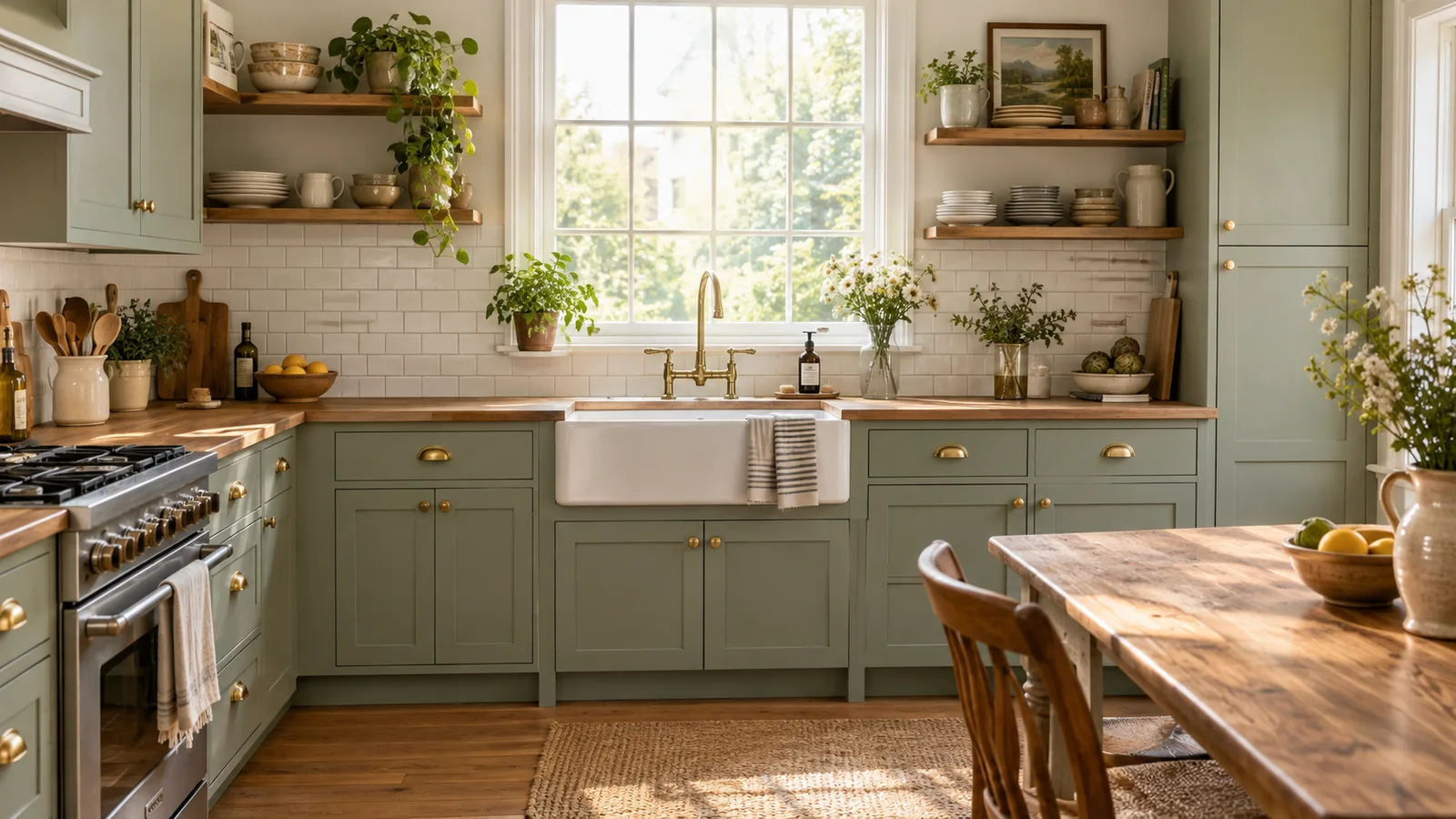
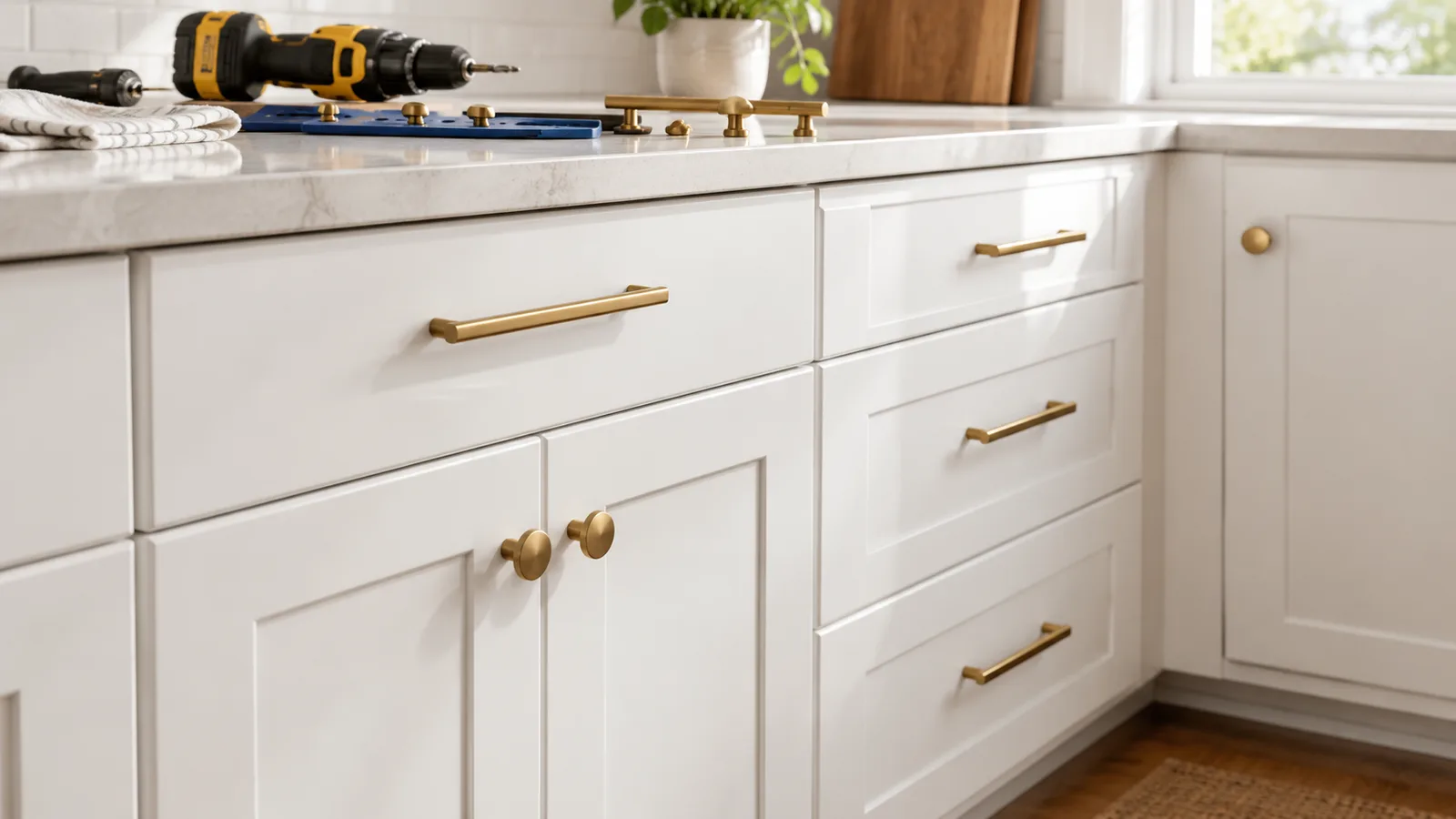
New pulls and a new faucet are among the cheapest changes with the biggest visual payoff. To avoid patching holes, measure the center-to-center spacing of your existing pulls (3 in and 96 mm are common) and buy new ones to match, or use a backplate to cover old holes.
4. Choose Counters Strategically
In a small kitchen you need less counter, so better materials may be more affordable than you think. Options from lower to higher cost:
- Laminate: cheapest, many convincing stone and wood looks, but not heat-proof.
- Butcher block: warm and DIY-friendly; needs oiling or sealing, especially near the sink.
- Quartz or granite remnants: stone yards sell leftover slabs that can be big enough for a small kitchen.
5. Keep the Backsplash Simple
A plain white or neutral ceramic tile in a simple pattern is affordable and timeless. If you rent or want a weekend project, quality peel-and-stick tile is an option. Run the tile calculator before buying so you get enough from the same lot.
6. Add Light Before Anything Else
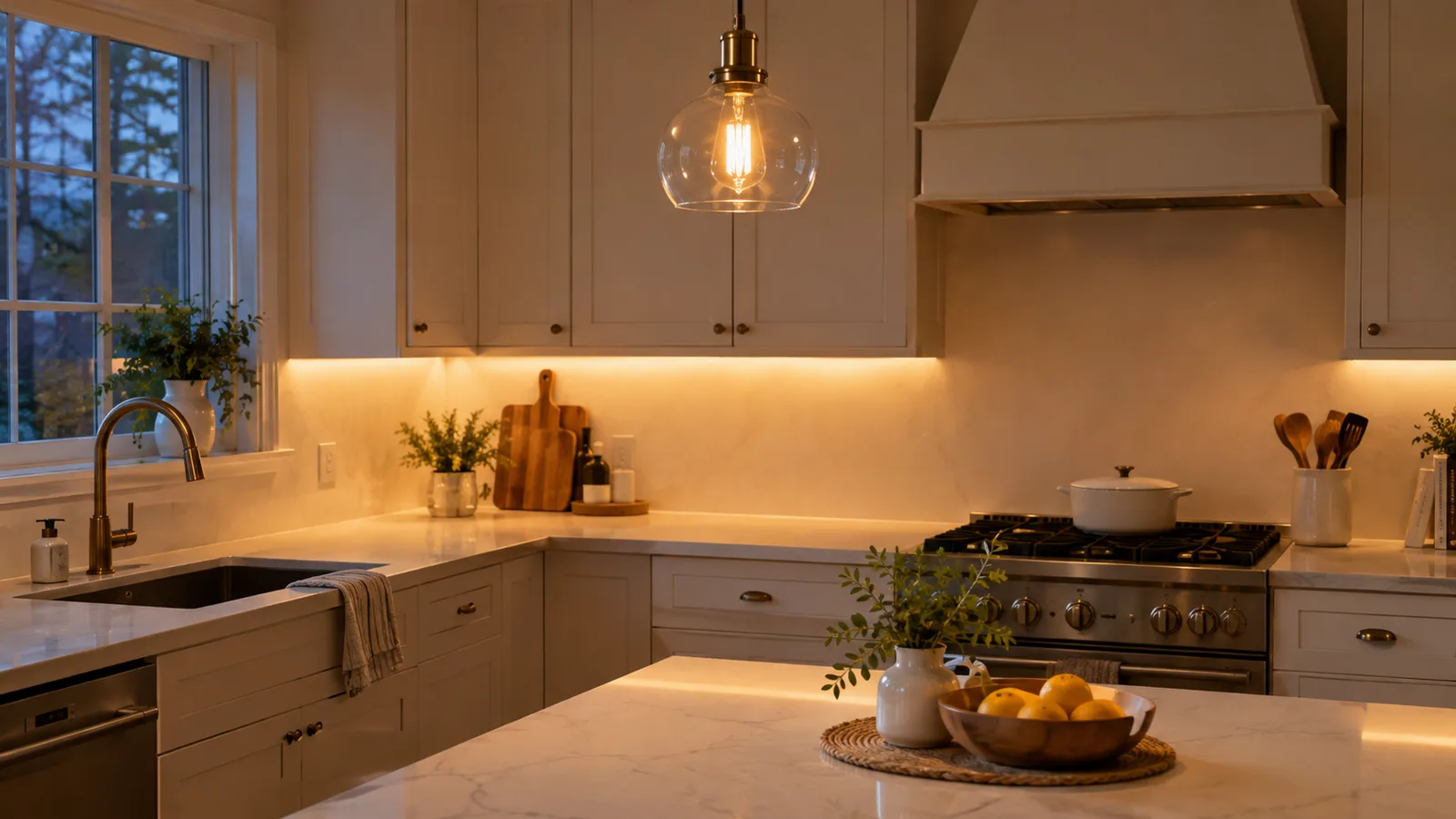
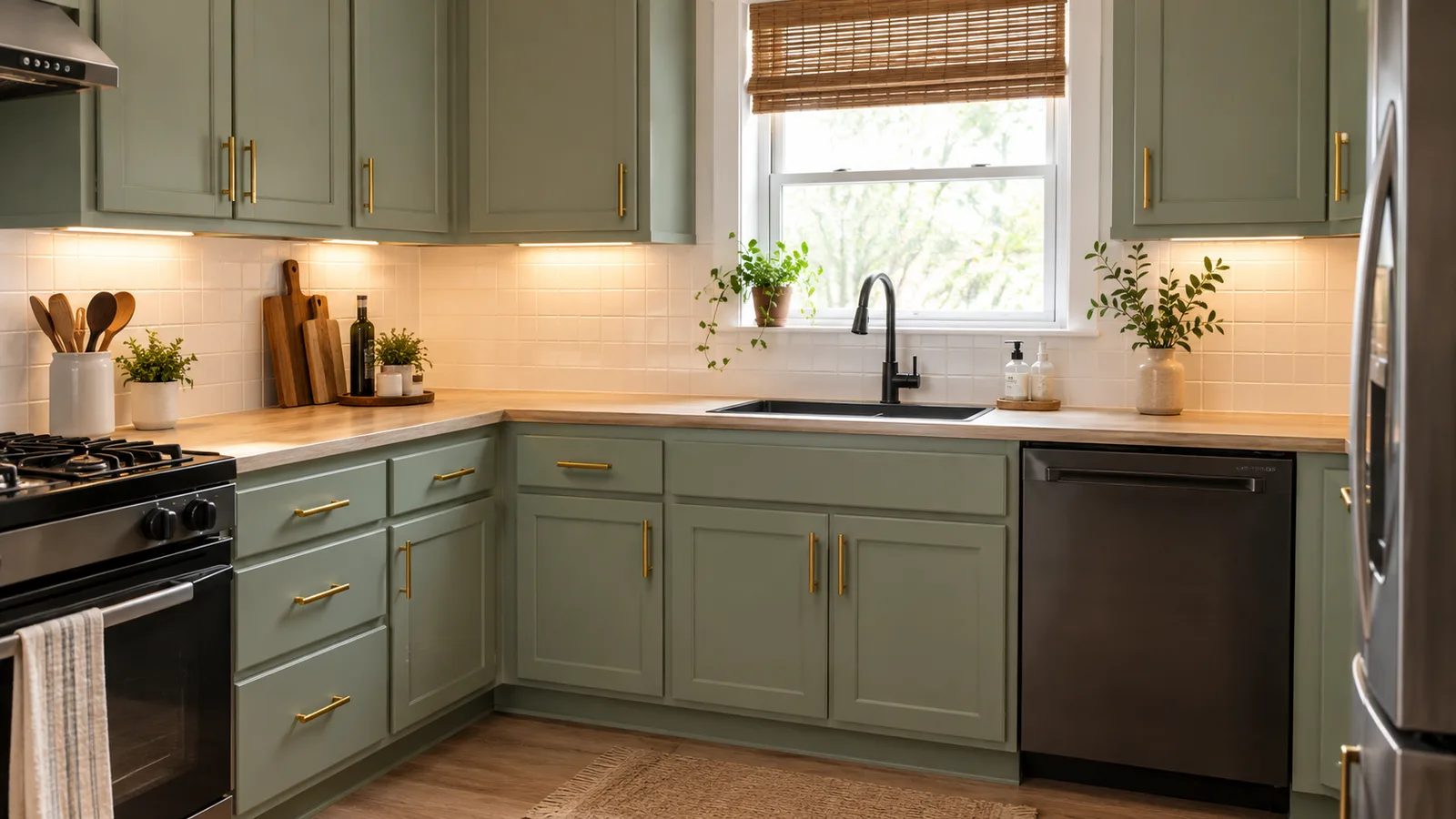
Under-cabinet LED lighting makes an old kitchen feel new and makes cooking easier. Plug-in kits are DIY-friendly; hardwired kits need an electrician unless you're qualified. Swapping one dated ceiling fixture for a simple pendant or flush mount finishes the effect.
7. Replace Appliances One at a Time
If your appliances work, keep them through the remodel and replace them as they fail. If you're replacing one now, pick a size that matches the opening so you don't trigger cabinet changes.
Where to Splurge and Where to Save
| Splurge (you touch it daily) | Save (easy to change later) |
|---|---|
| Faucet and sink | Paint colors |
| Drawer slides and hinges | Decorative lighting style |
| Under-cabinet lighting | Backsplash pattern |
| Counter in the main prep zone | Open shelf styling and accessories |
Hidden Costs to Plan For
- Surprises behind the walls: old wiring, leaks or rot found during demo. Keep a contingency of roughly 10–20% of your budget.
- Permits: electrical, plumbing and some structural work usually need them. Check with your local building department.
- Disposal: a dumpster or junk removal for old cabinets and counters.
- Eating out: even a small remodel can leave you without a working kitchen for a while. Set up a temporary kitchen with a microwave, kettle and dish tub.
- Touch-ups: paint, caulk and trim pieces you didn't expect to need.
DIY vs. Hiring a Pro
| Task | DIY-friendly? |
|---|---|
| Demolition of backsplash and hardware | Yes, with care |
| Painting cabinets and walls | Yes, if you're patient with prep |
| Installing hardware, shelves, plug-in lights | Yes |
| Tiling a small backsplash | Often yes |
| Plumbing, gas and new electrical circuits | Hire a licensed pro |
| Stone countertop fabrication and install | Hire a pro |
Small Changes With an Outsized Payoff
If your budget only stretches to a weekend, these changes give the most visible improvement for the money: a deep clean and degrease of every cabinet door, new hardware, a new faucet, under-cabinet lights, a fresh coat of wall paint, and a simple runner rug. Together they can make an older kitchen look cared for and current without touching a single cabinet box.
The Right Order of Work
- Decide what stays and get quotes.
- Order anything with a long lead time (counters, special-order doors).
- Demo (backsplash, old hardware, fixtures).
- Electrical and plumbing changes, if any.
- Paint or reface cabinets.
- Install counters.
- Backsplash.
- Paint walls, then hardware, lighting and faucet.
Budget-Friendly Supplies
INSL-X
Cabinet Coat Urethane Acrylic Enamel
Painting instead of replacing is the biggest saving, and a cabinet enamel is what makes it last.
- ✓Levels to a smooth finish
- ✓Hard-wearing once cured
- ✓Made for cabinets and trim
INSL-X
Stix Waterborne Bonding Primer
Helps paint grip old glossy finishes, so the new color doesn't peel.
- ✓Sticks to glossy surfaces
- ✓Helps paint grip old finishes
- ✓Water-based
Kreg
Cabinet Hardware Jig
New hardware is a cheap upgrade, and a jig puts every hole in the same spot.
- ✓Drill holes in the same spot every time
- ✓Works for knobs and pulls
- ✓Adjustable
GE Enbrighten
Plug-In LED Under-Cabinet Lights
Makes an old kitchen feel new for very little money, with no electrician.
- ✓No electrician needed
- ✓Brightens the counter
- ✓Warm white options
As an Amazon Associate, we earn from qualifying purchases.
The Bottom Line
A small kitchen remodel stays on budget when you keep the layout, paint or reface instead of replacing cabinets, and spend where you'll feel it every day: counters, faucet, hardware and lighting. Do the prep-heavy jobs yourself, hire pros for plumbing, gas and electrical, and follow the order of work so nothing gets done twice. For more inexpensive upgrades, browse our small kitchen ideas.