Open Shelving vs. Cabinets: Best for Small Kitchens
Deciding between open shelving and upper cabinets is one of the most debated design choices in any small kitchen renovation — and for good reason, because the decision affects everything from how spacious your kitchen feels to how easy it is to keep tidy. If you’re working with limited square footage, this choice carries even more weight, since every wall, every inch of vertical space, and every visual element either opens up the room or closes it down. In this guide, we’re breaking down the real differences between open shelving and cabinets for small kitchens so you can finally stop second-guessing and start designing.
Key Takeaways
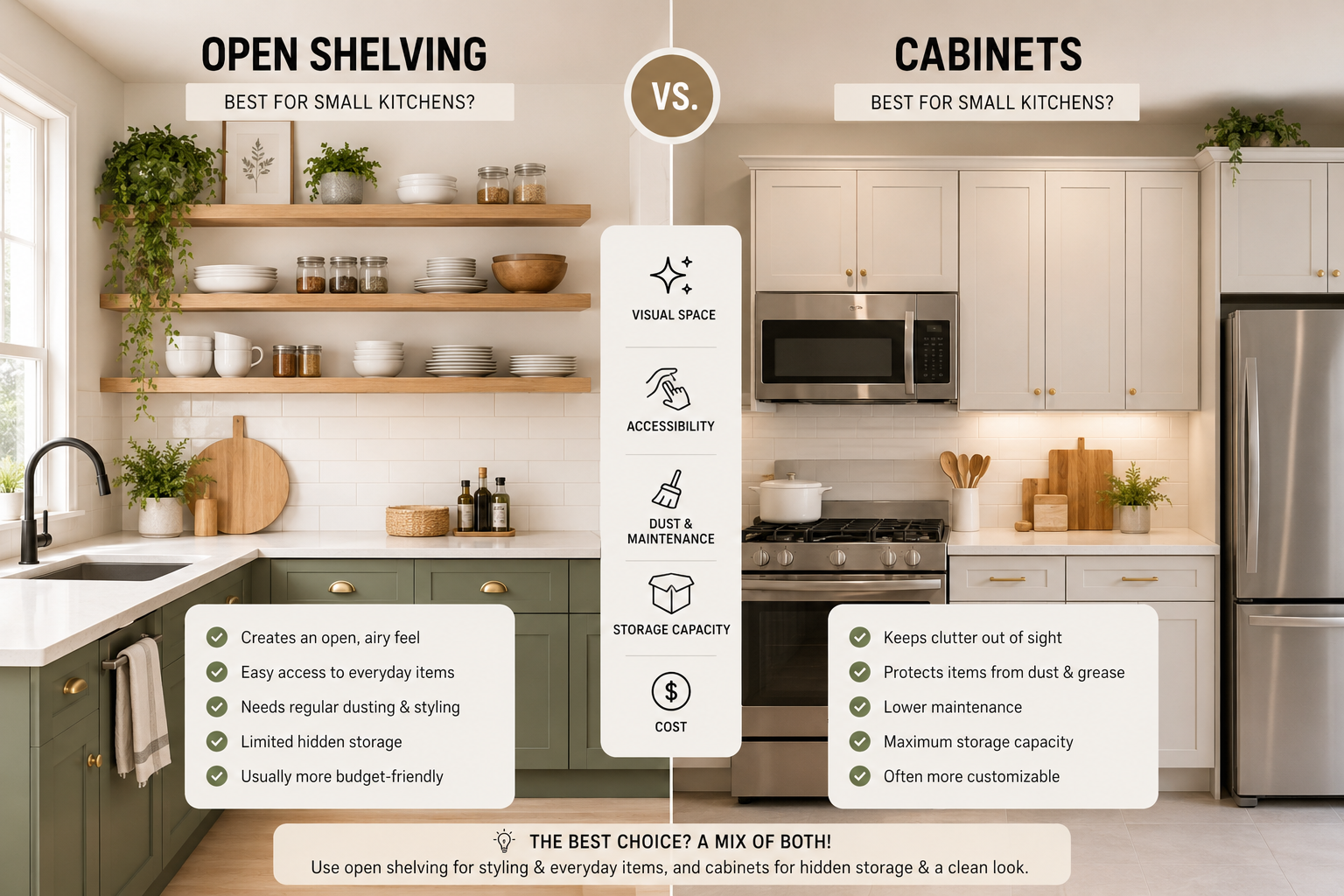
- Open shelving makes small kitchens feel larger and more airy, but requires consistent organization and styling to look its best.
- Upper cabinets provide superior enclosed storage and are far more forgiving if your kitchen tends toward clutter.
- Open shelves are typically cheaper to install than full upper cabinet runs, making them attractive for budget renovations.
- A hybrid approach — mixing open shelves with some closed cabinets — is often the smartest solution for small kitchens.
- Your lifestyle, cooking habits, and how much you value aesthetics vs. practicality should drive the final decision.
The Visual Impact: How Each Option Affects a Small Kitchen’s Look
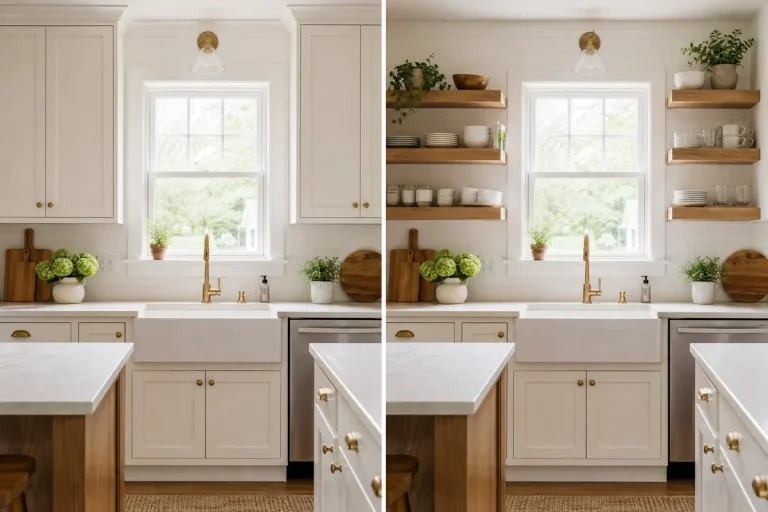
When it comes to a small kitchen, the way your storage solution looks on the wall can make or break the entire feel of the room. Open shelving has a well-earned reputation for making tight spaces feel more breathable. By removing the visual bulk of upper cabinet boxes, your eye can travel farther across the room, which creates a genuine sense of depth and openness. Light bounces around more freely, and if you have a window or a beautiful backsplash, open shelves let those features shine rather than hiding them behind door fronts.
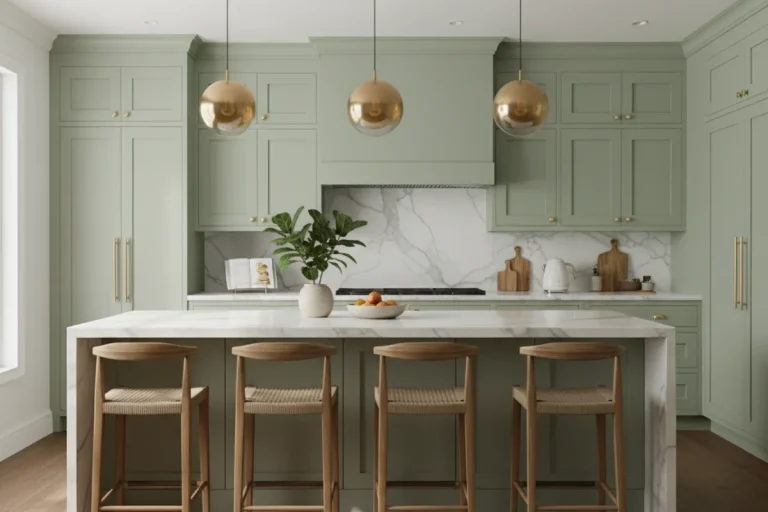
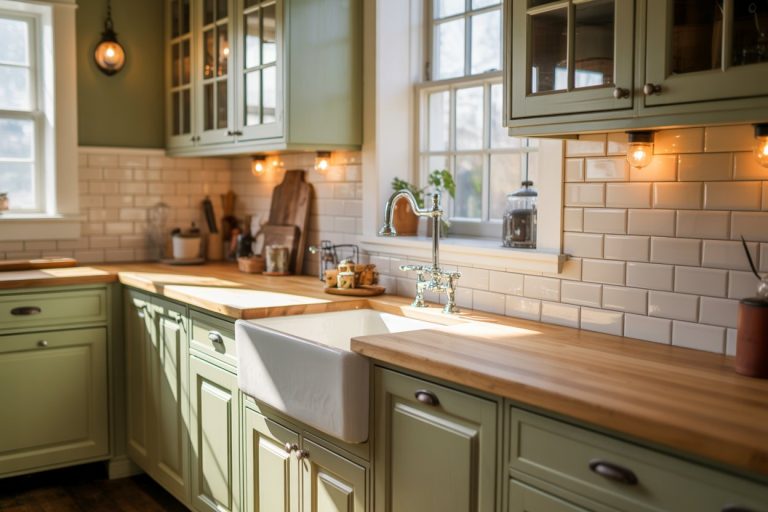
Upper cabinets, on the other hand, create a more enclosed, traditional kitchen feel. In a very small kitchen, a full run of upper cabinets can make the walls feel like they’re closing in — especially if the cabinets are dark or extend all the way to the ceiling without visual breaks. That said, white or light-colored cabinets with simple, clean hardware can actually read as quite airy. If you’re considering a fresh cabinet finish, pairing them with a bright tile treatment — like the ideas explored in our guide to kitchen backsplash ideas with white cabinets — can prevent that closed-in feeling.
Open shelving also gives you a built-in opportunity to style your kitchen like a design magazine spread. Arranging attractive dishes, plants, and jars on display adds personality and warmth that cabinet doors simply can’t offer. But here’s the catch: that styled look requires ongoing effort to maintain, and not every kitchen (or every homeowner) is suited to that level of visual accountability.
Storage & Practicality: The Honest Truth
Let’s be straightforward — cabinets win on raw storage practicality, and it’s not particularly close. Enclosed upper cabinets let you store everything from mismatched Tupperware to expired spice jars to that panini press you use twice a year, all completely out of sight. In a small kitchen where counter space is precious, being able to stash less-attractive items behind closed doors is genuinely valuable.
Open shelving forces a curated approach to your belongings. You can only display what you’re comfortable showing, which means your storage capacity is effectively limited to things that look good or are used frequently. If your kitchen gear is a mix of inherited mismatched pots, hand-me-down dishes, and random gadgets — and that’s most people’s reality — open shelves can feel chaotic rather than charming within a few weeks of installation.
Another practical consideration is dust and grease. Open shelves in a kitchen are exposed to cooking vapors and airborne grease, which means items on display need to be wiped down regularly. Dishes stored on open shelves in an active cooking kitchen can accumulate a fine film surprisingly quickly. Cabinets protect their contents completely, which means less cleaning effort overall.
That said, open shelving has one practical advantage worth noting: accessibility. Everything is visible and within reach at a glance. You never have to open three cabinet doors to find the right lid, and guests can easily locate a glass without asking. For frequently-used items, this visibility is genuinely convenient.
Cost Comparison: What You’ll Actually Spend
Budget is often the deciding factor in any kitchen update, and open shelving has a clear financial advantage. A set of floating shelves — whether you buy pre-made brackets and boards from a hardware store or invest in solid wood custom cuts — typically runs between $50 and $300 per shelf depending on material and bracket quality. For a small kitchen wall, you might spend $200–$600 total for a stylish open shelving setup.
Upper cabinets are a different investment altogether. Stock cabinets from big-box stores start around $75–$150 per linear foot, and semi-custom or custom cabinetry can run $300–$600 per linear foot or more once installation is factored in. For a small kitchen with 8–10 feet of upper cabinet space, you’re looking at a minimum of $600–$1,500 for stock options, and significantly more for anything custom. If you’re looking for ways to stretch your renovation budget creatively, our article on small kitchen remodel ideas under $500 that look expensive has some excellent approaches that pair beautifully with an open shelving strategy.
Installation costs differ too. Floating shelves can be a confident DIY project for most homeowners — you’ll need a stud finder, a level, a drill, and an afternoon. Cabinet installation is more complex, requiring precise alignment, potentially new electrical or plumbing work around existing layouts, and often a professional installer to ensure the doors hang properly and the boxes are level.
Which One Fits Your Lifestyle?
Here’s the question most design guides skip over: which option actually suits the way you live? Open shelving in a small kitchen is a beautiful idea that works wonderfully for people who cook regularly, own attractive kitchenware, and genuinely enjoy keeping their space organized. If you’re the type who always has fresh herbs on the counter, a few ceramic bowls in rotation, and a small collection of cookbooks you actually use — open shelving will feel like it was made for you.
But if your kitchen tends to accumulate clutter, if you have kids who rummage through cabinets, or if you simply don’t want the ongoing pressure of keeping your storage surfaces Pinterest-ready — closed cabinets will make your daily life significantly less stressful. There’s no shame in choosing function over form. A well-organized cabinet kitchen is always going to outperform a chaotic open shelf kitchen, no matter how trendy the shelves look in photos.
It’s also worth thinking about resale value. According to the National Association of Realtors, kitchen updates consistently rank among the top value-adding renovations — but buyer preferences vary widely. Some buyers love the open, airy feel of floating shelves; others immediately see the work required and prefer traditional cabinetry. If resale is on your horizon, a hybrid approach tends to appeal to the widest range of buyers.
Common Mistakes to Avoid with Each Option
Whether you go with open shelving or cabinets, there are a few pitfalls that can undermine the final result in a small kitchen.
With open shelving: The most common mistake is overcrowding the shelves. Less is genuinely more — a few well-chosen items with breathing room look far better than shelves stuffed end-to-end. Another mistake is choosing the wrong bracket or shelf depth. Deep shelves (over 12 inches) in a small kitchen can actually block light and feel heavy. Aim for 8–10 inch depth for upper shelves. Finally, skipping wall anchors into studs is a safety hazard — always mount into solid structure, especially for shelves holding heavy ceramic or cast iron.
With upper cabinets: Installing cabinets that are too low is a frequent mistake in small kitchens — it makes the space feel cramped and shortens the perceived ceiling height. Standard mounting height is 18 inches above the counter, but going to 20–24 inches can open up the visual space dramatically. Another mistake is choosing cabinet door styles with heavy detailing in a small kitchen; raised panel doors can look fussy and bulky. Flat-front or shaker-style doors keep things clean and contemporary.
The Hybrid Approach: Best of Both Worlds
For many small kitchens, the wisest answer isn’t choosing one or the other — it’s using both strategically. A hybrid layout might look like: lower cabinets with enclosed storage for appliances and pantry items, a few upper cabinets flanking the refrigerator for less-attractive items, and open shelves running along one accent wall or beside a window for display and easy-access everyday dishes.
This approach gives you the visual openness and personality of open shelving without surrendering all of your enclosed storage. It’s also a great way to ease into the open shelving trend without committing fully — you can always remove the open shelves and add more cabinets later if your lifestyle changes. If you’re exploring other creative ways to maximize storage in compact spaces, check out these small kitchen ideas that make tiny spaces feel huge for more inspiration that works alongside either storage approach.
Pro Tips for Pulling Off Either Look
For open shelving success: Invest in cohesive dishware. A matching set of simple white or neutral dishes instantly elevates open shelves from cluttered to curated. Use small baskets or containers to corral items like spices, tea bags, or snack packets — this adds texture while keeping things organized. Add a small trailing plant like pothos or a fresh herb pot to bring life and softness to the display.
For cabinet success in a small kitchen: Choose hardware thoughtfully — a slim, brushed brass or matte black pull can add character without overwhelming the space. Consider glass-front doors on at least one cabinet section; this gives you a hint of the open shelving aesthetic while keeping contents protected. Paint the interior of your cabinets in a contrasting color or a cheerful shade — when the doors open, that pop of color adds delight and personality. Also consider extending your cabinet run all the way to the ceiling to maximize storage and draw the eye upward, which makes the ceiling feel higher.
Lighting matters for both options. Under-cabinet lighting makes open shelves glow beautifully and also illuminates work surfaces below closed cabinets. It’s one of the highest-impact, lowest-cost upgrades you can add to either setup.
Frequently Asked Questions
Is open shelving a good idea in a small kitchen?
Open shelving can be an excellent choice for a small kitchen because it creates visual openness and makes the space feel larger and more airy. However, it works best for homeowners who keep a tidy, curated selection of cookware and dishware. If your kitchen tends toward clutter, closed cabinets may be a more practical choice — or consider a hybrid approach with a mix of both.
How much does it cost to replace upper cabinets with open shelves?
Removing upper cabinets and replacing them with floating shelves is one of the more budget-friendly kitchen updates you can make. The shelves themselves typically cost $50–$300 each depending on material and bracket type, and installation is a manageable DIY project. Contrast this with replacing upper cabinets, which can cost $600–$3,000+ depending on size and cabinet quality. You’ll also need to repaint or repair the wall where the cabinets were removed, which adds a small additional cost.
What are the disadvantages of open shelving in a kitchen?
The main disadvantages of open shelving in a kitchen include: items collect dust and grease and need regular cleaning; everything is on display, so organization must be consistently maintained; storage capacity is effectively limited to attractive or frequently-used items; and the look requires ongoing styling effort. In very active or busy kitchens, open shelves can quickly look messy if not managed daily.
Can I mix open shelves and cabinets in a small kitchen?
Absolutely — a hybrid layout is often the smartest choice for small kitchens. A common approach is to keep lower and corner cabinets enclosed (for hiding appliances and less-attractive items) while using open shelves on one wall or flanking a window for display and everyday dishes. This balances visual openness with practical enclosed storage and tends to appeal to the widest range of tastes and lifestyles.
Conclusion
At the end of the day, the best storage solution for your small kitchen is the one that fits both your space and your real life. Open shelving in a small kitchen creates an undeniable sense of openness, saves money, and gives you a gorgeous opportunity to showcase beautiful dishware and decor — but it demands consistency and organization to stay looking its best. Upper cabinets offer unmatched enclosed storage, hide clutter effortlessly, and remain the practical workhorse of kitchen design for a reason. And for many homeowners, the smartest path forward is a thoughtful combination of both.
Don’t feel pressured by design trends to choose a style that doesn’t fit how you actually cook and live. The most beautiful kitchen is one that works for you every single day. Take stock of your habits, your budget, and the visual style you want to wake up to — then build your kitchen around those honest answers. Ready to take the next step? Start by sketching out your wall space and exploring which option (or which combination) feels right for your layout. Your ideal small kitchen is closer than you think.