10 Dark Small Kitchen Ideas That Are Cozy, Not Cramped
Somewhere along the way, we all got the memo: small kitchens should always be white, bright, and airy. But what if that rule is holding your kitchen back from its most beautiful, atmospheric version? These 10 dark small kitchen ideas prove that deep, moody tones can actually make a compact space feel more intentional, more luxurious, and yes — far cozier than any stark white walls ever could.
Key Takeaways
- Dark colors in small kitchens create depth and intimacy rather than shrinking the space — when done right.
- Strategic lighting is the secret weapon that keeps a dark kitchen from feeling cave-like.
- Mixing textures and finishes adds visual interest without adding visual clutter.
- The right hardware, open shelving, and reflective surfaces can balance deep tones beautifully.
- You don’t need to paint every wall dark — even one moody accent can transform the whole vibe.
Why Dark Works in Small Kitchens
The conventional wisdom says: go light to make a room feel bigger. And while there’s truth to that logic in some spaces, small kitchens are a different beast. When you lean into dark tones intentionally, something unexpected happens — the boundaries of the room become less defined. Instead of highlighting every corner and flaw, a deep color wraps the space in a sense of completeness. It feels curated, not cramped.
Think about your favorite cozy restaurant or that charming little café that always feels just right. Chances are, it’s not bathed in glaring white light with bright walls. The moodiness is part of the appeal. Architectural Digest has long championed dark kitchens as one of the most enduring design trends precisely because they deliver a sense of drama and warmth that lighter palettes simply can’t match.
The key is balance — and we’ll walk you through exactly how to achieve it across 10 stunning design directions.
1. Charcoal Cabinets with Warm Brass Hardware
Charcoal is the gateway drug of dark kitchen design. It’s deep enough to feel moody but soft enough to avoid feeling oppressive. Pair charcoal gray cabinets with warm brass or antique gold hardware and you’ve got a combination that feels both sophisticated and welcoming. The warm metal tones cut through the coolness of the gray and add a glow that makes the kitchen feel alive.
Pro tip: Choose a satin or eggshell finish on your cabinets rather than flat matte — the slight sheen helps bounce light around the room, keeping things from feeling too heavy.
Common mistake: Using cool-toned silver or chrome hardware with charcoal. It reads as sterile and industrial rather than cozy. Stick with warm metals for this pairing.
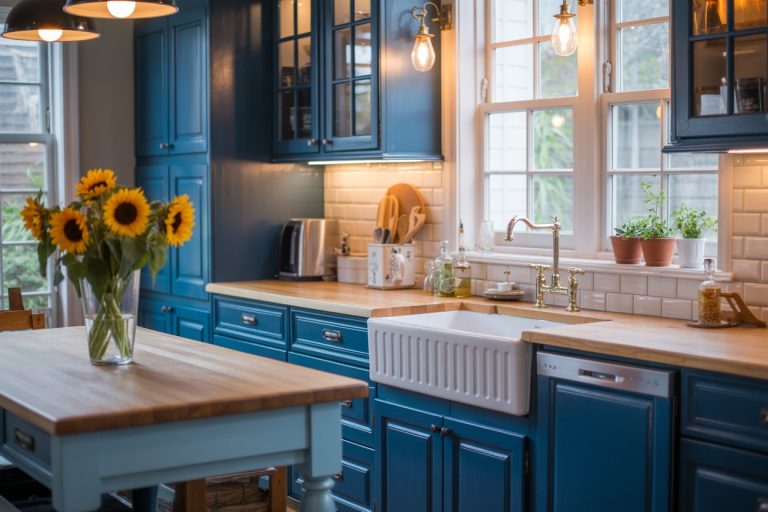
2. Navy Blue Lowers with White Uppers
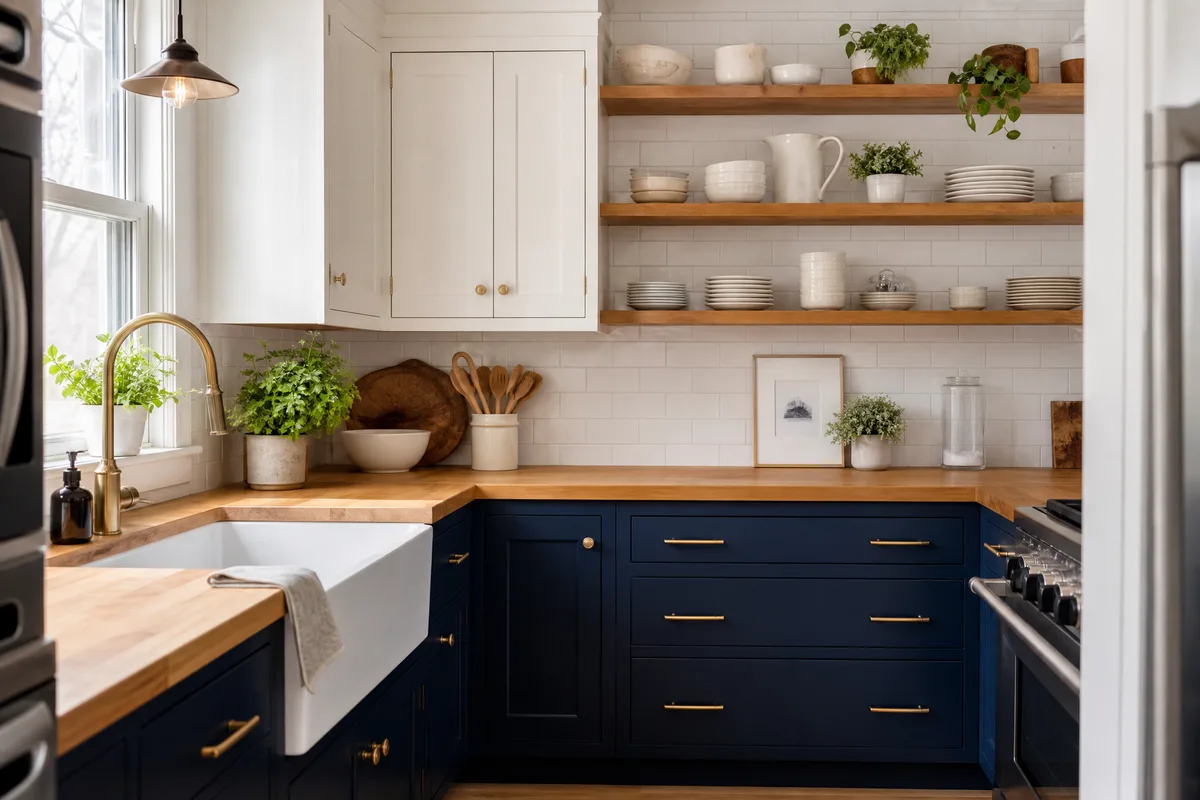
If you’re not ready to commit to dark tones on every cabinet, this approach gives you the best of both worlds. Navy blue lower cabinets ground the kitchen with richness and depth while white upper cabinets keep the eye moving upward and maintain brightness near the ceiling — which tricks the brain into perceiving more height and openness.
This is one of the most popular dark small kitchen ideas for renters and first-time decorators because you can often achieve it with just a can of paint on your lower cabinets. Pair it with a white subway tile backsplash or light countertops to create contrast that feels intentional rather than accidental.
When weighing your cabinet choices, it’s worth reading up on open shelving vs. cabinets for small kitchens — sometimes replacing your upper cabinets with open shelves is the move that makes the dark-lower-light-upper combo really sing.
3. Deep Forest Green Shaker Cabinets
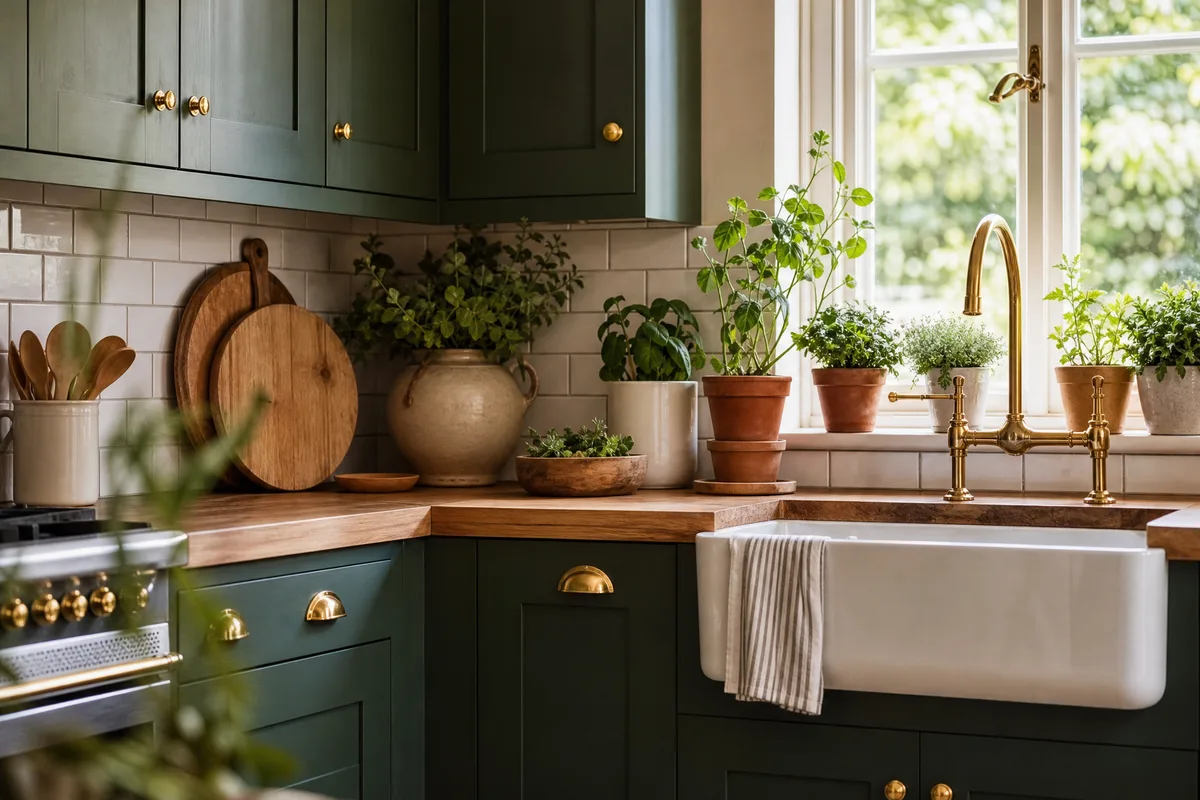
Forest green has officially dethroned navy as the chicest dark cabinet color of the decade, and for good reason. It’s earthy, organic, and deeply cozy — like bringing the outside in. In a small kitchen, deep green cabinets feel like a hug. They’re unexpected enough to feel designer-done but grounded enough to feel livable.
Pair forest green with unlacquered brass fixtures, butcher block countertops, and a white or cream tile backsplash. Add a few trailing plants on the windowsill or a small herb garden on the counter, and the botanical vibe becomes complete.
Pro tip: Farrow & Ball’s Calke Green and Benjamin Moore’s Hunter Green are two go-to shades that look stunning in low light and natural light alike.
4. Matte Black Everything — Done Right
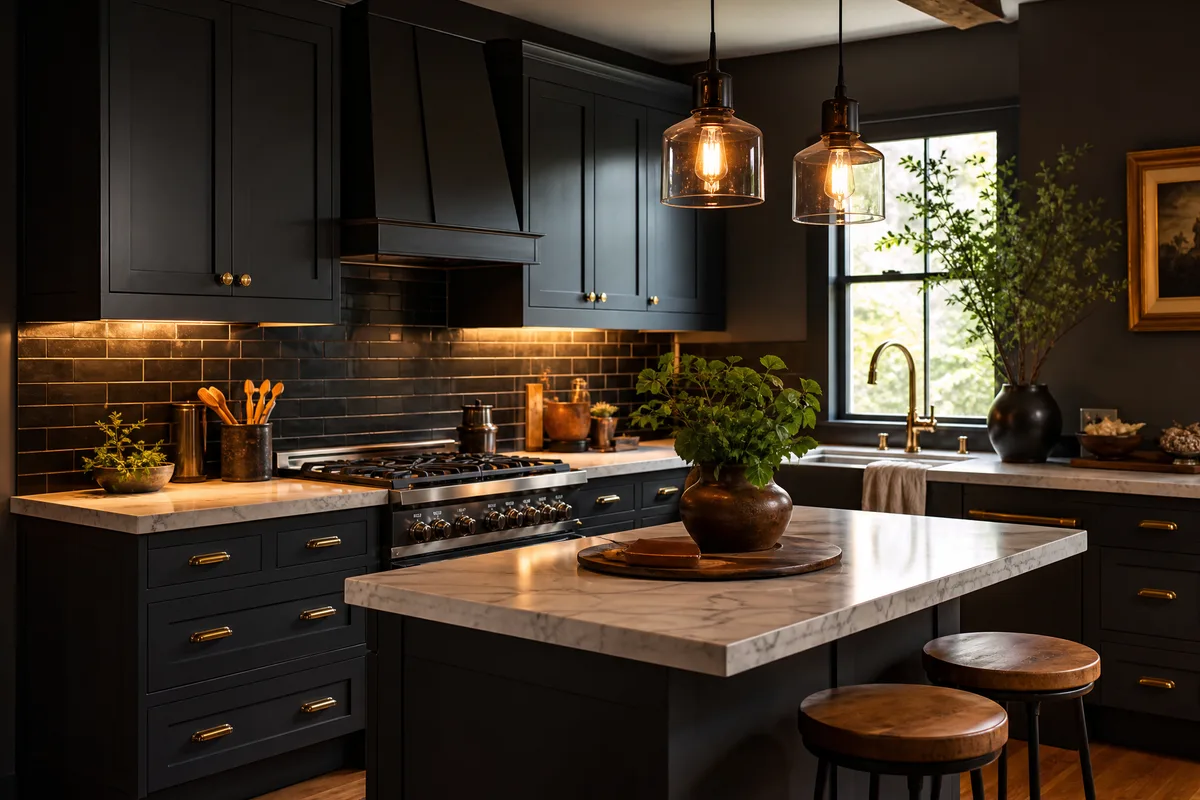
Yes, all-black kitchens can work in small spaces — but they require a very specific execution. The secret? Varying your textures relentlessly. Matte black cabinets, a glossy black tile backsplash, brushed black hardware, and a concrete or marble countertop in a lighter tone create a layered, dimensional look that prevents the space from collapsing into a visual void.
Under-cabinet lighting becomes absolutely essential here. Warm LED strips along the bottom of your upper cabinets (or the underside of open shelves) throw a golden glow across your countertops that gives the kitchen warmth and depth. This is one of those dark small kitchen ideas that photographs beautifully and feels even better in person.
5. Dark Backsplash, Light Cabinets
Not sure about dark cabinets? Let your backsplash do the heavy lifting. A dark backsplash — think deep charcoal subway tiles, moody emerald zellige, or dramatic black hexagon tiles — can transform the entire atmosphere of a kitchen while your cabinets stay light and neutral. If you love the idea of moody texture without the commitment, check out these dark kitchen backsplash ideas that feel luxurious for even more inspiration.
This approach is also incredibly budget-friendly since tile is often cheaper than a full cabinet repaint or replacement, and it delivers significant visual impact for the investment.
6. Dark Wood with Natural Stone
There is something deeply primal and satisfying about a kitchen built from natural materials in their darkest, richest forms. Dark walnut or espresso-stained cabinetry paired with a honed slate or soapstone countertop is a combination that feels ancient and modern at the same time — like a Viking longhouse updated for 2025.
The warmth of the wood grain prevents the space from ever feeling cold, and the variation in the stone’s surface keeps things visually interesting without needing any additional decoration. Keep your dishware simple — whites and creams — and let the materials speak.
Common mistake: Choosing overly shiny lacquered dark wood that bounces light in distracting ways. Opt for a matte or satin wood finish and a honed (not polished) stone countertop for the most cohesive, cozy result.
7. Plum and Burgundy for the Bold
This is the dark small kitchen idea for people who want to make a serious statement. Plum and burgundy cabinetry occupy a rare space in the design world — deep enough to feel dramatic but warm enough to feel welcoming. These tones work especially well in kitchens with natural wood floors, copper or oil-rubbed bronze fixtures, and plenty of ambient lighting.
The key to pulling this off without going over the top is restraint everywhere else. Keep walls neutral (white, cream, or light gray), countertops simple, and accessories minimal. Let the cabinetry be the star and everything else be the supporting cast.
8. Slate Gray with Open Shelving
Slate gray hits a beautiful middle ground between charcoal and medium gray — it’s dark enough to feel intentional but light enough to breathe. Combine it with floating wood open shelving for a Scandinavian-inspired look that feels organized and editorial. The open shelves break up the heaviness of the dark cabinets and give you a place to display beautiful objects — handmade pottery, olive oil bottles, a vase of dried eucalyptus.
Since storage strategy matters just as much as aesthetics in a small kitchen, it’s worth thinking through your organization approach for small kitchens with zero extra storage before committing to how many shelves versus closed cabinets you need.
9. The Dark Ceiling Trick
Here’s a dark small kitchen idea that most people never consider: paint only your ceiling a deep, moody color and leave everything else relatively neutral. This is one of the most transformative and underrated design moves you can make. A dark ceiling — think deep navy, forest green, or charcoal — creates a canopy effect that makes the room feel intimate and dramatic without making it feel smaller.
It works especially well in kitchens with lower ceilings where you’ve already lost the battle for vertical height. Instead of fighting the low ceiling, you celebrate it — making it feel like a deliberate design choice rather than an architectural limitation.
10. Two-Tone Dark Kitchens
Who says you have to pick just one dark color? Two-tone kitchens — where you use two different dark shades rather than a dark-and-light combination — are having a major moment. Try pairing deep olive green lowers with charcoal upper cabinets, or navy blue cabinets with a near-black island. The tonal layering adds enormous depth and makes the kitchen feel like it was designed by a professional.
This works beautifully in small kitchens because the close tonal relationship between the two colors prevents the space from feeling visually fragmented. It reads as sophisticated, not chaotic. If you’re tackling a full kitchen refresh, you might also want to explore small kitchen remodel ideas under $500 that look expensive to maximize your impact without overspending.
Lighting Tips That Make Dark Kitchens Glow
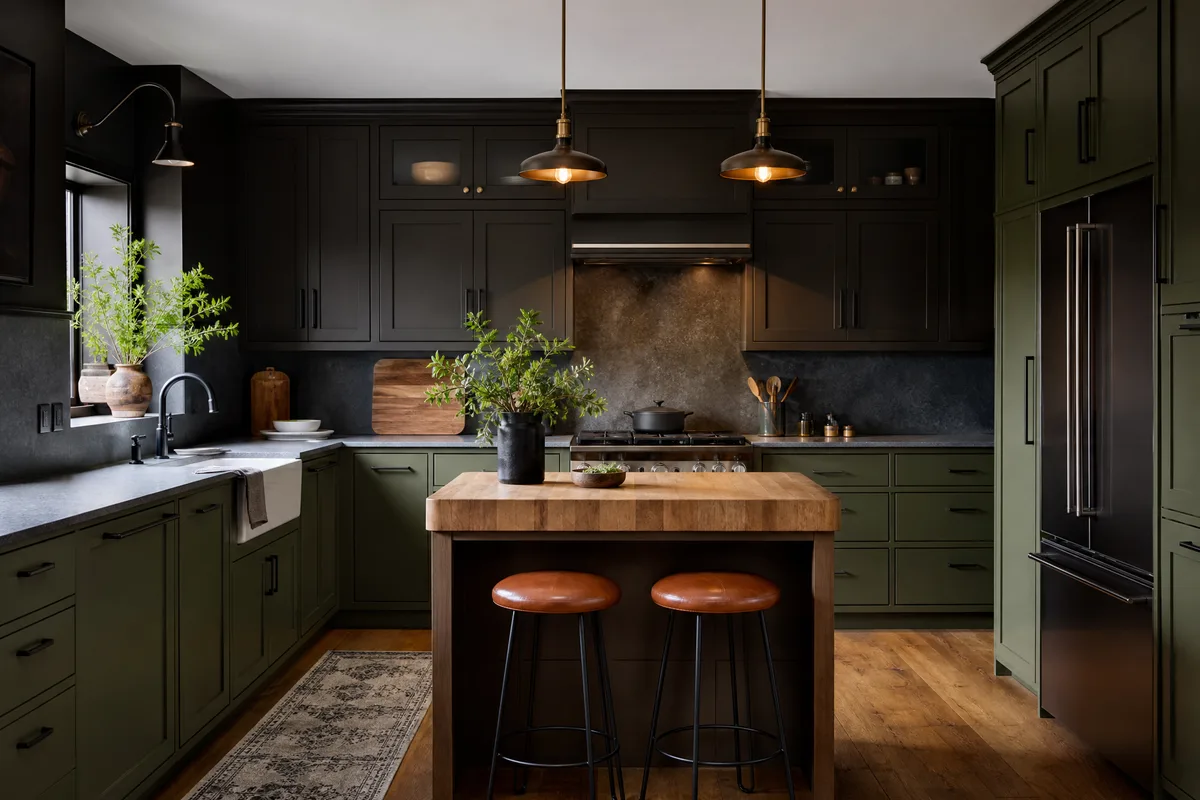
No guide to dark small kitchen ideas would be complete without talking seriously about lighting. This is where dark kitchens succeed or fail. Here are the non-negotiables:
- Layer your lighting. You need ambient (overhead), task (under-cabinet), and accent (inside glass cabinets or above shelves). Dark kitchens with only one light source feel dungeon-like.
- Choose warm bulbs. Stick to 2700K–3000K color temperature. Cooler bulbs make dark kitchens feel clinical and gloomy.
- Install a statement pendant. A beautiful pendant light over a small island or peninsula becomes jewelry for your kitchen — it draws the eye upward and adds warmth and character.
- Don’t underestimate under-cabinet strips. These are the single highest-impact, lowest-cost lighting upgrade you can make in a dark kitchen. They illuminate your workspace and bathe your backsplash in a gorgeous glow.
- Mirrors and reflective surfaces. A mirrored backsplash tile, glossy cabinet fronts, or even a small mirror on a nearby wall can double the perceived light in your kitchen dramatically.
Frequently Asked Questions
Will dark cabinets make my small kitchen look smaller?
Not necessarily — and often the opposite is true when done correctly. Dark tones create depth and make boundaries feel less defined, which can actually make a small kitchen feel more intentional and spacious. The key is balancing the dark tones with strategic lighting, reflective surfaces, and at least some lighter elements (countertops, backsplash, or ceiling) to prevent the space from feeling closed in.
What is the best dark color for a small kitchen?
Charcoal gray and navy blue are the most forgiving dark colors for small kitchens because they pair easily with a wide range of hardware, countertop, and backsplash options. Forest green is also an excellent choice for those who want warmth. Avoid very cool, stark black tones unless you’re confident in your lighting setup and texture layering — they’re stunning but require more expertise to execute in a small space.
How do I keep a dark small kitchen from feeling depressing?
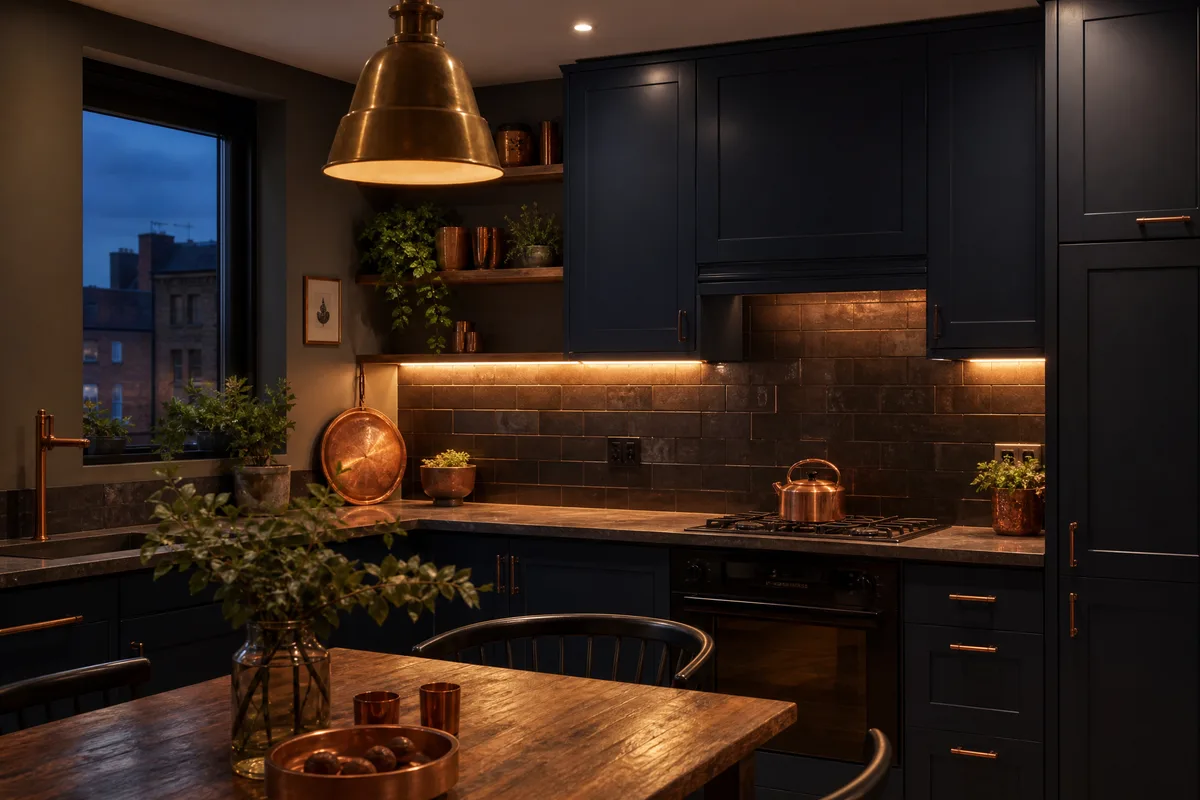
Warmth is the antidote to a gloomy dark kitchen. Use warm-toned bulbs (2700K–3000K), incorporate natural materials like wood and stone, add metallic accents in brass or copper, and bring in life with plants or fresh herbs. Good layered lighting — ambient, task, and accent — is the single most important factor in keeping a dark kitchen feeling cozy rather than cave-like.
Can I achieve a dark kitchen look on a budget?
Absolutely. You don’t need to replace your cabinets to go dark. Painting existing cabinets is one of the most cost-effective transformations available, and a dark backsplash update can dramatically shift the mood of a kitchen for a few hundred dollars. Even dark hardware swaps on existing light cabinets can add a moody, elevated feel without a major investment.
Ready to Go Dark?
The era of reflexively painting every small kitchen white is over — and that’s a very exciting thing. These 10 dark small kitchen ideas prove that deep, moody tones have a genuine place in compact spaces, offering something that bright whites simply cannot: atmosphere. That feeling of stepping into your kitchen and actually wanting to linger there, pour another cup of coffee, cook something slow and indulgent.
Whether you start with a single dark backsplash, paint your lower cabinets a rich forest green, or commit fully to an all-matte-black scheme layered with warm lighting and natural textures, the most important thing is to trust the process. Balance light and depth thoughtfully, layer your materials, and let your kitchen become the cozy, characterful heart of your home it was always meant to be.
Browse more inspiration across the site — and don’t be afraid to go dark. Your kitchen will thank you for it.