Open Shelving vs. Cabinets: Best for Small Kitchens
When you’re working with a compact kitchen, every decision matters — and few choices spark more debate than whether to go with open shelving or traditional upper cabinets. The right pick can make your small kitchen feel airy and styled, or it can leave you with a cluttered mess and regret. In this detailed comparison, we’re breaking down everything you need to know so you can choose with total confidence.
Key Takeaways
- Open shelving in a small kitchen creates visual space and makes the room feel larger, but requires consistent organization and tidiness.
- Upper cabinets offer superior hidden storage and are more practical for households with kids, pets, or heavy cooking habits.
- Open shelves are almost always cheaper to install than full upper cabinets, making them attractive for budget renovations.
- A hybrid approach — mixing open shelves with a few cabinets — often delivers the best of both worlds in tight spaces.
- Your lifestyle, cooking frequency, and design aesthetic should drive the final decision more than trends alone.
The Core Difference Between Open Shelving and Cabinets
At their most basic, open shelves are exactly what they sound like — horizontal surfaces mounted to your wall without doors or enclosures. Upper cabinets, by contrast, are enclosed boxes with doors that hide everything stored inside. In a standard kitchen, upper cabinets dominate the wall space above the countertop, running from roughly 18 inches above the counter all the way to the ceiling in some designs.
The debate around open shelving in small kitchens has intensified in recent years, largely driven by social media imagery of gorgeous, curated kitchen shelfies. But what looks effortless on Instagram can be a different story in everyday life. Understanding the fundamental trade-offs between these two storage approaches is the first step to making a decision you won’t regret.
Open shelves put everything on display — your dishes, glassware, pantry staples, and yes, any clutter you haven’t dealt with yet. Cabinets, on the other hand, operate on a concealment model: everything is tucked away, presenting a uniform, clean face to the room. For small kitchens specifically, the visual weight of each option plays an enormous role in how the space ultimately feels.
Aesthetics: Which Looks Better in a Small Kitchen?
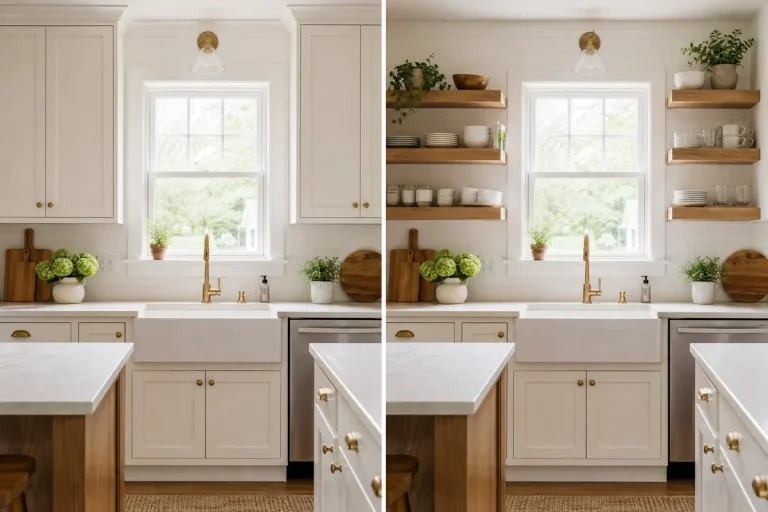
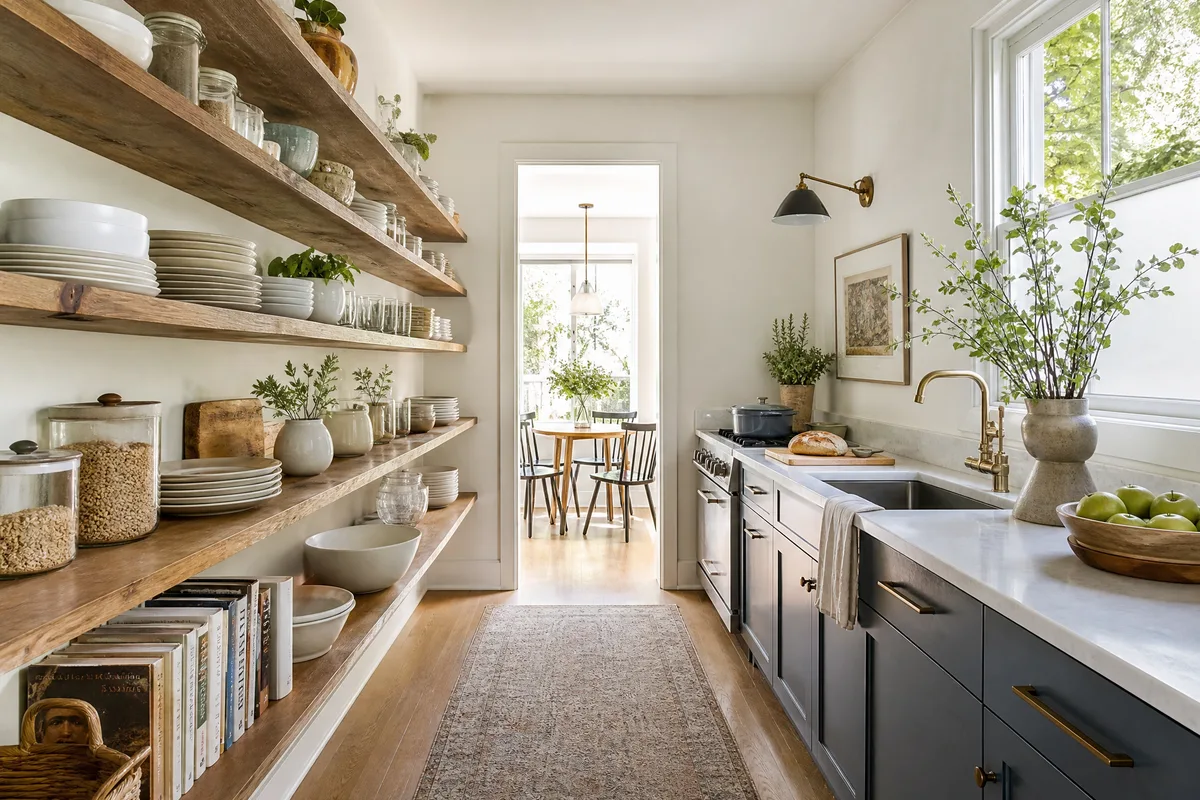
From a pure design standpoint, open shelving has a significant advantage in tight spaces: it eliminates visual mass. When you remove the bulk of upper cabinet boxes from a small kitchen, the walls open up, light moves more freely, and the room immediately feels less closed-in. This is why so many designers lean toward open shelves when working with galley kitchens, narrow layouts, or spaces under 100 square feet.
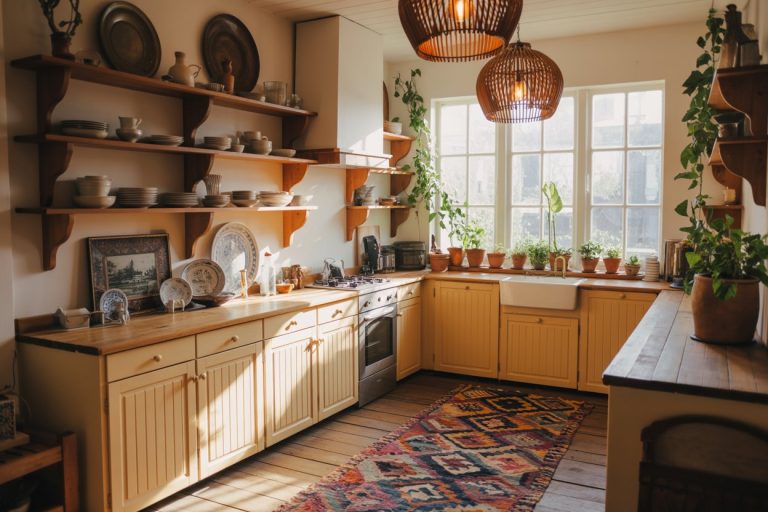
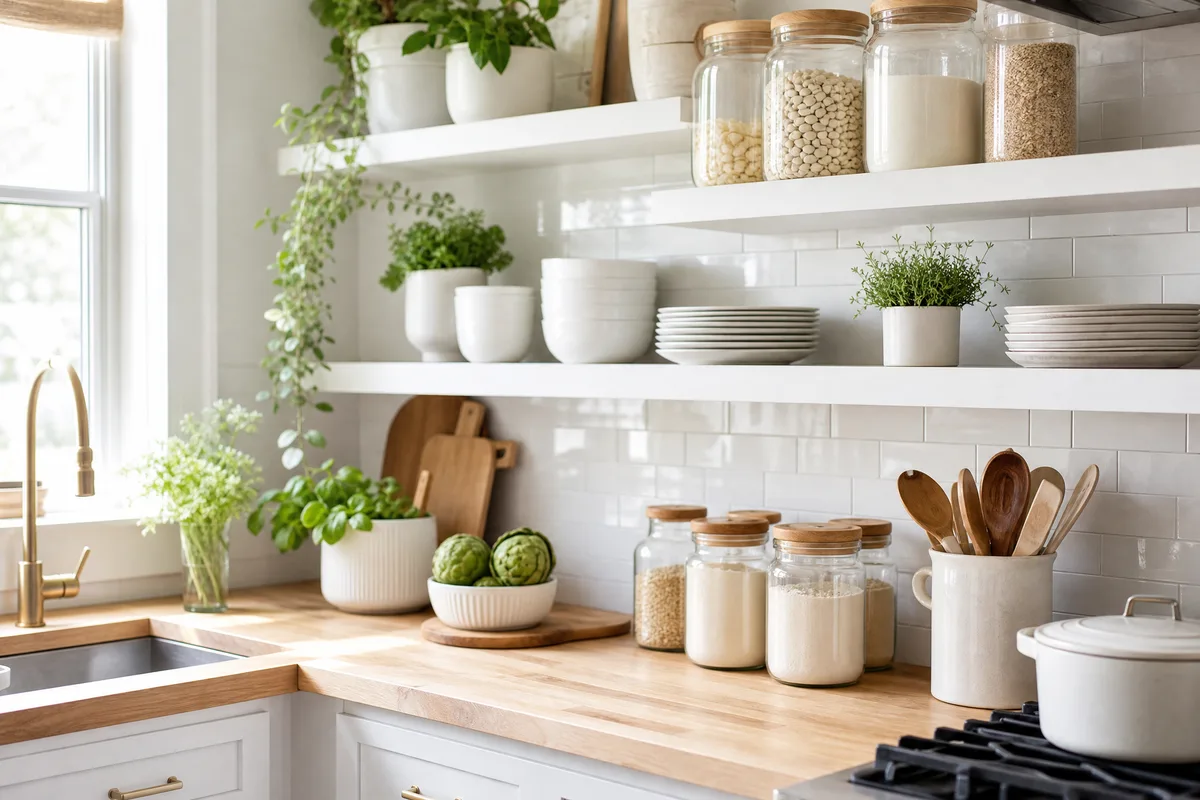
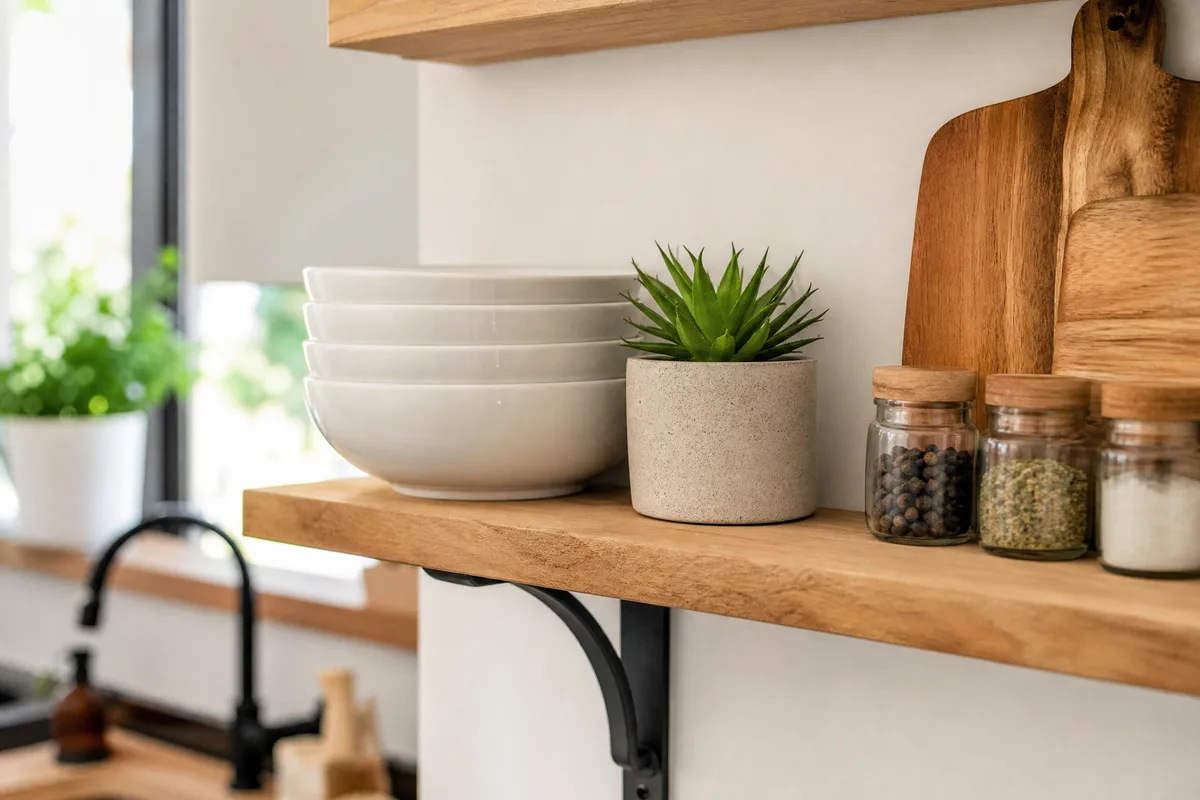
Open shelves also give you an opportunity to add personality. A well-curated shelf with matching canisters, a small trailing plant, a few cookbooks, and your prettiest bowls becomes a design feature rather than just storage. If you’re drawn to farmhouse, Scandinavian, bohemian, or modern minimalist aesthetics, open shelving can elevate your kitchen’s entire look.
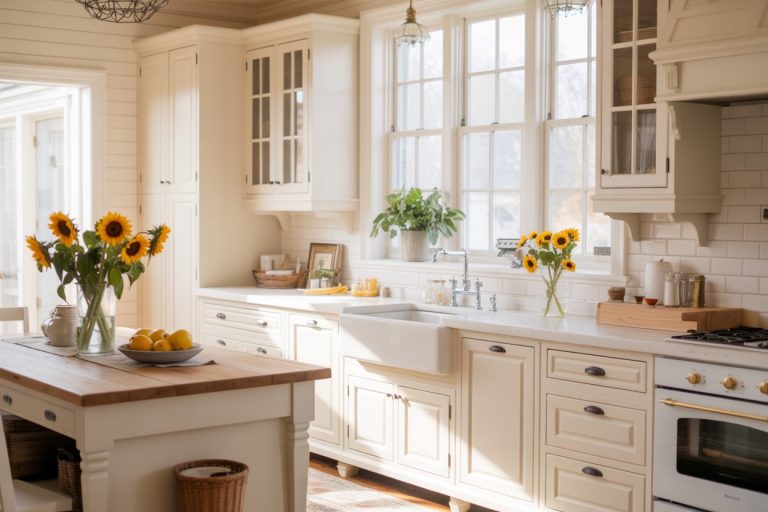
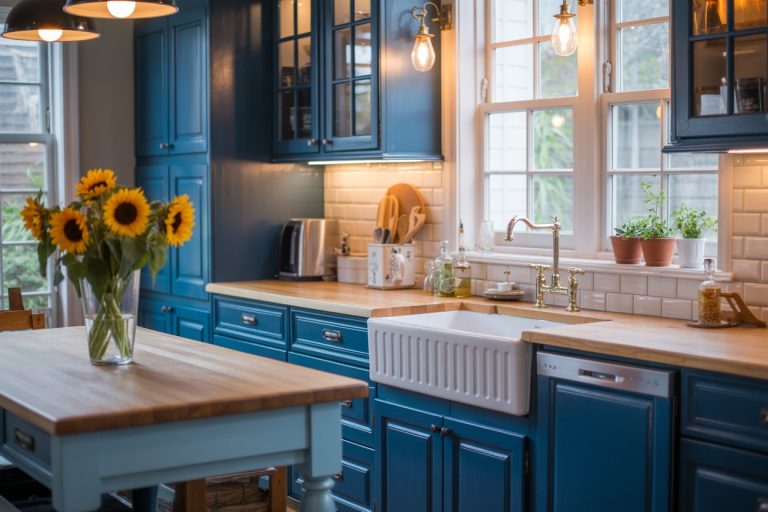
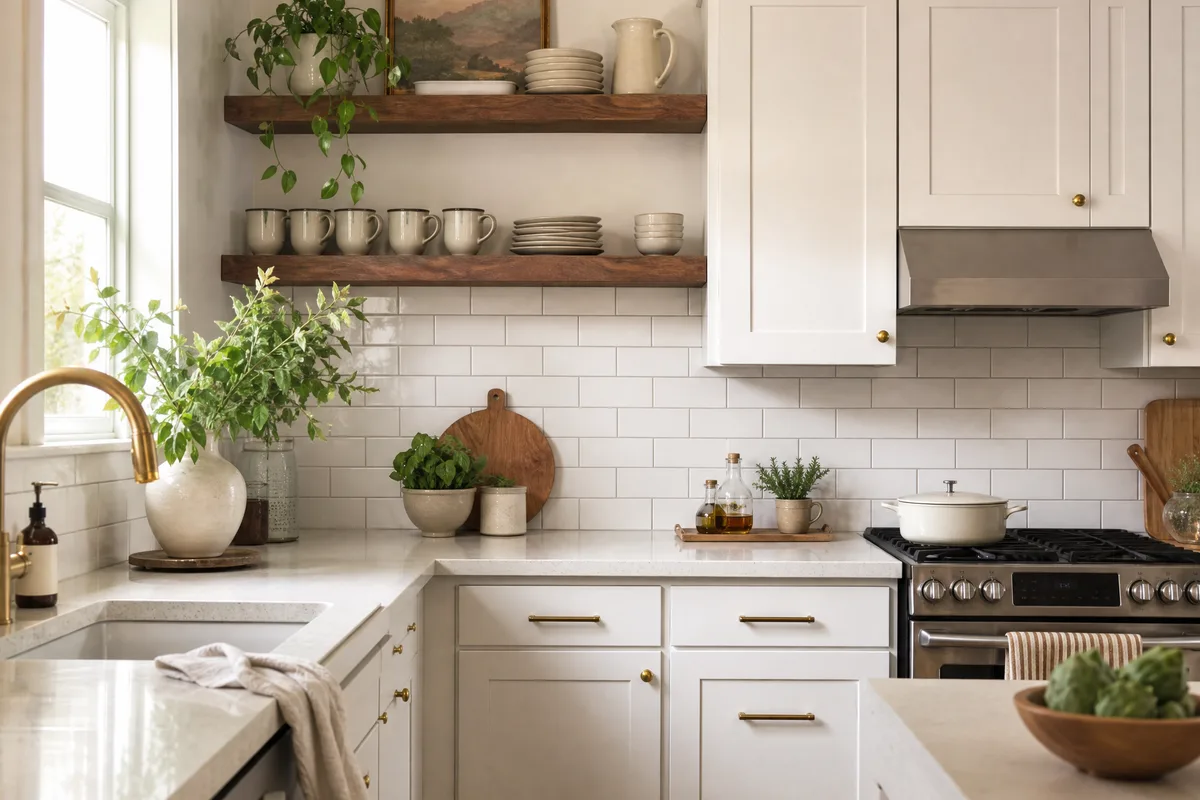
That said, cabinets aren’t without their own aesthetic merits. A run of sleek white or two-toned upper cabinets can look incredibly polished and intentional. If you’re pairing them with a beautiful backsplash with white cabinets, the result can be just as stunning as any open shelf arrangement. The key difference is that cabinets provide a uniform, cohesive visual backdrop — which can actually look very clean in a small space.
Ultimately, open shelving wins on the spaciousness front, but only when styled well. A messy open shelf makes a small kitchen feel chaotic, while clean cabinets always look put-together regardless of what’s inside them.
Practicality and Storage: The Real-World Test
Here’s where honest conversation becomes really important. Open shelving looks wonderful in theory, but the practicality equation shifts dramatically based on how you actually live and cook.
Storage capacity: Cabinets almost always win here. Enclosed upper cabinets typically offer more usable storage depth and height, and they allow you to stack items, store irregularly shaped things, and hide visual chaos. If you cook frequently and have a lot of equipment, cabinets give you the organizational flexibility that open shelves often can’t match.
Accessibility: Open shelves have a slight edge for frequently used items. When your everyday dishes are right in front of you, there’s no door to open and close. For quick-moving households or those who hate digging through cabinet depths to find things, open shelves offer satisfying ease.
Dust and grease exposure: This is the practical downside most people underestimate with open shelving. In a kitchen — especially a small one where the cooking zone is close to everything — open shelves accumulate grease, dust, and cooking residue surprisingly fast. Items you use daily stay clean through rotation, but decorative pieces or infrequently used dishes will need regular washing even before they’re used.
For those who want smart small kitchen storage that genuinely works, our guide on how to organize a small kitchen with zero extra storage has some brilliant creative solutions that work alongside either option.
Cost Comparison: Open Shelves vs. Upper Cabinets
Budget is often the deciding factor in small kitchen decisions, and on this front, open shelving wins handily. Here’s a general breakdown:
- Open shelving: A simple floating shelf can cost as little as $20–$80 per shelf for materials, plus hardware. Even a full wall of styled floating shelves rarely exceeds $300–$500 installed as a DIY project.
- Stock upper cabinets: Ready-to-assemble (RTA) upper cabinets from big box stores typically run $80–$200 per linear foot installed. A single 10-foot run of upper cabinets could easily cost $800–$2,000 or more depending on cabinet quality.
- Semi-custom or custom cabinets: These can run $300–$600+ per linear foot, putting a full set of upper cabinets well into the thousands.
If you’re working on a tight renovation budget, this difference is enormous. Our roundup of small kitchen remodel ideas under $500 that look expensive shows just how far open shelving can stretch a renovation budget without sacrificing style.
It’s worth noting that removing existing upper cabinets and replacing them with shelves can save money during a renovation, but you should factor in any patching and repainting of the wall behind where cabinets used to live. That said, the net cost almost always still favors shelves.
Maintenance and Cleaning Considerations
Open shelving demands a certain kind of homeowner — someone who enjoys tidying, doesn’t mind a weekly wipe-down, and takes genuine pleasure in keeping things visually organized. If that sounds like you, open shelves are a joy. If it sounds like a chore, proceed with caution.
Cabinets are far more forgiving. You can shove mismatched mugs, half-used bags of flour, and oddly sized lids behind closed doors and nobody needs to know. Cleaning is periodic rather than constant — wipe down the cabinet faces every week or two and give the interiors a thorough clean every few months.
Open shelves, by contrast, require daily visual management. Items that aren’t used regularly need to be dusted and occasionally washed. The aesthetic you see in those perfect kitchen photos requires consistent upkeep. Design experts at The Spruce note that the open shelf lifestyle is genuinely rewarding for those who embrace it, but it’s not a passive storage solution.
One practical tip: if you go with open shelves, use matching dishware and containers as much as possible. Uniform vessels — same jar style for dry goods, matching sets of plates and bowls — dramatically reduce visual chaos and make maintenance much easier.
The Hybrid Approach: Mixing Both for Maximum Impact
Here’s the design secret that many small kitchen owners overlook: you don’t have to choose just one. A hybrid kitchen that combines open shelving with a few strategic cabinets is often the smartest solution of all.
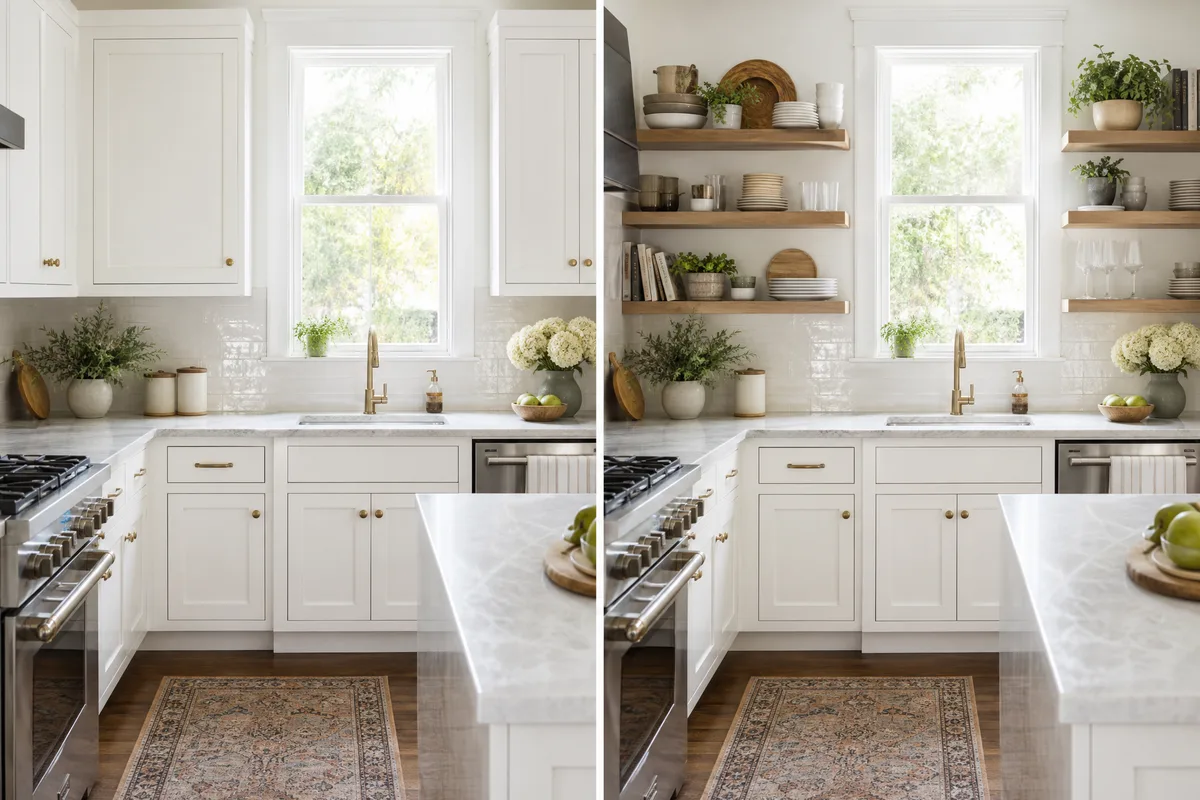
A popular layout involves keeping cabinets in areas where you most need concealed storage — think above the refrigerator, flanking the window, or over the stove — while using open shelves in the most visible or light-filled sections of the kitchen. This approach lets you hide the chaos while still creating that open, airy visual quality that makes small kitchens feel larger.
You might also consider open shelves on a single feature wall or one bank of wall space, balanced by cabinets on the opposite side. The contrast actually adds design interest rather than looking mismatched. Many of the most beautiful small kitchens featured in design publications use exactly this approach.
Looking for more ideas to maximize a compact cooking space? Our collection of small kitchen ideas that make tiny spaces feel huge includes several hybrid layouts that might spark some inspiration for your own home.
Who Should Choose Open Shelving — and Who Shouldn’t
After weighing all the factors, here’s a clear breakdown to help you decide:
Open Shelving Is Ideal If You…
- Have a small kitchen that feels dark, cramped, or cave-like
- Enjoy decorating and styling your home spaces
- Cook minimally or have a streamlined set of kitchen items
- Want to save money on your kitchen renovation
- Have beautiful dishware worth showing off
- Tend to keep your kitchen naturally tidy
Upper Cabinets Are Better If You…
- Cook daily and have a lot of equipment and pantry items
- Have children or pets that might knock things off accessible shelves
- Prefer low-maintenance storage that doesn’t require daily styling
- Have mismatched dishware or pantry items you’d rather not display
- Live in a humid or high-grease cooking environment
- Want to protect dishes and glassware from dust and airborne grease
The honest truth is that your lifestyle should lead this decision — not what’s trending on Pinterest. A kitchen that works beautifully for how you actually live will always beat a kitchen that looks great in photos but frustrates you every single day.
Frequently Asked Questions
Does open shelving actually make a small kitchen look bigger?
Yes, open shelving can genuinely make a small kitchen feel more spacious. By removing the visual bulk of upper cabinet boxes, the walls open up and the eye travels further, creating an illusion of depth and airiness. This effect is most pronounced in narrow or galley-style kitchens where upper cabinets can make the walls feel like they’re closing in. However, this only works if the shelves are kept tidy — cluttered open shelves can have the opposite effect and make a small kitchen feel chaotic.
How do I keep open shelves in a kitchen from getting dusty and greasy?
The best approach is a combination of placement and routine. Position open shelves away from the stove if possible, as the cooking zone generates the most airborne grease. Use items on your shelves regularly so they’re naturally rotated and cleaned through use. For decorative items or infrequently used pieces, do a quick wipe-down weekly. Choosing items with smooth, easy-to-clean surfaces also helps. Some homeowners add a small lip to their shelves to catch drips, and silicone shelf liners make cleaning even easier.
Is it expensive to switch from upper cabinets to open shelves?
Switching from upper cabinets to open shelves can actually save you money overall, but there are costs to consider. Removing existing cabinets may leave wall damage that requires patching, sanding, and repainting. The shelves themselves are inexpensive — budget floating shelves can cost as little as $20–$80 each. Hardware and brackets add a small additional cost. In total, most homeowners spend $200–$600 to complete an open shelf conversion for a standard small kitchen, making it one of the most affordable kitchen updates available.
Can I mix open shelving with cabinets in my small kitchen?
Absolutely — and many designers recommend exactly this hybrid approach. You get the airy aesthetic of open shelves in the most visible areas of your kitchen while maintaining the practical concealed storage of cabinets where you need it most. Common hybrid configurations include open shelves flanking a window with cabinets at the ends, open shelves on one wall with cabinets on another, or cabinets positioned at higher, harder-to-reach areas with open shelves at counter height for everyday items.
Conclusion
The open shelving vs. cabinets debate for small kitchens doesn’t have a universal winner — it has a right answer for your kitchen, based on your lifestyle, budget, aesthetic goals, and honest self-assessment of how much maintenance you’re willing to commit to. Open shelving in a small kitchen is a transformative, affordable choice that can genuinely open up a cramped space and give it personality and warmth. But cabinets offer the kind of reliable, low-maintenance storage that busy households depend on every single day.
If you can swing it, the hybrid approach is worth serious consideration — a thoughtful mix of both gives you visual breathing room and practical functionality without compromise. Whatever you decide, make sure the choice reflects how you actually cook and live, not just how you want your kitchen to photograph.
Ready to take the next step? Browse our full collection of small kitchen ideas for layouts, color inspiration, and storage solutions that make every inch count — whether you go open, enclosed, or a beautiful blend of both.