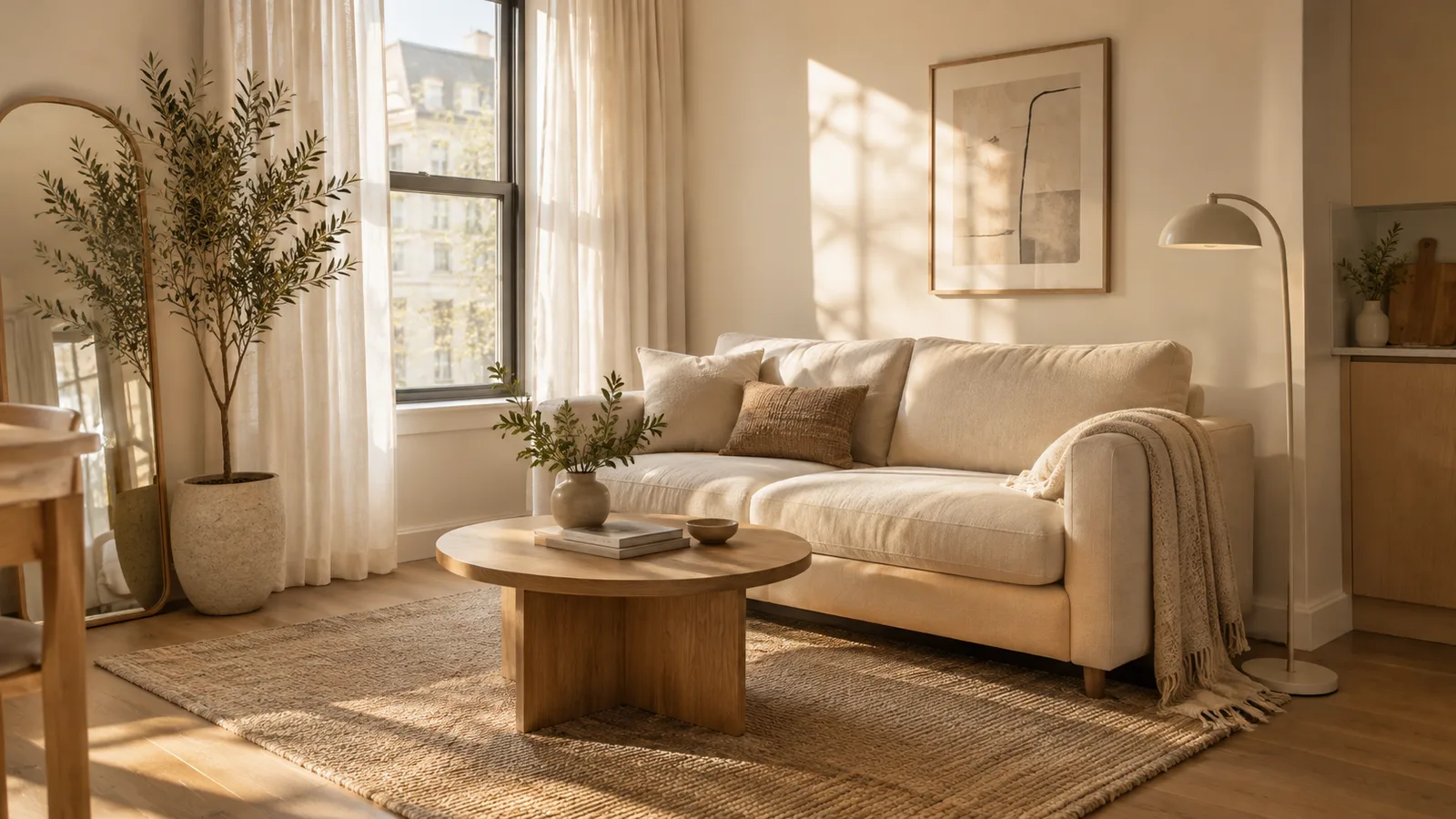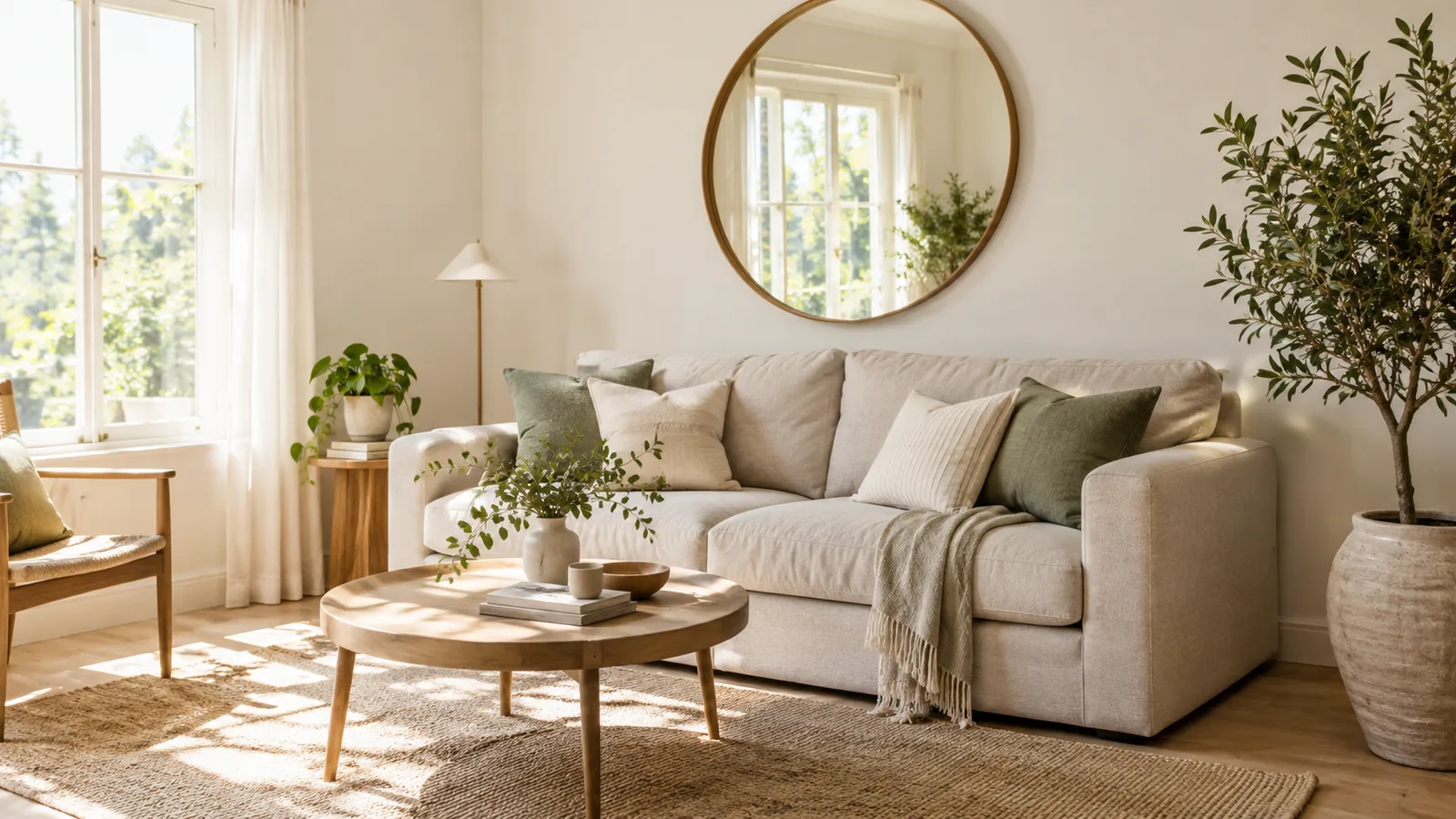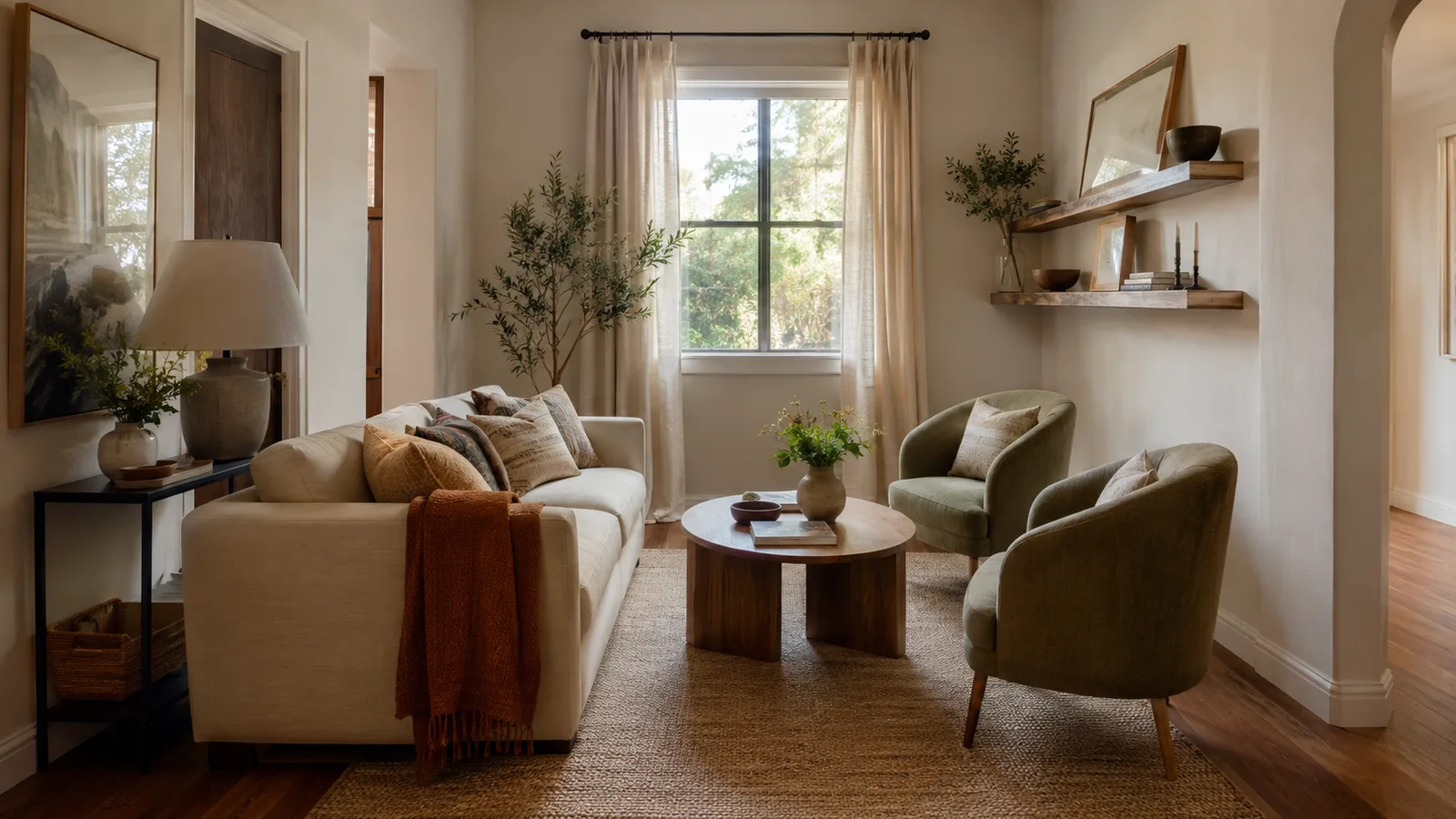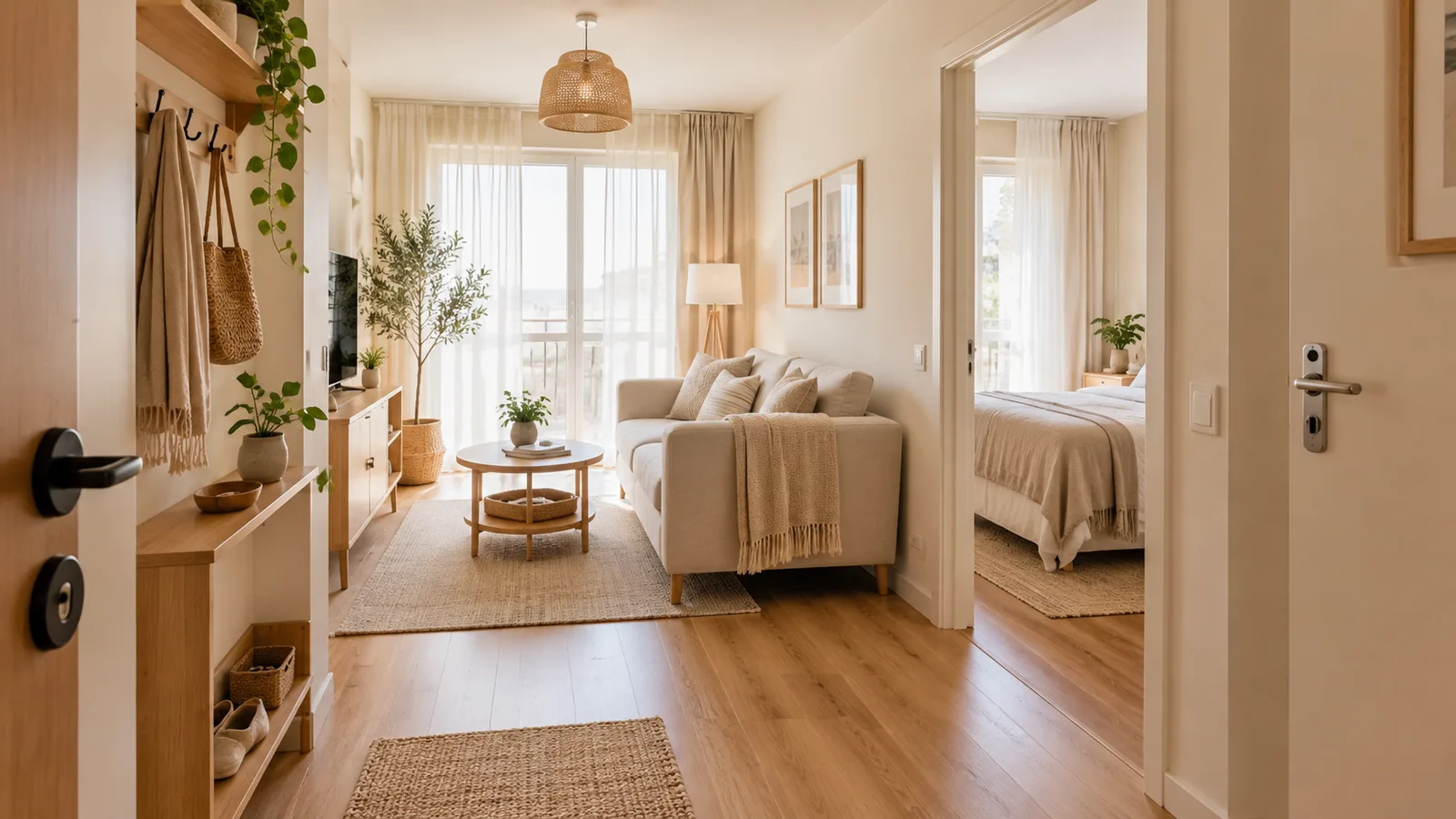
Short answer: decorate a small apartment as one connected space, not five separate rooms. Choose one palette and repeat it everywhere, buy furniture scaled to each room, give every corner a light source, store things up the walls instead of across the floor, and use renter-friendly upgrades you can take with you. Start with the room you use most, usually the living area or bedroom.
Small apartments feel bigger when your eye can travel through them without a jolt of new colors, styles or clutter at every doorway. This plan works room by room, but the rules are the same everywhere.
Five Rules That Apply to Every Room
- One palette, repeated. Pick two neutrals and one or two accent colors, and use them in every room. When the bedroom bedding echoes the living room pillows, the apartment reads as one calm space.
- Scale furniture to the room, not the store. Apartment-size sofas (about 72–80 inches), round tables and leggy furniture take up less visual space.
- Light every corner. Most apartments have one ceiling light per room. Add a lamp to each dark corner so rooms don't shrink at night.
- Go vertical. Tall bookshelves, wall shelves and hooks keep the floor clear, and a clear floor is what makes a room feel spacious.
- Keep it portable. Favor upgrades that come with you: lamps, rugs, curtains, plug-in sconces and peel-and-stick finishes.
Room-by-Room Plan
| Room | Biggest problem | First fix | Renter-friendly upgrade |
|---|---|---|---|
| Entry | Shoes and bags pile up | Hooks + a slim shoe bench | Adhesive hooks, a mirror on a lean |
| Living area | Furniture too big or pushed to walls | Apartment-size sofa, rug under front legs | Plug-in sconces, curtains hung high |
| Bedroom | No space for nightstands | Wall sconces or floating shelves | Under-bed storage, headboard decal or fabric panel |
| Kitchen nook | Counters cluttered | Rails, magnetic strips, open shelf | Peel-and-stick backsplash, swapped knobs |
| Bathroom | No storage, dated finishes | Over-toilet shelf, shower caddy | New shower curtain on a higher rod, peel-and-stick floor tiles |
The Entry: Your First Impression
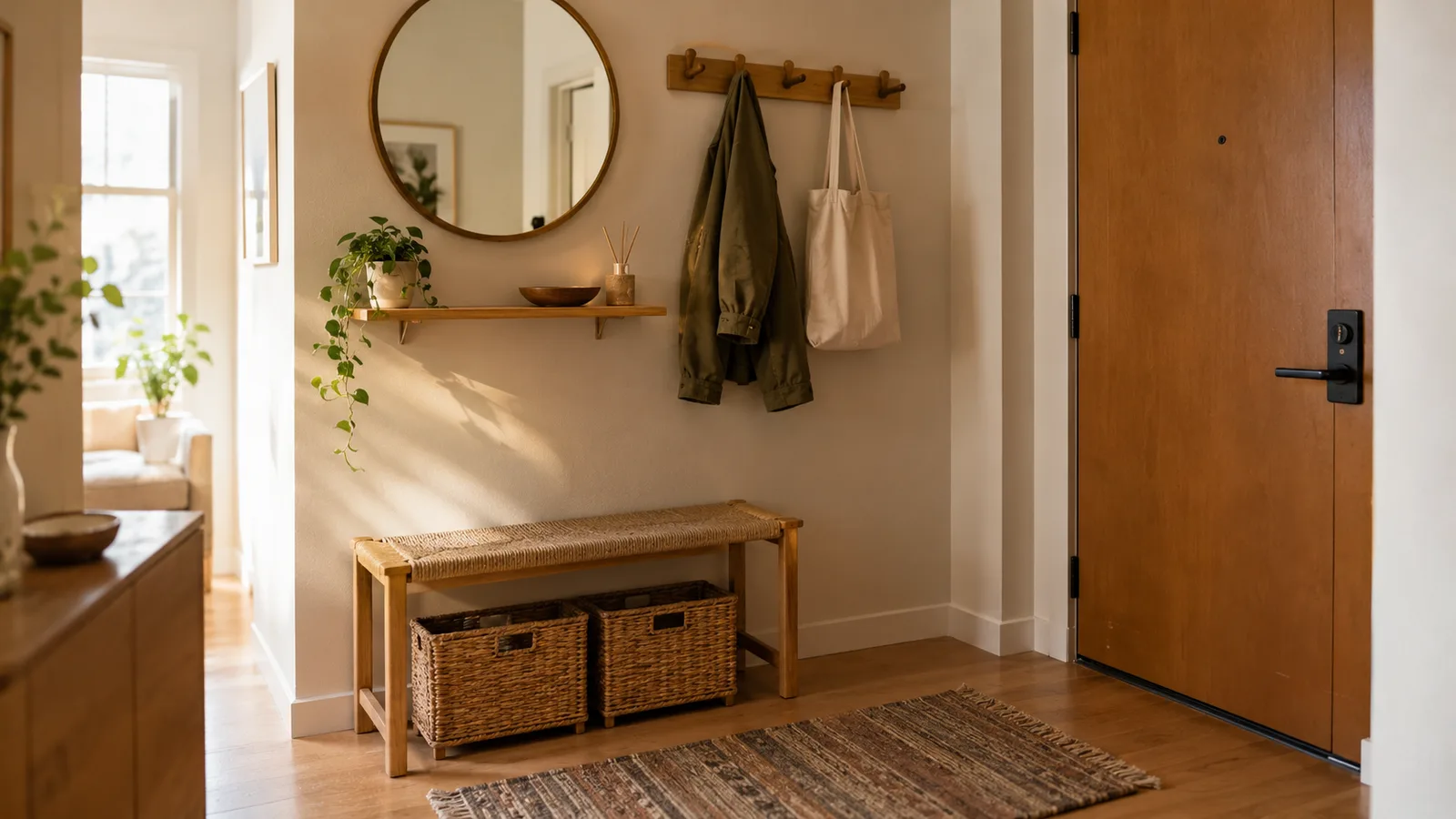
Even a two-foot strip of wall by the door can be an entry:
- A row of hooks at about 60–66 inches high for coats and bags
- A slim bench or shoe cabinet with baskets below
- A mirror for a last check and to bounce light
- A small runner to catch dirt and define the spot
If you can't drill, use heavy-duty adhesive hooks and lean a mirror against the wall.
The Living Area
The living room is where small apartments struggle most, and we've covered it in depth:
- Layout and clearances: small living room furniture arrangement
- Studios and open plans: small space living room ideas
- Storage: small living room storage ideas
- Color: small living room color ideas
- Budget: small living room ideas on a budget
The short version: one apartment-size sofa, a rug big enough for the front legs of every seat, curtains hung high and wide, and at least two lamps.
The Bedroom
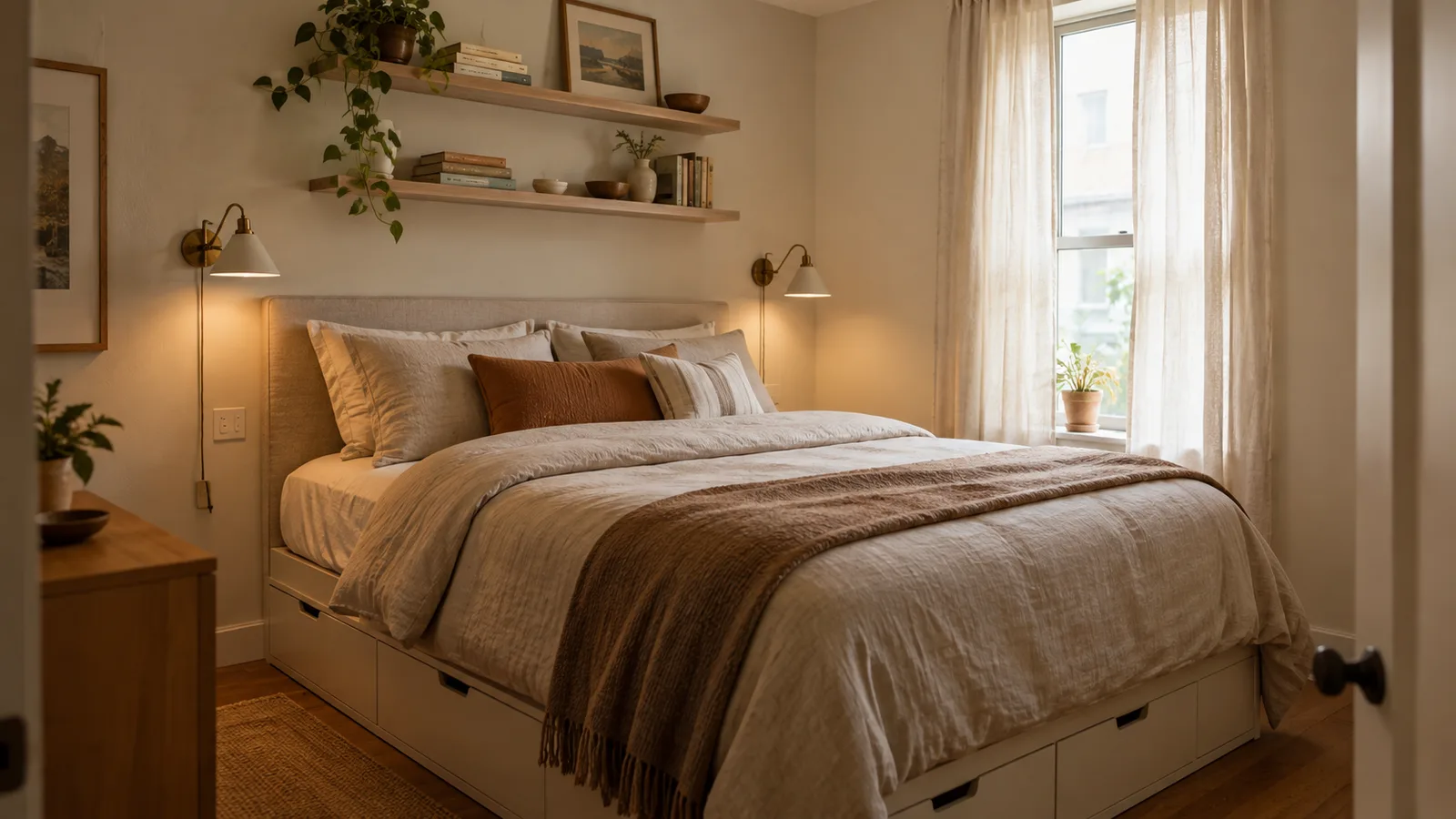
- Swap nightstands for wall sconces and floating shelves. Plug-in sconces need no electrician; run the cord through a cord cover painted to match the wall.
- Use the space under the bed. Rolling bins or a bed with drawers can replace a dresser.
- Repeat the living room palette in the bedding and curtains so the doorway between rooms doesn't feel like a border.
- Hang curtains close to the ceiling to make low apartment ceilings feel taller; our curtain height guide explains how high to go.
The Kitchen Nook
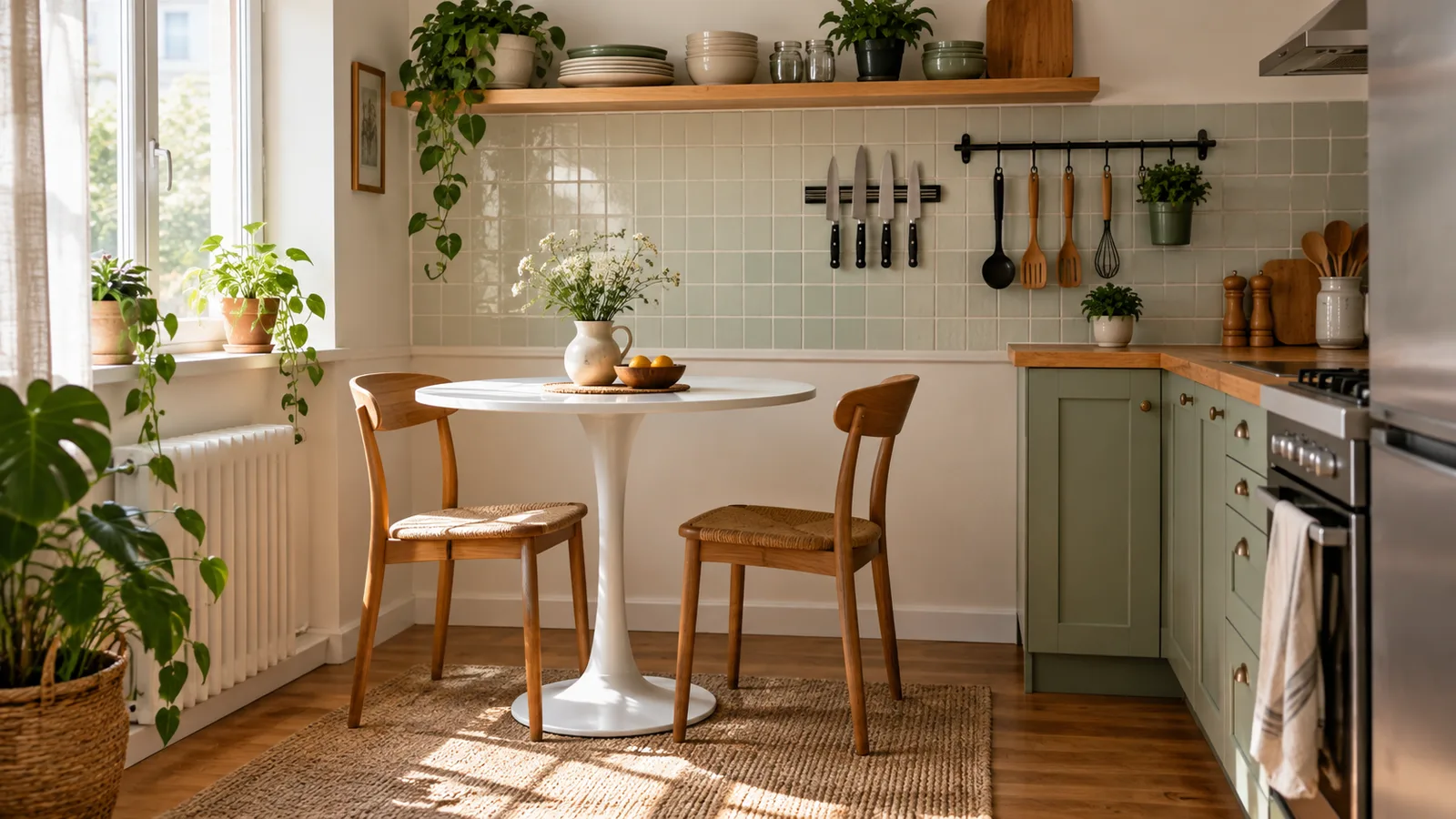
- Clear the counters. Move knives to a magnetic strip and utensils to a wall rail.
- Add one open shelf for the dishes you use daily.
- Choose a round pedestal table for a dining nook; it seats more people in less space and has no corners to bump.
- Peel-and-stick backsplash covers dated tile in an afternoon and removes when you leave (test a small area first and check your lease).
For more kitchen layout help, see how to organize a small kitchen with no storage.
The Bathroom
- An over-the-toilet shelf adds storage without drilling.
- A new shower curtain on a rod hung higher than the existing one makes the room feel taller.
- Matching towels in your palette tie the bathroom to the rest of the home.
- Peel-and-stick floor tiles can cover a dated floor, but check your lease before using them.
Read your lease before any change that touches walls, floors or fixtures. Keep the original hardware (knobs, light covers, curtain rods) in a labeled bag so you can put it back when you move out.
Tricks That Make the Whole Apartment Feel Bigger
- Mirrors opposite or beside windows bounce daylight deeper into the room.
- Curtains hung close to the ceiling and wide past the frame make windows and ceilings look larger.
- Rugs that are big enough for the furniture to sit on make a room feel more generous than a small rug floating in the middle.
- Furniture with legs shows more floor, which reads as more space.
- Fewer, larger accessories look calmer than many small ones. One big plant beats five tiny ones.
- Matching storage containers (baskets or boxes in one material) make open shelves look tidy instead of cluttered.
Common Small Apartment Mistakes
- Buying furniture before measuring. Measure doorways and stairwells too; a sofa that doesn't fit through the door is a common and expensive mistake.
- A different style in every room. It chops a small home into pieces. Keep the palette and wood tones consistent.
- Relying on the ceiling light. Overhead lighting alone makes small rooms feel flat and smaller at night.
- Filling every wall. Leave some wall space blank so the eye has somewhere to rest.
- Ignoring the entry. Without a drop zone, shoes and bags spread into the living area.
What to Do First
- Declutter before buying anything; small apartments fill up fast.
- Pick the palette and write it down so every purchase fits.
- Fix lighting in the room you use most.
- Get the big pieces right (sofa, bed, rug), then add storage.
- Finish with textiles and art, repeating your palette in every room.
Renter-Friendly Products That Help
Plug-in sconce
Plug-In Wall Sconces, Set of 2
- ✓Frees up nightstand space
- ✓Plugs into an outlet
- ✓Adds warm light to dark corners
Command
Heavy-Duty Adhesive Wall Hooks
- ✓No drilling
- ✓Removes cleanly
- ✓Great for entries and bathrooms
Peel-and-stick tile
Peel and Stick Backsplash Tiles
- ✓Covers dated tile
- ✓Cuts with scissors or a knife
- ✓Test removal on a small area first
Under-bed storage
Rolling Under-Bed Storage Drawers
- ✓Replaces a dresser
- ✓Rolls out easily
- ✓Keeps the floor clear
As an Amazon Associate, we earn from qualifying purchases.
The Bottom Line
- Treat the apartment as one space: one palette, repeated in every room
- Scale furniture to the rooms and keep the floor clear by going vertical
- Give every corner a light; plug-in sconces solve most bedroom problems
- Use portable, renter-friendly upgrades and keep the original hardware
- Start with the room you use most, then work outward