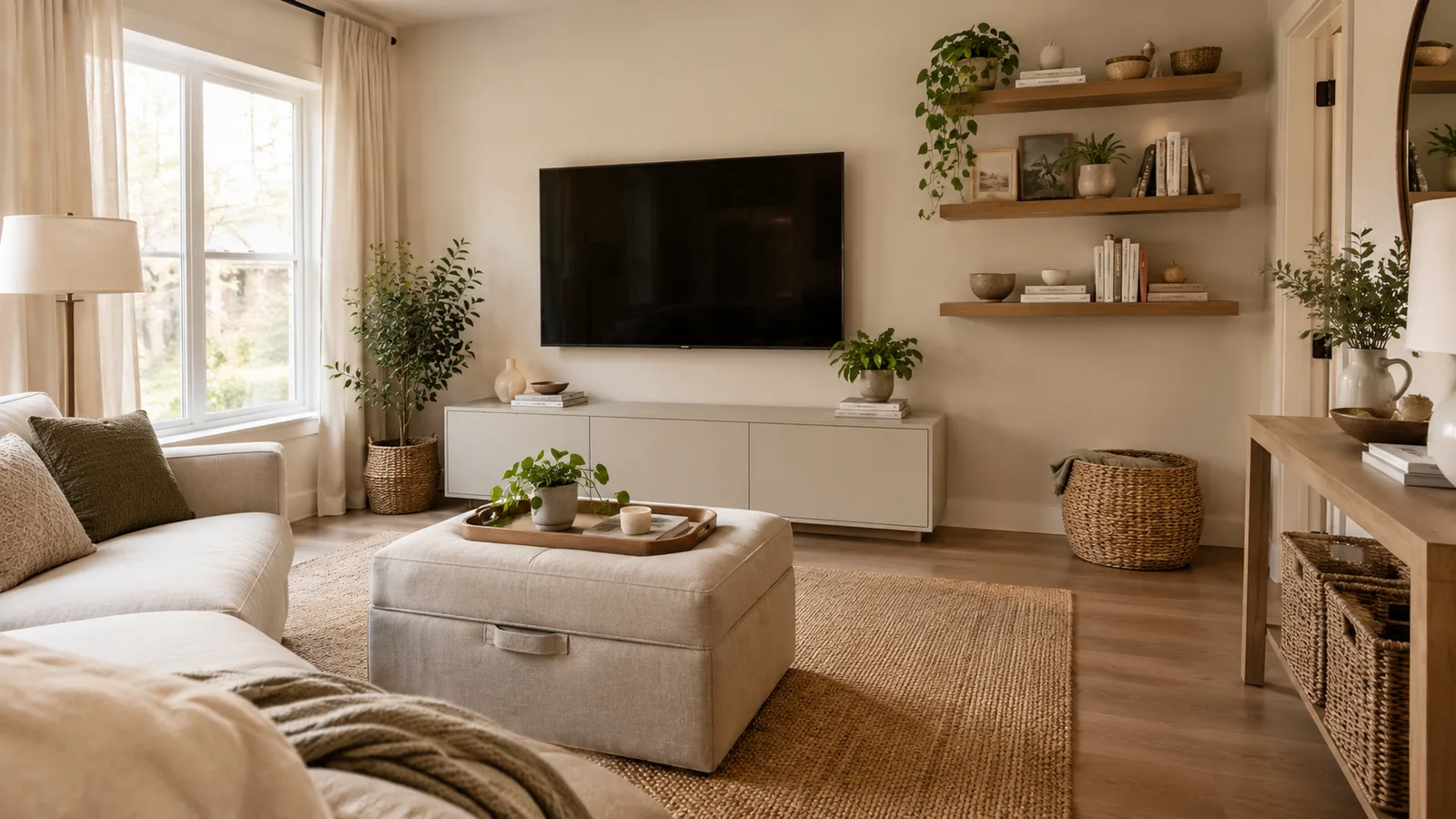
Short answer: in a small living room, store things up the walls and under other furniture, not in extra pieces on the floor. A closed media console hides cables and clutter, shallow wall shelves (8 to 12 inches deep) hold books without eating floor space, a storage ottoman doubles as the coffee table, and baskets under a sofa-back console catch the everyday mess.
Storage is what keeps a small room calm. Here's how to plan it so it adds function without making the room feel crowded. For the layout itself, see our small living room furniture arrangement guide.
Start With What You Actually Need to Store
Make a quick list before you buy anything. Most small living rooms need homes for:
- Media: remotes, game controllers, chargers, router and cables
- Comfort items: throws and pillows
- Books and magazines
- Everyday drop zone: mail, keys, bags (especially when there's no entry hall)
- Hobby or kid stuff: toys, craft supplies, a laptop
Then decide which items should be hidden (cables, toys, mail) and which can be on display (books, a few favorite objects). Hidden storage keeps the room calm; open storage keeps it personal.
Storage Pieces by Footprint
| Piece | Typical depth | Floor space used | Best for |
|---|---|---|---|
| Floating wall shelves | 8–12 in | None | Books, plants, decor |
| Shallow bookcase | 10–12 in | Low | Books and baskets |
| Wall-mounted media cabinet | 12–16 in | None | Media gear, hidden clutter |
| Low media console | 15–18 in | Medium | TV, router, closed storage |
| Sofa-back console | 10–14 in | Low (uses dead space) | Lamps, baskets, drop zone |
| Storage ottoman | 18–24 in | Replaces coffee table | Blankets, toys |
| Rolling cart | 12–16 in | Low | Mobile side table and supplies |
| Lift-top coffee table | 20–24 in | Replaces coffee table | Laptop, remotes, magazines |
The rule of thumb: prefer pieces that either use no floor at all (wall shelves, wall-mounted cabinets) or that replace something you already need (an ottoman instead of a coffee table).
1. Choose a Closed Media Console
Open TV stands show every cable and controller. A low console with doors or drawers hides the mess and gives the room one clean horizontal line. Look for:
- Cutouts at the back for cables
- Ventilation if you're closing in a router or console
- A depth of 15 to 18 inches so it doesn't stick into the walkway
If floor space is very tight, mount the TV and a slim cabinet on the wall and leave the floor below open. A visible floor makes a small room feel larger.
2. Go Up the Wall With Shallow Shelves
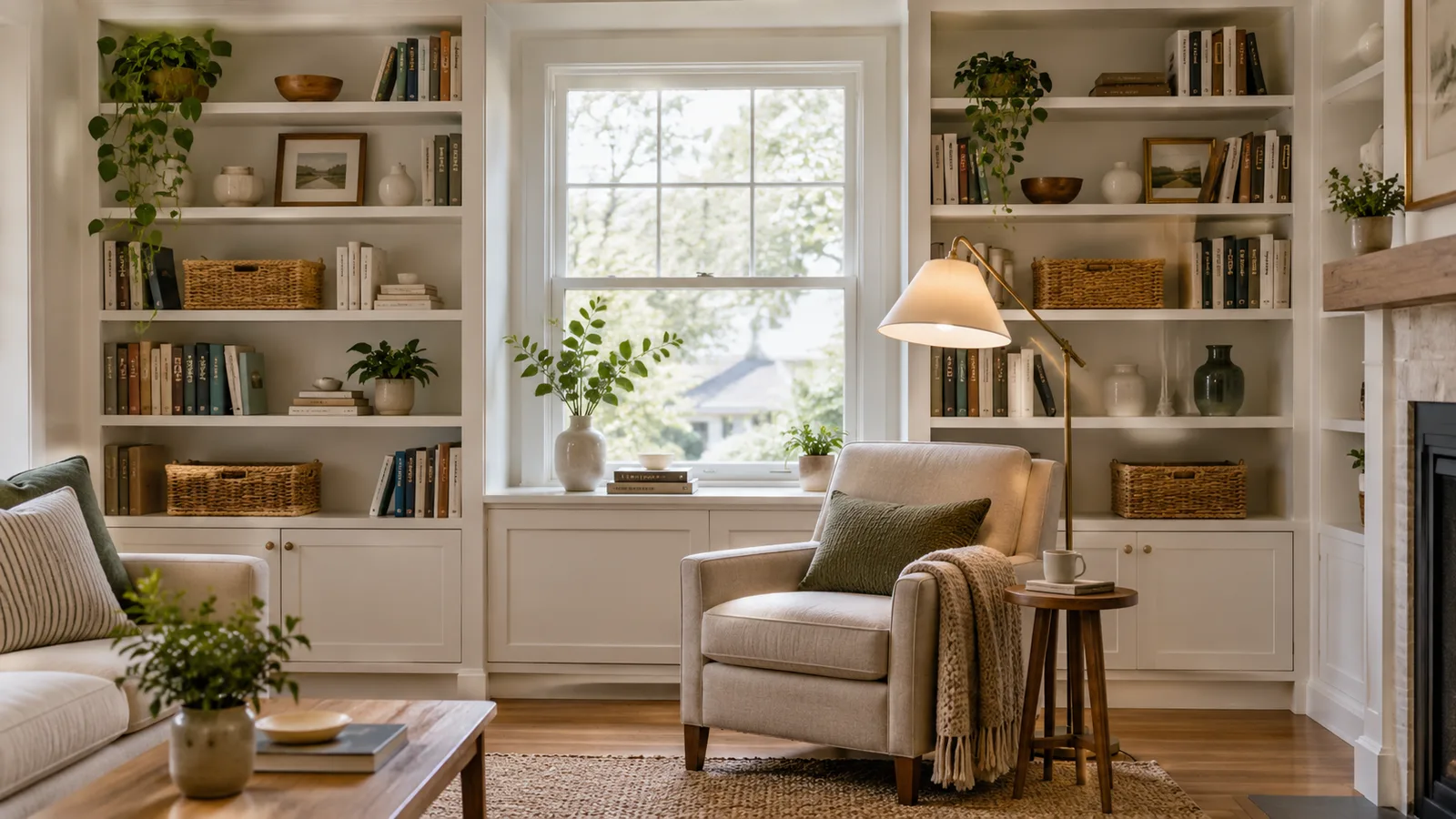
A wall of shelves holds a surprising amount without taking floor space. Keep them shallow: 8 to 12 inches is enough for most books and baskets. Deeper shelves stick out and make a small room feel narrow.
Styling tips that keep shelves from looking cluttered:
- Leave about a third of each shelf empty
- Group books by color or height and mix in a few baskets for hidden storage
- Repeat a few materials (wood, ceramic, greenery) across the shelves
- Put heavier, larger items on the lower shelves
Run shelves all the way to the ceiling. Tall shelving draws the eye up and makes the ceiling feel higher, and the top shelf is perfect for things you rarely use.
3. Make the Coffee Table Work Harder
Swap a plain coffee table for:
- A storage ottoman with a tray on top (soft corners are great in tight spaces)
- A lift-top coffee table that rises to laptop height
- A table with a lower shelf for baskets
4. Use the Space Behind and Beside the Sofa
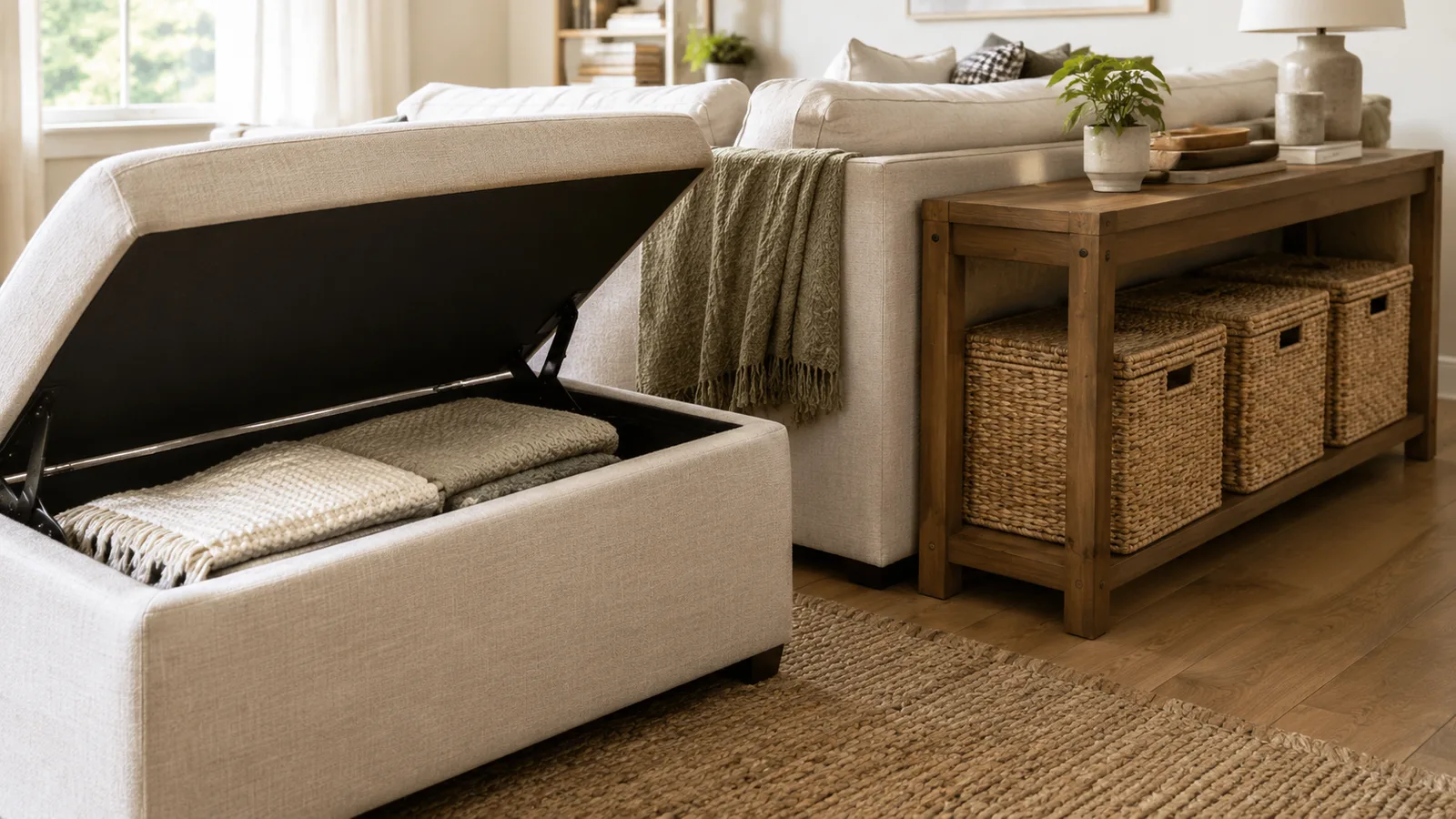
The space behind a floated sofa is usually wasted. A sofa-back console (10 to 14 inches deep) holds lamps on top and lidded baskets underneath for mail, chargers and kids' toys. It doubles as a drop zone if your door opens into the living room.
Beside the sofa, a C-shaped side table slides over the seat for a laptop or drink, and a narrow rolling cart can hold a plant on top and supplies below.
5. Find Hidden Storage You Already Have
- Under the sofa: low bins for flat items like board games (check clearance first)
- Inside the window seat or bench: a bench with a lift-up seat stores bulky blankets
- Behind doors: an over-the-door rack for bags or coats
- Corners: a tall corner shelf uses space nothing else fits in
6. Renter-Friendly Storage
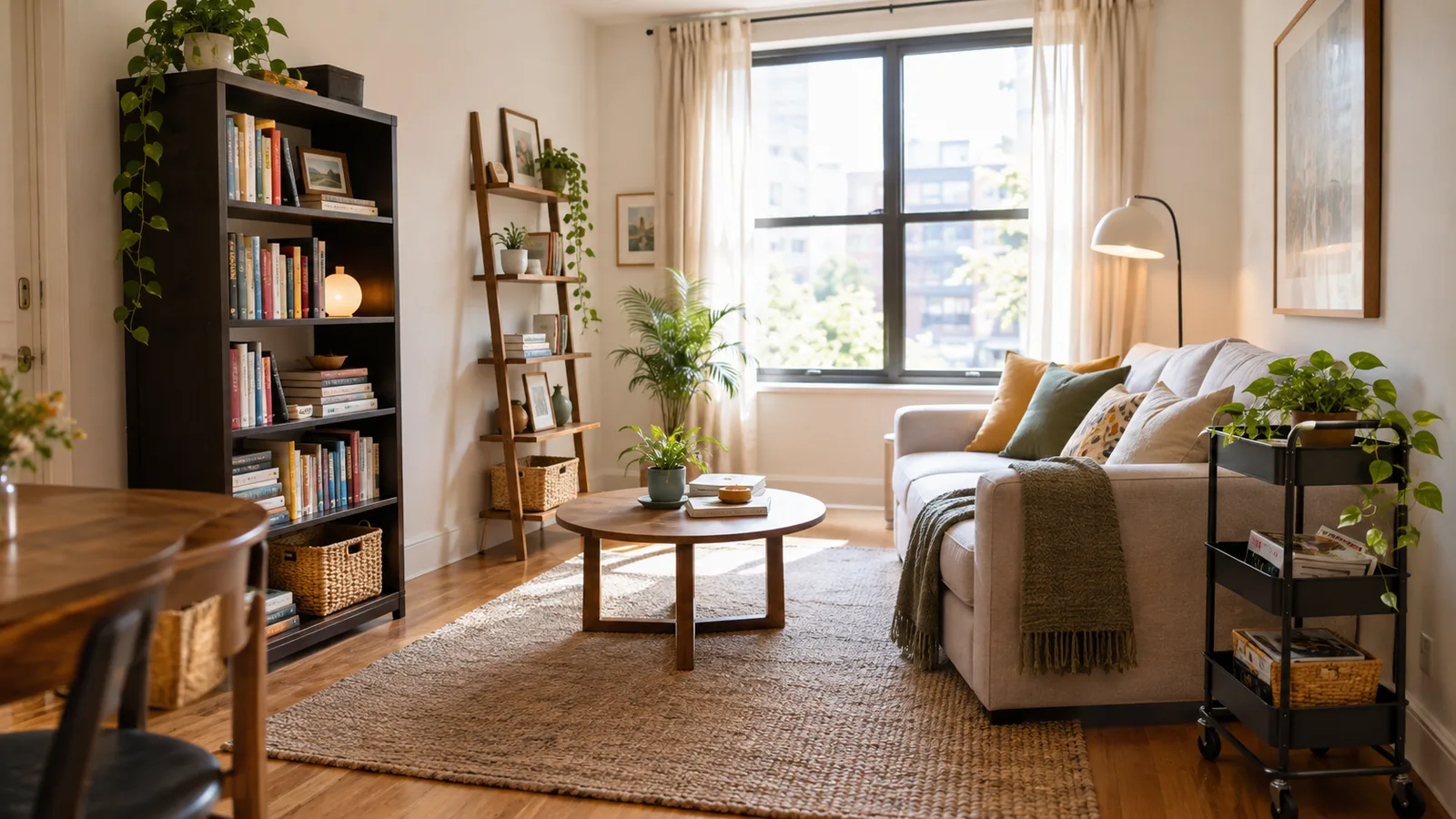
If you can't drill or build:
- Freestanding shallow bookcases placed side by side look like a built-in (anchor them with anti-tip kits; most leases allow small anchor holes, but check)
- Leaning ladder shelves need no mounting
- Adhesive hooks hold lightweight items
- Rolling carts and baskets move with you to the next place
Planning a Storage Wall Step by Step
If you have one wall to dedicate to storage, plan it in this order:
- Measure the wall and note windows, outlets, vents and the swing of nearby doors.
- Put closed storage low (a console or cabinets about 15 to 18 inches deep and 24 to 30 inches high). Closed doors at the bottom hide the heavy, messy things.
- Put open storage high with shallow shelves above, starting about 15 to 18 inches above the console so lamps and a TV still fit.
- Keep a breathing gap around the TV or a central piece of art so the wall doesn't look packed.
- Light it. A picture light or a lamp on the console keeps a full wall from looking heavy at night.
| Wall width | Good setup |
|---|---|
| Under 6 ft | One tall, shallow bookcase or 3 to 4 floating shelves |
| 6–9 ft | Low console plus 2 to 3 rows of shelves above |
| Over 9 ft | Console centered with bookcases or shelving on each side for a built-in look |
7. Edit Before You Store
The cheapest storage is owning less. Every few months, clear out what's crept into the living room: old magazines, extra throws, broken chargers. Storage works best when it's about 80% full, so there's room for the things that come in each week.
For more ways to make a small room feel bigger without spending much, see small living room ideas on a budget and our guide to small space living rooms in studios and open plans.
Storage Pieces Worth a Look
Walker Edison
Walker Edison Low Media Console With Doors, 58 in
Closed doors hide cables and gear, and a low console keeps one clean line across a small wall.
- ✓Closed storage for media gear
- ✓Cable cutouts
- ✓Keeps one clean line
Floating Wall Shelves, Set of 3
Shallow 8 to 12 inch shelves hold books and baskets without taking any floor.
- ✓Shallow depth
- ✓Books, plants and decor
- ✓Stack vertically for height
Walker Edison
Walker Edison Lift-Top Coffee Table
Replaces the coffee table you already need and adds hidden storage plus a laptop-height top.
- ✓Rises to laptop height
- ✓Hidden compartment
- ✓Replaces a plain coffee table
Lidded Woven Storage Baskets
Lidded baskets under a sofa-back console turn dead space into a drop zone for mail and chargers.
- ✓Hide mail and chargers
- ✓Fit under consoles
- ✓Warm, natural texture
As an Amazon Associate, we earn from qualifying purchases.
The Bottom Line
To add storage to a small living room without crowding it:
- Go vertical with shelves 8 to 12 inches deep, ideally up to the ceiling
- Hide the mess in a closed media console and lidded baskets
- Replace, don't add: a storage ottoman or lift-top table instead of a plain coffee table
- Use dead space behind the sofa, in corners and under seating
- Edit regularly so storage stays about 80% full
A room with a home for everything feels bigger than the same room with things on every surface.