15 White Kitchen Backsplash Ideas for a Bright Clean Look
A white kitchen backsplash is one of the most versatile, timeless design choices you can make — it brightens the space, makes cleaning look effortless, and complements virtually every cabinet color and countertop material. Whether you’re drawn to the sleek simplicity of glossy metro tiles or the handcrafted warmth of Zellige, the right white backsplash can completely transform how your kitchen feels and functions.
Key Takeaways
- White backsplashes work in virtually every kitchen style — from modern minimalist to rustic farmhouse.
- Finish matters as much as color: matte, glossy, and textured whites each create a completely different atmosphere.
- Zellige, marble, and handmade tiles add organic texture that prevents a white kitchen from feeling sterile.
- Grout color is a major design decision — white grout creates seamlessness, while dark grout adds graphic contrast.
- Many white backsplash styles are DIY-friendly and budget-conscious, making them accessible for almost any renovation.
Why a White Backsplash Is Always a Good Idea
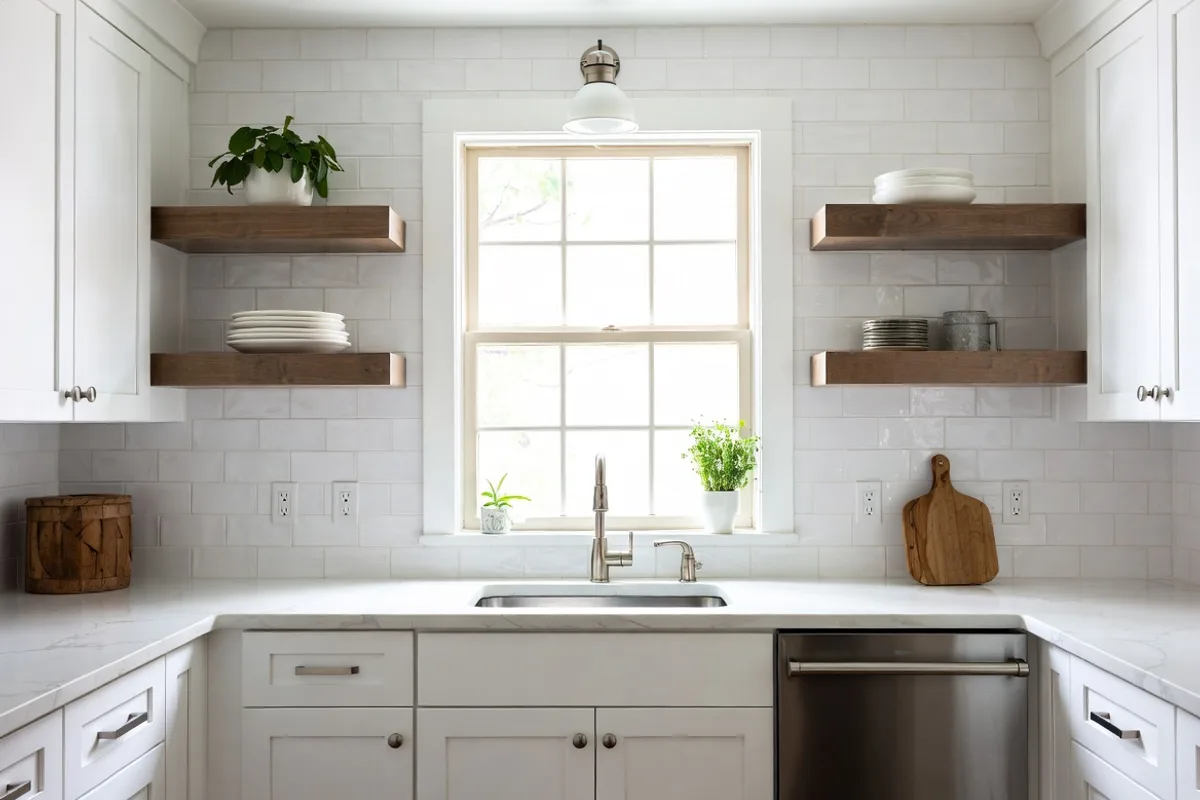
There’s a reason white kitchen backsplash ideas never go out of style. White reflects light, making even a smaller kitchen feel more open and airy. It provides a neutral canvas that lets your cabinetry, countertops, and hardware take center stage — which means your backsplash won’t clash if you eventually update other elements in the room.
Beyond aesthetics, white is also incredibly practical. A glossy white surface is easy to wipe down after cooking, and even more textured options like Zellige or stacked stone are manageable with the right sealant. According to the National Kitchen and Bath Association, the backsplash is consistently rated as one of the highest-impact kitchen updates homeowners can make — and a white finish ensures that investment stays relevant for years to come.
If you’re also thinking about the bigger picture of your kitchen renovation, you might be interested in what kitchen renovations designers swear by in 2025 — spoiler: a statement backsplash tops the list.
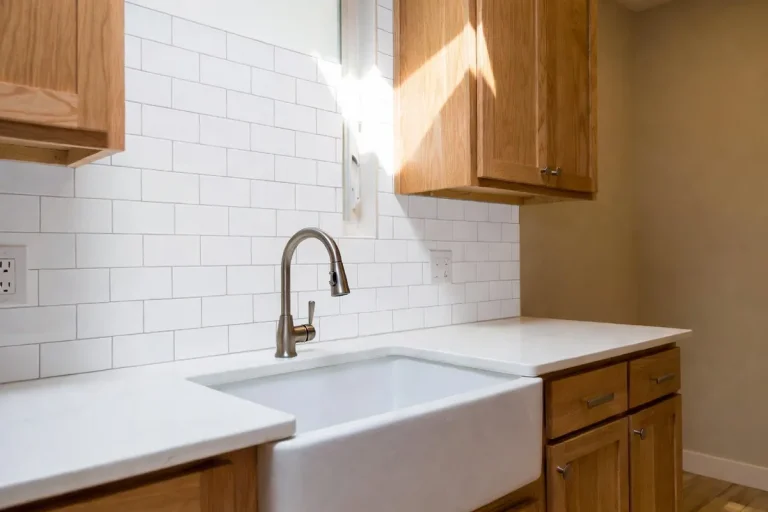
Classic White Subway Tile
Let’s start with the undisputed champion of kitchen backsplashes: the white subway tile. Introduced in New York City subway stations in the early 1900s, this simple rectangular tile has endured for over a century because it works. Every. Single. Time.
Standard 3×6 Metro Tiles
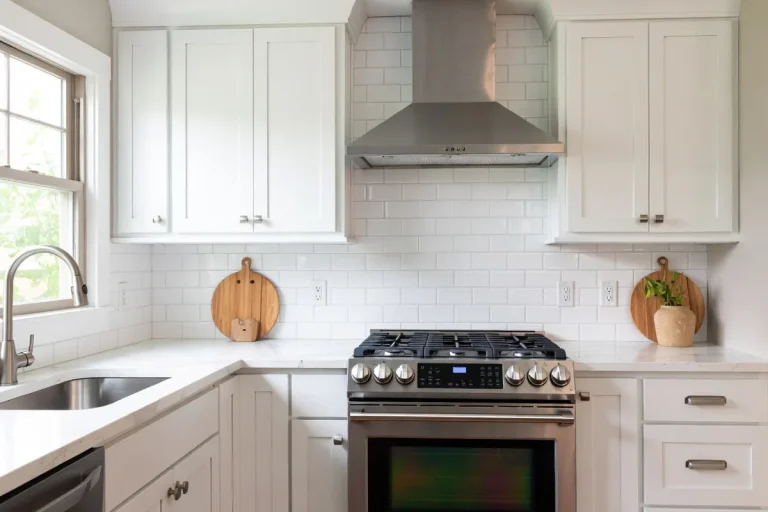
The original 3×6 inch format laid in a classic brick offset pattern is still the most popular choice. Pair it with bright white grout for a seamless, clean look, or use a warm grey grout to highlight each tile’s shape and add a subtle graphic quality. Glossy finishes bounce light around beautifully in smaller kitchens, while a matte or satin finish feels more contemporary and understated.
Stacked and Vertical Subway Layouts
For a more modern twist, try stacking subway tiles in a vertical column pattern or a herringbone arrangement. Stacked verticals draw the eye upward and make ceilings feel taller — a great trick for galley kitchens. Herringbone adds movement and visual interest without introducing any new color or texture. If you’re planning to tackle this yourself, our detailed guide on how to install a subway tile backsplash step by step walks you through every stage of the process.
Pro tip: Glossy subway tiles show water spots more readily near the sink. Consider a satin or matte finish in high-splash zones and save the glossy tiles for the range wall where they’ll reflect your pendant lighting beautifully.
Zellige and Handmade White Tile
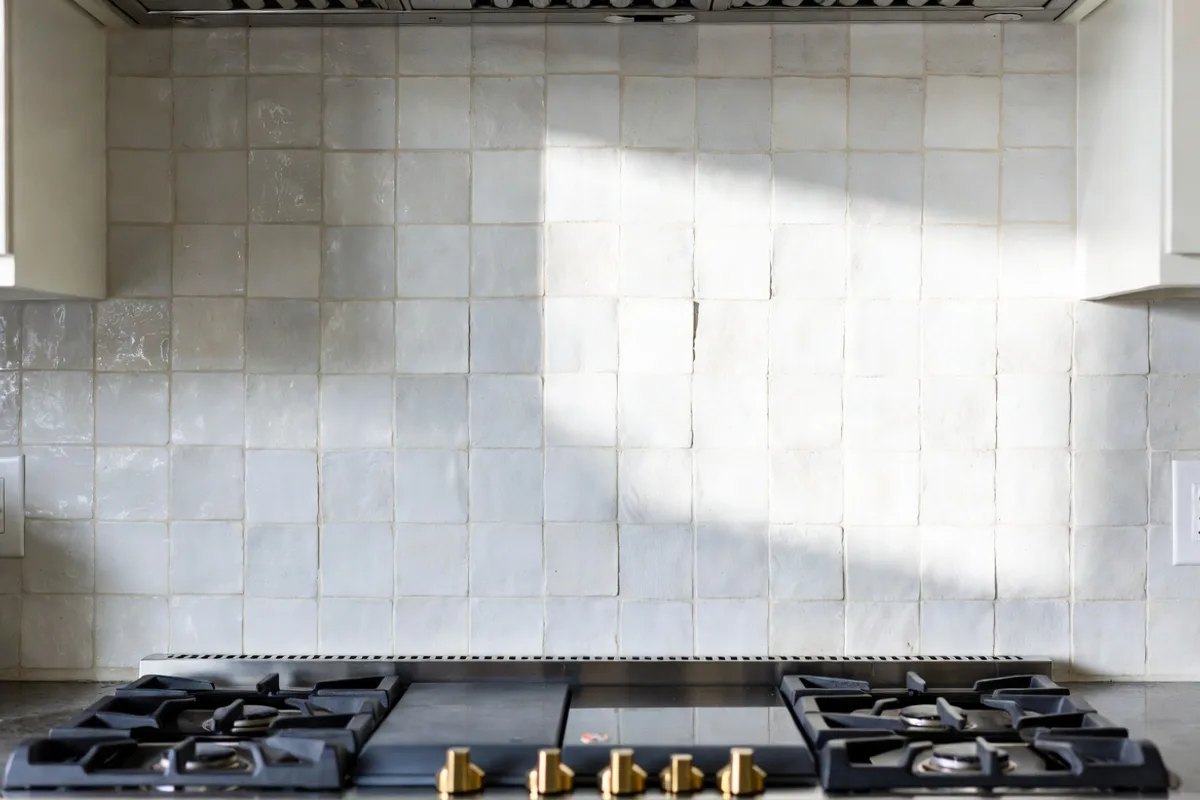
If classic subway tile is the dependable sedan of backsplash choices, Zellige is the vintage sports car — full of character, personality, and organic imperfection. Zellige is a traditional Moroccan tile, hand-pressed and glazed so that each piece varies slightly in texture, thickness, and tone. A run of white Zellige tiles isn’t a flat, uniform surface — it’s a living, shimmering wall of subtle movement.
White Zellige in particular has become enormously popular in contemporary kitchens because it bridges the gap between clean minimalism and warm artisanal texture. The slightly uneven glaze catches light differently throughout the day, giving the backsplash an almost luminescent quality that standard factory tiles simply can’t replicate.
What to Know Before You Buy
Zellige tiles are more expensive than standard ceramic subway tiles, and they require a professional installer who is experienced with handmade tiles — the variation in thickness means standard installation methods don’t always apply. Budget for waste too, as the irregularity means more cuts and breakage than with uniform tiles. Still, for a backsplash that genuinely looks like nothing else, the investment is worth it.
White Marble and Marble-Look Tile
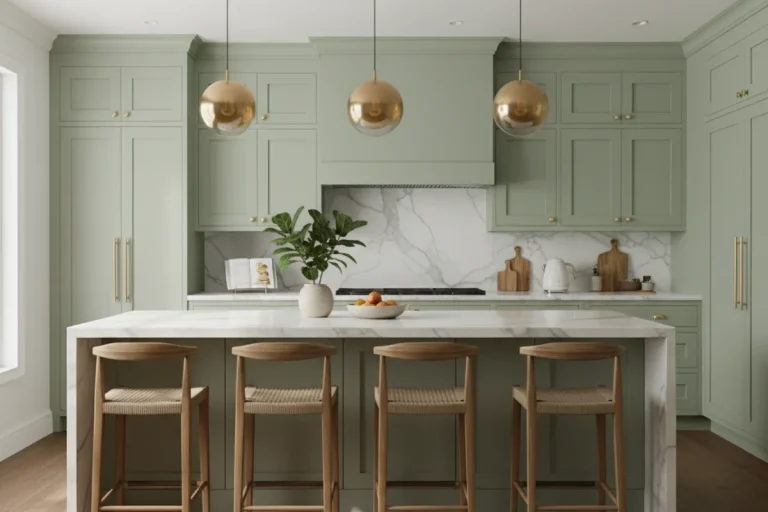
White marble backsplashes are the definition of elevated kitchen design. Whether you choose true Carrara marble with its soft grey veining, dramatic Calacatta with bold gold and grey veins, or the more budget-conscious Bianco Dolomite, a marble backsplash brings a sense of luxury that few other materials can match.
Natural Marble Tile
Natural marble tiles (typically 4×4, 4×12, or subway formats) are beautiful but require consistent sealing to prevent staining — especially near the stove and sink. Marble is porous, so olive oil, red wine, and acidic foods can permanently stain unsealed stone. With proper care, though, marble only gets more beautiful with age as it develops a natural patina.
Marble-Look Porcelain
If the maintenance commitment feels like too much, marble-look porcelain tiles have improved dramatically in recent years. Modern printing technology creates surfaces that are nearly indistinguishable from real stone at a fraction of the cost and with virtually zero maintenance requirements. They’re also far more durable and resistant to chipping than natural marble.
Common mistake: Pairing marble with pure-white grout. Instead, use a slightly warm or grey-tinted grout that complements the veining — it masks grout haze and looks far more intentional.
Mosaic and Penny Tile Backsplashes
White mosaic and penny tiles bring a charming vintage-meets-modern energy to kitchen backsplashes. Classic penny tiles (small circles or hexagons in a mesh-mounted sheet) create a soft, almost cottage-like texture that looks gorgeous behind open shelving. White glass mosaic tiles, on the other hand, create a shimmering, jewel-like surface that reads as contemporary and luxurious.
These smaller-format tiles work especially well in kitchens where you want a lot of visual texture without introducing any additional color. The intricate pattern does all the work. One thing to keep in mind: the more individual tiles in a mosaic, the more grout lines there are — and more grout means more cleaning surface area. Choose a grout color that’s easy to maintain, or use an epoxy grout that resists staining.
Large Format White Tiles and Slabs
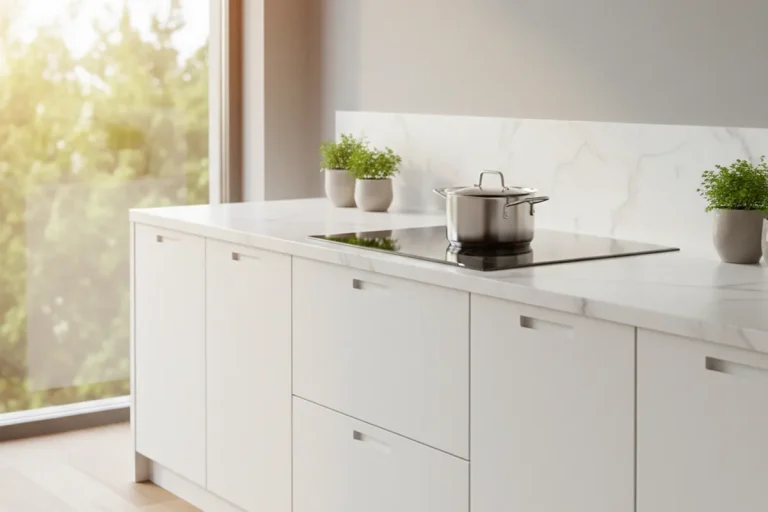
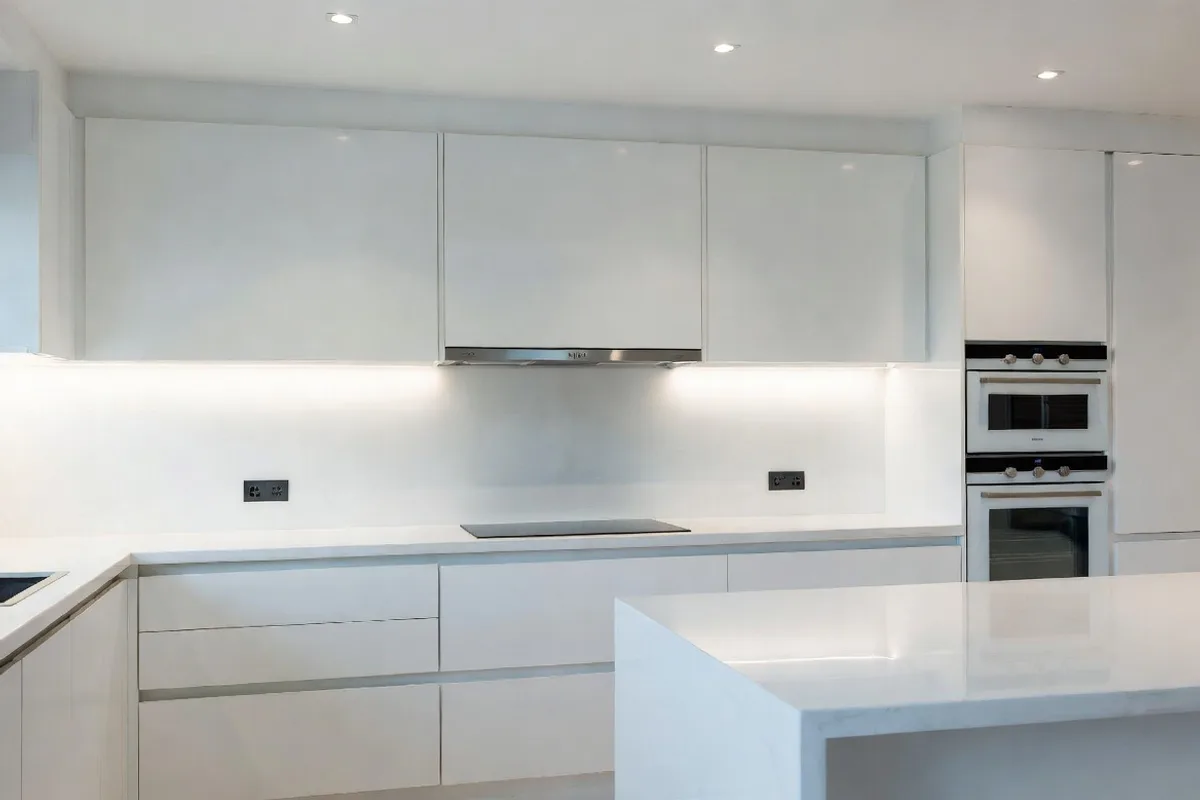
At the opposite end of the spectrum from tiny mosaics, large format tiles and full slabs have become one of the most sought-after looks in modern kitchen design. A seamless white porcelain slab that runs from countertop to upper cabinets with minimal grout lines creates an almost architectural quality — sleek, uninterrupted, and effortlessly sophisticated.
Rectified Large Format Tiles
Rectified porcelain tiles in sizes like 12×24, 24×48, or even 48×48 can be installed with very tight grout joints (sometimes as small as 1/16 inch), creating a near-slab effect at a significantly lower cost than actual slab materials. These work beautifully in modern and contemporary kitchens where clean lines are a priority.
Porcelain or Quartz Slabs
For the ultimate in seamlessness, a single porcelain or quartz slab cut to fit your backsplash area eliminates grout entirely. This is a premium option that typically requires professional templating and installation, but the result is breathtaking — especially when the slab material matches or complements your countertop for a fully integrated look.
If budget is a consideration in your overall kitchen update, it’s worth checking out these cheap kitchen backsplash ideas under $200 for ways to achieve a high-end look without the slab price tag.
Textured and 3D White Tiles
One of the most creative directions in white kitchen backsplash ideas is the use of textured or three-dimensional tiles. These tiles are all one color — white — but the raised or sculpted surface creates shadow and depth that changes dramatically depending on the time of day and the direction of your kitchen lighting.
Ripple and Wave Tiles
Ripple tiles feature a soft, undulating surface that mimics the movement of water. In a white kitchen, they add a tactile, almost sculptural element that catches natural light beautifully. They pair especially well with matte white cabinetry and warm wood accents.
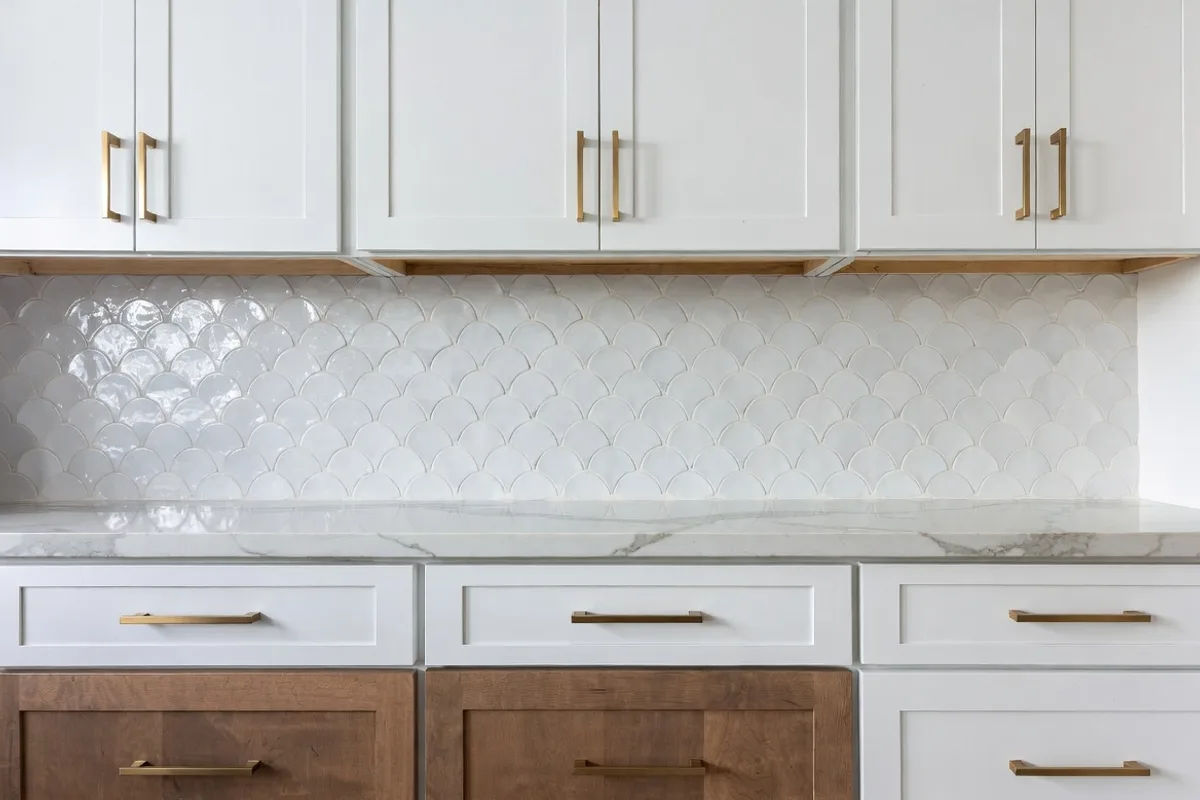
Scallop and Fish Scale Tiles
The scallop (or fish scale) shape has enjoyed a major resurgence in recent years, and for good reason. In white, these curved tiles create a pattern that feels both retro and thoroughly modern — playful without being juvenile. They work in a full kitchen backsplash or as an accent wall behind the range.
Brick-Effect and Textured Ceramic
Some ceramic tiles are molded to mimic the look of real handmade brick, with slightly irregular surfaces and raised edges that cast small shadows. These give a white backsplash the visual warmth of exposed brick without any of the porosity or maintenance challenges of real masonry.
Grout Color, Finish, and Installation Tips
Choosing your tile is only half the decision — grout color and finish can completely transform the final look, and it’s a choice that many homeowners underestimate until it’s too late.
White Grout vs. Contrasting Grout
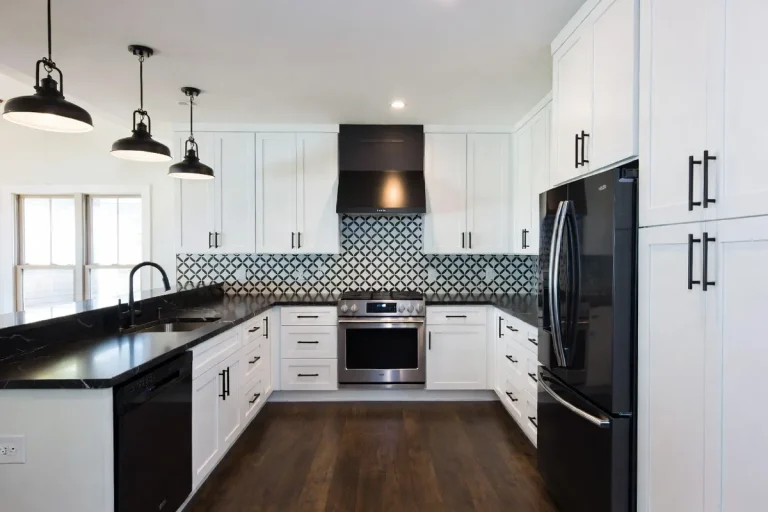
White-on-white grout creates a seamless, unified surface where the eye sees the wall as a whole rather than individual tiles. It’s clean, minimal, and particularly effective with large format tiles or slabs. Contrasting dark grout (charcoal, black, or deep grey) with white tiles does the opposite — it highlights the grid pattern and adds a graphic, almost industrial quality. Both are valid choices; it just depends on the overall mood you’re going for.
Sealant Is Non-Negotiable
Whether you’re working with natural stone, Zellige, or standard ceramic, applying a high-quality penetrating sealant after installation protects your investment from moisture, grease, and food stains. Re-seal annually for porous materials like marble or Zellige.
If you’re considering painting an existing backsplash rather than replacing it entirely, our guide on how to paint a kitchen backsplash that lasts covers everything you need to know to get professional-looking results.
Pro tip: Always order 10-15% more tile than your calculated square footage to account for cuts, breakage, and future repairs. Running out of a dye lot mid-project is a frustrating and avoidable mistake.
Frequently Asked Questions
What is the most popular white kitchen backsplash tile?
White subway tile remains the most popular choice by a significant margin, thanks to its affordability, versatility, and timeless appeal. The classic 3×6 inch format in a brick offset pattern works in virtually every kitchen style, from traditional farmhouse to sleek contemporary. Zellige and marble-look porcelain are fast-growing alternatives for homeowners who want more texture and personality.
Does a white backsplash make a kitchen look bigger?
Yes — white backsplashes reflect both natural and artificial light, which makes a kitchen feel more open and spacious. This effect is amplified when you use glossy or polished finishes, which bounce light around even more effectively. Pairing a white backsplash with white grout maximizes this effect by eliminating visual grid lines that can make a space feel busier.
Is white grout hard to keep clean on a kitchen backsplash?
White grout can show staining over time, especially near the stove and sink. The best way to prevent this is to apply a quality grout sealer immediately after installation and re-apply every 12-18 months. For day-to-day cleaning, a gentle alkaline cleaner and a soft brush work well. If you’re concerned about maintenance, consider using a slightly off-white or light grey grout, which hides minor staining much better than pure white.
Can I install a white kitchen backsplash myself?
Many white backsplash options — including standard subway tiles, mosaic mesh sheets, and large format rectified tiles — are genuinely DIY-friendly for homeowners with basic tiling skills. Specialty materials like Zellige, natural marble, and full slabs are better left to professionals due to their installation complexity. If you’re tackling it yourself, make sure you have the right tools, a quality thin-set mortar, and plenty of patience for the grouting process.
Ready to Transform Your Kitchen?
A white kitchen backsplash is one of the smartest, most enduring investments you can make in your home. Whether you fall in love with the timeless simplicity of glossy subway tile, the artisanal shimmer of Zellige, the quiet luxury of marble, or the modern drama of a seamless large-format slab, there is a white backsplash style that was made for your kitchen. The key is to think about finish, texture, and grout color as intentionally as you think about the tile itself — because those details are what separate a good backsplash from a great one. Take your time, order samples, and hold them up against your actual cabinets and countertops in different lighting conditions before you commit. Your dream kitchen is closer than you think.