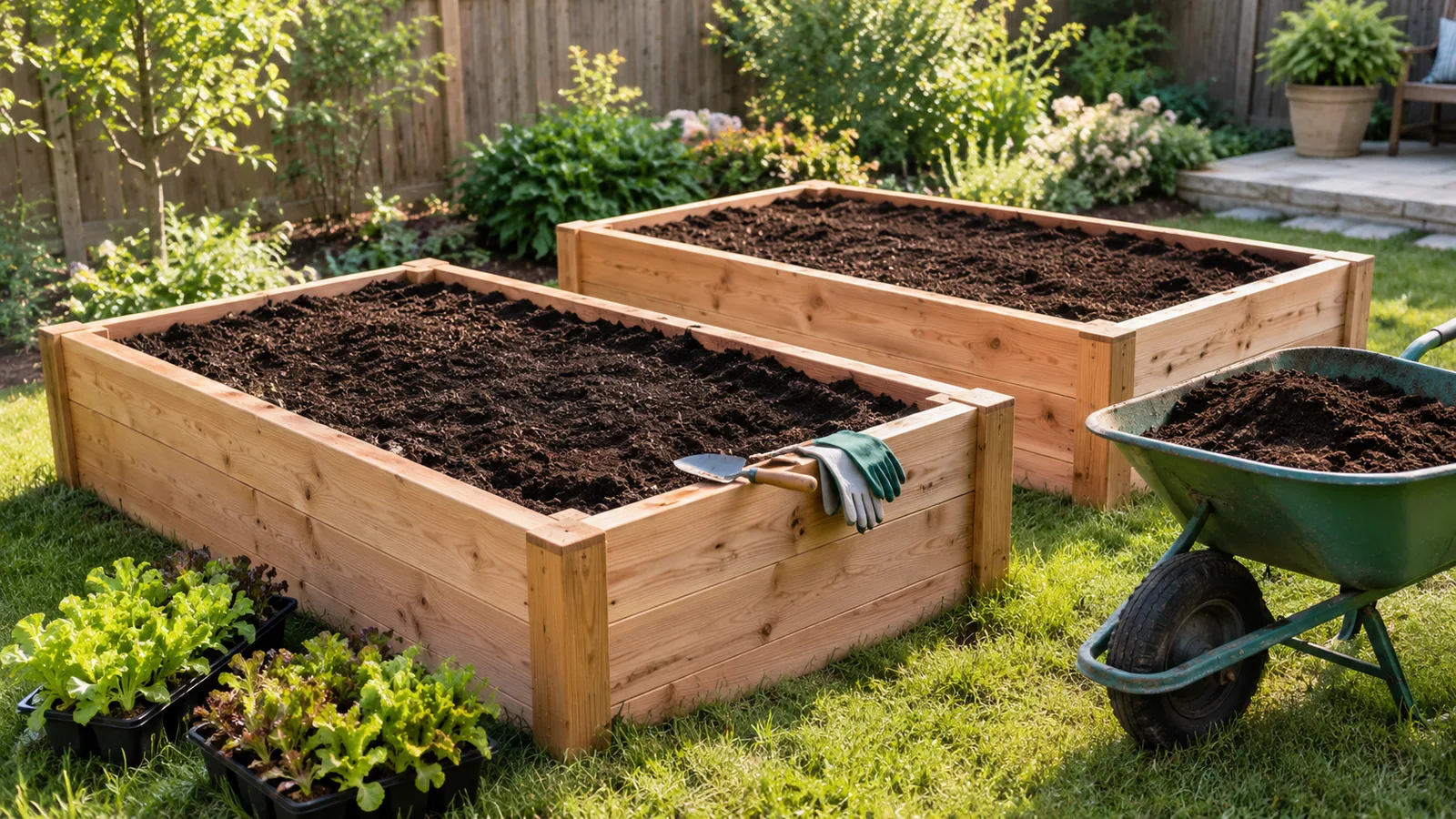
Short answer: A 4 × 8 ft raised bed filled 12 inches deep holds 32 cubic feet of soil. Add about 10% for settling and you need roughly 35 cubic feet, which is 1.3 cubic yards or 18 bags of the common 2-cubic-foot size.
Smaller beds need less: a 4 × 4 ft bed at the same depth takes about 17.6 cubic feet (9 bags). Deeper beds need a lot more, so the depth you choose matters as much as the size.
Calculate soil for your exact beds
Cubic feet, cubic yards and bags of soil for raised garden beds.
The Raised Bed Soil Formula
Soil is sold by volume, so you need three measurements: length, width and how deep you'll fill the bed.
- Measure inside the frame in feet. A typical bed is 4 ft wide and 8 ft long.
- Convert the fill depth to feet: 12 inches ÷ 12 = 1 ft. (Fill to about an inch below the top edge.)
- Multiply: 4 × 8 × 1 = 32 cubic feet.
- Add 10% for settling: 32 × 1.10 = 35.2 cubic feet.
- Convert to what you're buying:
- Bags: 35.2 ÷ 2 = 17.6, so 18 bags of 2 cu ft (always round up)
- Bulk: 35.2 ÷ 27 = 1.3 cubic yards
Building more than one bed? Multiply by the number of beds. Three 4 × 8 beds at 12 inches need about 105.6 cubic feet, which is 3.91 cubic yards or 53 bags of 2 cu ft.
Soil Chart for Common Raised Bed Sizes
All numbers below are for beds filled 12 inches deep with a 10% settling allowance, the same method our raised bed soil calculator uses.
| Bed size | Cubic feet | Cubic yards | 2 cu ft bags | 1.5 cu ft bags |
|---|---|---|---|---|
| 2' × 8' | 17.6 | 0.65 | 9 | 12 |
| 4' × 4' | 17.6 | 0.65 | 9 | 12 |
| 3' × 6' | 19.8 | 0.73 | 10 | 14 |
| 4' × 8' | 35.2 | 1.3 | 18 | 24 |
| 4' × 12' | 52.8 | 1.96 | 27 | 36 |
| Two 4' × 8' beds | 70.4 | 2.61 | 36 | 47 |
How Depth Changes the Number (4' × 8' Bed)
Depth has a huge effect, because every extra inch covers the whole 32 square feet of the bed.
| Fill depth | Cubic feet | Cubic yards | 2 cu ft bags | 1 cu ft bags |
|---|---|---|---|---|
| 6 in | 17.6 | 0.65 | 9 | 18 |
| 8 in | 23.5 | 0.87 | 12 | 24 |
| 10 in | 29.3 | 1.09 | 15 | 30 |
| 12 in | 35.2 | 1.3 | 18 | 36 |
| 18 in | 52.8 | 1.96 | 27 | 53 |
Most vegetables do well with 10 to 12 inches of good soil. Shallow-rooted crops like lettuce and herbs can manage with less, while tomatoes, squash and root crops appreciate the full 12 inches or more.
Why Add 10% for Settling?
Fresh soil and compost are full of air. After the first few waterings and a couple of rainstorms, the mix compacts and the surface can drop noticeably. If you fill to the brim with exactly the calculated volume, you'll likely be topping up within weeks.
- No allowance (0%): fine if you're using heavy, already-settled topsoil.
- 10% (typical): right for most bagged mixes and topsoil-compost blends. For a 4 × 8 bed at 12 in, that's 35.2 cu ft instead of 32.
- 20%: for very fluffy mixes heavy in compost, peat or coir. The same bed would need 38.4 cu ft (20 bags of 2 cu ft).
Fill the bed in layers and water each layer as you go. You'll see how much it settles before planting, and the soil will be evenly moist all the way down.
What Soil Mix Should You Use?
A raised bed needs soil that drains well but still holds moisture and nutrients. Plain garden dirt dug from the yard tends to compact in a bed. Three common approaches:
| Mix | What goes in | For a 4' × 8' × 12" bed (35.2 cu ft) |
|---|---|---|
| 60/40 topsoil and compost | 60% screened topsoil, 40% compost | 21.1 cu ft topsoil + 14.1 cu ft compost |
| "Thirds" mix | Equal parts compost, peat moss or coco coir, coarse vermiculite | 11.7 cu ft of each |
| Bagged raised bed mix | Ready-made blend, no mixing | 18 bags of 2 cu ft |
The 60/40 blend is the most economical for big beds, especially if you can buy topsoil and compost in bulk. The thirds mix is light and drains beautifully, but the ingredients cost more per cubic foot. Bagged mix is the simplest for one or two beds.
Whatever mix you choose, look for screened topsoil without clay clumps or rocks, and use finished compost that smells earthy, not sour.
Bags or Bulk Soil?
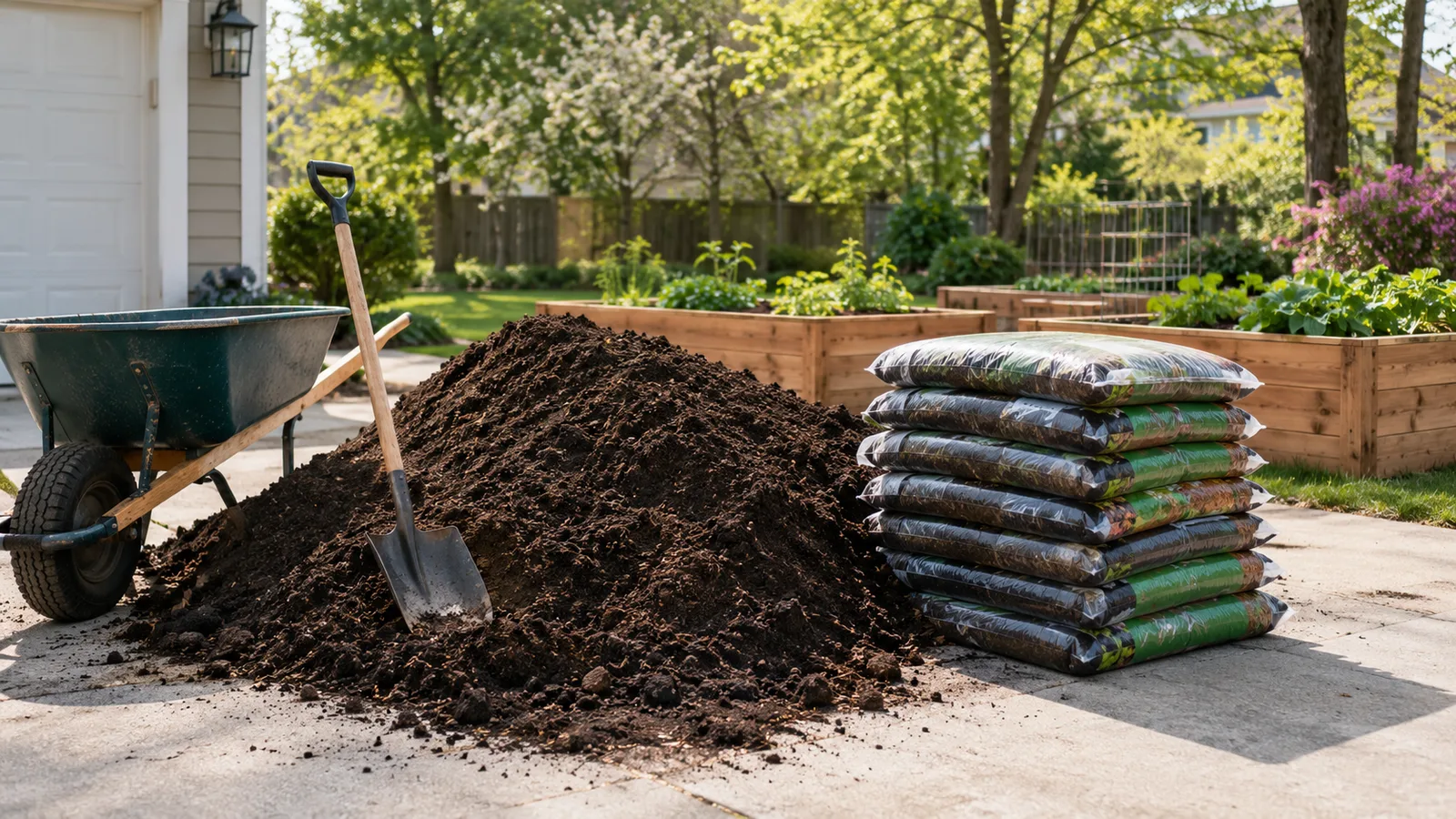
For one 4 × 8 bed, 18 bags fit in most cars over a couple of trips and need no delivery. Once you need more than about 2 cubic yards (two 4 × 8 beds already take 2.61), bulk soil delivered by the yard is usually cheaper per cubic foot, even after the delivery fee. Prices vary a lot by region, so get a quote from a local landscape supplier before deciding.
Bulk soil also lets you mix your own blend, for example ordering topsoil and compost separately and combining them in the bed.
How to Fill a Tall Bed for Less
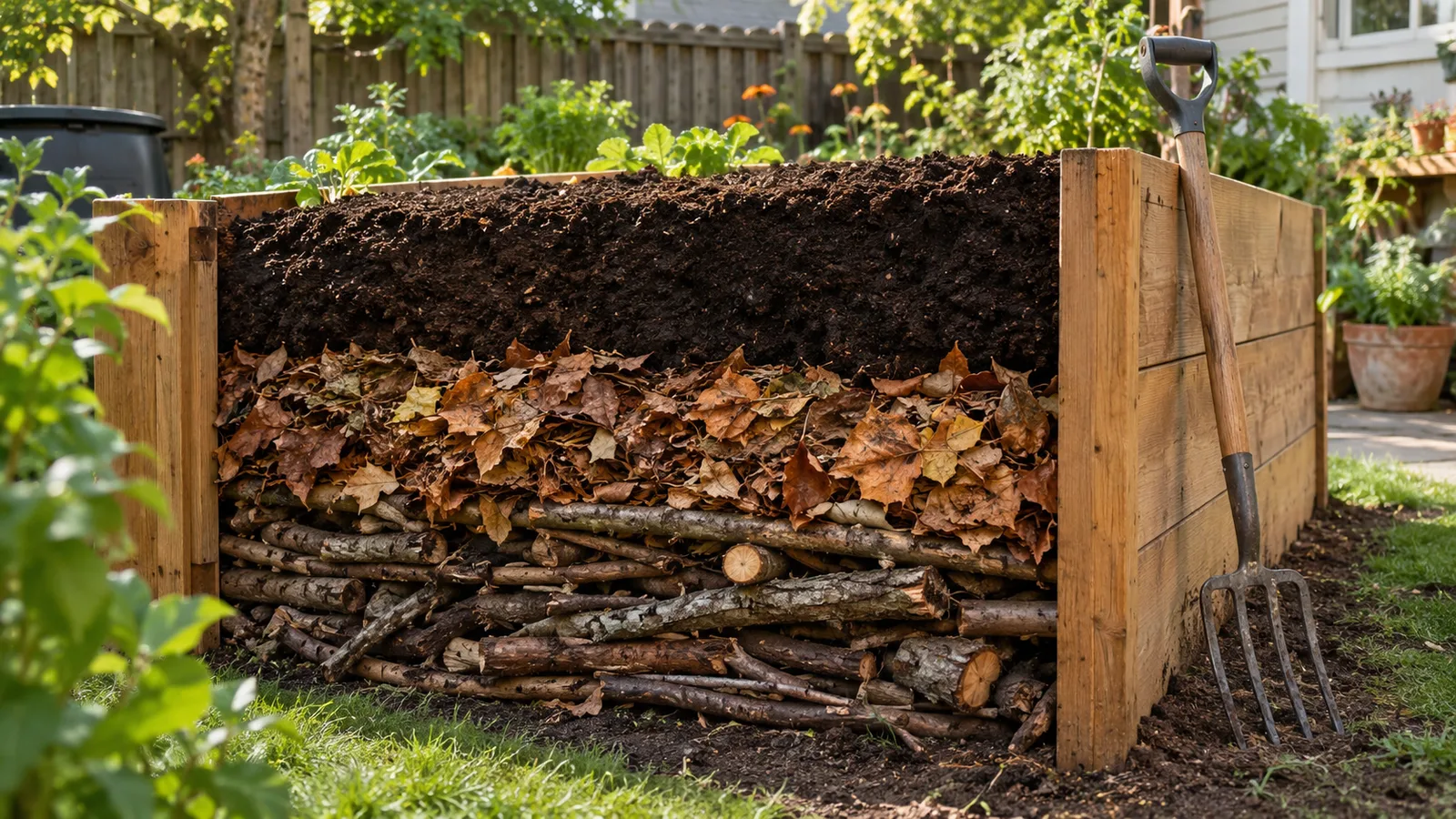
Beds taller than about 18 inches are easy on the back, but filling them entirely with soil gets expensive: a 4 × 8 bed filled 24 inches deep would take 70.4 cubic feet, or 36 bags. Most vegetable roots live in the top 12 inches, so many gardeners fill the bottom differently, in a method inspired by hugelkultur:
- Bottom layer: untreated logs and thick branches.
- Middle layer: smaller sticks, leaves, grass clippings or straw.
- Top 10–12 inches: your soil mix.
The wood and leaves break down slowly over the years, feeding the soil and holding moisture. Expect the bed to sink more than usual as they decompose, so plan to top it up. Avoid treated, painted or black walnut wood.
Use the calculator for just the soil layer: enter the depth of good soil you'll add on top rather than the full height of the bed.
Top Up Every Spring
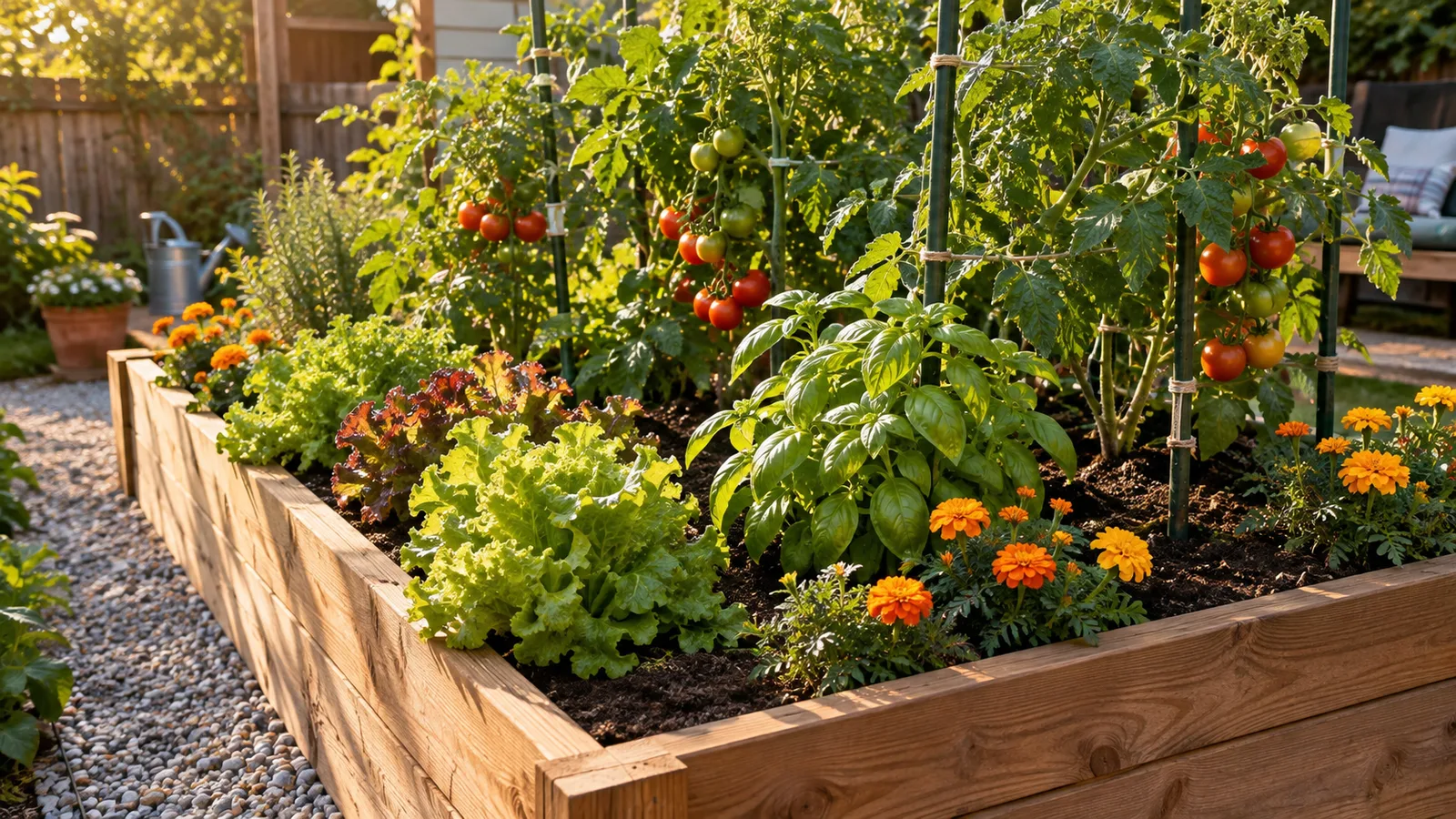
Raised beds lose a little volume every year as organic matter breaks down and plants take up nutrients. A 1–2 inch layer of compost each spring keeps the bed full and fertile. For a 4 × 8 bed, a 2-inch top-up is about 5.3 cubic feet (32 sq ft × 2/12 ft), or roughly three bags of 2 cu ft.
Mulching the paths between beds helps keep weeds out of the soil too. Our guide to how much mulch you need and the mulch calculator cover the paths.
Products That Make Filling Beds Easier
Miracle-Gro
Raised Bed Soil Mix, 1.5 cu ft
- ✓Ready to use, no mixing
- ✓Made for raised beds and containers
- ✓Good for one or two small beds
Compost
Organic Compost
- ✓Base of a 60/40 or thirds mix
- ✓Improves drainage and moisture
- ✓Use for spring top-ups
Coco coir
Coco Coir Brick
- ✓Peat-free alternative for the thirds mix
- ✓Holds moisture well
- ✓Expands with water
True Temper
Steel Wheelbarrow, 6 Cubic Foot
- ✓Moves three bags per trip
- ✓Handles bulk soil easily
- ✓Pneumatic tire
As an Amazon Associate, we earn from qualifying purchases.
The Bottom Line
- A 4 × 8 ft bed filled 12 inches deep needs about 35 cubic feet of soil with settling: 1.3 cubic yards or 18 bags of 2 cu ft.
- A 4 × 4 ft bed at the same depth needs about 17.6 cubic feet (9 bags).
- Add 10% for settling, more for very fluffy mixes.
- Over about 2 cubic yards, compare a bulk delivery quote.
- For tall beds, fill the bottom with logs and leaves and use soil only for the top 10–12 inches.
Plug your bed sizes, depth and number of beds into the free raised bed soil calculator to get cubic feet, cubic yards, bag counts and a mix breakdown.