Short answer: most lawns need 2 to 8 pounds of seed per 1,000 square feet for a new lawn, depending on the grass. Tall fescue takes about 6 to 8 lb, Kentucky bluegrass about 2 to 3 lb, and warm-season grasses like Bermuda or zoysia about 1 to 2 lb. Overseeding a thin lawn uses roughly half of the new-lawn rate.
For a typical 5,000 sq ft new tall fescue lawn, that's 30 to 40 lb of seed, or two 20 lb bags.
Enter your lawn size and grass type to get pounds and bags
Pounds of grass seed for a new lawn or overseeding, by grass type.
Step 1: Measure the Lawn
Break the lawn into simple shapes and add them up:
- Rectangles: length x width
- Circles: 3.14 x radius x radius
- Triangles: base x height ÷ 2
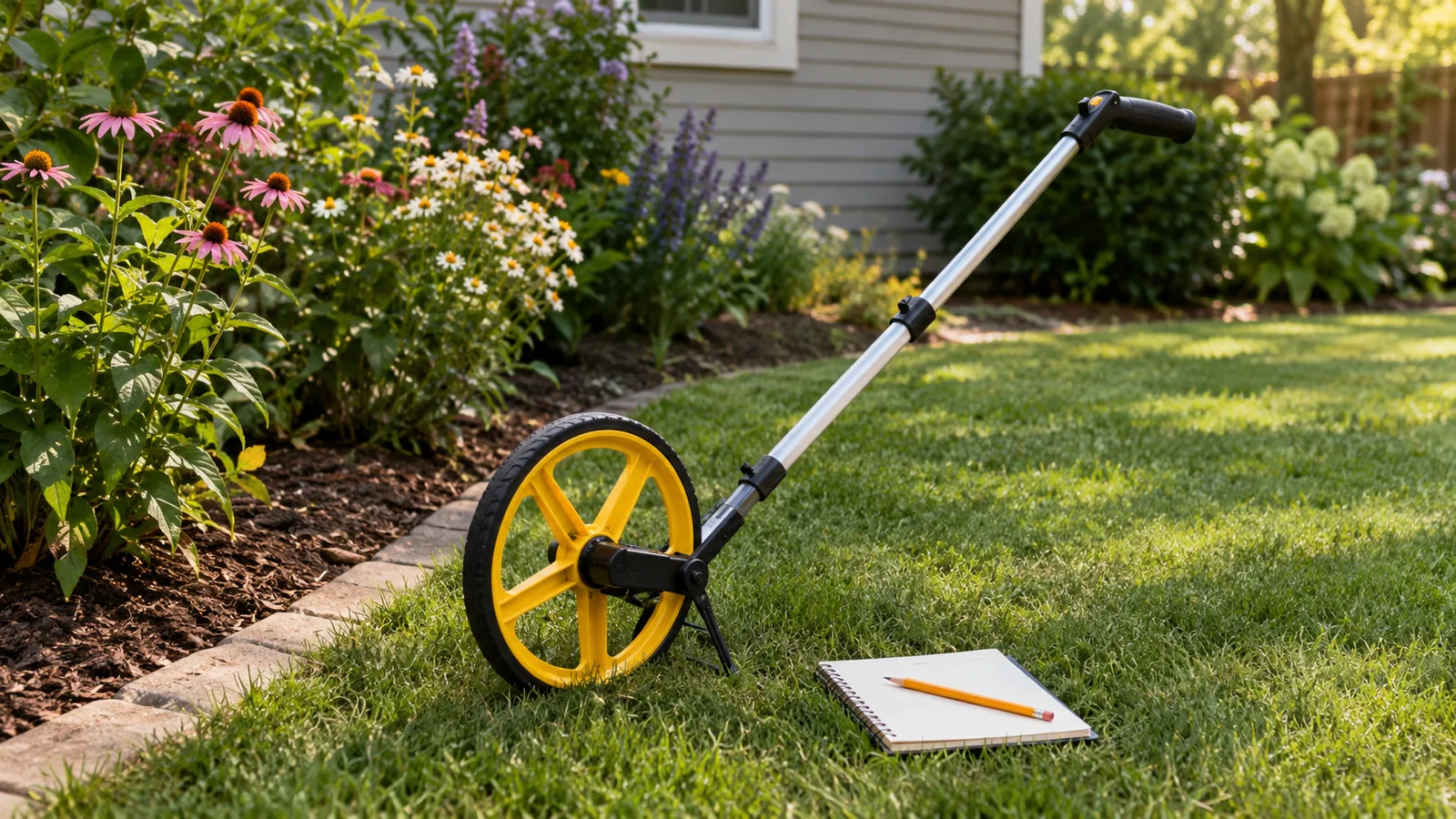
Subtract the house, driveway, patio and large beds. A measuring wheel makes this quick, but pacing it out works for a rough number. If you're only patching thin spots, measure just those areas.
Step 2: Find Your Seeding Rate
Rates below are pounds of seed per 1,000 sq ft, typical of university extension and seed-label guidance. Always follow the rate printed on your seed bag: blends, coated seed and mixes vary.
| Grass type | Season | New lawn (lb / 1,000 sq ft) | Overseeding (lb / 1,000 sq ft) |
|---|---|---|---|
| Tall fescue | Cool | 6–8 | 3–4 |
| Kentucky bluegrass | Cool | 2–3 | 1–1.5 |
| Perennial ryegrass | Cool | 5–7 | 3–4 |
| Fine fescue (shade) | Cool | 4–5 | 2–3 |
| Sun & shade mix | Cool | 4–6 | 2–3 |
| Bermudagrass (hulled) | Warm | 1–2 | 0.5–1 |
| Zoysiagrass | Warm | 1–2 | 0.5–1 |
| Centipedegrass | Warm | 0.25–0.5 | 0.25 |
Why such a range? Seed size. Kentucky bluegrass seed is tiny, so a pound holds far more seeds than a pound of tall fescue.
How Much Seed for a New Lawn
Every number below comes from our grass seed calculator. "Buy" is the high end of the range, rounded up, with the bags that fit it best from common 20, 7 and 3 lb sizes.
| Grass | 1,000 sq ft | 2,500 sq ft | 5,000 sq ft | 10,000 sq ft |
|---|---|---|---|---|
| Tall fescue | 6–8 lb (one 7 + one 3) | 15–20 lb (one 20) | 30–40 lb (two 20) | 60–80 lb (four 20) |
| Kentucky bluegrass | 2–3 lb (one 3) | 5–7.5 lb (one 7 + one 3) | 10–15 lb (one 20) | 20–30 lb (20 + 7 + 3) |
| Perennial ryegrass | 5–7 lb (one 7) | 12.5–17.5 lb (one 20) | 25–35 lb (two 20) | 50–70 lb (three 20 + 7 + 3) |
| Sun & shade mix | 4–6 lb (one 7) | 10–15 lb (one 20) | 20–30 lb (20 + 7 + 3) | 40–60 lb (three 20) |
| Bermudagrass | 1–2 lb (one 3) | 2.5–5 lb (one 7) | 5–10 lb (one 7 + one 3) | 10–20 lb (one 20) |
How Much Seed to Overseed
| Grass | 1,000 sq ft | 2,500 sq ft | 5,000 sq ft | 10,000 sq ft |
|---|---|---|---|---|
| Tall fescue | 3–4 lb (one 7) | 7.5–10 lb (one 7 + one 3) | 15–20 lb (one 20) | 30–40 lb (two 20) |
| Kentucky bluegrass | 1–1.5 lb (one 3) | 2.5–3.8 lb (one 7) | 5–7.5 lb (one 7 + one 3) | 10–15 lb (one 20) |
| Perennial ryegrass | 3–4 lb (one 7) | 7.5–10 lb (one 7 + one 3) | 15–20 lb (one 20) | 30–40 lb (two 20) |
| Sun & shade mix | 2–3 lb (one 3) | 5–7.5 lb (one 7 + one 3) | 10–15 lb (one 20) | 20–30 lb (20 + 7 + 3) |
More seed isn't better. Seeding far above the label rate makes seedlings crowd each other, compete for water and light, and thin out later. Stick to the recommended range.
When to Plant Grass Seed
Timing matters as much as the amount.
| Grass group | Examples | Best time to seed |
|---|---|---|
| Cool-season | Tall fescue, Kentucky bluegrass, ryegrass, fine fescue | Early fall (spring is second best) |
| Warm-season | Bermuda, zoysia, centipede | Late spring to early summer |
Cool-season grasses germinate best when soil is still warm but air is cooling, and fall seeding gives the new grass two cool seasons to establish before summer heat. Warm-season grasses need warm soil, so they're seeded once nights stay warm.
Getting the Seed to Grow
- Loosen the soil. Rake or dethatch so seed lands on soil, not on a mat of dead grass. For bare areas, rake the top inch loose.
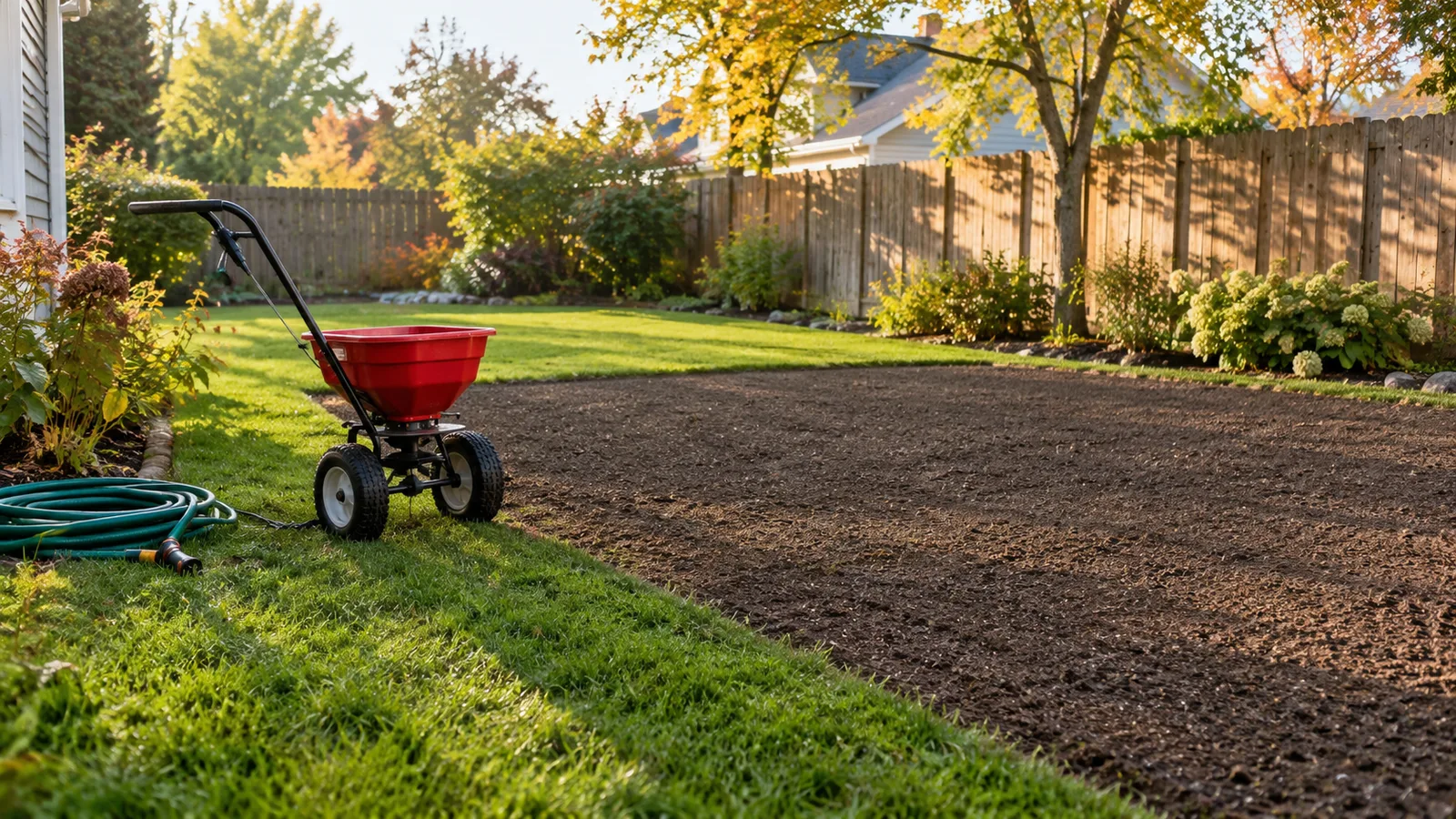
- Spread evenly. Use a broadcast or drop spreader. Spread half the seed in one direction and half crosswise for even coverage.
- Make seed-to-soil contact. Lightly rake the seed in or roll it so it's pressed into the soil. Seed sitting on top often dries out or feeds birds.
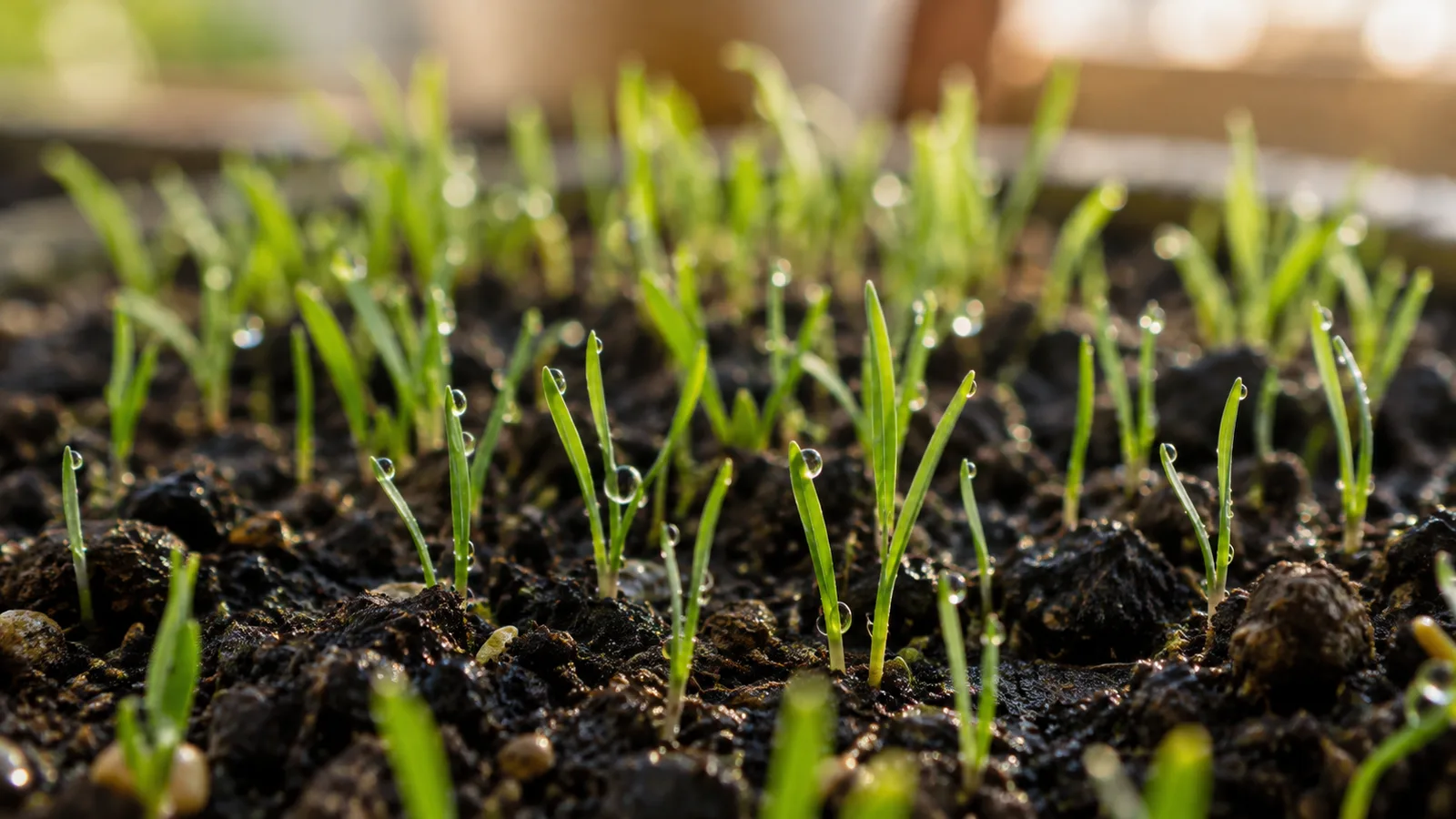
- Keep it moist. Water lightly once or twice a day so the top half inch stays damp until germination, then water less often and deeper.
- Wait to mow. Mow new grass once it reaches about a third taller than your normal mowing height.
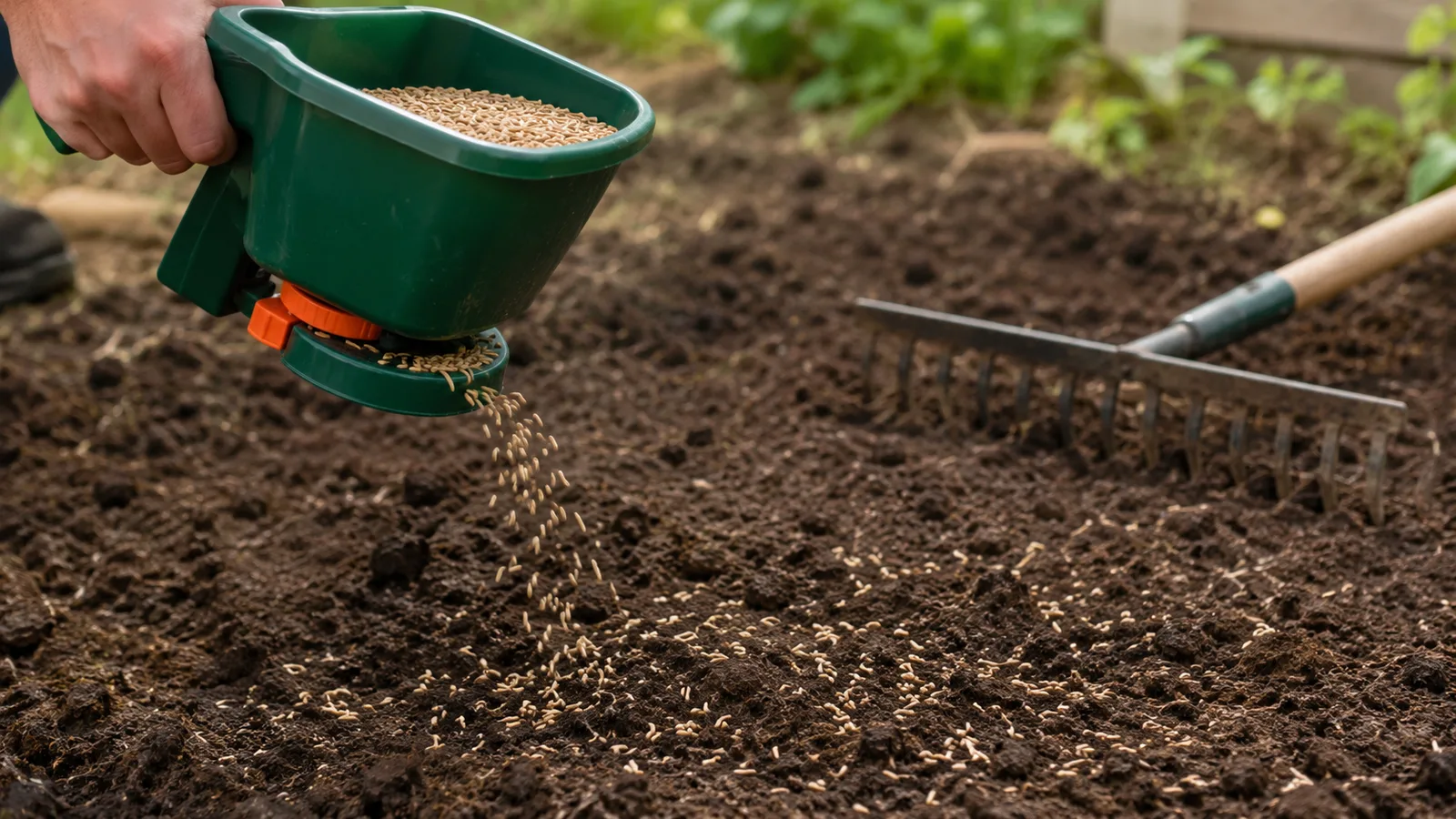
A thin layer of compost raked over bare patches helps hold moisture. Topping up garden beds at the same time? Our guides on how much soil a raised bed needs and how much mulch to buy use the same measuring approach.
Common Grass Seeding Mistakes
- Seeding in the wrong season. Cool-season seed sown in midsummer heat often struggles, and warm-season seed won't germinate in cold soil.
- Letting the seedbed dry out. New seed needs steady moisture until it sprouts. One hot, dry afternoon can set it back.
- Skipping soil prep. Seed thrown onto hard, compacted soil or thick thatch has nowhere to root.
- Using a weed preventer at the same time. Many pre-emergent weed controls also stop grass seed from germinating. Read the label and wait as directed.
- Buying the wrong grass for your yard. Shady areas need shade-tolerant grasses like fine fescue or a sun and shade mix; full-sun southern lawns usually suit warm-season grasses.
- Mowing too soon or too short. Let new grass establish before the first cut, and keep the mower blade sharp so it doesn't pull seedlings out.
Helpful Products
Scotts
Broadcast Lawn Spreader
- ✓Spreads seed and fertilizer
- ✓Adjustable rate settings
- ✓Covers large lawns quickly
Various
Tall Fescue Grass Seed, 20 lb
- ✓Tolerates heat and drought well
- ✓Deep roots
- ✓Good for sun and partial shade
Various
Measuring Wheel
- ✓Measures lawn areas fast
- ✓Counts in feet and inches
- ✓Folds for storage
Various
Lawn Starter Fertilizer
- ✓Formulated for new seedlings
- ✓Use at seeding time
- ✓Follow label rates
As an Amazon Associate, we earn from qualifying purchases.
The Bottom Line
- New lawns: about 6–8 lb of tall fescue, 2–3 lb of Kentucky bluegrass or 1–2 lb of Bermuda per 1,000 sq ft.
- Overseeding: about half the new-lawn rate.
- A 5,000 sq ft new tall fescue lawn needs 30–40 lb of seed.
- Seed cool-season grass in early fall, warm-season grass in late spring to early summer.
- Follow the rate on your seed bag, and keep the seed moist until it sprouts.
Plug your lawn size and grass type into the free grass seed calculator for pounds and the right mix of bags.