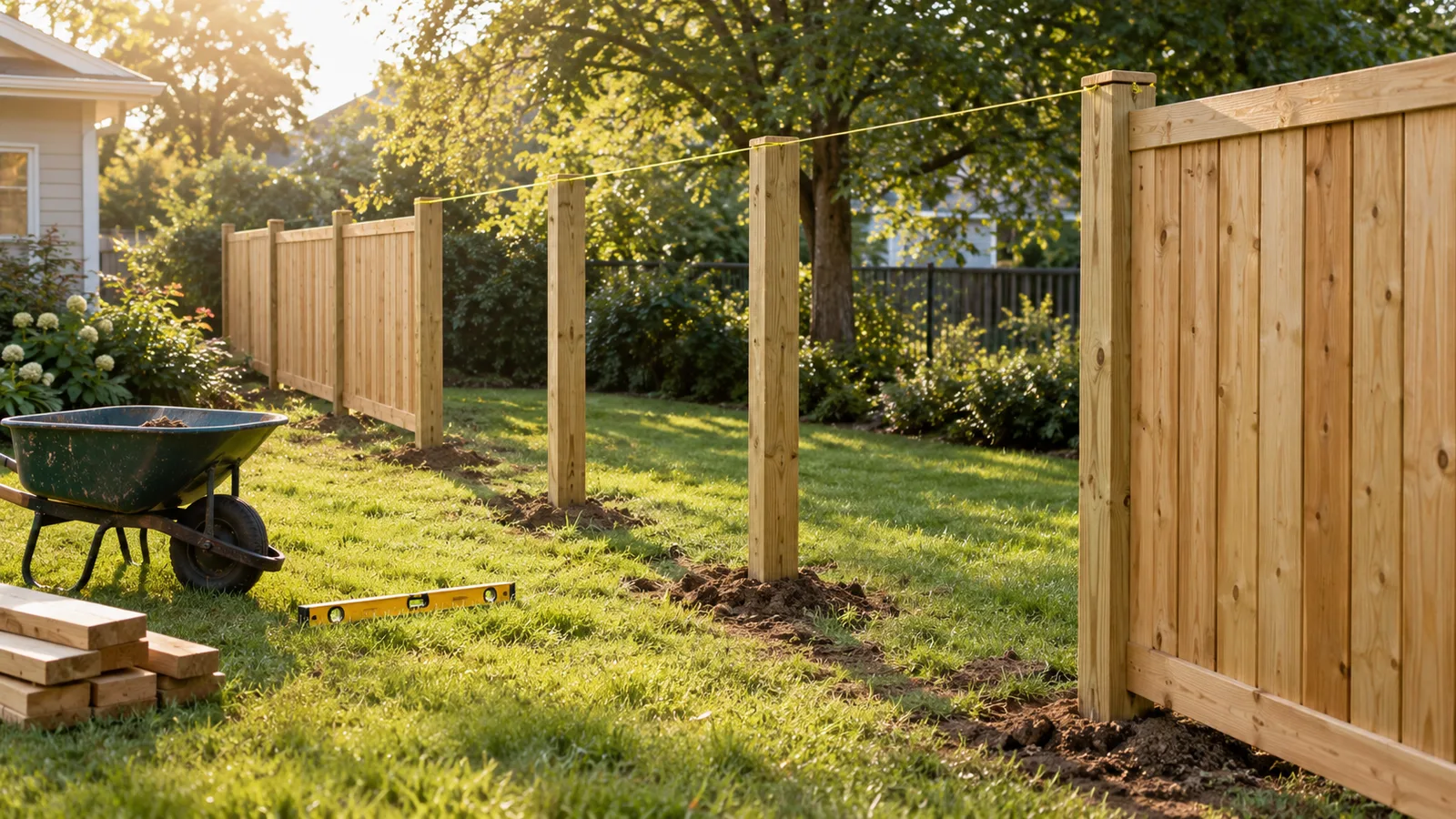
Short answer: for a single straight fence run, divide the length by the post spacing, round up, and add 1:
- 100 ft at 6 ft spacing: 100 ÷ 6 = 16.7 → 17, + 1 = 18 posts
- 100 ft at 8 ft spacing: 100 ÷ 8 = 12.5 → 13, + 1 = 14 posts
Then add one post per gate and work out corners run by run. Here are the details, charts and how much concrete you'll need.
Get posts, rails, pickets and concrete for your fence
Calculate posts, rails, and pickets for your fence project.
The Fence Post Formula
Posts sit at both ends of a run and every "spacing" in between:
Posts = (run length ÷ spacing, rounded up) + 1
- 6 ft spacing is the common choice for privacy fences: sturdier and less sag in the rails.
- 8 ft spacing uses fewer posts and suits lighter fences, but 8 ft is generally treated as the maximum for wood rails. Check the length of the rails you plan to buy.
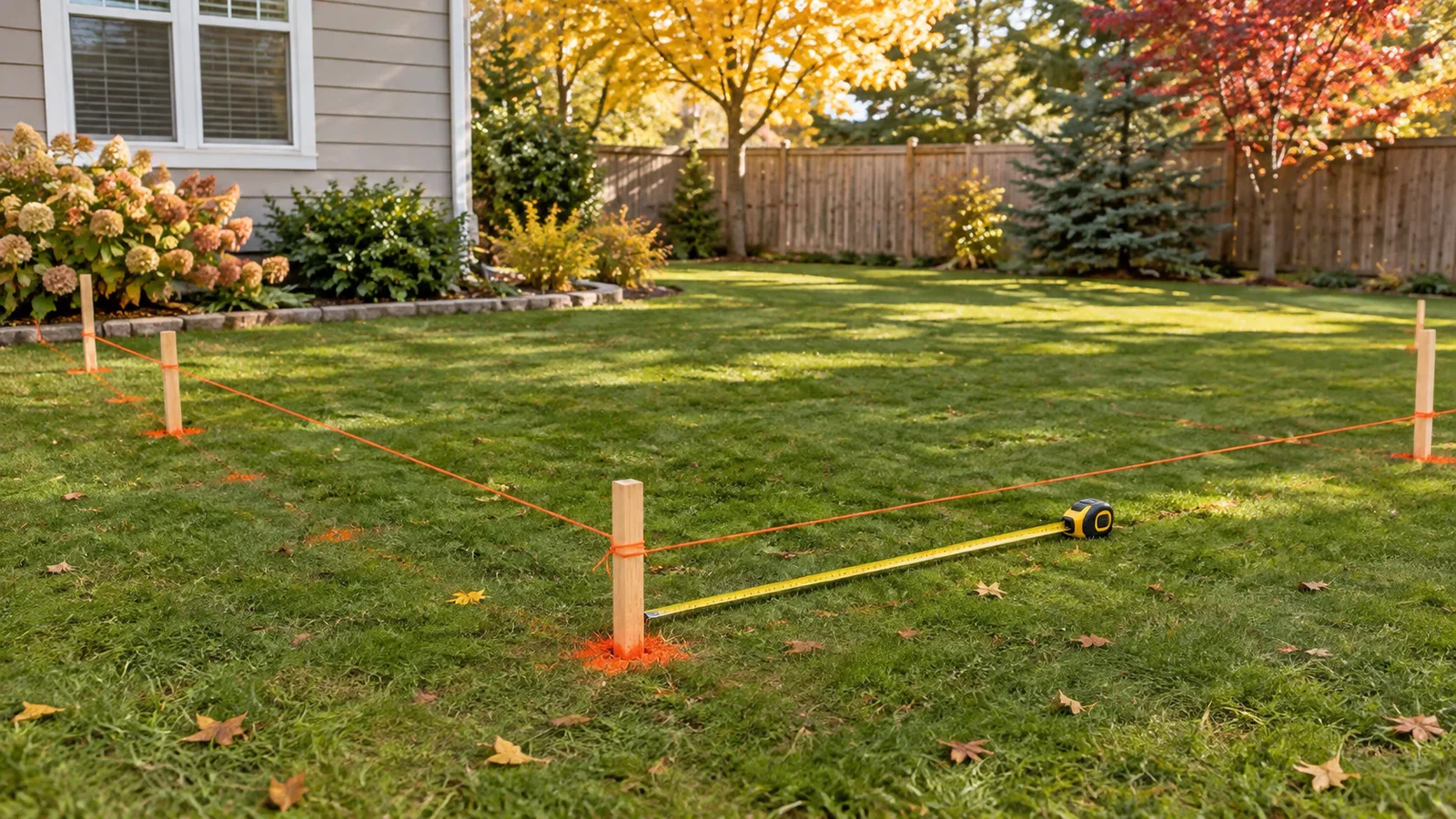
Corners: Count Each Straight Run
The formula above is for one straight run. For an L- or U-shaped fence:
- Measure each straight side separately.
- Use the formula for each side.
- Subtract one post for each corner, because neighboring sides share their corner post.
Example: an L-shaped fence with a 60 ft side and a 40 ft side at 6 ft spacing:
- 60 ÷ 6 = 10, + 1 = 11 posts
- 40 ÷ 6 = 6.7 → 7, + 1 = 8 posts
- 11 + 8 − 1 shared corner = 18 posts
Corner and end posts carry more load than line posts, so many builders use a heavier post (for example a 6x6 instead of a 4x4) at corners and gates.
Gates Add Posts
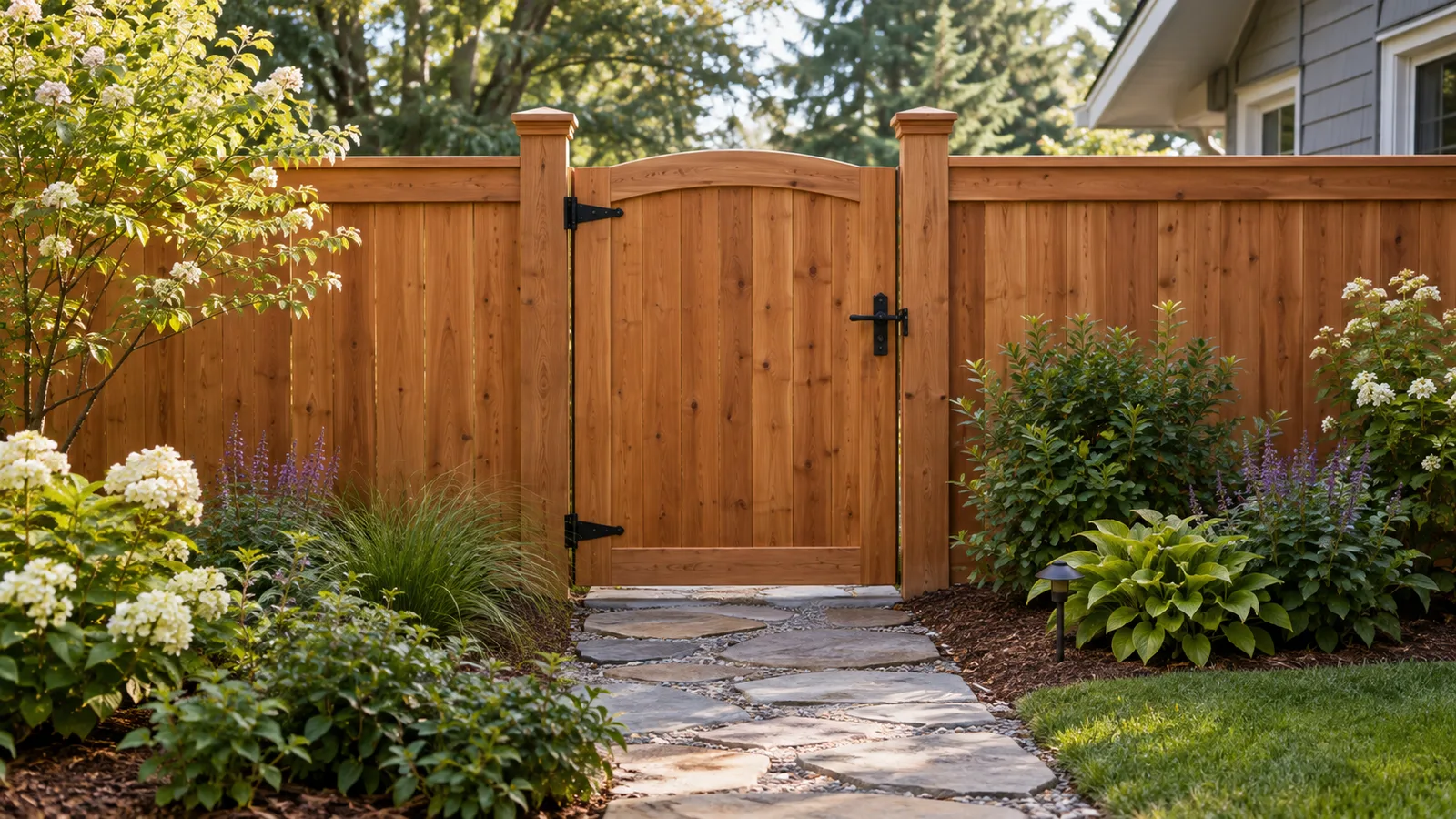
A gate hangs between two posts, and both need to be set extra firmly because the gate's weight pulls on them. But only one of them is extra: the other is the end post of the neighboring fence section. So our fence calculator subtracts the gate opening from the fence length, counts the fence posts as usual, and adds one post per gate.
That's why a gate sometimes doesn't change the total at all: removing a 4 ft opening can drop a whole section from the fence run, and the gate's extra post fills its place. The gate opening also gets no rails or pickets.
Fence Post Chart
These numbers come straight from our fence calculator for a 6 ft privacy fence on one straight run, with a 4 ft gate where noted.
| Fence length | 6 ft spacing | 6 ft spacing + 1 gate | 8 ft spacing | 8 ft spacing + 1 gate |
|---|---|---|---|---|
| 50 ft | 10 posts | 10 posts | 8 posts | 8 posts |
| 100 ft | 18 posts | 18 posts | 14 posts | 14 posts |
| 150 ft | 26 posts | 27 posts | 20 posts | 21 posts |
| 200 ft | 35 posts | 35 posts | 26 posts | 27 posts |
And the rest of the materials for the same 6 ft privacy fence at 6 ft spacing, no gate:
| Fence length | Rails (3 per section) | 5.5 in pickets | 50 lb concrete bags (2 per post) |
|---|---|---|---|
| 50 ft | 27 | 110 | 20 |
| 100 ft | 51 | 219 | 36 |
| 150 ft | 75 | 328 | 52 |
| 200 ft | 102 | 437 | 70 |
Building a taller 8 ft fence? Plan on 4 rails per section instead of 3. For a shadowbox fence (pickets on alternating sides), the calculator uses about 1.5 times the privacy picket count, for example 329 pickets for 100 ft instead of 219.
Choosing Fence Posts
The number of posts doesn't change much with the material, but the size and type do:
| Post type | Typical use | Notes |
|---|---|---|
| Pressure-treated 4x4 wood | Line posts on most wood fences | Look for lumber rated for ground contact |
| Pressure-treated 6x6 wood | Corners, ends, gate posts, tall fences | Stiffer, resists sagging under a gate's weight |
| Cedar 4x4 | Line posts where looks matter | Naturally rot-resistant heartwood, but still lasts longer kept off direct soil contact |
| Galvanized steel post | Long-lasting alternative to wood | Wood rails and pickets attach with brackets; very resistant to rot |
| Vinyl post (often over a wood or metal insert) | Vinyl fence systems | Use the spacing the fence system specifies; panels are made to fit it |
For prefab fence panels (often 6 or 8 ft wide), set your post spacing to the panel width plus the post, measured center to center, so each panel fits exactly. Measure an actual panel before you dig.
How Deep to Set Fence Posts
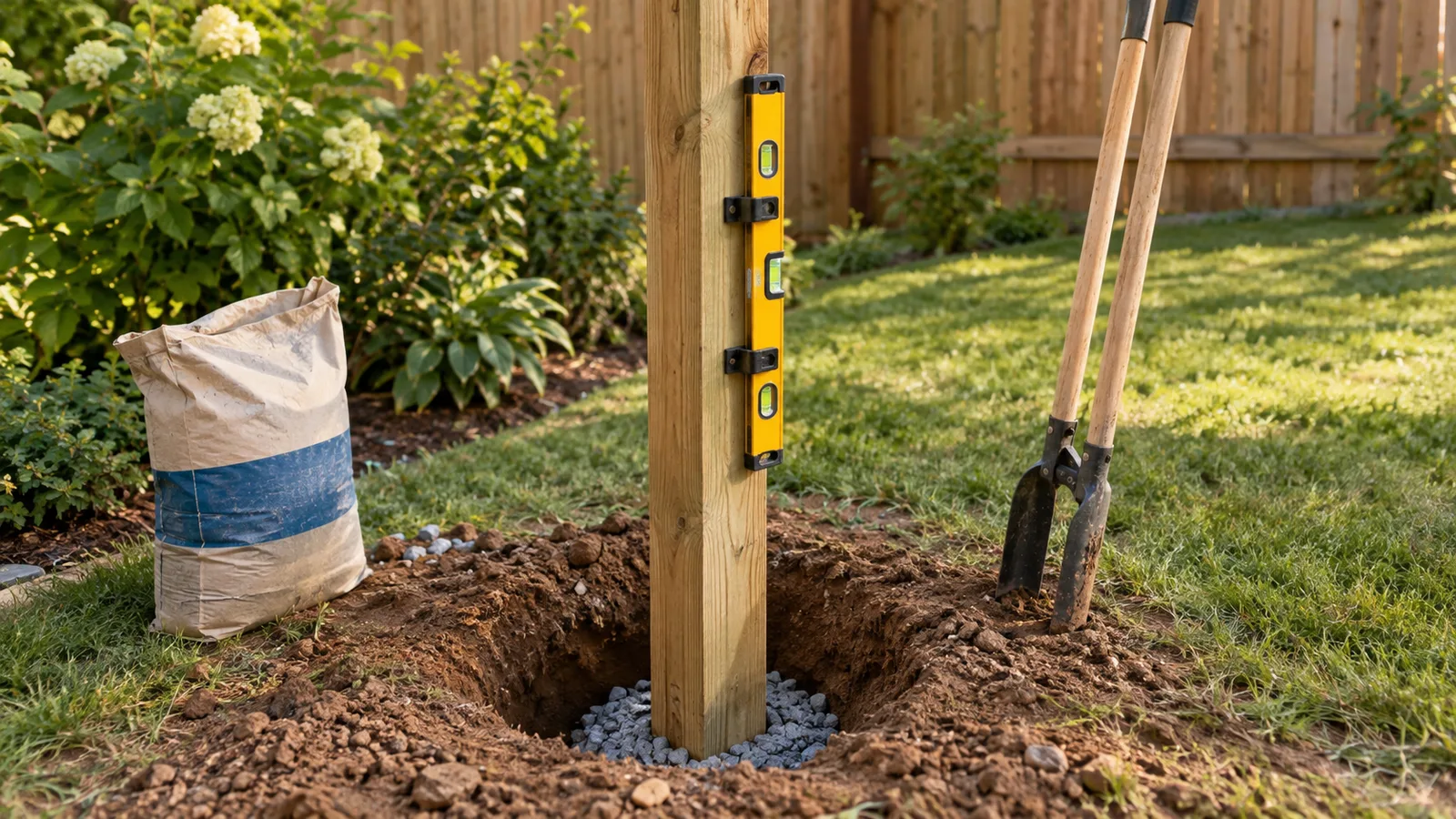
A common rule of thumb is to bury about one-third to one-half of the post's above-ground height. For a 6 ft fence, that usually means holes around 2 to 3 ft deep, which is why 6 ft fences often use 8 ft posts.
Two more things decide the real depth:
- Frost line: in cold climates, posts need to go below the frost depth so they don't heave. Your local building department can tell you the depth for your area.
- Local rules: some towns and HOAs set fence height, setbacks and post requirements. Check before you dig, and call 811 in the US to have buried utilities marked.
How Much Concrete per Fence Post
The fence calculator budgets two 50 lb bags of fast-setting concrete per post, which suits a typical hole around 10 inches across and 2 ft deep. (A hole roughly 3 times the post width is common: about 10 inches across for a 4x4.)
Deeper or wider holes need more. Using our concrete calculator's post-hole mode with standard concrete mix (including 10% extra):
| Hole size | Concrete | 80 lb bags | 60 lb bags |
|---|---|---|---|
| 10 in wide × 2 ft deep | 1.1 cu ft | 2 | 3 |
| 10 in wide × 2.5 ft deep | 1.4 cu ft | 3 | 4 |
| 12 in wide × 3 ft deep | 2.4 cu ft | 5 | 6 |
The post itself takes up a little of that space, so you'll often have a bit left over. For holes deeper or wider than the typical 10 in × 2 ft, use the concrete calculator in post-hole mode for an exact count instead of the two-bags-per-post baseline.
Put a few inches of gravel in the bottom of each hole before setting the post. It helps water drain away from the end of the post, which is where wood fence posts usually rot first.
What You'll Need
Fiskars
Manual Post Hole Digger
- ✓Digs clean round holes
- ✓Fiberglass handles
- ✓Good for a few dozen holes
Quikrete
Fast-Setting Concrete Mix, 50 lb
- ✓Pour dry, then add water
- ✓Sets in minutes
- ✓Made for posts
Johnson Level
Magnetic Post Level
- ✓Checks plumb on two sides at once
- ✓Straps to the post
- ✓Hands-free
Various
Mason's Line and Stakes
- ✓Keeps posts in a straight line
- ✓High-visibility color
- ✓Reusable
As an Amazon Associate, we earn from qualifying purchases.
Setting posts in concrete for other projects? See how many bags of concrete a 10x10 slab needs.
The Bottom Line
- Posts = run length ÷ spacing, rounded up, + 1 for each straight run
- Count corners run by run and subtract one shared post per corner
- Each gate adds one post (it hangs between that post and the neighboring fence post); set both extra firmly
- A 100 ft straight fence needs 18 posts at 6 ft spacing or 14 at 8 ft
- Bury roughly 1/3 to 1/2 of the post's above-ground height, below the frost line where required, and budget about two 50 lb bags of fast-setting concrete per post
For posts, rails, pickets, screws and concrete in one go, try the free fence calculator.