How to Arrange Furniture in a Small Living Room: 7 Layouts
A small living room doesn’t have to feel cramped, cluttered, or awkward — it just needs the right furniture arrangement strategy. Whether you’re working with a narrow shoebox layout, a boxy square room, or an oddly shaped L-shaped space, the way you position your sofa, chairs, and tables makes all the difference between a room that feels tight and one that feels intentional and cozy. In this guide, we’re walking you through 7 proven small living room furniture arrangement layouts so you can finally feel confident about what goes where.
Key Takeaways
- Defining a clear focal point — like a fireplace, TV, or window — is the essential first step in any small living room layout.
- Floating furniture away from walls often makes a small room feel larger, not smaller.
- The right rug size and placement can visually anchor your seating zone and create the illusion of more space.
- Different room shapes (narrow, square, L-shaped) each call for their own unique layout approach.
- Multi-functional furniture and traffic flow planning are non-negotiables in small living rooms.
[IMAGE_1]
Before You Start: The Golden Rules of Small Space Layout
Before you start dragging furniture around, a little planning goes a long way. The most important thing you can do is measure your room — wall to wall — and sketch it out on graph paper or use a free online room planner. Note where your doors, windows, outlets, and any architectural features (like a fireplace or built-ins) are located.
Once you have your room dimensions, keep these golden rules in mind:
- Identify your focal point first. Every living room needs an anchor — a fireplace, a TV wall, a large window with a view. Your seating should always face or frame this focal point.
- Maintain traffic flow. Leave at least 30–36 inches of walkway between pieces of furniture so people can move comfortably through the space. According to Architectural Digest, proper traffic flow is the single most overlooked element in small room design.
- Don’t push everything against the walls. It feels counterintuitive, but pulling furniture slightly away from walls actually makes a room feel more spacious and intentional.
- Choose the right rug. A rug that’s too small makes a room feel disjointed. Aim for at least the front legs of all seating pieces to sit on the rug.
Layout 1: The Classic Sofa-Facing-TV Setup
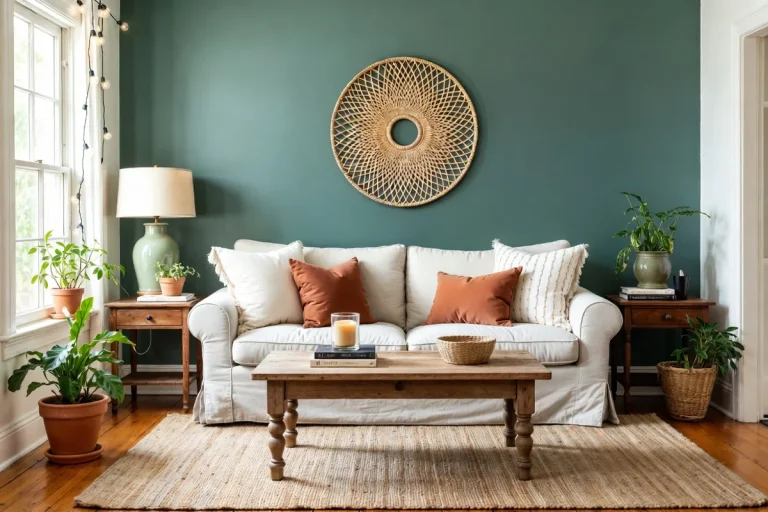
This is the most straightforward small living room furniture arrangement and it works beautifully when your room has one obvious focal wall for your TV or entertainment center. Place your sofa directly across from the TV, centered on the wall. Add a coffee table in front with about 15–18 inches of clearance between the table and sofa edge. Flank the sofa with a side chair or loveseat at a slight angle to close off the seating area.
Best for: Rectangular rooms with a clear TV wall.
Pro tip: Mount your TV on the wall rather than placing it on a bulky entertainment unit to free up floor space. Use floating shelves on either side for storage without adding visual clutter.
Layout 2: The Floating Conversation Arrangement
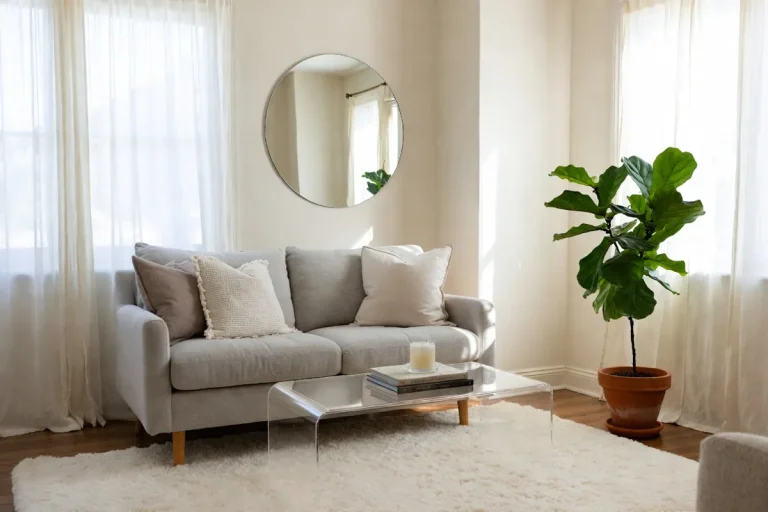
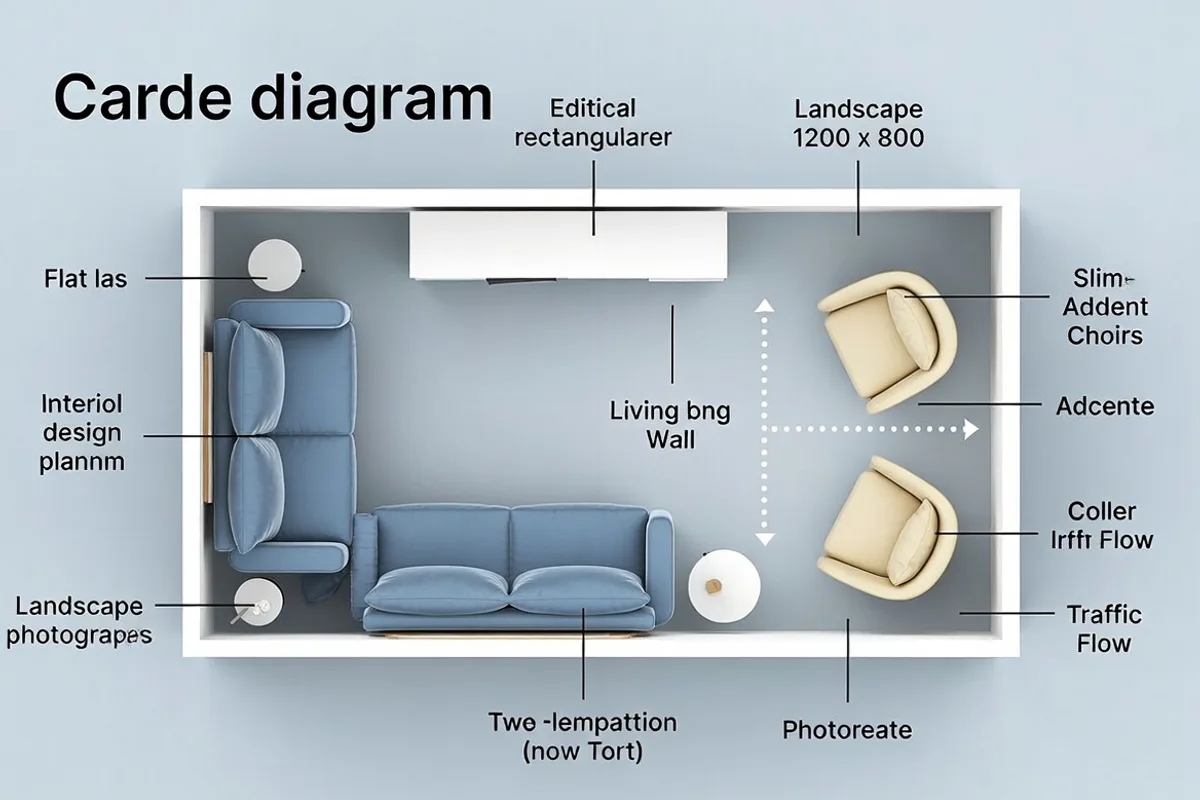
Instead of lining everything up against the walls, this layout pulls the sofa away from the wall by 6–12 inches and positions two accent chairs across from it, facing each other or angled slightly inward. A round coffee table works best here because it eliminates sharp corners in a tight space and allows movement from all directions.
Best for: Square rooms or rooms where socializing matters more than TV-watching.
Pro tip: Use a console table behind the sofa to fill the gap between the couch and the wall — it adds function (lamps, decor, storage) without wasting that awkward space.
Layout 3: The Narrow Room Long-Wall Layout
Narrow living rooms are one of the trickiest layouts to work with, but with the right approach, they can feel surprisingly comfortable. The key is to work with the length of the room rather than fight it. Place your sofa along one of the long walls (not a short end wall), and keep it relatively compact — a 72–84 inch sofa is usually the sweet spot. Position a loveseat or two chairs along the opposite long wall, leaving a corridor of 36 inches between them.
Avoid filling the short end walls with large furniture — instead, use that space for a floor lamp, a slim console, or an open bookshelf to draw the eye down the length of the room and create a sense of depth.
Best for: Rooms that are significantly longer than they are wide (think 10×16 or 10×18 feet).
Pro tip: Use a long, low coffee table to run parallel with the sofa. Avoid round tables in narrow rooms — they eat up too much of your walking corridor.
Layout 4: The Square Room Diagonal Trick
Square rooms feel boxy and static when furniture is placed parallel to every wall. The fix? Go diagonal. Angle your sofa at 45 degrees in one corner and position your chairs or loveseat to face it. This creates a natural, dynamic flow and makes the room feel larger because your eye is drawn across the diagonal — the longest line in any square room.
Best for: Square rooms roughly 12×12 to 14×14 feet.
Pro tip: Place a triangular or wedge-shaped side table in the open corner behind the sofa to fill what would otherwise be dead space. A tall plant or floor lamp works beautifully here too.
Layout 5: The L-Shaped Room Corner Anchor
L-shaped living rooms can feel like two disconnected spaces if you don’t plan carefully. The trick is to anchor your main seating in the larger section of the L and use the smaller alcove intentionally — as a reading nook, a compact desk area, or even a small dining space if your home is open plan. Place your sofa in the corner where the two sections of the L meet, facing the focal point. Use a sectional sofa if space allows — it naturally fills the L-shape and creates a unified, cozy seating zone.
If you love the look of a farmhouse-inspired living space, check out some of these small farmhouse dining room ideas for inspiration on how to define different zones within an open or irregular floor plan — the same zone-defining principles apply perfectly to L-shaped living rooms.
Best for: Open-concept homes with L-shaped living/dining combos.
Pro tip: Use a large area rug to define and unify the main seating zone within the L-shape, visually separating it from the secondary alcove area.
Layout 6: The Open-Plan Zone Divider Layout
When your living room flows directly into a kitchen or dining area without walls, defining the living zone is crucial. Use your sofa as a divider — float it in the middle of the space with its back facing the kitchen or dining area. This creates a physical and visual boundary without building a wall. Add a long, low-profile console table behind the sofa to reinforce the divide and add surface space for lamps or decor.
Position your TV or focal point on the far wall, opposite the sofa, so the living area has a clear sense of direction. If you’re thinking about how to light these different zones, farmhouse dining room lighting ideas offer great insight into using pendant lights and layered lighting to delineate spaces — a technique that works equally well when you’re separating a living zone from a dining area.
Best for: Open-concept studio apartments or combined living/dining/kitchen spaces.
Pro tip: Keep furniture in the living zone low-profile so it doesn’t visually block light from windows across the kitchen or dining space.
Layout 7: The Multi-Purpose Layout for Dual-Use Rooms
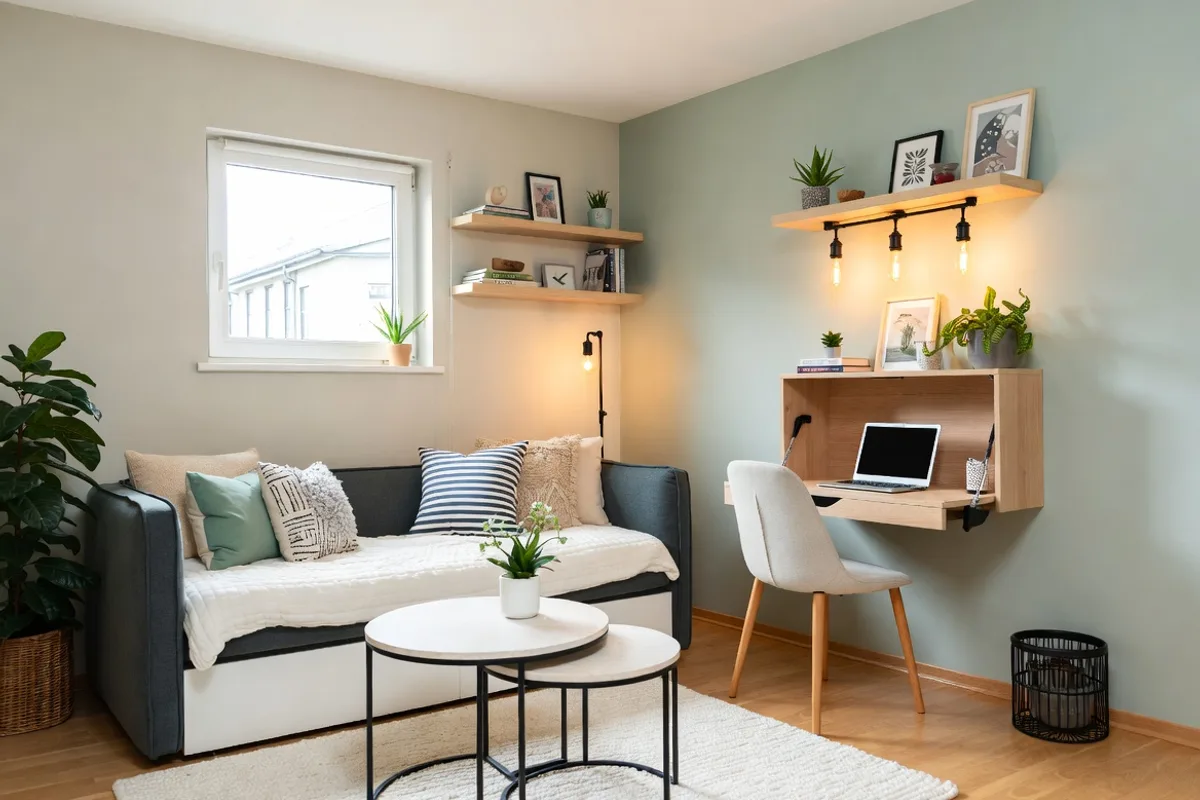
Many small living rooms pull double duty — functioning as a home office, guest bedroom, or playroom in addition to a main lounge space. In this layout, the secret is using furniture that folds, tucks, or transforms. A sofa bed or daybed along one wall handles sleeping guests. A wall-mounted fold-down desk or a slim secretary desk in a corner provides workspace without permanently sacrificing floor space.
Keep the central floor area as clear as possible — a nesting coffee table set or an ottoman with interior storage serves as a table, extra seating, and a storage solution all at once. Wall-mounted shelving above furniture replaces bulky bookcases and keeps your walls working hard without crowding the floor.
Best for: Studio apartments, guest rooms that double as offices, or multipurpose family rooms.
Pro tip: Use a room divider or curtain panel to visually separate the sleeping or work zone from the living zone when needed — and fold it back when you want the room to feel open.
Common Small Living Room Arrangement Mistakes to Avoid
Even with the best layout intentions, a few common errors can undermine your small living room furniture arrangement. Here’s what to watch out for:
- Oversized furniture: A sofa that’s too large for the room immediately makes the space feel suffocating. Stick to pieces that leave breathing room — and measure before you buy.
- Too many accent pieces: Every extra chair, side table, and pouf adds up. Be ruthless. Only keep what earns its floor space.
- Wrong rug size: A tiny rug floating in the middle of a room is one of the most common design mistakes. Go bigger than you think you need — at minimum, get all front legs of seating onto the rug.
- Blocking natural light: Never place tall furniture in front of windows. Light is your most powerful small-room expander.
- Ignoring vertical space: Small rooms benefit enormously from tall shelving and wall-mounted storage that draws the eye upward and keeps the floor clear.
Frequently Asked Questions
What is the best furniture layout for a very small living room?
For a very small living room, the best approach is the classic sofa-facing-TV layout or the floating conversation arrangement. Keep furniture minimal — one sofa, one or two accent chairs, and a compact coffee table. Choose pieces with legs (rather than pieces that sit flush to the floor) to create visual airiness, and prioritize multi-functional pieces wherever possible.
Should furniture touch the walls in a small living room?
Not necessarily. While it might feel logical to push everything against the walls to free up the middle, floating furniture slightly away from the walls (even just 3–6 inches) actually makes a small room feel more intentional and spacious. It creates depth and dimension that a wall-hugging arrangement lacks. The exception is in very narrow rooms where maintaining walkway clearance requires furniture to be closer to the walls.
How do I arrange furniture in an L-shaped living room?
In an L-shaped living room, anchor your main seating group in the largest section of the L and use the smaller section for a secondary function (reading nook, desk, or dining area). A sectional sofa that follows the L-shape works beautifully to unify the space. Use a large area rug to define the main seating zone and keep your focal point (TV or fireplace) clearly visible from the primary seating.
What size rug should I use in a small living room?
In a small living room, a 5×8 rug is often the minimum, with a 6×9 or 8×10 being ideal depending on your room dimensions. The goal is to have at least the front two legs of every seating piece resting on the rug. A rug that’s too small makes furniture look like it’s floating disconnected in space, which actually makes a room feel smaller and more cluttered rather than larger.
Conclusion
Figuring out the right small living room furniture arrangement doesn’t have to be a guessing game. Whether you’re working with a narrow shotgun layout, a boxy square, an L-shaped open concept, or a room that needs to do triple duty, there’s a proven layout that will make your space feel larger, more functional, and genuinely welcoming. Start by measuring, identify your focal point, and choose the layout from our seven that best matches your room shape and lifestyle needs. Then commit to it — move pieces into position, live with it for a day or two, and make small tweaks as needed. The difference a thoughtful arrangement makes is remarkable. Ready to transform your living room? Pick one layout from this guide and try it this weekend — you might be surprised how much potential your small space has been hiding.