Open Shelving vs. Cabinets: Best for Small Kitchens
Choosing between open shelving and upper cabinets is one of the most debated decisions in small kitchen design — and for good reason, because it genuinely affects how your kitchen looks, functions, and feels every single day. If you’re working with a compact space, the stakes are even higher: the wrong choice can make a tiny kitchen feel cluttered and claustrophobic, while the right one can open it up beautifully. Let’s break down exactly what each option offers so you can make a decision you’ll love for years to come.
Key Takeaways
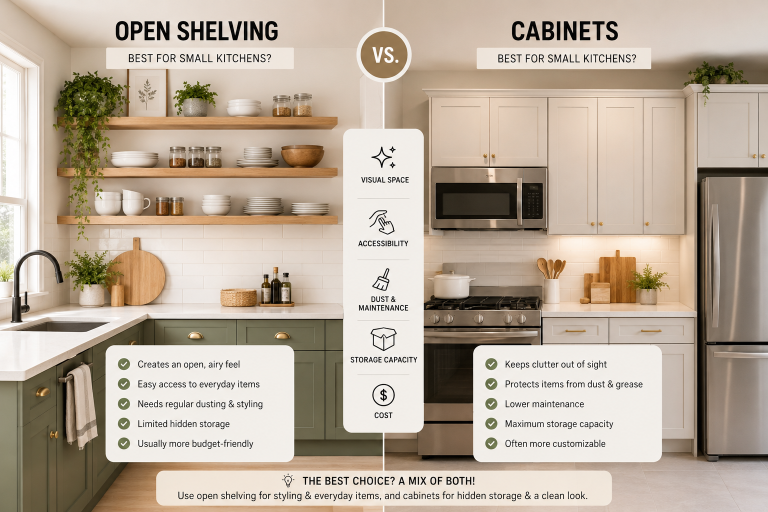
- Open shelving visually expands a small kitchen by removing visual bulk, but requires consistent organization and styling.
- Upper cabinets offer superior concealed storage and are more forgiving of everyday clutter.
- A hybrid approach — mixing open shelves with some closed cabinets — often delivers the best of both worlds in tight spaces.
- Cost differences between the two options can be significant, with open shelving often being the more budget-friendly route.
- Your lifestyle, cleaning habits, and aesthetic goals should drive the final decision more than trends alone.
How Each Option Affects the Look of a Small Kitchen
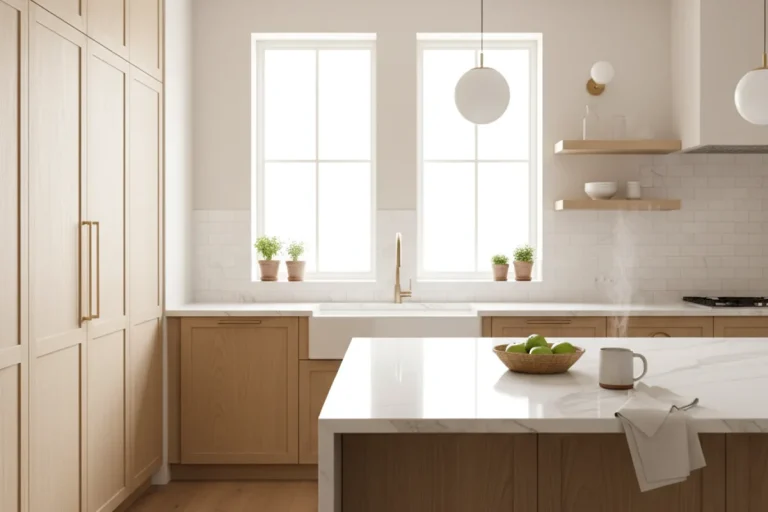
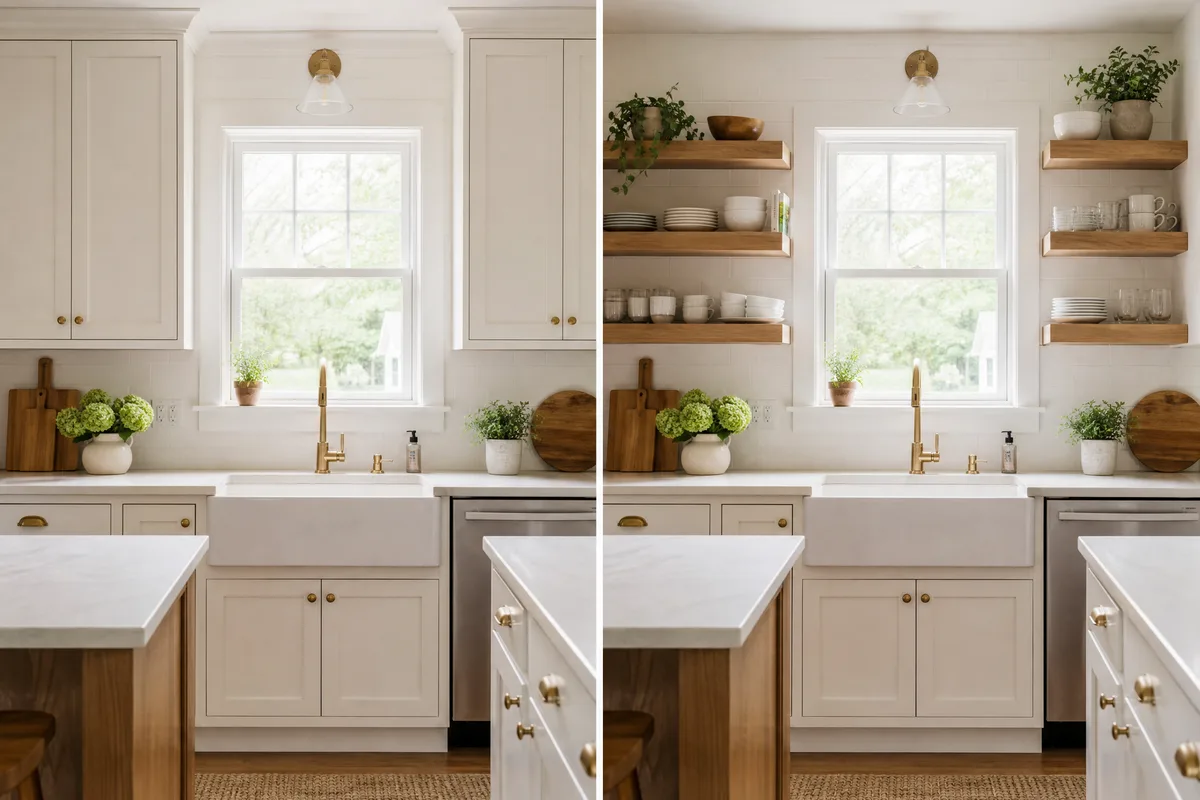
When you remove upper cabinets and replace them with open shelves, something almost magical happens to a small kitchen: it breathes. The visual weight of bulky cabinet boxes disappears, your eye travels further into the room, and the walls suddenly feel taller. This is why open shelving in a small kitchen has become such a popular design move — it genuinely makes cramped spaces feel more expansive without knocking down a single wall.
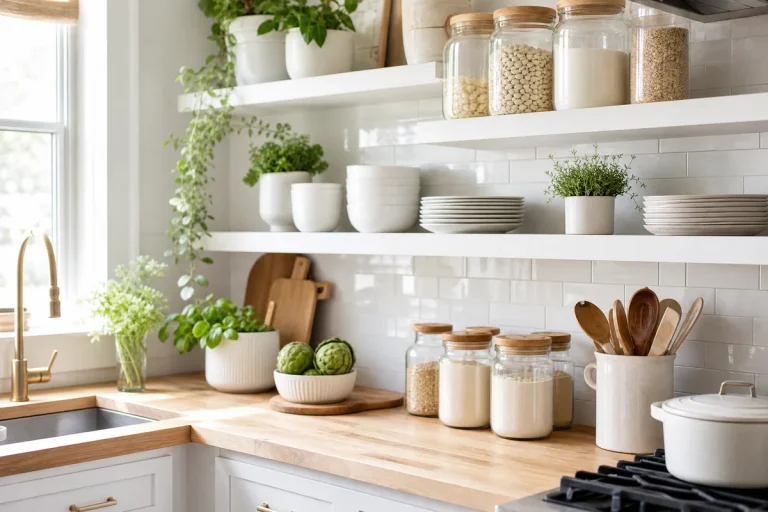
Open shelves also create an opportunity to add personality. Displaying your favorite dishes, a row of matching canisters, or a collection of cookbooks turns functional storage into a design feature. When styled well, open shelves can make a small kitchen look like a thoughtfully curated, magazine-worthy space.
Upper cabinets, on the other hand, create a more uniform, cohesive look — especially if you choose a style and color that complements your walls. White or light-colored upper cabinets can still feel airy, particularly when you pair them with a beautiful kitchen backsplash with white cabinets that draws the eye and adds depth. The visual trade-off is real, though: closed cabinet boxes in a small kitchen can feel heavy and cave-like if the layout isn’t carefully planned.
Pro Tip: If you go with upper cabinets in a small kitchen, opt for glass-front doors on at least some of them. This gives you the concealed storage benefit while letting light pass through and keeping the space feeling open.
Storage and Practicality: The Real-World Test
Here’s where the conversation gets honest: open shelving looks gorgeous in staged photos, but how does it hold up in real daily life? The answer depends entirely on how you use your kitchen.
Upper cabinets win decisively on raw storage capacity. They keep everything hidden, protected from dust and grease, and organized in whatever chaotic way works for you behind closed doors. For families with kids, avid bakers with lots of equipment, or anyone who hasn’t mastered a minimal lifestyle, cabinets are a practical lifesaver. According to the National Kitchen and Bath Association, adequate storage is consistently ranked as the number-one priority for homeowners during kitchen renovations — and cabinets are the most reliable way to deliver it.
Open shelves require daily commitment. Everything on display is always visible, which means mismatched mugs, random packaging, and last night’s leftovers in odd containers will undermine the whole effect. If you’re naturally tidy and enjoy the ritual of keeping things organized, shelves can be a joy. If your kitchen sees heavy use and things rarely make it back to their exact spot, you may find open shelves create more stress than satisfaction.
There’s also the dust and grease factor. Open shelves in kitchens near the stove accumulate a fine layer of cooking residue faster than you’d expect. Plates and glasses you don’t use daily will need regular washing even if they haven’t been touched, simply because they’ve been sitting on an open shelf.
Cost Comparison: Open Shelving vs. Cabinets
Budget is often the deciding factor in small kitchen upgrades, and this is one area where open shelving has a clear advantage. Installing a few floating wood shelves — even quality ones from solid wood or thick MDF with a beautiful stain — can cost a fraction of what upper cabinet installation runs.
A basic set of two or three floating shelves with proper wall anchoring can be completed for $100–$400 depending on materials and whether you DIY. Semi-custom upper cabinets from a home improvement store typically run $150–$400 per linear foot installed, meaning even a modest run of upper cabinets in a small kitchen can cost $1,500–$4,000 or more.
If you’re doing a larger renovation and curious how costs stack up across different kitchen features, our breakdown of kitchen island costs gives you a useful frame of reference for budgeting your overall project. Open shelving fits naturally into budget-conscious renovations because the material cost is low, installation is straightforward for a confident DIYer, and you can upgrade incrementally — adding one shelf at a time rather than committing to a full cabinet run upfront.
Cost Summary:
- Open floating shelves (DIY): $50–$200 for materials
- Open floating shelves (professional install): $200–$500
- Stock upper cabinets (installed): $800–$2,000+ for a small kitchen
- Semi-custom upper cabinets (installed): $2,000–$5,000+
Which One Fits Your Lifestyle?
Before committing to either option, it helps to honestly answer a few questions about how you actually live in your kitchen — not how you wish you did.
Ask yourself: Do I enjoy organizing and styling? Do I have a cohesive set of dishware I’m proud to display? Am I willing to wipe down shelves and wash displayed items regularly? If you answered yes to most of these, open shelving in your small kitchen could be a genuinely rewarding choice that adds character and charm.
If, however, you have a large collection of mismatched items accumulated over years, a household with multiple people grabbing things randomly, or simply a preference for a clean and uncluttered visual environment when you walk into your kitchen, cabinets will serve you much better. There’s no shame in that — the best design choice is always the one that makes your life easier and your home more enjoyable.
Renters also face a unique set of constraints. If you’re in a rental apartment and dreaming of a kitchen refresh, you may not be able to install floating shelves at all without landlord approval, and removing existing upper cabinets is almost certainly off the table. For renters navigating these limitations, our guide to small kitchen ideas that make tiny spaces feel huge includes renter-friendly approaches that don’t require major structural changes.
The Hybrid Approach: Best of Both Worlds
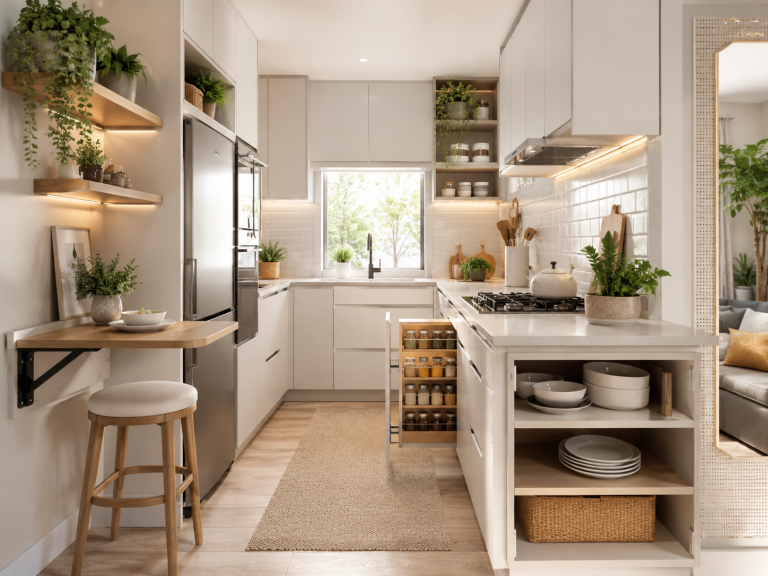
For most small kitchens, the smartest solution isn’t choosing one or the other entirely — it’s combining both thoughtfully. A hybrid layout gives you the visual openness and personality of shelves alongside the concealed storage and practicality of cabinets.
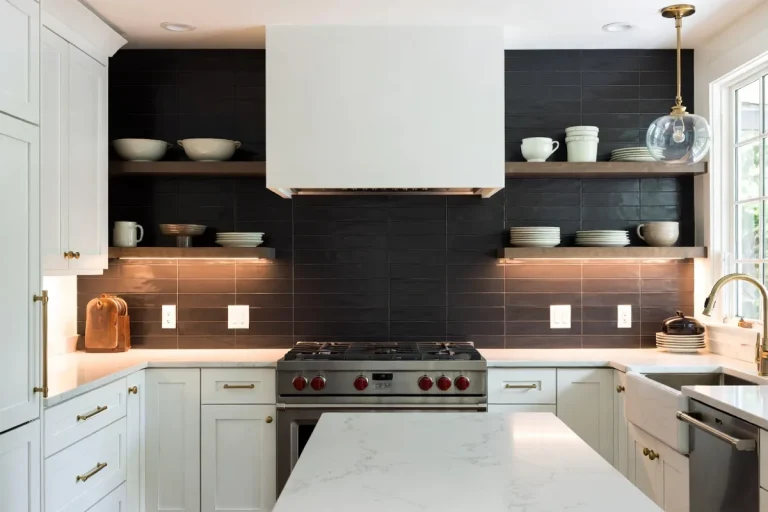
One popular configuration is to keep lower cabinets and a few upper cabinets flanking the range or sink, while replacing upper cabinets on an accent wall or at the end of a run with open floating shelves. This creates a visual break, makes the kitchen feel less boxed-in, and gives you a dedicated display zone without sacrificing all your hidden storage.
Another approach is to remove upper cabinets on the wall that faces you when you enter the kitchen — the one that makes the biggest visual impression — and keep cabinets on the side walls. First impressions matter enormously in small spaces, and an open shelf wall greeting you as you walk in can completely change how spacious the kitchen feels.
Pro Tip: When mixing open and closed storage, use the same finish or color family for both. Matching wood-toned floating shelves to the cabinet hardware or the toe-kick color creates visual continuity that keeps the space from feeling disjointed.
Common Mistakes to Avoid
Whether you go with open shelving, cabinets, or a combination, there are pitfalls that can undermine even the best-intentioned small kitchen design.
Overcrowding open shelves. This is the number-one mistake. Open shelves that are packed tight with items of varying heights, colors, and sizes look chaotic in a small kitchen. The whole point is to create a curated, breathing display — if you can’t edit down what you own, shelves will work against you.
Ignoring wall strength. Floating shelves hold real weight — plates, bowls, and jars add up fast. Always anchor into wall studs or use proper toggle bolts rated for the weight you plan to store. A shelf that pulls away from the wall is both a safety hazard and a design disaster.
Choosing the wrong shelf depth. Standard upper cabinet depth is about 12 inches. Open shelves that are too shallow (under 8 inches) won’t hold dinner plates; too deep (over 14 inches) and they protrude uncomfortably into a narrow kitchen. Ten to twelve inches is typically the sweet spot.
Neglecting lighting under cabinets. If you do keep upper cabinets, don’t skip under-cabinet lighting. It dramatically improves the functionality of a small kitchen counter and makes the whole space feel brighter and more welcoming.
Pro Tips for Styling Open Shelves in Small Kitchens
If you’ve decided open shelving is right for your small kitchen, styling them well is what separates a polished result from a cluttered mess.
Edit ruthlessly. Only display items you actively use or genuinely love. Everything else goes in lower cabinets, a pantry, or out of the kitchen entirely.
Group by color and material. Clustering white dishes together, keeping glassware on one shelf, and grouping wooden items creates a cohesive visual rhythm that feels intentional rather than random.
Leave breathing room. Don’t fill every inch. Empty space on a shelf is not wasted space — it’s what makes the items around it look considered and styled.
Add a plant or two. A small potted herb, trailing pothos, or even a single stem in a bud vase brings life and softness to shelves that might otherwise look stark.
Use the bottom shelf strategically. The lowest open shelf is prime real estate — it’s eye level and gets the most attention. Put your most visually appealing items here: a beautiful stack of bowls, a cluster of matching jars, or your favorite cookbook propped open.
Frequently Asked Questions
Is open shelving a good idea for a small kitchen?
Open shelving can be an excellent choice for a small kitchen when done thoughtfully. By removing the visual bulk of upper cabinet boxes, open shelves make a compact kitchen feel larger and more airy. The key is keeping shelves well-organized and curated — overcrowded or cluttered open shelves in a small space will have the opposite effect. If you’re naturally tidy and enjoy styling your kitchen items, open shelving is a smart, budget-friendly way to open up the room.
Do open shelves make a small kitchen look bigger?
Yes — open shelves typically make a small kitchen look bigger than solid upper cabinets do. When upper cabinet boxes are removed, the wall space above the counter becomes visible, the eye can travel further, and the ceiling feels higher. Light also moves more freely through the space. For the maximum effect, choose shelves in a lighter tone that blends with the wall, and keep styling minimal so there’s visual breathing room.
How do I keep open kitchen shelves from looking messy?
The secret to tidy open shelves is ruthless editing and consistent organization. Only display items you use regularly or that are genuinely attractive. Group similar items together by color, material, or function. Leave some empty space on each shelf — it keeps things feeling intentional rather than crowded. Wipe shelves down weekly and do a quick re-sort whenever things get shuffled around. Using matching containers, jars, or dishware goes a long way toward creating a cohesive, clean look.
What is cheaper: open shelves or upper cabinets?
Open shelves are almost always significantly cheaper than upper cabinets. A set of quality floating wood shelves can be installed for $100–$500 depending on materials and whether you hire someone. Upper cabinets, including materials and installation, typically run $800–$5,000 or more for a small kitchen depending on whether you choose stock, semi-custom, or custom options. If budget is a primary concern, open shelving is a great way to create a stylish, functional kitchen at a lower cost.
Conclusion
There’s no single right answer when it comes to open shelving versus upper cabinets in a small kitchen — the best choice is the one that aligns with how you actually cook, clean, and live. Open shelving in a small kitchen is a genuinely powerful design tool that can make tight spaces feel open, personal, and airy, but it rewards organization and demands a bit more daily attention. Upper cabinets offer reliability, generous concealed storage, and forgiveness for the realities of a busy household. And for many small kitchens, the most satisfying result comes from blending both: a thoughtful mix that captures the visual lightness of open shelves without sacrificing the practicality of covered storage.
Whatever direction you choose, approach it intentionally. Consider your habits, your budget, and the specific layout of your kitchen before committing. If you’re still looking for more inspiration on maximizing a compact kitchen, explore our full collection of small kitchen ideas that make tiny spaces feel huge — you might discover a combination approach that transforms your space in ways you hadn’t imagined. Your small kitchen has more potential than you think; the right storage strategy is simply the key to unlocking it.