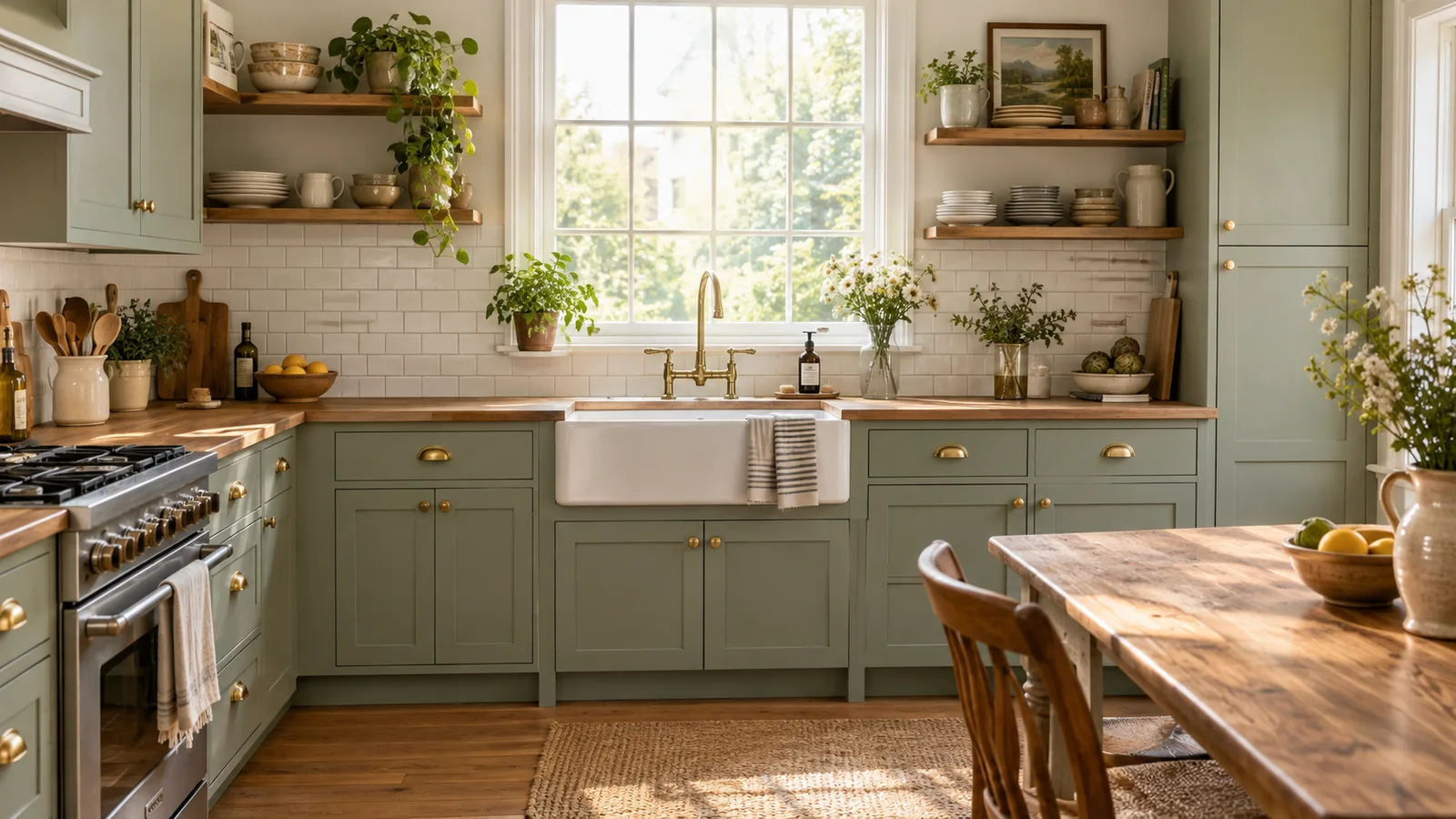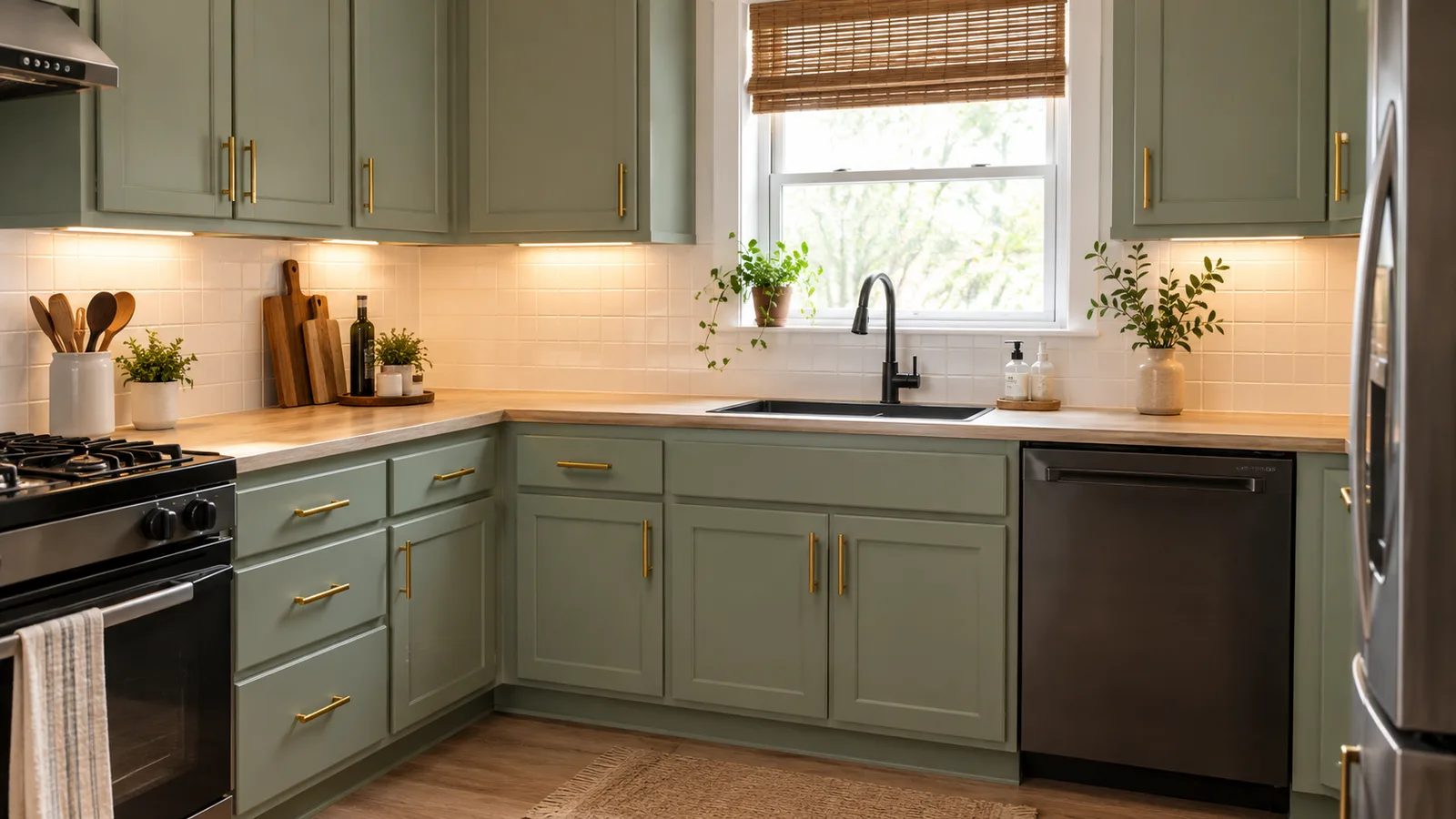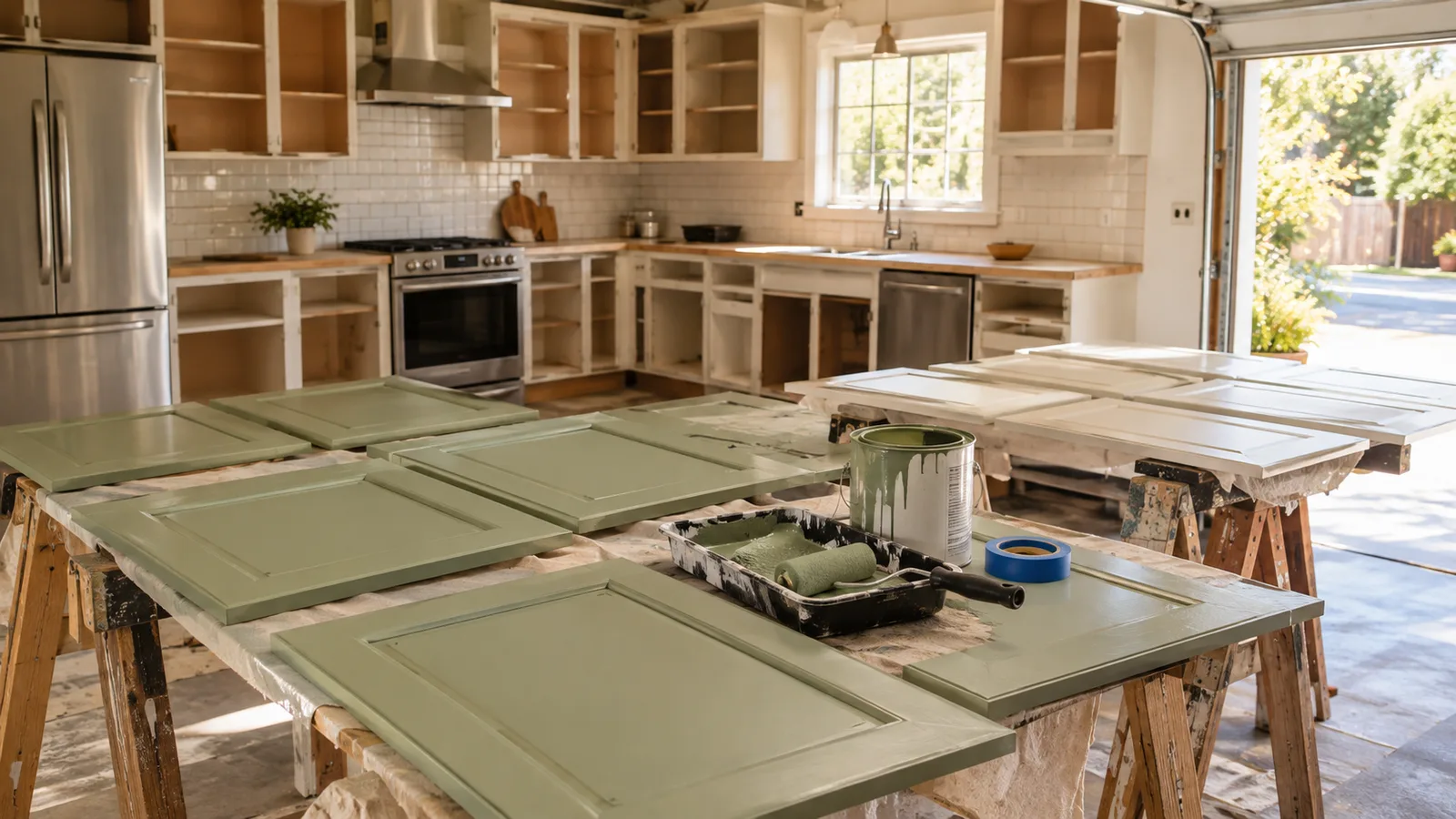
Short answer: most kitchens need 1 to 2 gallons of cabinet paint for two coats, plus 2 quarts to 1 gallon of primer:
- Small kitchen (about 12 doors, 6 drawers): about 1 gallon of paint
- Medium kitchen (about 20 doors, 10 drawers): 1 gallon plus 1 quart
- Large kitchen (about 30 doors, 15 drawers): about 2 gallons
Cabinets use far less paint than walls, because you're only covering doors, drawer fronts, frames and a few side panels. Here's how to measure yours and what to buy.
Painting the kitchen walls too? Get their gallons here
Calculate how much paint you need for any room. Get accurate estimates for walls and ceilings.
Why You Can't Use a Wall Paint Calculator for Cabinets
Wall calculators work from room dimensions, which would massively overestimate cabinets. For cabinets you need the surface area of the parts you'll actually paint:
- Doors, usually both sides (the inside shows every time you open them)
- Drawer fronts, front and edges only
- Face frames, the strips around the doors and drawers
- Visible sides: end panels, the exposed side of an upper next to a window, the island back
Cabinet boxes' interiors are usually left alone.
How to Measure Your Cabinets
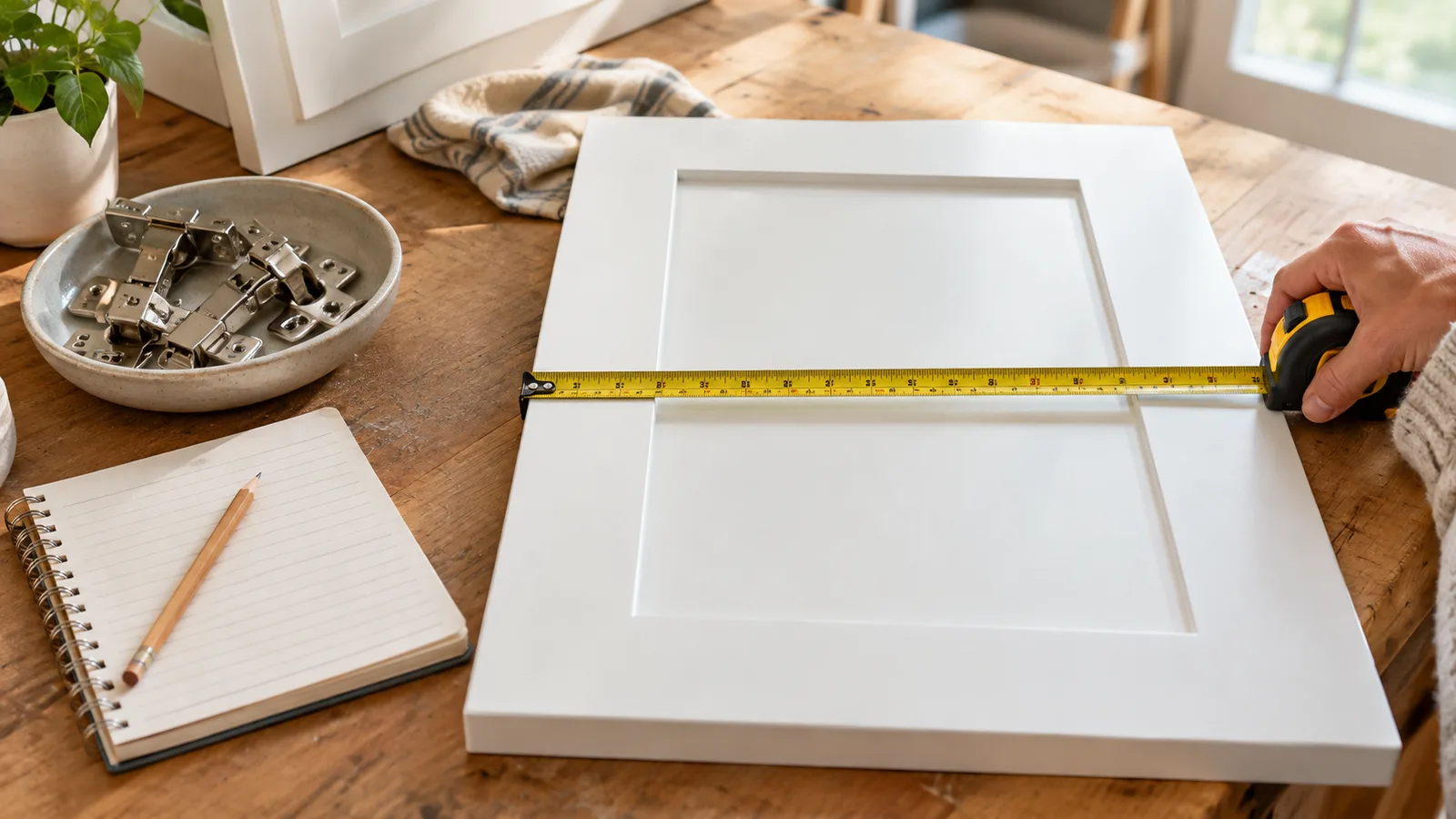
You don't need to measure every piece. Measure a typical door and drawer, count them, then estimate the frames.
| Part | How to measure | Typical size |
|---|---|---|
| Door | Width × height ÷ 144, then × 2 sides | 15 × 30 in ≈ 3.1 sq ft per side |
| Drawer front | Width × height ÷ 144 (front only) | 15 × 6 in ≈ 0.6 sq ft |
| Face frames | Total length of frame strips × their width | Often 30–75 sq ft per kitchen |
| End panels / island back | Width × height ÷ 144 | 2–8 sq ft each |
Example (medium kitchen):
- 20 doors × 3.1 sq ft × 2 sides ≈ 125 sq ft
- 10 drawer fronts × 0.6 sq ft ≈ 6 sq ft
- Face frames and visible sides ≈ 50 sq ft
- Total ≈ 180 sq ft of paintable surface
From Square Feet to Gallons
Cabinet enamels often cover around 350–400 sq ft per gallon per coat on primed, smooth surfaces. Check the label on the can you buy; coverage varies by product.
The math:
- Surface area × 2 coats
- Add 10% for touch-ups and what stays in the tray
- Divide by the coverage on the can
For the medium kitchen above at 350 sq ft/gallon: 180 × 2 × 1.10 ÷ 350 ≈ 1.1 gallons, so 1 gallon plus 1 quart.
Quick Reference
These assume two coats, a 10% buffer and 350 sq ft per gallon. If your paint covers 400 sq ft per gallon, you'll land a little lower.
| Kitchen size | Doors / drawers | Approx. surface | Paint (2 coats) | Primer (1 coat) |
|---|---|---|---|---|
| Small | 12 / 6 | ~110 sq ft | 1 gallon | 2 quarts |
| Medium | 20 / 10 | ~180 sq ft | 1 gallon + 1 quart | 3 quarts or 1 gallon |
| Large | 30 / 15 | ~270 sq ft | 2 gallons | 1 gallon |
Buy all your cabinet paint at once and have it tinted in the same batch. Small color shifts between batches are easy to spot on cabinet doors sitting side by side.
Don't Skip the Primer
Primer is what makes cabinet paint stick and last. Glossy factory finishes, oak with open grain, and laminate all need a bonding primer:
- Wood cabinets with an old finish: clean, scuff-sand, then a bonding primer
- Oak or other open-grain wood: consider a grain filler if you want a smooth, modern look; otherwise the grain shows through
- Laminate or thermofoil: use a primer made for slick surfaces, and check that thermofoil isn't peeling first (paint won't fix that)
- Going from dark to light: a tinted primer saves a coat
One coat of primer usually covers about the same area as one coat of paint, which is why the primer column above is roughly half the paint.
Quarts or Gallons?
- Quarts are a quarter of a gallon and often cost proportionally more. They make sense for primer on a small kitchen, an accent island, or touch-ups.
- Gallons are better value once you need more than about 3 quarts.
- Spraying uses noticeably more paint than rolling and brushing, because some of it ends up in the air. If you're spraying, buy at the top of the range or add a quart.
What Changes the Amount
- Two-tone kitchens (for example, dark lowers and light uppers) need separate quantities. Split your surface area by color.
- Raised-panel doors have more surface than flat shaker doors. Add about 10–15% if your doors have detailed profiles.
- Glass-front doors have less to paint.
- A big color change may need a third coat; plan an extra quart.
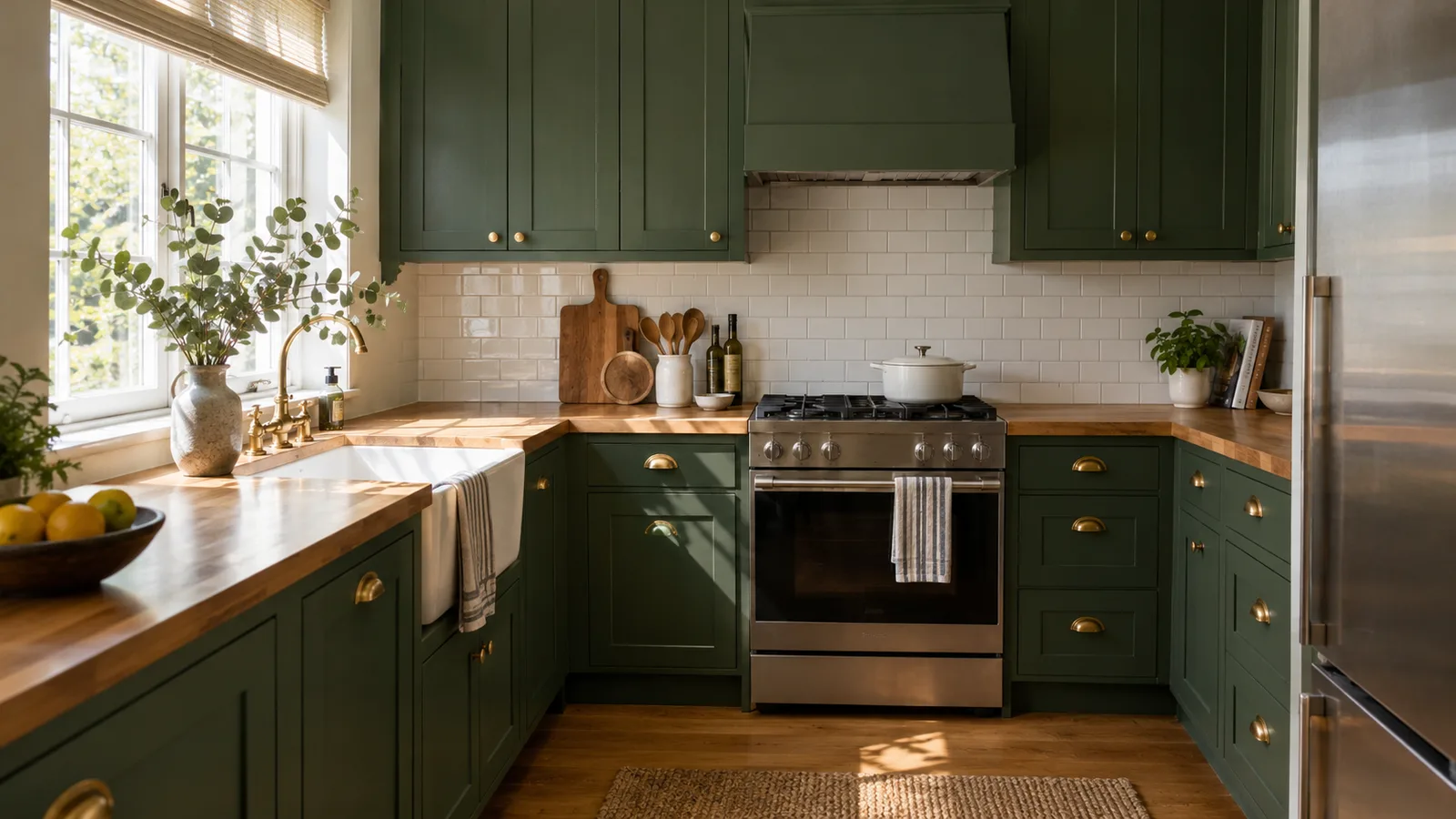
The Order of Work
Cabinet painting is mostly prep and waiting. A typical sequence:
- Label and remove doors, drawers and hardware. Number each door and its opening with painter's tape so everything goes back in the right place.
- Degrease. Kitchen cabinets carry cooking grease, especially near the range. Clean with a degreaser made for pre-paint cleaning, then rinse.
- Scuff-sand every surface to dull the old finish, then remove the dust.
- Prime all surfaces and let it dry as long as the label says.
- Paint coat one, lightly sand any raised grain or drips, then coat two.
- Let it cure before rehanging and heavy use. Many cabinet enamels are dry to the touch quickly but take days to weeks to fully harden, so handle doors gently at first.
Common Mistakes That Waste Paint
- Skipping the inside of the doors on your estimate, then running short halfway through.
- Thick coats. Two thin coats level better and use about the same paint as one heavy coat that drips.
- Painting over grease. Paint peels off grease, and fixing it means sanding back and repainting.
- Rushing reassembly. Doors stacked or rehung too soon can stick and mark, which means touch-ups and more paint.
What You'll Need
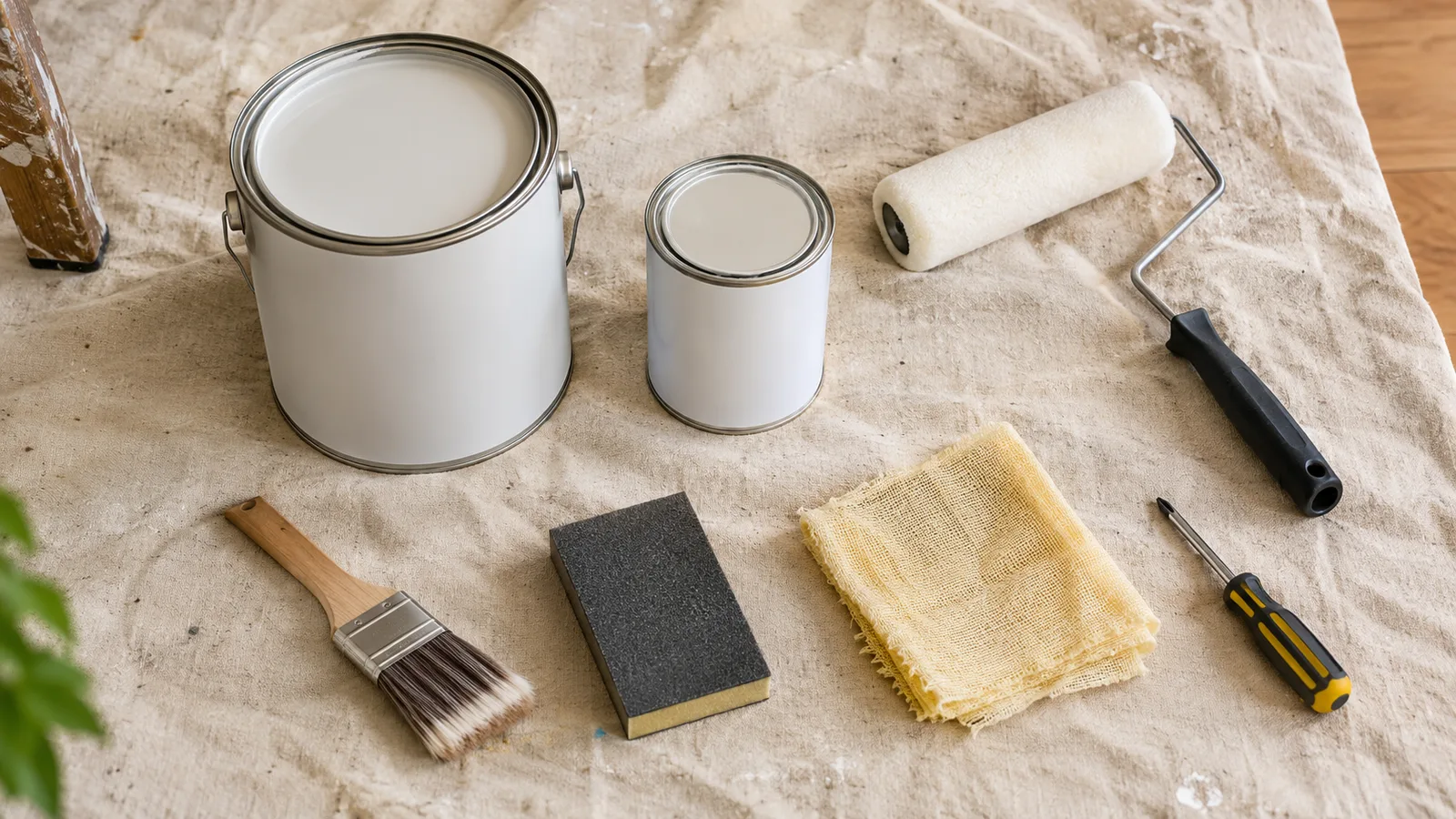
A smooth cabinet finish comes from good prep and the right applicators as much as the paint:
Benjamin Moore
Advance Waterborne Interior Alkyd Paint
- ✓Self-levels to a smooth finish
- ✓Hard, durable cure
- ✓Made for doors and trim
INSL-X
Stix Waterborne Bonding Primer
- ✓Sticks to glossy surfaces
- ✓Good under cabinet enamels
- ✓Low odor
Wooster
4-Inch High-Density Foam Mini Roller Kit
- ✓Smooth, roller-mark-free finish
- ✓Fits door panels
- ✓Includes small tray
3M
Fine-Grit Sanding Sponges
- ✓Scuff-sand between coats
- ✓Follows profiles and edges
- ✓Reusable
As an Amazon Associate, we earn from qualifying purchases.
Planning a bigger refresh? Our guide to farmhouse kitchen cabinet ideas covers colors and hardware, and small kitchen remodel on a budget shows where painting cabinets fits in the order of work.
The Bottom Line
- Measure doors (both sides), drawer fronts, face frames and visible sides, not the room
- Multiply by 2 coats, add 10%, and divide by the coverage on the can
- Most kitchens need 1–2 gallons of paint plus 2 quarts to 1 gallon of primer
- Buy everything in one batch, and add a quart if you're spraying or making a big color change
For the walls around your freshly painted cabinets, the paint calculator handles doors, windows and ceiling height for you.