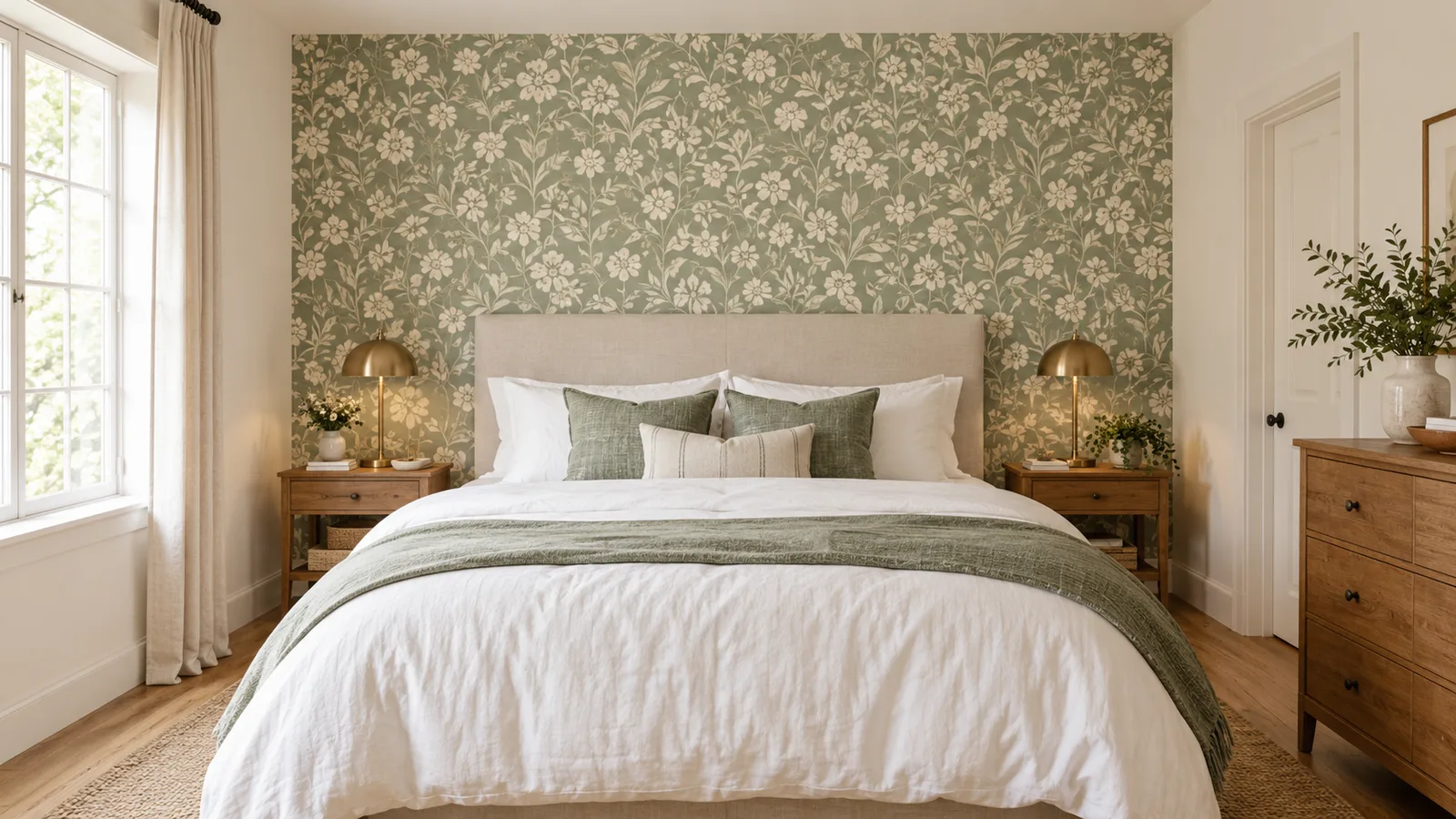
Short answer: a 12-foot-wide accent wall with 8-foot ceilings takes 8 strips of standard 20.5-inch wallpaper. A 33-foot roll gives you 3 full strips, so you need 3 double rolls. A whole 12x12 room with one door and two windows takes 26 strips, or about 9 double rolls.
Most quick wallpaper estimates divide the wall area by the area of a roll. That reliably comes up short, because wallpaper isn't used by the square foot: it's hung in full-height strips, and whatever is left at the end of each roll is usually too short for another strip. Count strips instead and you'll order the right amount the first time.
Calculate strips and rolls for your room or accent wall
Figure out how many rolls of wallpaper you need for any room.
Step 1: Know Which Roll You're Buying
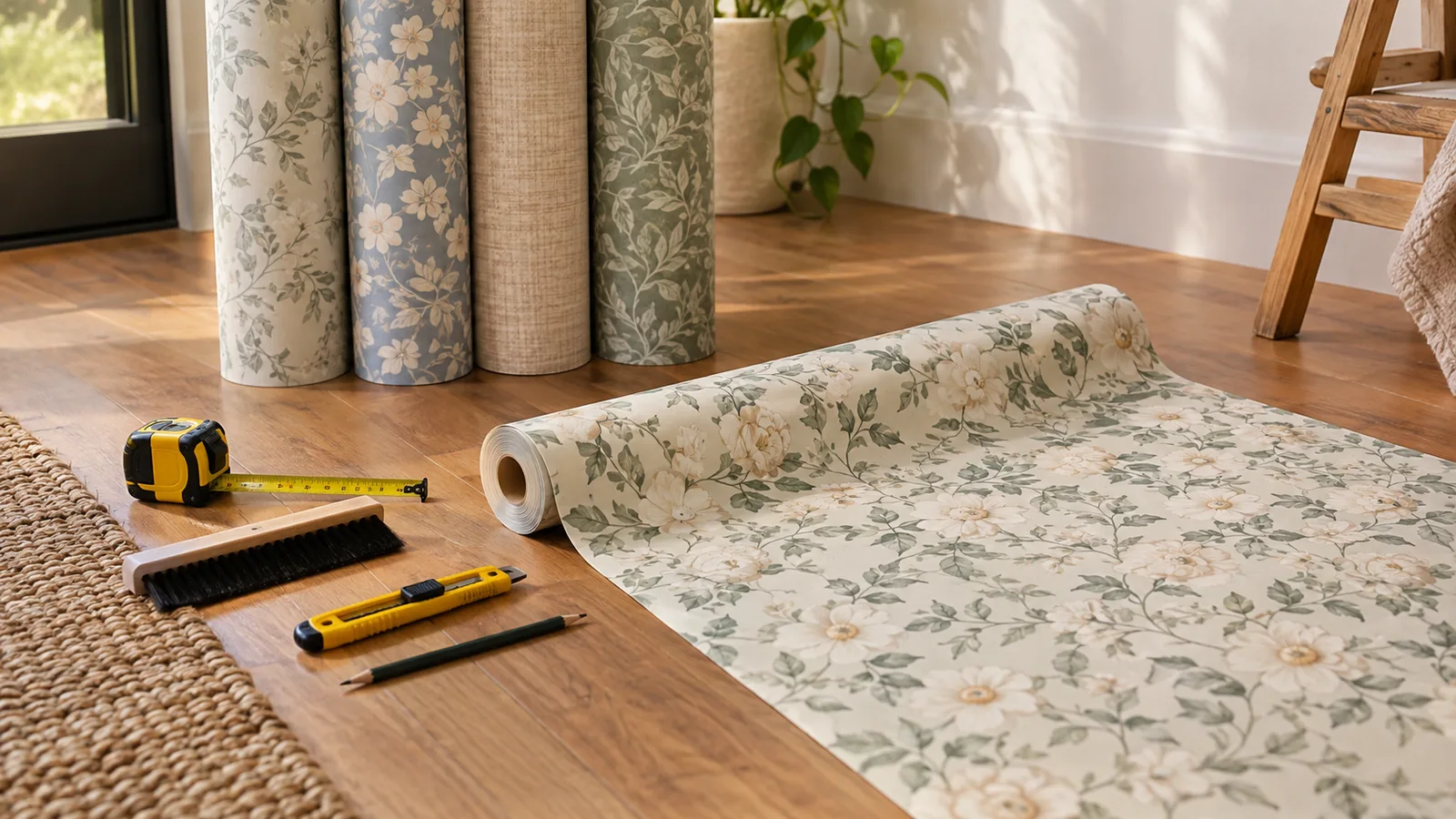
Roll sizes are the most confusing part of buying wallpaper. In the US, prices are often quoted per single roll, but most papers are sold only in double rolls. Check the label for the actual length.
| Roll type | Width | Length | Area | Full 8 ft strips per roll |
|---|---|---|---|---|
| US single roll | 20.5" | 16.5 ft | about 28 sq ft | 1 |
| US double roll | 20.5" | 33 ft | about 56 sq ft | 3 |
| Euro roll | 21" | 33 ft | about 58 sq ft | 3 |
| Wide roll | 27" | 33 ft | about 74 sq ft | 3 |
A US single roll is 198 inches long. A strip for an 8-foot wall needs about 100 inches (96 inches plus a couple of inches to trim at the top and bottom), so a single roll gives you just one strip and wastes almost half the roll. That's why wallpaper is packaged as double rolls: a 33-foot double roll gives you three full strips.
Step 2: Count the Strips
- Measure the width of every wall you're papering and add them up.
- Convert to inches and divide by the roll width, then round up. That's one strip per roll width.
- Subtract openings. A standard 36-inch door or window takes out one full-height strip. The short pieces above a door and above and below a window come from the offcuts at the end of each roll.
For a 12-foot accent wall: 144 inches ÷ 20.5 inches = 7.02, which rounds up to 8 strips.
Step 3: Strips per Roll, Then Rolls
- Strip length = wall height + about 4 inches for trimming.
- Strips per roll = roll length ÷ strip length, rounded down (a partial strip is useless).
- Rolls = strips needed ÷ strips per roll, rounded up.
8 strips ÷ 3 strips per double roll = 2.67, so you buy 3 double rolls.
Why not just divide square feet? A 12 x 8 ft wall is 96 square feet, and a double roll covers about 56 square feet, so area math says 2 rolls. But two rolls only give you 6 full-height strips, and the wall needs 8. You'd run out two strips before the end of the wall. Counting strips accounts for the offcut wasted at the end of every roll.
What About Pattern Repeat?
The pattern repeat is the vertical distance before the design repeats, printed on the label. Every strip has to start at the same point in the pattern so it lines up with the next one, which means each strip is rounded up to a whole number of repeats.
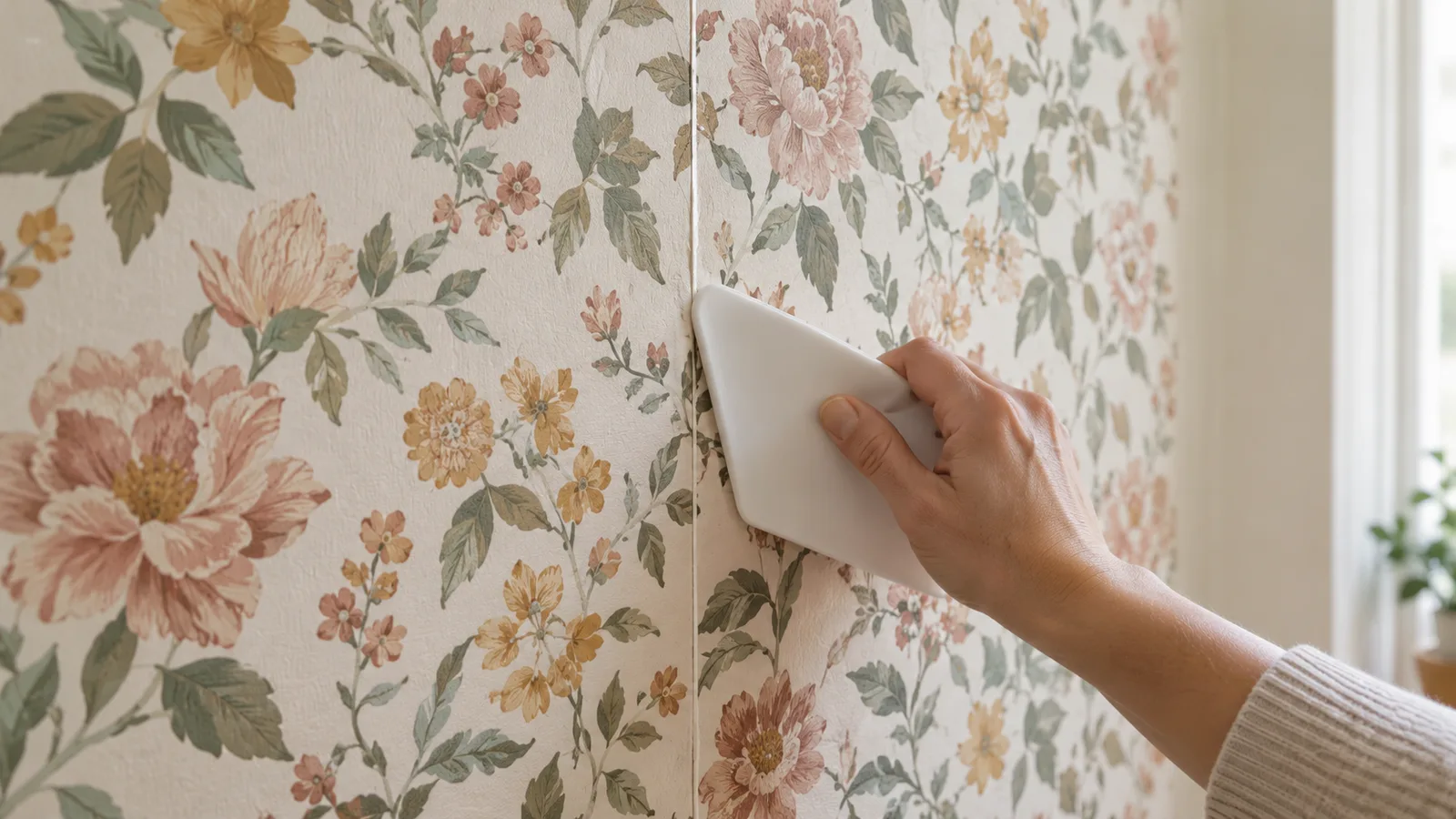
For an 8-foot wall (about 100 inches per strip before matching), here's how long each strip gets:
| Pattern repeat | Strip length | Full strips per 33 ft roll |
|---|---|---|
| None / random match | 100" | 3 |
| Small (6") | 102" | 3 |
| Medium (12") | 108" | 3 |
| Large (21") | 105" | 3 |
On 8 and 9-foot walls, a 33-foot roll still gives three strips with any of these repeats, because three strips fit as long as each one is 132 inches or shorter. The repeat starts to cost you a roll on taller walls or very large repeats, when strips get longer than 132 inches and each roll only yields two. Patterned paper also means more careful cutting, so a spare roll is cheap insurance.
Buy every roll at once and check that they all share the same batch or dye lot number. Colors can shift slightly between print runs, and a mismatched roll on a feature wall is very noticeable.
How Many Rolls: Worked Examples
All numbers come from the wallpaper calculator, using 33-foot rolls (US double or Euro).
Accent walls
| Wall | Roll width | Strips needed | Strips per roll | Rolls to buy |
|---|---|---|---|---|
| 12 ft wide, 8 ft high | 20.5" | 8 | 3 | 3 |
| 12 ft wide, 9 ft high | 20.5" | 8 | 3 | 3 |
| 10 ft wide, 9 ft high | 27" (wide) | 5 | 3 | 2 |
If you buy US single rolls (16.5 feet) for the 12 x 8 ft wall instead, each gives one strip, so you'd need 8 single rolls. That's the same paper as roughly 4 doubles, which is another reason to buy doubles.
Whole rooms
| Room | Openings | Strips needed | Rolls (33 ft) |
|---|---|---|---|
| 12' x 12', 8 ft ceiling | 1 door, 2 windows | 26 | 9 |
| 12' x 12', 9 ft ceiling | 1 door, 2 windows | 26 | 9 |
| 10' x 12', 8 ft ceiling | 1 door, 1 window | 24 | 8 |
| 5' x 8' bathroom, 8 ft ceiling | 1 door | 15 | 5 |
Small Rooms, Big Patterns
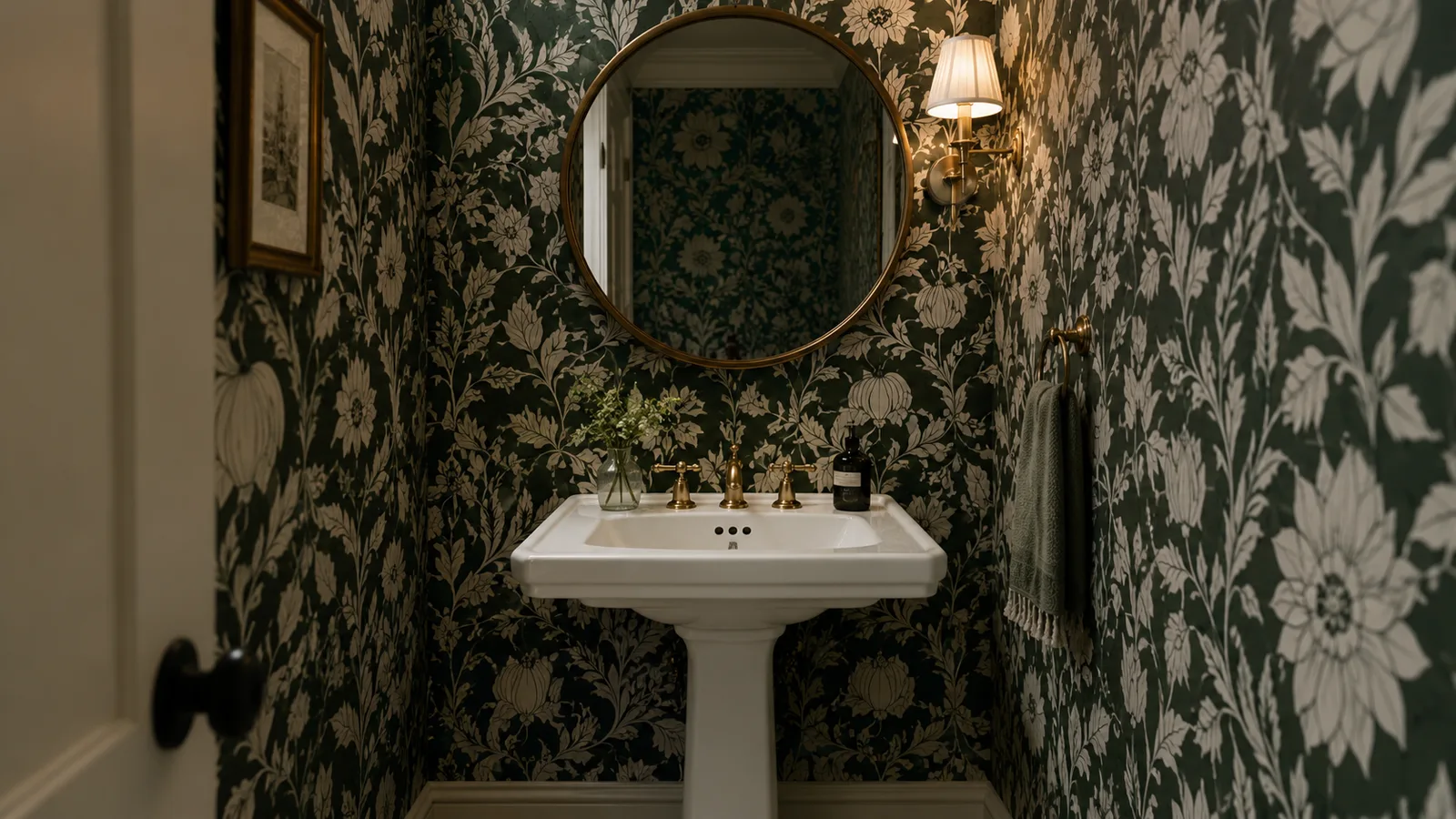
Powder rooms and small bathrooms are the best places to try a bold pattern: the room is small, so even a pricey paper only takes a few rolls. A 5 x 8 ft bathroom with 8-foot ceilings and one door takes 15 strips, or 5 double rolls. Choose a vinyl or "scrubbable" wallpaper for bathrooms, and make sure the room has a working exhaust fan.
Peel-and-Stick vs. Traditional Wallpaper
| Peel-and-stick | Traditional (paste) | |
|---|---|---|
| Best for | Renters, accent walls, quick updates | Whole rooms, long-term installs |
| Removal | Usually peels off cleanly | Needs steaming or remover |
| Roll size | Often shorter and narrower (check the box) | Standard US double or Euro rolls |
| Humidity | Can lift in steamy bathrooms | Better with the right paste |
Peel-and-stick rolls come in many sizes, so apply the same method: divide the roll length by your strip length to see how many full strips each roll gives.
Tips Before You Order
- Measure each wall separately and add them up; don't assume opposite walls match.
- Keep one spare roll if your budget allows. It's invaluable for repairs years later, when the batch is long gone.
- Prime first. A wallpaper primer helps the paper stick and makes it far easier to remove later.
- Paint the other walls a quiet color. If you're doing an accent wall, pull a soft shade from the wallpaper. See our small living room color ideas for calm options.
Quick Questions
Do I subtract doors and windows? Yes, for a whole room: each standard door or window removes one full-height strip. For a single accent wall with no openings, count the full wall.
Should I wallpaper the ceiling too? You can, but count its strips separately (ceiling width ÷ roll width, with strips as long as the room) and expect it to be the hardest part of the job. Many people paint the ceiling instead.
How long does it take to wallpaper an accent wall? Plan on a few hours for a first-timer with peel-and-stick, and most of a day with traditional paper, including priming and letting the primer dry first.
Wallpapering Supplies Worth a Look
Peel and stick
Peel and Stick Wallpaper
- ✓No paste needed
- ✓Removable
- ✓Great for accent walls
Roman
Wallpaper Primer
- ✓Better adhesion
- ✓Easier removal later
- ✓Use on fresh drywall
Smoothing kit
Wallpaper Smoothing Tool Kit
- ✓Smoother, seam-free strips
- ✓Pushes out air bubbles
- ✓Includes edge trimmer
OLFA
Snap-Off Utility Knife
- ✓Clean trim cuts
- ✓Snap a fresh blade often
- ✓Prevents torn edges
As an Amazon Associate, we earn from qualifying purchases.
The Bottom Line
- Wallpaper is hung in full-height strips, so count strips, not square feet.
- A 33 ft double roll gives 3 strips on an 8 or 9 ft wall; a 16.5 ft single roll gives just 1.
- 12 ft accent wall, 8 ft ceilings: 8 strips → 3 double rolls.
- 12x12 room: 26 strips → 9 double rolls.
- Buy all rolls from the same batch, and keep a spare if you can.
Enter your walls, openings, roll size and pattern repeat in the free wallpaper calculator for an exact strip and roll count.