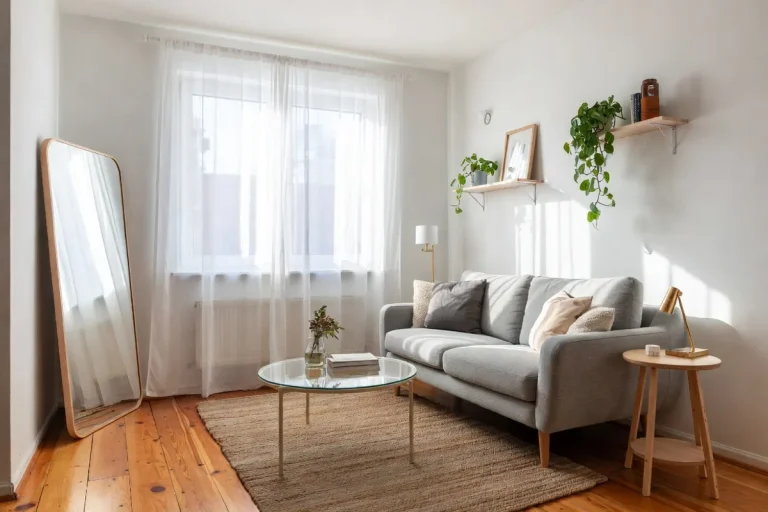
15 Small Living Room Ideas That Feel Surprisingly Spacious
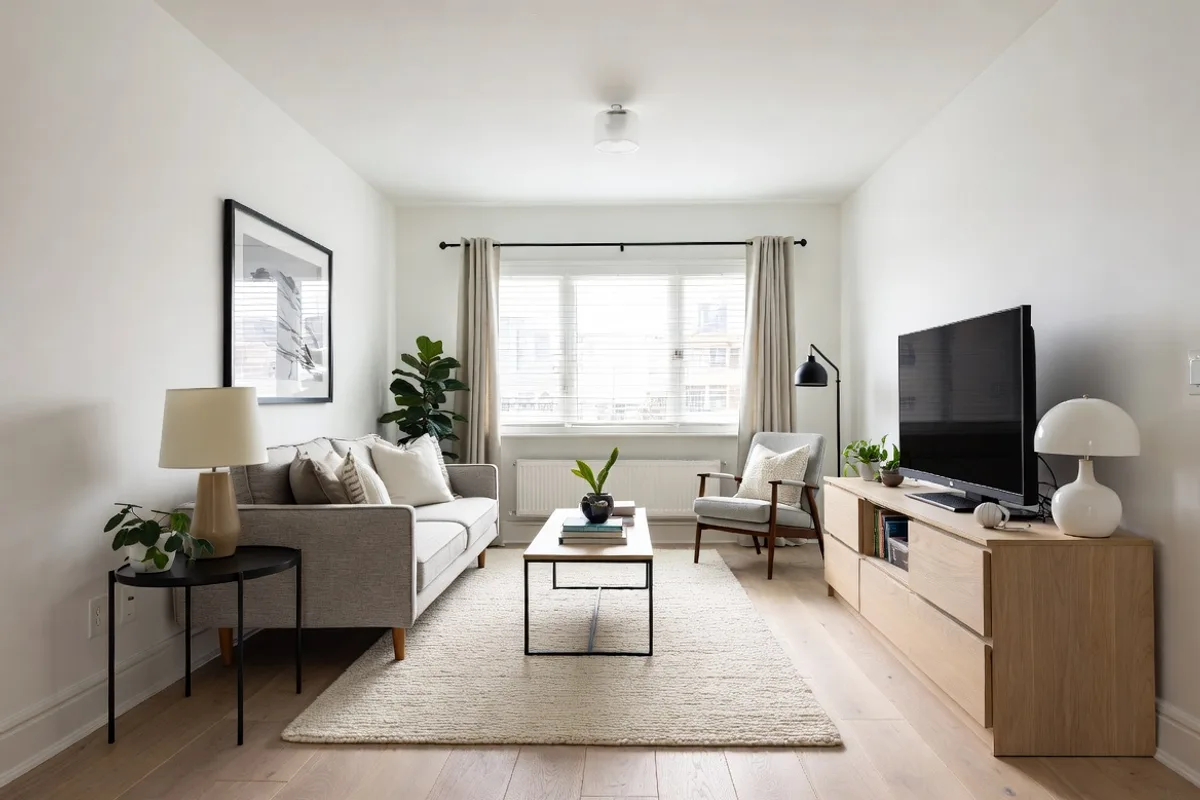
A small living room doesn’t have to feel cramped, cluttered, or like an afterthought — with the right design strategies, even the tiniest space can feel open, intentional, and genuinely inviting. Whether you’re working with a studio apartment, a narrow townhouse layout, or a cozy bungalow, these small space living room ideas are backed by real design principles and proven results. Read on for 15 clever tricks that will transform how you see — and feel — your living room.
Key Takeaways
- Light colors, mirrors, and strategic lighting are your best friends in a small living room.
- Multi-functional furniture dramatically reduces clutter while adding style.
- Vertical space is massively underused — tall shelves and high curtains make ceilings feel taller.
- Less is more: editing down your furniture and decor creates breathing room that makes a space feel larger.
- Rugs, scale, and cohesive color palettes tie a small room together without overwhelming it.
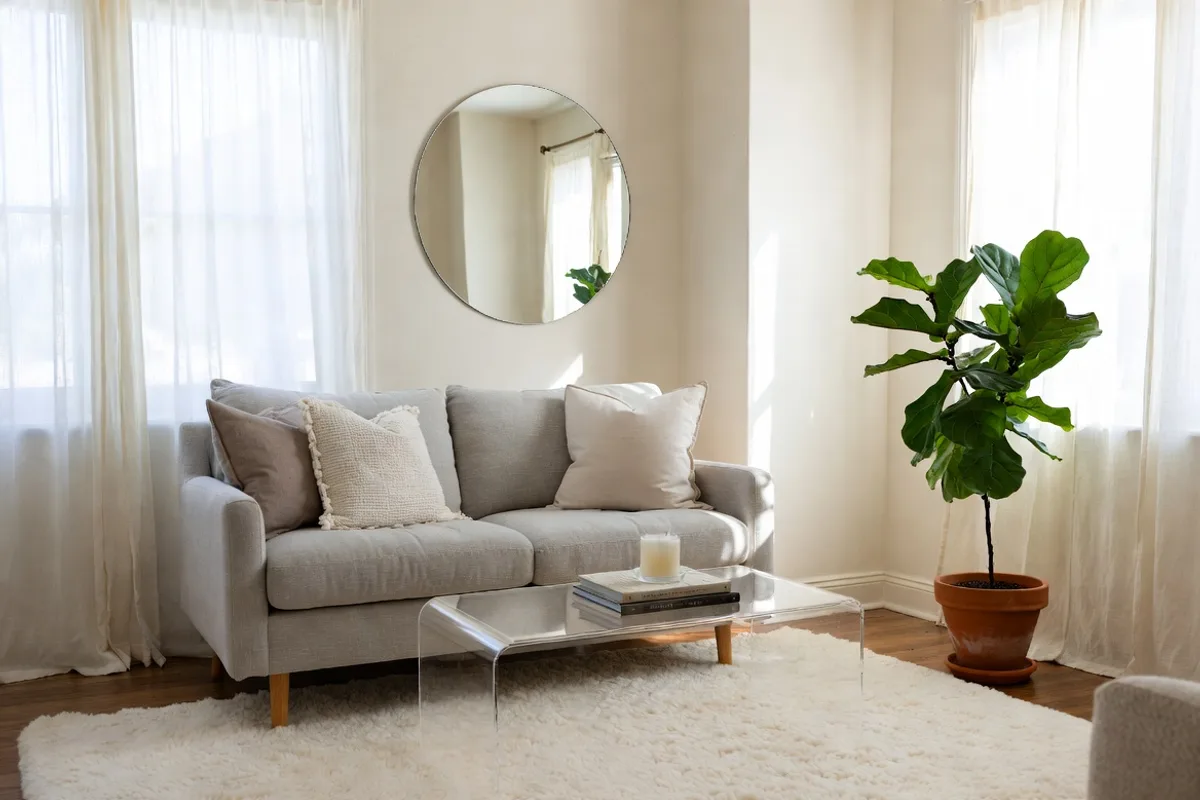
1. Go Light With Your Color Palette
The fastest way to make a small living room feel bigger is to embrace a light, airy color palette. Soft whites, warm creams, pale greiges, and barely-there blues reflect natural light and prevent walls from visually closing in on you. Paint not just your walls but also your trim and ceiling in the same or similar shades — this seamless approach blurs boundaries and tricks the eye into perceiving more square footage. One designer trick: use a matte finish on walls and a satin finish on trim to add subtle dimension without contrast overload.
Pro tip: Don’t be afraid of a warm white like Benjamin Moore’s White Dove or Sherwin-Williams’ Alabaster. Cool stark whites can actually make small spaces feel harsh rather than expansive.
2. Use Mirrors Strategically
Mirrors are the ultimate small-space cheat code. A large mirror placed opposite a window doubles your perceived natural light and visually extends the room. Lean a floor-length mirror against a wall for an effortlessly stylish look, or hang a gallery of smaller mirrors to create depth and movement. According to Architectural Digest, professional designers consistently recommend mirrors as the single most impactful tool for expanding the visual footprint of a compact room.
Common mistake: Placing mirrors where they only reflect clutter or dark walls. Always position them to capture light or a beautiful view.
3. Invest in Multi-Functional Furniture
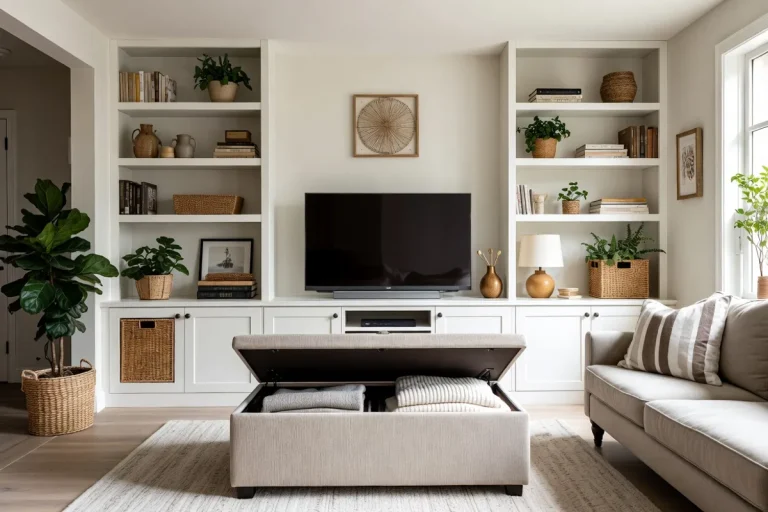
In a small living room, every piece of furniture needs to earn its keep. Look for ottomans with hidden storage, sofa beds for guest-ready flexibility, nesting coffee tables that tuck away neatly, and console tables that double as desks. A storage bench under a window adds seating and stashes throws, books, and remotes. The key is choosing pieces that solve two problems at once — style and utility — so your room never feels overrun by furniture you don’t truly need.
Actionable advice: Before buying any furniture piece, ask yourself: does this do at least two things for this room? If not, look for an alternative that does.
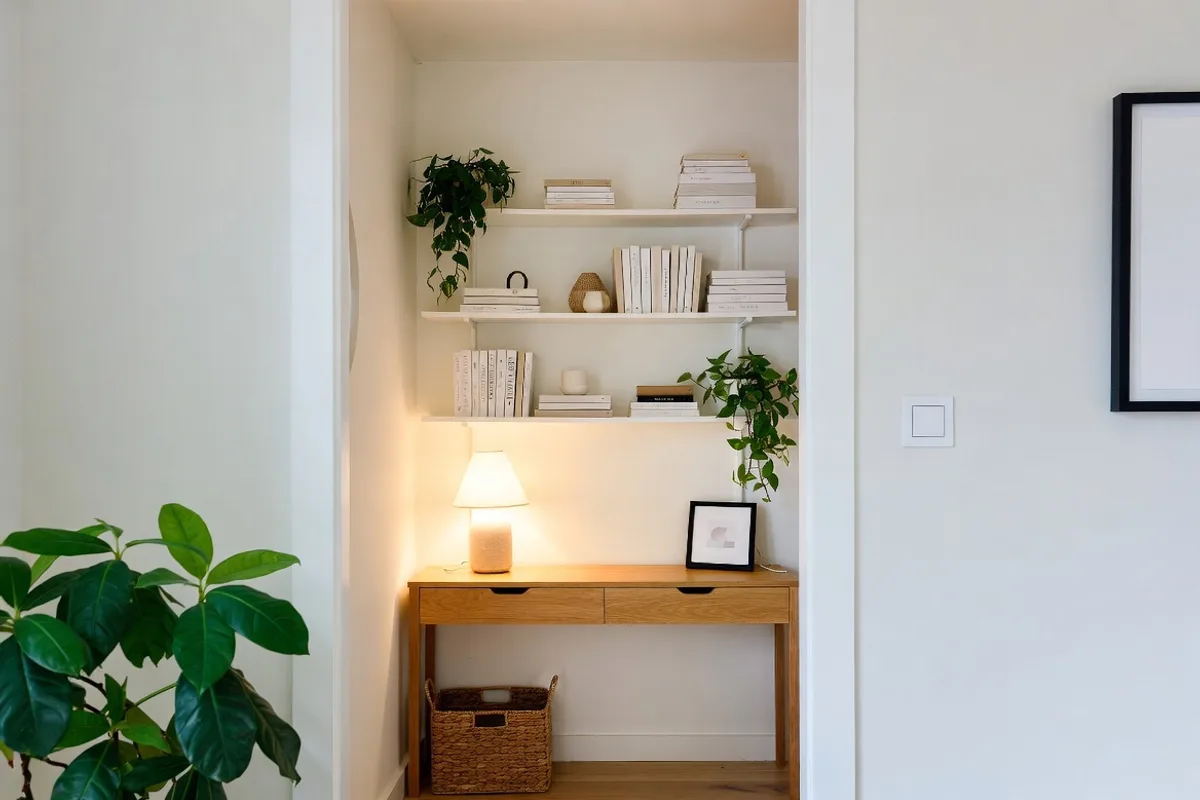
4. Maximize Vertical Space
When floor space is limited, think UP. Floor-to-ceiling bookshelves draw the eye upward and create the illusion of a taller, grander room. Floating shelves stacked high on walls provide storage without consuming precious floor real estate. Even hanging your art higher than eye level — closer to the ceiling — subtly elongates the walls. If you love the idea of cozy dining nooks with maximized vertical impact, you might enjoy how similar principles apply in small farmhouse dining room ideas that maximize style and space.
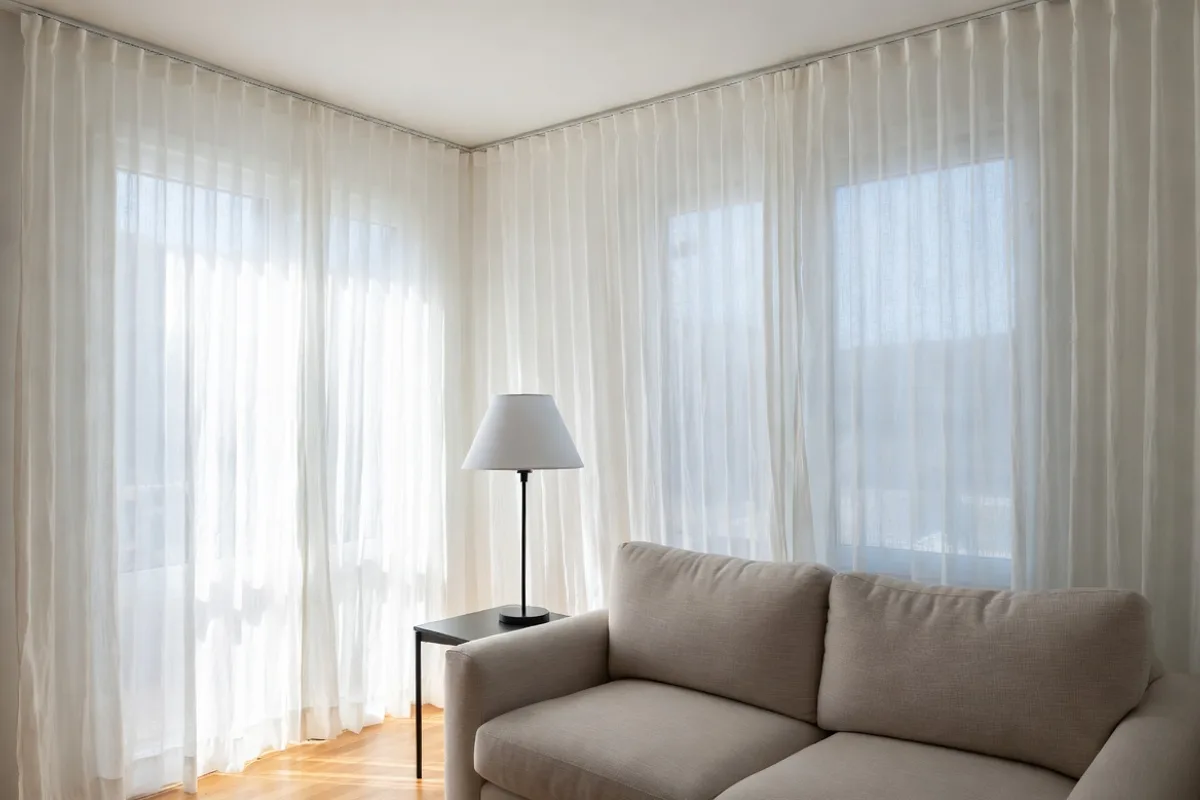
5. Hang Curtains High and Wide
One of the most transformative — and surprisingly affordable — small space living room ideas is simply changing how you hang your curtains. Mount curtain rods as close to the ceiling as possible (not just above the window frame) and extend the rod well beyond the window’s edges on both sides. This makes windows look dramatically larger, the ceiling higher, and the room more expansive. Choose light, flowing fabrics in neutral tones to allow maximum light in. Avoid heavy, dark drapes that visually shrink the space.
Pro tip: Sheer linen curtains hung from ceiling to floor are a timeless, designer-approved choice for small rooms at any budget.
6. Choose the Right Rug Size
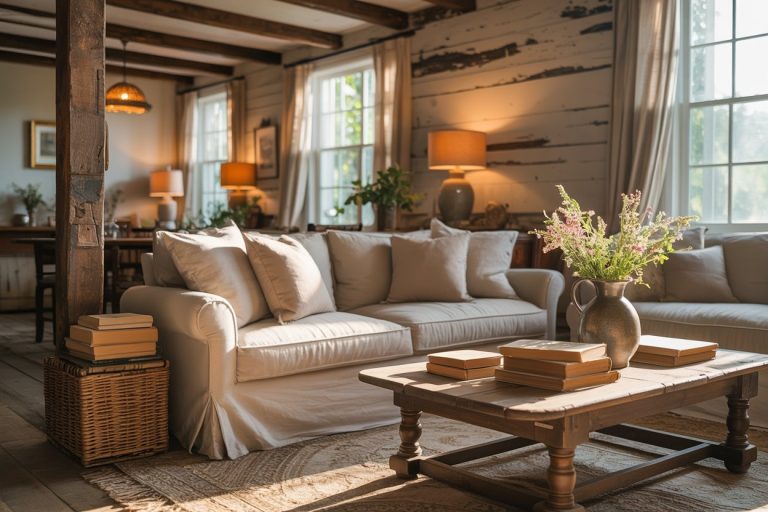
A rug that’s too small is one of the most common decorating mistakes in compact living rooms. A properly sized rug — one that fits under the front legs of all your seating, at minimum — anchors the furniture arrangement and makes the room feel cohesive and larger. Aim for an 8×10 or 9×12 in most small rooms rather than a 5×7, which will make the space feel fragmented and choppy. A single large rug also simplifies the visual field, which makes the room feel calmer and more open.
7. Layer Your Lighting
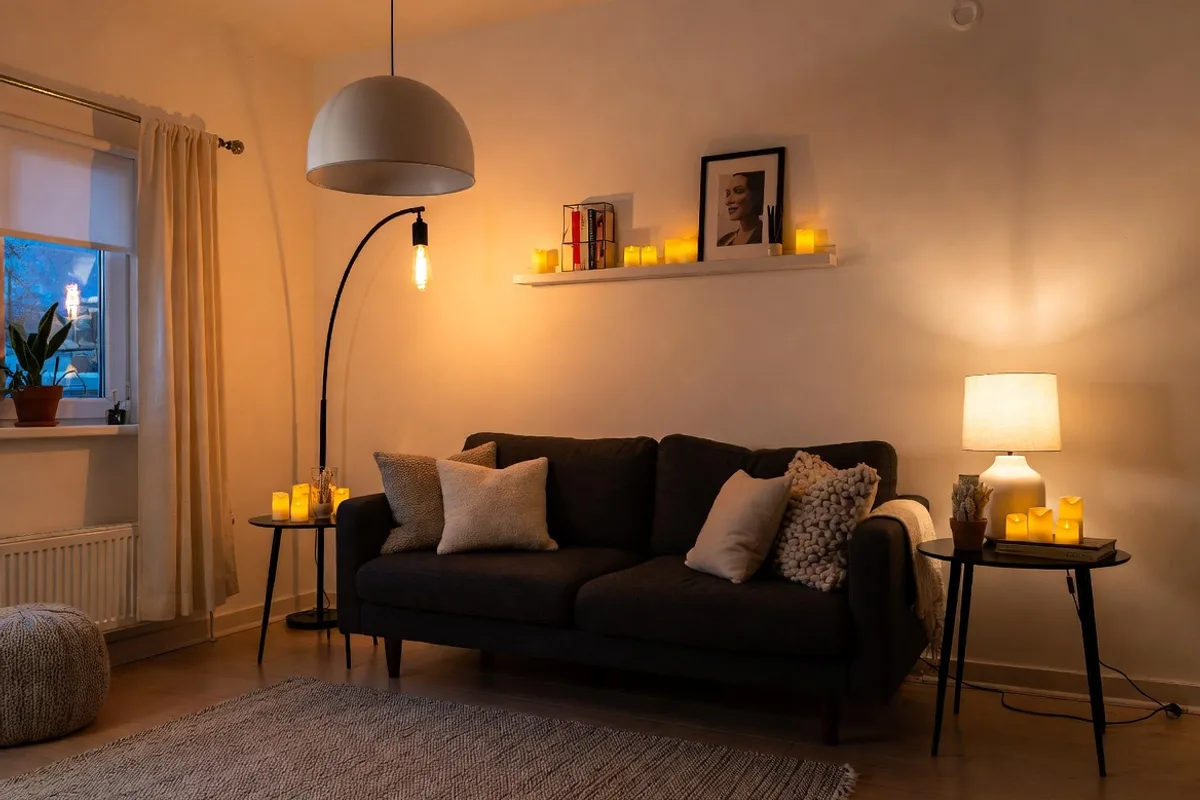
Flat, single-source overhead lighting flattens a room and makes it feel smaller and more cave-like. Instead, layer your lighting with a combination of ambient (overhead), task (table and floor lamps), and accent lights (wall sconces, LED strips, candlelight). Multiple light sources at different heights create warmth, depth, and dimension — all of which make a room feel more intentional and spacious. Dimmers are a worthwhile upgrade that let you shift the mood instantly.
Actionable advice: Add at least one floor lamp in a corner to eliminate dark shadows that shrink the perceived size of the room.
8. Edit Ruthlessly and Declutter
No design trick in the world will make a cluttered small living room feel spacious. Clutter is the enemy of openness. Edit your surfaces down to three or fewer decorative objects per area, invest in smart hidden storage, and be honest about what isn’t earning its place visually or functionally. A curated collection of meaningful items always looks more intentional — and makes the room feel bigger — than a crowded display of everything you own.
Common mistake: Keeping furniture or decor out of guilt rather than love or necessity. If it’s blocking flow or adding visual noise, it’s costing you square footage.
9. Mind Your Furniture Scale
Oversized furniture overwhelms a small space, but tiny furniture makes it look mismatched and cramped in a different way. The sweet spot is right-scaled furniture — pieces that are proportionate to your room dimensions. A loveseat instead of a full three-seater sofa, a slim-profile armchair, and a low-profile coffee table can completely open up a living room. Look for furniture with exposed legs, which allow light to flow underneath and create visual breathing room.
10. Embrace Open and Floating Shelving
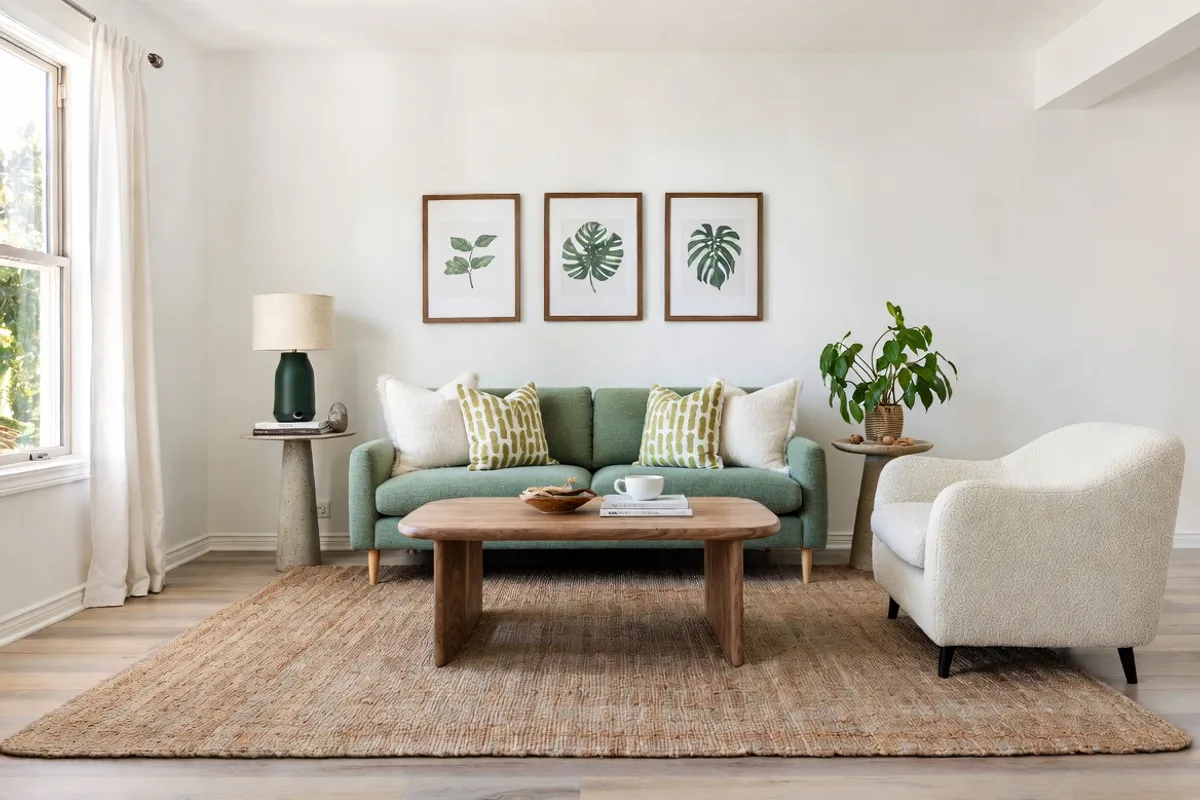
Bulky entertainment centers and closed TV consoles consume visual weight. Swapping them for floating shelves or a sleek, low-profile TV stand instantly lightens the room. Open shelving lets walls breathe and creates the impression of more space, provided you keep what’s displayed curated and intentional. Style shelves with a mix of books, plants, and a few decorative objects in cohesive colors for a look that’s both functional and beautiful.
11. Create Color Continuity
A cohesive color palette throughout your living room removes visual interruptions that chop up the space. When your walls, furniture, rug, and soft furnishings share a family of colors, the eye travels smoothly around the room without stopping — and that uninterrupted flow makes the space feel larger. This doesn’t mean everything has to match perfectly; it means nothing should jar or clash unexpectedly. Think of it as using a palette of three to five harmonizing tones and repeating them throughout the room. The same principle applies beautifully in other small spaces — the approach we see in farmhouse half bathroom ideas that transform small spaces translates brilliantly to compact living rooms too.
12. Try Transparent or Lucite Furniture
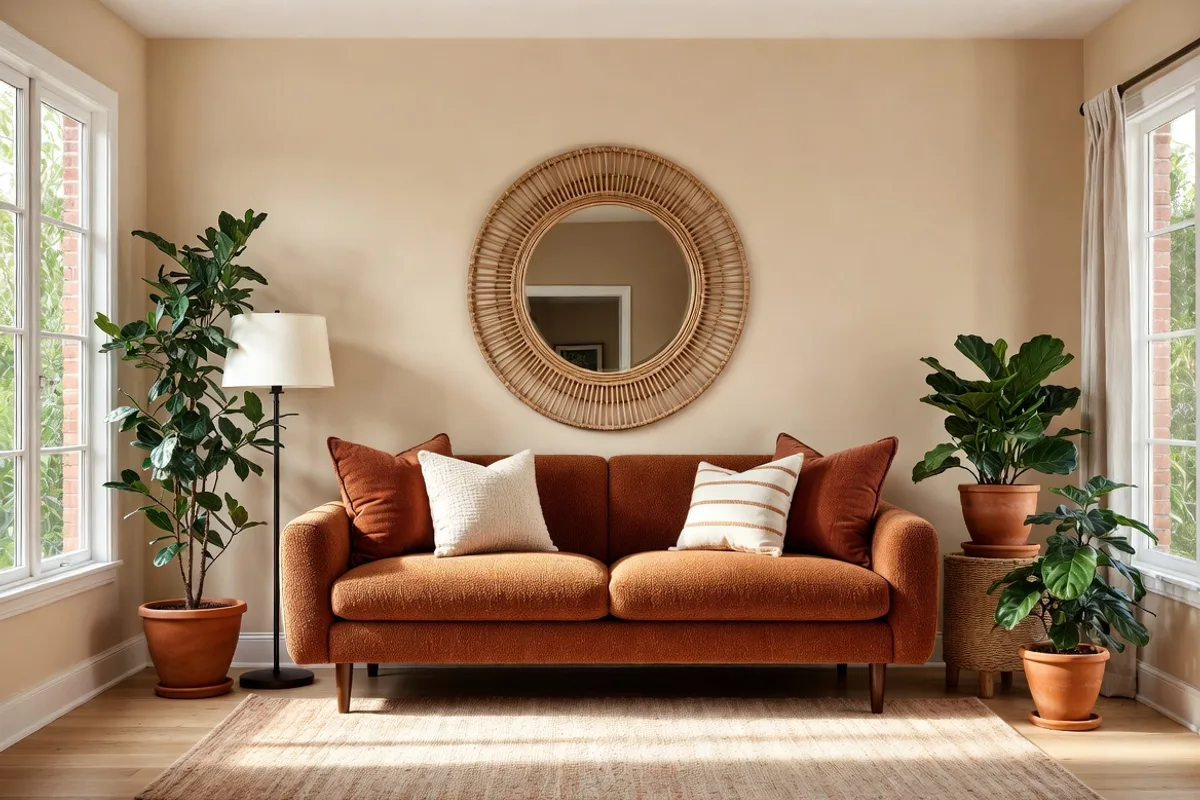
Acrylic and glass furniture pieces are a secret weapon in small room design. A clear acrylic coffee table, ghost chairs, or a glass-topped side table takes up physical space but not visual space — your eye passes right through it, making the room feel less crowded. This is especially effective in seating areas where you need a coffee table but don’t want it to dominate the room. Pair clear pieces with texture-rich sofas and rugs for balance.
13. Create a Strong Focal Point
Every room, no matter how small, needs a focal point — a place for the eye to land and rest. In a small living room, a strong focal point (a fireplace, a gallery wall, a bold piece of art, or a beautifully styled bookshelf) actually helps the room feel more organized and expansive. Without one, the eye darts around searching for somewhere to settle, making the room feel chaotic. Identify your focal point, design around it, and let everything else support it quietly.
14. Add Life With Greenery
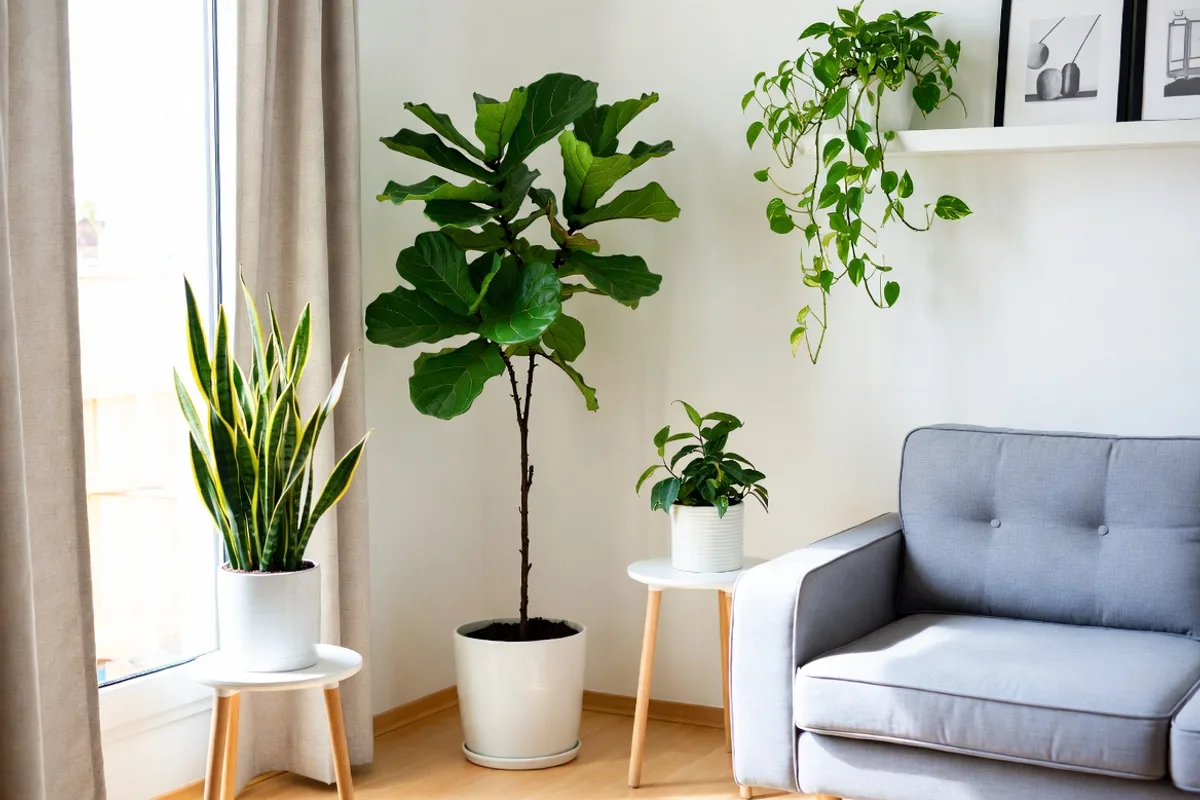
Plants bring energy, life, and a sense of the outdoors into a small living room — and that connection to nature naturally makes spaces feel more open and less confined. A tall fiddle-leaf fig or snake plant in a corner draws the eye up and adds height. Trailing pothos on a shelf adds softness. A cluster of small succulents on a coffee table adds organic texture. Plants are also one of the most affordable ways to add color, warmth, and personality to a room without cluttering it.
Pro tip: Choose a few larger plants rather than many small ones. One dramatic plant makes a statement; a collection of tiny pots can look cluttered.
15. Define Zones With Smart Layout
In open-plan spaces or multi-use small living rooms, defining clear zones actually makes the overall space feel more organized and purposeful — which reads as larger. Use a rug to anchor the seating area, a sofa or console table to divide the living zone from a dining or work area, and lighting to signal the shift between zones. A room that has clear purpose in each area feels intentional and spacious rather than crammed and confused. Arrangement matters as much as what you put in the room: pull furniture slightly away from walls (yes, even in small rooms) to create flow and depth.
Frequently Asked Questions
What colors make a small living room look bigger?
Light, neutral colors like soft white, warm cream, pale greige, and light gray are consistently the best choices for making a small living room look larger. These shades reflect natural light and keep walls from feeling like they’re closing in. For a bolder look, a monochromatic color scheme in any medium tone can also work well — the key is keeping the palette cohesive so the eye flows smoothly around the room.
What size rug should I use in a small living room?
Counterintuitively, you should go larger than you might think. In most small living rooms, an 8×10 rug is the minimum recommended size. The front legs of all your seating should rest on the rug, anchoring the furniture arrangement. A rug that’s too small makes a room feel disconnected and actually smaller, while a properly sized rug creates cohesion and makes the space feel more expansive.
Is it better to have less furniture in a small living room?
Generally, yes — but it’s not about having less furniture so much as having the right furniture. A small living room with three well-chosen, properly scaled pieces will always feel better than one stuffed with six mismatched options. Prioritize multi-functional pieces, choose furniture with exposed legs to let light flow underneath, and leave enough open floor space for easy movement through the room.
How do I make my small living room feel cozier without making it feel smaller?
Layer textures through throw pillows, blankets, and rugs to add warmth and depth without adding bulk. Use warm-toned lighting (think soft white bulbs, not cool white) and layer multiple light sources. Add a few meaningful personal touches — a plant, a stack of favorite books, a piece of art you love — rather than decorating every surface. Cozy and spacious can absolutely coexist when you edit thoughtfully and choose elements that add warmth without visual clutter.
The Bottom Line: Small Doesn’t Mean Sacrificing Style
The best small space living room ideas all share one thing in common: they work with the room’s proportions rather than fighting them. Whether you start by hanging your curtains closer to the ceiling, swapping your coffee table for a clear acrylic version, or simply choosing a rug that’s one size larger than you thought you needed — each of these changes compounds. Small rooms reward thoughtful, intentional design more than any other space in the home, because every single choice is visible and impactful.
Start with one or two of these ideas this week — even just rearranging your furniture away from the walls or adding a floor lamp to a dark corner can shift the entire feel of your living room. Your small space has more potential than you think. Now go make it work for you.